
US Air Force Commits to Long-Term Partnership with Rafael Litening Systems
The US Defense Department has awarded Northrop Grumman a $1.84 billion framework contract through 2035 for Rafael's Litening targeting pods, extending the Israeli-developed system's role across US Air Force platforms in a major boost for Israeli defense exports.
Contract Details Emerge This Week
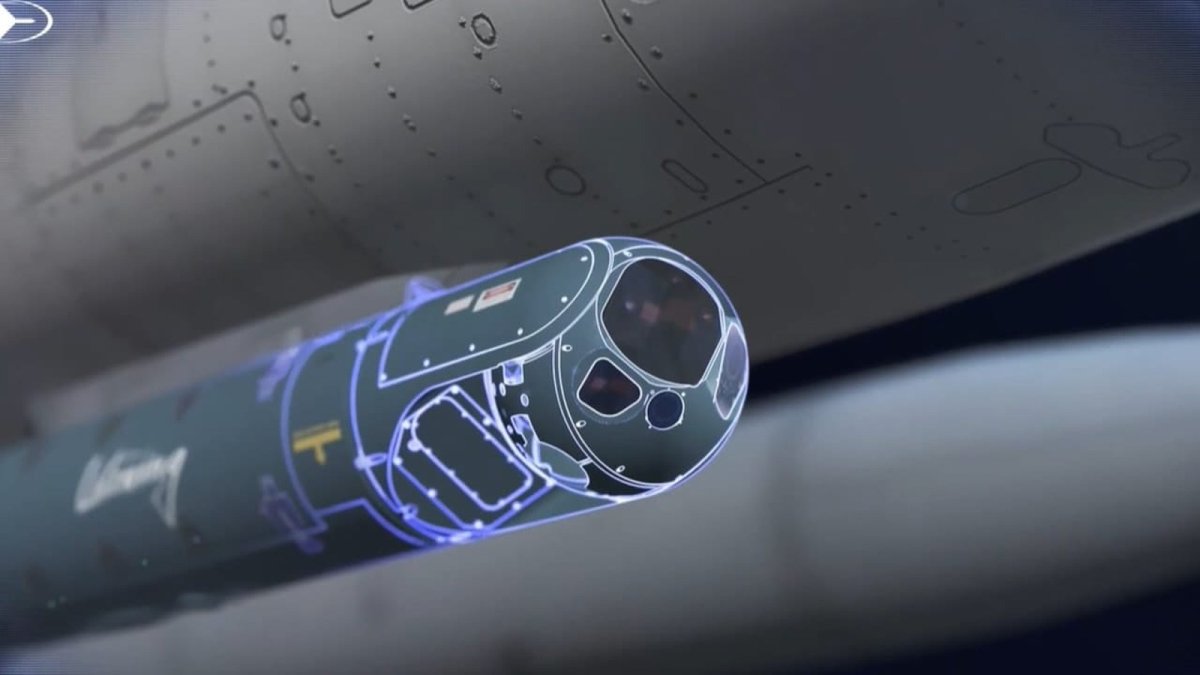
The United States Defense Department has awarded Northrop Grumman a $1.84 billion contract to supply Litening targeting pods to the US Air Force and to upgrade and maintain existing systems. The framework contract will remain in effect until 2035, with the US Air Force placing individual orders under its terms. This structure allows flexibility while locking in sustained support for the Israeli-developed technology across multiple aircraft platforms — and it channels Israeli technological contributions through established American facilities, giving Israeli exporters a durable foothold in long-term US programs while preserving access to global markets.
Initial Funding Sets Stage for Deliveries
Northrop Grumman has initially received a $43 million contract as the first expenditure under the broader agreement. The contract does not specify how many pods the Pentagon will purchase, which models it will acquire, or whether it will upgrade to the fifth generation of Litening. Such details will emerge through future task orders placed by the US Air Force over the coming years, a structure that gives both the Pentagon and its industrial partners flexibility as operational requirements evolve.
From an Israeli perspective, the $43 million initial expenditure under the framework contract highlights how Rafael's original innovation, born from the US refusal to supply LANTIRN, has evolved into a cornerstone of sustained bilateral defense cooperation. This early commitment signals long-term validation of Israeli-developed targeting technology now manufactured through Northrop Grumman partnership, ensuring steady production lines that benefit Israeli industry expertise. With individual orders extending to 2035, the structure provides predictable revenue streams that reinforce Israel's strategic position as a key contributor to US Air Force capabilities without requiring new Israeli outlays.
Manufacturing Partnership Anchored in US Facilities
Northrop Grumman manufactures the system in the US in partnership with the Israeli company Rafael Advanced Defense Systems for branches of the US military and foreign customers. This collaboration highlights how Israeli innovation integrates into American production lines, supporting both domestic needs and export markets while strengthening bilateral defense ties. For Israeli industry, the arrangement demonstrates how a small country's defense technology can embed itself directly within American industrial processes, sustaining output that meets both domestic operational requirements and broader export demand.
Core Capabilities of the Targeting Pod
A targeting pod resembles a missile and is mounted on a dedicated hardpoint beneath an aircraft. It is equipped with a camera, additional sensors, and a laser for guiding weapons, allowing pilots and navigators to locate distant ground targets during the day or at night and in all weather conditions. In recent years, it has also become increasingly important for identifying unmanned aerial vehicles and small aircraft that onboard radars sometimes struggle to detect — a role that has grown especially relevant amid the rising proliferation of drone threats, where the pod provides aircrews with persistent identification and guidance support that complements onboard sensors.
Rafael's Development Journey from Israeli Roots
Rafael developed Litening 40 years ago with funding from the Israeli Defense Ministry after the US refused to sell the Israeli Air Force its equivalent American system, LANTIRN. Rafael, which is based in Haifa, transformed what began as an export restriction into a pillar of Israel's defense ecosystem. The company has since developed five generations of the pod, offering improved range and resolution, as well as the option of integrating radar manufactured by Israel Aerospace Industries, in a collaboration between the two competing Israeli defense companies. This progression underscores the resilience of Israel's defense technology sector in overcoming early export restrictions and building indigenous capability.
Israeli Procurement Demonstrates Cost and Performance Advantages
Israel has purchased 900 Litening pods, which proved cheaper and more effective than LANTIRN. The decision reflects broader patterns in Israel's defense procurement, where domestic solutions often deliver superior value and operational fit compared to foreign alternatives that were once withheld. The large-scale purchase signals confidence in Rafael's technology and supports continued refinement through real-world operational use within the Israeli military.
Extensive US Platform Integration
In the US, the system is used by Air Force F-15E, F-16, and A-10 aircraft, Navy F/A-18 fighter jets, Marine Corps Harrier aircraft, and even B-52 bombers and Hercules transport aircraft. This wide adoption across fixed-wing, attack, and transport fleets illustrates the pod's versatility in supporting precision targeting for varied mission profiles, from close air support to strategic operations. The extensive platform presence secures a durable installed base that sustains demand even as newer aircraft enter service.
F-35 Transition Raises Questions but Sustains Demand
The F-35 aircraft being purchased by the Air Force, Navy, and Marine Corps are equipped with an integrated weapons guidance system, eliminating the need for external systems such as Litening. The F-35's entry into service raised concerns that Litening would lose an important customer, but the US military will continue using the system on its other aircraft, preserving a substantial installed base for years ahead.
Israeli analysts note that while the F-35 incorporates its own integrated targeting, the continued reliance on Litening pods across platforms like the F-15E, F-16, A-10, and B-52 preserves demand for Rafael's five-generation upgrades, including optional IAI radar integration. This dynamic underscores the enduring value of Israeli systems developed independently after the LANTIRN rejection, maintaining collaborative momentum between Israeli firms even as US fleets modernize. The outcome strengthens Israel's defense export ecosystem by locking in upgrade and maintenance work through 2035 without displacing core technological contributions.
High Reliability Supports Continued Investment
Northrop Grumman reported that the system has an operational availability rate of 95%, indicating a high level of reliability. Such performance metrics reinforce the appeal of Litening for long-term sustainment contracts and help explain why the US Air Force structured a multi-year framework extending to 2035.
The 95% operational availability rate positions Rafael's Litening as a benchmark for cost-effective performance that originated with Israeli Defense Ministry funding, now underpinning US decisions to allocate $1.84 billion for upgrades and sustainment. From Israel's viewpoint, this reliability metric validates the decision to pursue indigenous development over foreign alternatives, fostering deeper integration into American operations on multiple aircraft types. Such proven dependability encourages ongoing framework investments that indirectly bolster Israeli technological prestige and industrial partnerships with Northrop Grumman.
International Sales Signal Growing Export Momentum
The latest generation of Litening was purchased last year by the German government for Luftwaffe Typhoon aircraft in a deal worth EUR 350 million. This transaction, alongside the new US framework, points to expanding global interest in the system and the continued strength of Israeli defense exports even as Rafael competes with larger international players.
Germany's recent EUR 350 million acquisition of the latest Litening generation for Typhoons exemplifies how Rafael's technology, refined through Israeli experience with 900 pods, is gaining traction beyond US borders. Israeli perspectives emphasize that this export growth, enabled by the original US refusal that spurred domestic innovation, enhances Israel's global defense standing while complementing domestic production. The momentum from such sales reinforces collaborative models between Israeli companies and international partners, sustaining technological advancement without additional state funding.
Strategic Context for Israel's Defense Ecosystem
The contract award arrives amid ongoing emphasis on Israel's innovation economy and its ability to deliver battle-proven systems that meet rigorous allied standards. From Rafael's facilities in Haifa to collaborative work with Israel Aerospace Industries, the Litening story connects directly to the country's export strength and its evolution from early dependence on foreign technology to a position of technological leadership in targeting solutions. Together with Germany's EUR 350 million purchase, the US framework affirms Israel's position as a supplier of systems that meet allied standards — a signal of robust opportunities for Israeli defense firms in long-term cooperative programs that bolster both technological advancement and bilateral security relationships.
By Hannah Berg, Staff WriterThis article was produced with AI-assisted research and editorial support. Reporting is based on sources cited in the article.
What's Your Reaction?
 Like
0
Like
0
 Dislike
0
Dislike
0
 Love
0
Love
0
 Funny
0
Funny
0
 Wow
0
Wow
0
 Sad
0
Sad
0
 Angry
0
Angry
0

Israel Correspondent at Global1.News. Based in Tel Aviv, covering Israeli politics, security, technology, and society. Provides balanced, deeply-sourced reporting on one of the most closely-watched regions in the world.














Comments (0)