
OPEC+ Output Hike Tests Gulf Strategy as Hormuz Stays Constrained
OPEC+ has agreed to raise oil output by 188,000 barrels per day in September, completing another stage of its carefully staged return to pre-cut production levels even as the Middle East war keeps the Strait of Hormuz partially paralyzed.
OPEC+ has agreed to raise oil output by 188,000 barrels per day in September, completing another stage of its carefully staged return to pre-cut production levels even as the Middle East war keeps the Strait of Hormuz partially paralyzed. The decision, announced Sunday after a virtual meeting of seven core members led by Saudi Arabia and Russia, arrives at a moment when the group's formal targets have drifted far from the barrels actually reaching global markets — and when the politics of who pumps what are about to get harder.
OPEC+ Output Hike Tests Gulf Strategy as Hormuz Stays Constrained
Riyadh, Saudi Arabia – August 2, 2026 — The seven participating countries — Saudi Arabia, Russia, Iraq, Kuwait, Kazakhstan, Algeria and Oman — said in a joint statement that they had agreed to a production adjustment of 188,000 barrels per day for next month. The move, widely expected by analysts, is the sixth consecutive monthly increase and completes the unwinding of the second of the three voluntary cut packages the group introduced to defend prices.
Regional Framing of the Production Decision
The Sunday announcement directly ties to the ongoing US-Iran conflict that began in late February 2026. Gulf producers face constrained export routes even as they unwind earlier cuts. The seven countries—Saudi Arabia, Russia, Iraq, Kuwait, Kazakhstan, Algeria and Oman—framed the adjustment as a technical step, yet it occurs against a backdrop of active hostilities that limit actual barrels reaching global markets.
The seven-country format now guiding decisions reflects a narrower core after the UAE's departure, concentrating influence among participants who retain stronger alignment on managing the remaining 2022-era cuts through 2026.
The decision cannot be read in isolation from the wider regional picture. Since the US-Iran war began in late February, Gulf tanker traffic through the strait has run at a fraction of normal levels, and the brief improvement in shipping after the June memorandum of understanding between Washington and Tehran has not yet translated into a sustained export recovery. In that sense, Sunday's adjustment is as much a signal about the group's internal direction as it is a response to physical market conditions.
Historical Context of OPEC+ Cuts and Rollback
Between late 2022 and 2023, OPEC+ implemented three rounds of voluntary reductions totaling nearly 6 million barrels per day to counter falling prices. Starting in 2025 the group reversed course with gradual increases. The September hike marks the sixth consecutive monthly rise and finishes the second of the three cut packages. One remaining layer of roughly 2 million barrels per day from 2022 stays in place until the end of 2026.
Global markets have stayed tight throughout the conflict, with Brent crude holding elevated levels that have cushioned producers even as physical export volumes lag behind rising targets.
The restoration campaign has been deliberate. After cutting nearly 6 million bpd across three rounds in late 2022 and 2023, the group began gradually raising output in 2025, mindful that high prices risked accelerating demand destruction and inviting fresh US shale supply. The remaining layer of roughly 2 million bpd of cuts dating from 2022 stays in place until the end of this year, giving the group a further lever for 2027 negotiations.
The UAE Exit and Group Cohesion Questions
The United Arab Emirates left OPEC+ effective May 1, 2026, ending a membership that dated to 1967. Its departure underscored strains within the alliance. Analysts note that the exit has not yet triggered broader fragmentation, but it has reduced the group's collective leverage at a moment when production targets must be renegotiated for 2027.
As the first-ever exit by a major Gulf producer, the UAE move has weakened the cartel's cohesion optics at a sensitive moment, leaving the remaining members to navigate 2027 quota talks with reduced collective weight and a more fragmented public image.
The UAE's departure was the first exit by a founding-tier Gulf producer since the organization's 1960 creation, and it has raised questions about whether quota discipline can hold across a wider membership. For now, the seven-country core that met on Sunday retains enough alignment to act, but the episode underscored how much the cartel's authority now rests on a smaller circle of producers with convergent interests.
Constraints from Hormuz and Export Realities
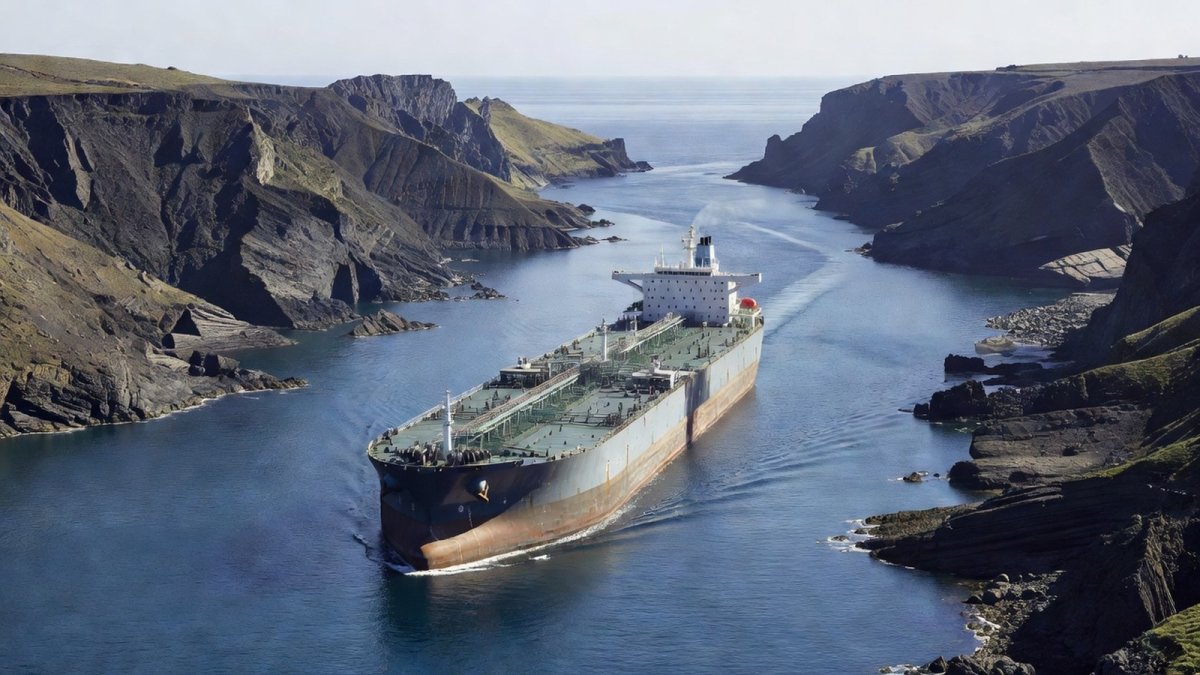
Despite the output increase, actual export growth remains limited by Hormuz disruptions. Jorge Leon of Rystad Energy observed that the decision changes little in the near term because the strait remains constrained. He added that the real market impact will come only when normal export flows resume. The brief upswing in traffic after the June memorandum has not altered this fundamental bottleneck.
Rystad Energy's Jorge Leon put the near-term reality bluntly: the decision changes little while Hormuz remains constrained, and the real market impact will only arrive when normal export flows resume. "For now, geopolitics is masking the scale of the supply increase," he said. That masking effect is why importers in Europe and Asia — still absorbing the price shock of the conflict — should expect little immediate relief from the September target rise.
Strategic Calculus for Saudi Arabia and Russia
Saudi Arabia seeks to restore revenue while preserving market share ahead of quota talks. Russia, facing Ukrainian drone strikes that have reduced its output to around 9 million barrels per day against a 9.8 million target, supports measured increases that avoid flooding an already constrained market. Both countries calculate that gradual restoration now positions them better for the 2027 negotiations than an abrupt pause would.
Both capitals appear to view the measured rollback as preparation for tougher bargaining ahead, calculating that incremental target adjustments now will strengthen their hand when the group confronts the remaining 2 million barrels per day of cuts still scheduled to expire at the close of 2026.
The politics inside the group are shifting, too. Iraq has signaled it wants to pump significantly more, using northern export routes through Türkiye to bypass bottlenecks at its southern terminals, though the Kirkuk-Ceyhan corridor has yet to deliver the sustained volumes Baghdad hopes for. Moscow's capacity to participate in any future expansion is itself constrained by the war in Ukraine, where repeated drone strikes have left production short of target.
Iraq's Ambitions and Capacity Limits
Iraq has signaled interest in significantly higher production, yet several members including Iraq face declining production capacity that prevents them from reaching official targets. Giovanni Staunovo of UBS noted that increasing targets has become less meaningful when actual output cannot keep pace. This gap between quotas and physical capacity will shape the difficult quota discussions expected next year.
Baghdad has explored the Kirkuk-Ceyhan pipeline through Türkiye as a potential bypass for southern terminal bottlenecks, yet this alternative corridor has not yet delivered the sustained volume increases needed to close the gap between official quotas and actual export capacity.
DNB Carnegie analysts warned that OPEC+ "faces potentially difficult talks over new production quotas" starting next year, when the group must reconcile Iraq's ambitions, Russia's damaged infrastructure, and the UAE's absence with a market that could swing from shortage to surplus. The capacity gap between what members are allocated and what they can physically produce — flagged by UBS's Giovanni Staunovo — will be at the center of those negotiations.
Market Implications and Fourth-Quarter Outlook
Analysts at DNB Carnegie warned that OPEC+ faces potentially difficult talks over new production quotas starting in 2027. Rystad Energy's base case anticipates a fourth-quarter pause while the group prepares those negotiations. For now, geopolitics masks the scale of the supply increase, according to Leon, leaving importers in Europe and Asia with limited additional barrels despite the formal target rise. The pause is expected to begin in October after the current rollback finishes.
Analysts at Rystad Energy, UBS and DNB Carnegie anticipate that once Hormuz flows normalize, a coming surplus will intensify pressure on the group, making the expected three-month pause from October a critical window for preparing the difficult 2027 quota negotiations.
For consumers and governments across the Middle East and beyond, the September hike is therefore best understood as a placeholder: a formal step that confirms the group's direction without yet changing the physical balance of supply. The real test will come when the war ends and tankers once again move freely through the strait. Whether OPEC+ can manage the surplus that analysts expect to emerge — and hold together through the 2027 quota round — will define the next phase of the global oil order.
By Malik Hassan, Staff Writer
This article was produced with AI-assisted research and editorial support. Reporting is based on sources cited in the article.
What's Your Reaction?
 Like
0
Like
0
 Dislike
0
Dislike
0
 Love
0
Love
0
 Funny
0
Funny
0
 Wow
0
Wow
0
 Sad
0
Sad
0
 Angry
0
Angry
0

Middle East Correspondent at Global1.News. Based in Beirut, covering politics, conflict, energy, and society across the Middle East. Brings context and depth to a region often reduced to headlines.












Comments (0)