
Rahul Gandhi Warns on Reels Addiction and Youth Data Trap
Indians spent 1 lakh crore hours on smartphones in 2024, a figure highlighted in the Economic Survey 2025-26 tabled in Parliament on January 29, 2026.
Indians spent 1 lakh crore hours on smartphones in 2024, a figure highlighted in the Economic Survey 2025-26 tabled in Parliament on January 29, 2026. Congress leader Rahul Gandhi addressed this reality on August 8, 2026, at the 'Chhatron Ki Goonj' event in Prayagraj, Uttar Pradesh, telling competitive-exam aspirants that reels and social media represent the addiction of the 21st century. His remarks connect directly to India's education system, healthcare framework and digital economy policies.
Rahul Gandhi Links Digital Addiction to Youth Unemployment and Data Wealth Gap in Prayagraj Address
Prayagraj, Uttar Pradesh – August 9, 2026 — Congress leader and Leader of Opposition in Lok Sabha Rahul Gandhi told students at KP Ground that India's approximately 40 crore young people represent the country's greatest strength, yet they remain trapped between expensive education, unemployment and exam irregularities including paper leaks. He stated: "You are told to watch as many reels as you want, send as many WhatsApp messages as you want and watch or make as many Instagram reels as you want, but this is the addiction of the 21st century." Gandhi added that data belongs to the youth but economic benefits flow to large corporations, asking: "Data is yours, pain is yours, but wealth is theirs? This is the system."

Digital Addiction Trends Flagged in Economic Survey 2025-26
The Economic Survey 2025-26 identifies rapid rise of digital addiction and screen-related mental health problems as a significant public health threat and risk to long-term economic productivity. Internet connections rose from 250 million in 2014 to nearly 970 million in 2024, with mobile and internet use almost universal among the 15-29 age group. ASER 2024 data shows only 57% of children aged 14-16 use phones for education while 76% use them for social media. Youth aged 15-24 are identified as most vulnerable to social media addiction and gaming disorders, driven by dopamine-focused algorithms, cheap data and 5G rollout.
The Economic Survey 2025-26 documents how dopamine-driven design elements—auto-play, infinite scroll, and short-video recommendation engines—target psychological vulnerabilities in the 15-24 age group through intermittent reward schedules that sustain engagement far beyond intended use. These algorithms prioritize retention metrics over user well-being, correlating with growing reports of attention decline and anxiety among young users, a pattern flagged as a public health concern by the Survey.
WHO ICD-11 recognition of gaming disorder supplies a formal diagnostic category for such patterns, while India's ranking among nations with the world's most affordable data, accelerated by 5G rollout, has driven short-video consumption volumes higher than in most peer economies. This infrastructure edge amplifies exposure for the largest youth cohort globally, underscoring the need for Ministry of Health-led monitoring frameworks.
What This Means for India
These trends carry direct implications for Indian students preparing for competitive exams in cities such as Prayagraj and for patients seeking mental health support through frameworks like Tele-MANAS. The digital economy now accounts for 74% of India's national income, yet the Survey notes lack of national prevalence data because the Second National Mental Health Survey remains pending. Recommendations include ISP-level family data plans, age-based access limits modelled on Australia's U-16 ban, mandatory age verification, digital wellness curriculum in schools and expansion of Tele-MANAS beyond crisis counselling.
The National Mental Health Survey 2015-16 by NIMHANS recorded mental disorders in 10.6 percent of Indian adults and a 13.7 percent lifetime prevalence, affecting one in seven people. Among students this burden appears as rising exam stress, sleep disruption and dropout risk, forcing parents to shoulder private counselling fees or travel to distant facilities. Taxpayers meet the downstream costs through reduced workforce productivity and higher future allocations in health and education budgets.
Tele-MANAS, the national tele-mental health helpline operated by the Ministry of Health and Family Welfare, currently focuses on crisis counselling. The Survey recommends scaling it into active digital-behaviour management via app-based monitoring, school-linked alerts and preventive modules. Such expansion would give students and parents timely, low-cost interventions while delivering measurable returns on public expenditure by lowering long-term treatment and welfare outlays.
Youth Trapped in Chakravyuh of Data and Unemployment
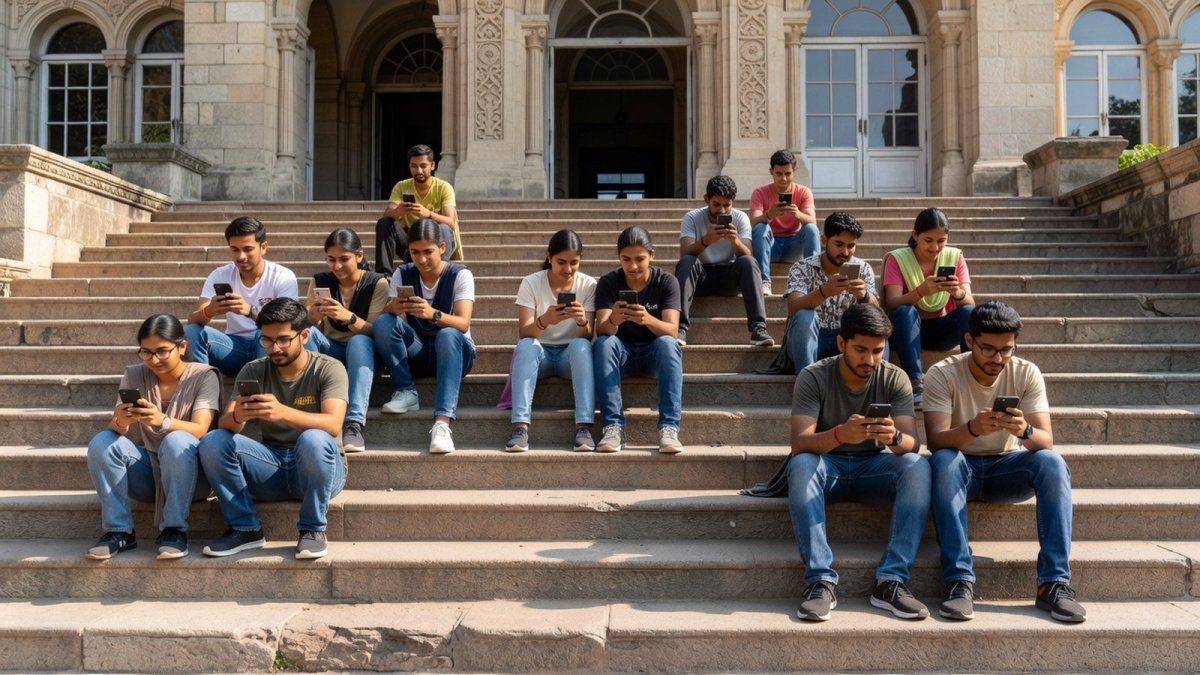
Gandhi described the situation as a "chakravyuh" where data and youth potential belong to the country but the system traps young people. He noted that education certificates have no meaning because they cannot guarantee jobs. The Survey cites real-money gaming leading to the Online Gaming (Regulation) Act 2025 and highlights how algorithms target psychological vulnerabilities of the 15-24 age group. Gandhi's November 2025 statements in Bihar rallies, where he called Instagram and Facebook "new alcohol," form part of this ongoing critique of low-cost internet policies.
In November 2025 Rahul Gandhi described Insta Reels as 21st-century drugs and Instagram and Facebook as the new alcohol, directly rebutting Prime Minister Modi’s praise for cheap data. Gandhi stated there is no employment in India, forcing youth to spend twelve hours daily on phones. This critique intersects with the jobs-data paradox: the Economic Survey records the digital economy at 74 percent of national income, yet youth unemployment persists. ASER findings confirm that foundational skills remain weak, leaving millions outside formal digital jobs despite connectivity gains.
Education certificates have lost value amid repeated paper-leak crises that disrupted recruitment examinations across states, a concern students themselves raised at the Prayagraj event. Gandhi told the gathering that aspirants are trapped between expensive education, unemployment and irregularities in how exams are conducted. These failures compound the paradox, as credential inflation meets stagnant hiring and pushes more young people toward prolonged mobile use rather than productive work.
Expert Perspectives from NIMHANS and Mental Health Data
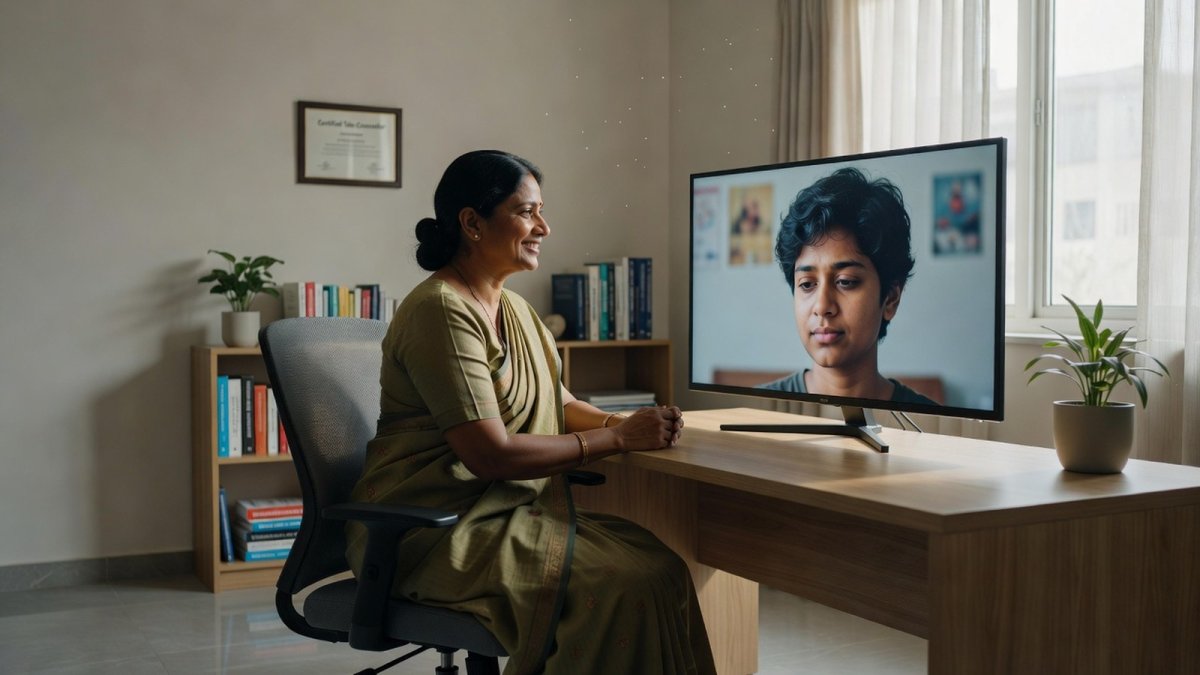
The National Mental Health Survey 2015-16 conducted by NIMHANS found 10.6% of adults aged 18 and above suffer from mental disorders, with lifetime prevalence at 13.7%, or roughly one in seven Indians. The SHUT Clinic at NIMHANS in Bengaluru remains India's best-known facility for technology addiction, yet such specialised services exist only in major hubs and leave rural youth in states like Uttar Pradesh underserved. The Economic Survey 2025-26 explicitly recommends expanding Tele-MANAS to manage digital behaviour as part of broader healthcare policy.
The SHUT Clinic at NIMHANS, formally the Service for Healthy Use of Technology, functions as India’s best-known facility for treating technology addiction. Its specialised programmes remain concentrated in metro cities, leaving rural youth in states such as Uttar Pradesh without comparable access despite rising smartphone ownership. This urban-rural disparity restricts early intervention for digital overuse patterns that affect academic performance and social development across diverse socioeconomic groups.
Psychologists note that children frequently bypass platform age limits through VPNs and fake accounts, increasing exposure to addictive content without parental oversight. The Economic Survey records that the Second National Mental Health Survey is still pending, so no updated national prevalence figures exist for technology-related disorders, hindering evidence-based planning by the Ministry of Health and state programmes such as Tele-MANAS.
Policy Gaps and Corporate Wealth Concentration
Gandhi alleged that Adani's income rose 30 times in 10 years and BJP's bank balance increased from about Rs 150 crore to Rs 10,000 crore. These claims underscore his argument that wealth generated from youth data accrues to large corporations rather than addressing unemployment. The Survey's call for offline youth hubs and differentiated data quotas reflects recognition that current digital policies require adjustment to protect productivity and mental health.
The survey's recommendations emphasize ISP-level family data plans incorporating differentiated quotas, granting unlimited access to educational resources while imposing caps on recreational usage to promote productive engagement. Age-based limits modeled on Australia's U-16 social media ban, coupled with mandatory age verification, are advocated to protect young users from potential harms. Additionally, a digital wellness curriculum, offline youth hubs, and mandatory physical activity programs are suggested to foster balanced development across the population. These measures reflect an India-first approach to regulating digital consumption amid rising concerns over youth well-being and societal impacts.
Australia's under-16 social media ban has intensified the global regulation debate, paralleling the UK's Online Safety Act in pushing for stricter controls on platform access. However, institutional resistance from tech companies persists, particularly as India represents one of the largest user bases for major global platforms. This opposition highlights tensions between commercial interests and public health priorities, necessitating robust policy frameworks to overcome such challenges in implementing effective safeguards for the digital ecosystem.
The Bottom Line
With 970 million internet connections and 1 lakh crore smartphone hours logged in 2024, India's youth face measurable risks documented in the Economic Survey 2025-26 and NIMHANS data. Gandhi's Prayagraj address on August 8, 2026, frames these statistics as a policy challenge linking education, jobs and digital addiction. Implementation of Survey recommendations on age verification, school curricula and Tele-MANAS expansion will determine whether the 40 crore young people become drivers of inclusive growth or remain caught in the chakravyuh.
— By Dr. Raj Patel, Staff Writer
This article was produced with AI-assisted research and editorial support. Reporting is based on sources cited in the article.
What's Your Reaction?
 Like
0
Like
0
 Dislike
0
Dislike
0
 Love
0
Love
0
 Funny
0
Funny
0
 Wow
0
Wow
0
 Sad
0
Sad
0
 Angry
0
Angry
0

India/South Asia Correspondent at Global1.News. Analytical voice with a background in science and health journalism. Based in New Delhi, covering Indian politics, education, healthcare, technology, and policy. Breaks down complex data into clear, actionable reporting.















Comments (0)