
Putin Signs 'Civic Death' Law Targeting Exiled Russians
On Tuesday, President Vladimir Putin signed a law imposing sweeping restrictions on Russians living abroad who have been convicted in absentia. The measure, formally titled "On Temporary Restrictive Measures Against Individuals Located Outside the Russian Federation Who Are Evading Punishment," t
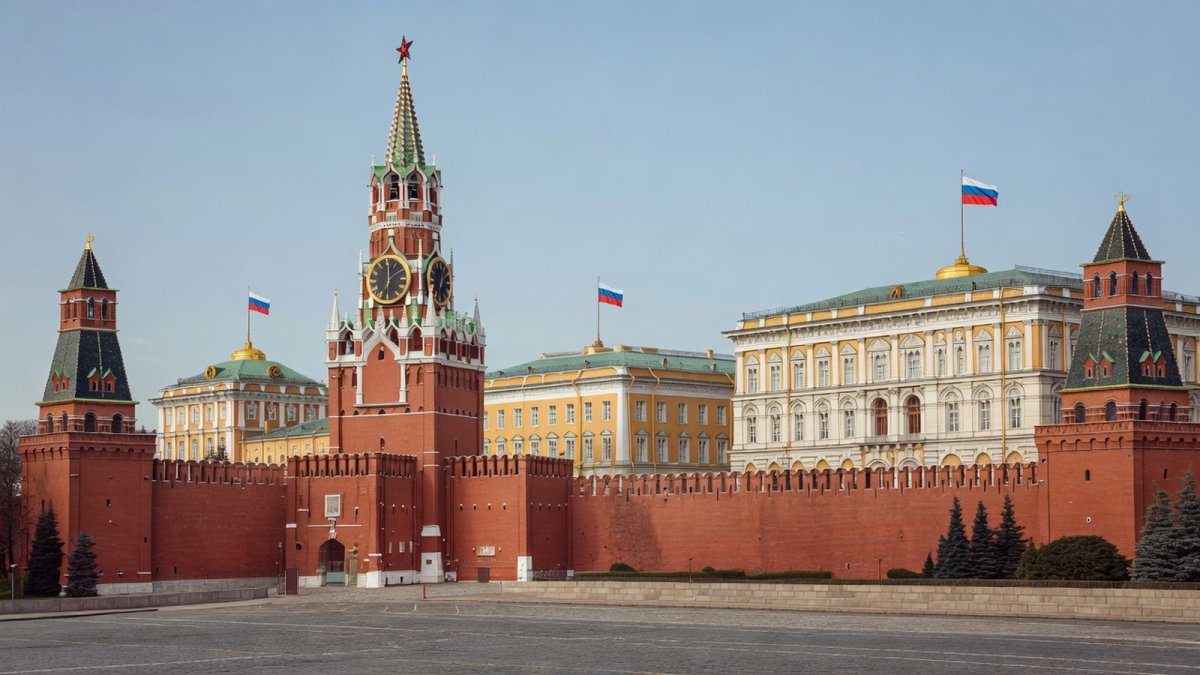
On Tuesday, President Vladimir Putin signed a law imposing sweeping restrictions on Russians living abroad who have been convicted in absentia. The measure, formally titled "On Temporary Restrictive Measures Against Individuals Located Outside the Russian Federation Who Are Evading Punishment," takes effect immediately upon official publication. Two additional laws on cryptocurrency trading and government access to food supply data were also signed the same day.
Putin Signs 'Civic Death' Law Targeting Exiled Russians
Moscow, Russia — August 4, 2026 — The new law freezes bank accounts, blocks online banking and the Gosuslugi portal, prohibits property sales, and bars consulates from issuing new passports to Russians convicted in absentia. The Justice Ministry will maintain a register of those deemed to be evading punishment abroad, with the prosecutor general empowered to add names.
The "Civic Death" Law for Exiled Russians
The legislation formalizes an expansion of in-absentia prosecutions that Russia has pursued since the full-scale invasion of Ukraine in February 2022, when hundreds of thousands of citizens departed amid heightened political pressure. By linking the new register directly to existing criminal and administrative convictions, the measure extends state control over individuals already beyond physical reach, allowing authorities to enforce asset freezes and service denials without requiring their return. This approach builds on earlier practices targeting opposition networks but applies them more systematically to everyday administrative matters.
Official statements frame the restrictions as necessary to compel compliance with court rulings, yet the law's immediate effect upon publication reveals a broader intent to sever practical ties between the state and those abroad. The sharing of register data across multiple agencies creates an integrated enforcement network that monitors financial and property activities in real time. Analysts interpret this as an evolution of long-standing Russian legal traditions of internal exile, adapted to a digital era where physical borders no longer limit jurisdiction.
The new legislation targets individuals convicted of criminal offenses as well as selected administrative violations, including breaches of Russia's foreign agent rules, participation in undesirable organizations, discrediting the military, calling for sanctions, or challenging territorial integrity. Many of these provisions have been applied against anti-war activists, independent journalists, and political opponents who departed Russia after the full-scale invasion of Ukraine.
The Justice Ministry will maintain an official register of those deemed to be evading punishment while abroad. The prosecutor general and their deputy hold authority to add names to the list. Information from the register will be shared with the Interior Ministry, Federal Security Service, Federal Penitentiary Service, Federal Bailiffs Service, Federal Tax Service, property registry, and Central Bank.
Scope of the New Restrictions
Since 2022, in-absentia cases have increasingly targeted associates of figures such as Alexei Navalny, independent journalists, and anti-war activists who left Russia during the initial emigration wave. The new register captures not only those convicted of criminal offenses but also individuals facing administrative sanctions for foreign-agent violations or participation in organizations deemed undesirable, categories that have grown sharply in recent years. This broad net encompasses many who departed without anticipating such extended legal consequences.
The Moscow Times, itself designated a foreign agent and undesirable organization, exemplifies how media outlets and their personnel abroad fall within the law's scope. While the measure applies uniformly to any Russian convicted in absentia, its practical impact concentrates on those who have built lives outside the country and rely on remote access to Russian systems. Experts view this selective reach as reinforcing a divide between those who remain and those who have exited, without altering the underlying judicial processes that produced the convictions.
Those placed on the register face bans on remote banking services and online access to state and municipal services, including the Gosuslugi portal. Their money and assets will be frozen, and property transactions, such as sales of real estate and vehicles, will be blocked. Russian embassies and consulates are prohibited from issuing new passports or most other official documents, with the sole exception of a certificate confirming the person is alive.
Additional prohibitions include registering as entrepreneurs or self-employed workers, receiving state payments, taking out loans, or authorizing others through power of attorney. Legal experts from the rights group Perviy Otdel described the restrictions as resembling the effective deprivation of citizenship, noting that the state retains jurisdiction while withholding substantial rights normally associated with it.
Official Statements on the Measure
State Duma speaker Vyacheslav Volodin stated before the law's passage on July 22 that those who left need to consider how they will turn themselves in to the court and confess. He described the targets as extremists and traitors to the homeland who justify Nazism, insult soldiers and officers, and hide from punishment in other countries.
The State Duma approved the bill on July 22. The legislation applies to Russians convicted in absentia of any criminal offense and certain administrative offenses widely used against critics of the government.
Parallel Cryptocurrency Reforms
President Putin also signed legislation legalizing cryptocurrency trading under strict Central Bank oversight beginning September 1, 2026. The law prohibits cryptocurrency payments inside Russia and requires that digital assets be bought or sold only through institutions regulated by the Central Bank, such as exchanges, brokers, asset managers, and digital depositories.
Investors must pass a test before trading. Non-qualified investors, who represent approximately 98 percent of market participants according to the Central Bank, are limited to purchases of 300,000 rubles per year through each intermediary. Cryptocurrencies qualify for exchange trading if they meet average market capitalization and daily trading volume thresholds over the previous two years. Central Bank First Deputy Governor Vladimir Chistyukhin previously indicated that Bitcoin, Ether, and the USDT stablecoin meet those criteria. No restrictions apply to cryptocurrency use in cross-border settlements, and crypto exchanges have until July 1, 2027, to obtain licenses.
Access to Food Supply Data
The separate food-supply data law, effective January 1, 2027, mandates reporting of transactions, prices, sales volumes, revenues, expenses, and profits from producers and retailers. Together with the cryptocurrency framework, these measures illustrate a dual strategy of tightening political controls while expanding state visibility into financial and commercial flows. Analysts see the timing as coordinated, allowing the authorities to project regulatory modernization even as political restrictions intensify for those outside the country.
A third law grants designated government agencies access to confidential information from food producers and retailers, including transactions, prices, sales, revenue, expenses, and profits. The measure takes effect on January 1, 2027, and aims to help officials track prices throughout the supply chain and identify causes of sudden increases.
The government will determine the covered products, with staples such as meat, vegetables, milk, and grains expected to be included. Deputy Industry and Trade Minister Roman Chekushov stated that the data would allow officials to quickly limit markups on socially important goods and prevent unscrupulous behavior by market participants. Retail industry representatives have warned that granting agencies access to raw transaction data could increase the risk of confidential information leaks.
Reactions from Human Rights Organizations
Human Rights Watch warned in May 2026 that the restrictions would amount to civic death by stripping individuals of essential state interactions while retaining formal citizenship obligations. Legal specialists at Perviy Otdel have similarly described the outcome as an effective deprivation of citizenship, noting that the state preserves its claim to jurisdiction even as it withholds rights to banking, property management, and consular services. These assessments highlight how the register functions less as a temporary measure and more as a permanent barrier to normal civic participation.
Historical parallels to Soviet-era practices of internal exile and passport restrictions surface in commentary on the law, though contemporary implementation relies on digital registries rather than physical relocation. Official rhetoric attributes the policy to the need to address evasion by extremists and traitors, yet the absence of pathways for those abroad to resolve their status without returning underscores the punitive dimension. Observers interpret the measure as a signal that departure from Russia carries lasting administrative consequences beyond the original convictions.
These measures build on Russia's expanded use of in-absentia prosecutions since 2022 against opposition figures, journalists, and activists living outside the country. The Moscow Times has itself been labeled a foreign agent, with its work criminalized by the Prosecutor General's Office.
Analysis and Implications
The combined legislation signals a long-term recalibration of the relationship between the Russian state and its diaspora, particularly the post-2022 emigration cohort that includes professionals and activists who may not have anticipated permanent exclusion from domestic systems. By institutionalizing asset controls and service denials, the policy raises the personal costs of political dissent expressed from abroad and may discourage further departures among those still inside Russia. This dynamic extends existing patterns of in-absentia prosecutions into everyday economic life.
Interpretations differ on whether the measures will achieve their stated goal of compelling returns or instead solidify a permanent external opposition insulated from direct pressure yet deprived of practical connections. The integration of financial oversight with political registries suggests authorities anticipate sustained emigration rather than a reversal of the outflow. Over time, such frameworks could influence how other states respond to similar extraterritorial legal assertions by Russia.
Analysts suggest the package of laws forms part of a broader effort to extend Kremlin control over Russians abroad and the domestic economy at the same time. The civic death provisions could further isolate the exile community that has grown since the 2022 invasion, while the cryptocurrency and food-data measures signal increased state oversight even as Moscow seeks foreign investment.
These developments affect ordinary Russians by tightening financial and administrative controls on those who have left, and they place additional compliance burdens on businesses operating in regulated sectors. The laws reinforce existing power structures without altering the fundamental dynamics of post-Soviet governance.
By Irina Volkov, Staff Writer
This article was produced with AI-assisted research and editorial support. Reporting is based on sources cited in the article.
What's Your Reaction?
 Like
0
Like
0
 Dislike
0
Dislike
0
 Love
0
Love
0
 Funny
0
Funny
0
 Wow
0
Wow
0
 Sad
0
Sad
0
 Angry
0
Angry
0

Russia/Eastern Europe Correspondent at Global1.News. Covering Russian politics, energy, security, and the shifting dynamics of the post-Soviet space. Provides clear-eyed analysis on one of the world's most opaque regions.














Comments (0)