
Five Dead Near Moscow as Ukraine's Drone Blitz Hits Wildberries Logistics Empire
In a recent BBC News report, Ukraine's overnight drone campaign against Russian logistics hubs reached the outskirts of Moscow itself, where a strike on a warehouse complex in the town of Chekhov killed at least five people and wounded ten more, according to the region's governor.
In a recent BBC News report, Ukraine's overnight drone campaign against Russian logistics hubs reached the outskirts of Moscow itself, where a strike on a warehouse complex in the town of Chekhov killed at least five people and wounded ten more, according to the region's governor. The attack, which targeted a site that Ukrainian media linked to the e-commerce giant Wildberries, marked the latest escalation in a two-week campaign that Kyiv says is aimed at severing the Russian military's supply chains.
Five Dead Near Moscow as Ukraine's Drone Blitz Hits Wildberries Logistics Empire
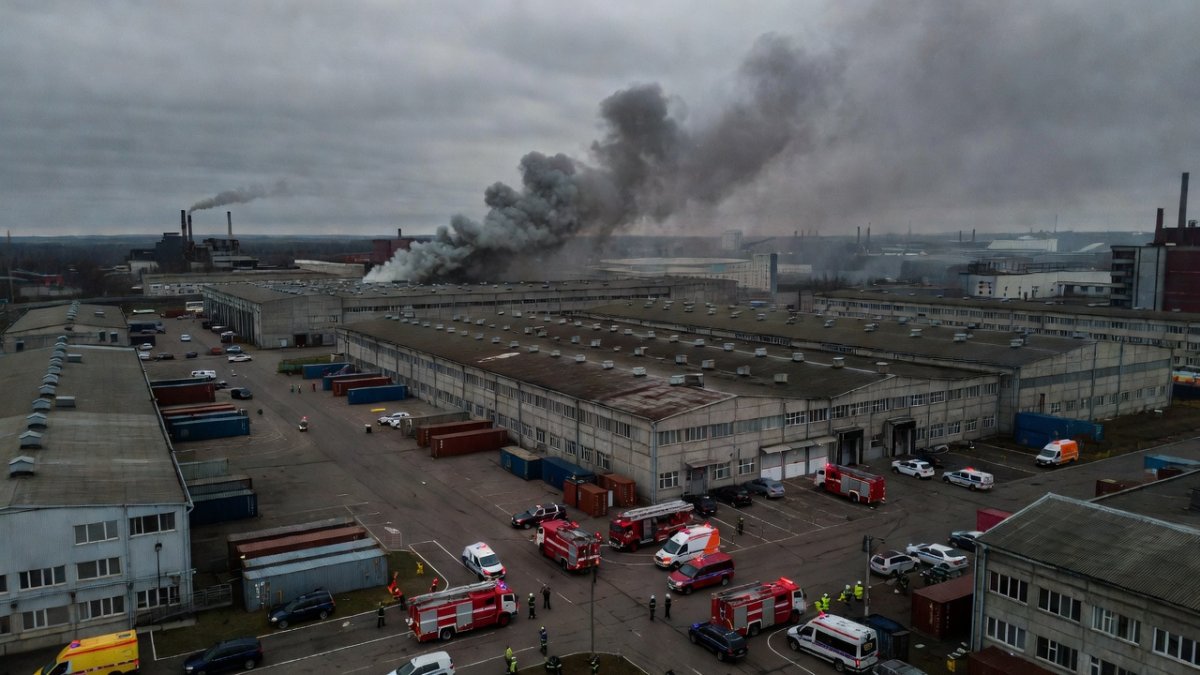
Chekhov, Russia – 4 August 2026 — A Ukrainian drone strike on an industrial site 69 kilometres south of the Kremlin killed at least five people and injured ten more overnight on Monday, as Kyiv's campaign against the warehouses of Russia's largest online retailer, Wildberries, pressed ever closer to the capital. Moscow region governor Andrei Vorobyov said the warehouse caught fire, and an electrical substation and an administration building were also damaged in the town of Chekhov, on the outskirts of Moscow. In a Telegram post, Vorobyov said seven of the ten injured were in a moderate condition, with one in a serious condition. Ukrainian media reported that the warehouse site was linked to Wildberries, and it was listed on Russia's Yandex search engine as associated with the company; local officials did not confirm the operator. Two other Wildberries sites were confirmed hit in the St Petersburg and Tver regions, and the company acknowledged its facility in the St Petersburg region had caught fire, saying there were no injuries there.
The Overnight Strikes
The industrial site in Chekhov lies roughly 69 kilometres south of the Kremlin. Governor Andrei Vorobyov confirmed that a warehouse caught fire after the drone impact. An electrical substation and an administration building also sustained damage. Vorobyov posted on Telegram that ten people were injured in total. Seven of those injured remained in moderate condition while one person was listed in serious condition. Local officials did not identify the operator of the site. Ukrainian media outlets linked the facility to Wildberries through listings on the Yandex search engine. The strike formed part of a broader overnight operation that reached multiple regions.
Two Wildberries warehouses were struck by Ukrainian drones overnight on Monday. Another site apparently connected to the retailer suffered damage near Moscow. Russia's Defence Ministry reported that its forces intercepted and destroyed 320 drones across Russia and annexed Crimea between Monday night and Tuesday morning. Officials confirmed separate hits on Wildberries facilities in the St Petersburg and Tver regions. The ministry's statement did not specify how many drones were directed at logistics targets. The scale of the interception effort highlighted the intensity of the Ukrainian campaign over the past two weeks.
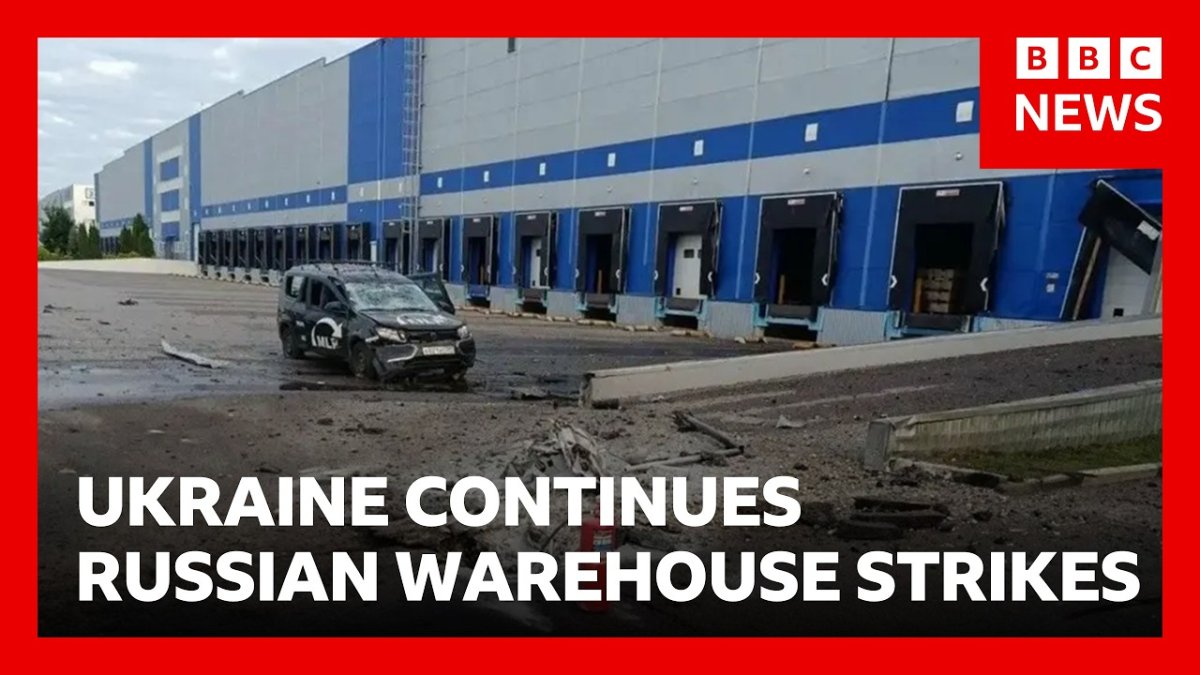
Wildberries confirmed that one of its warehouses in the northwestern Leningrad region caught fire after a drone strike. The company stated there were no injuries at that location. Russian retailer Lenta reported that a fire briefly broke out at one of its logistics centres in the same region and that one person was injured. Tver region acting governor Vitaly Korolyov said a Wildberries facility in his region was damaged overnight with no injuries recorded. These incidents formed part of the coordinated strikes that also affected sites further east.

Wildberries: The 'Russian Amazon' Under Fire
Wildberries ranks as Russia's largest online retailer and is frequently described as the Russian Amazon. Ukraine has targeted facilities operated by the company for weeks. Since mid-July Ukrainian forces have attacked almost two dozen Wildberries logistics centres according to The Moscow Times. Kyiv accuses the company of supplying the Russian military with drone parts and other equipment. Moscow denies these claims. The repeated strikes have placed the retailer at the centre of the conflict over supply chains that support both civilian commerce and military logistics.
The strikes have eliminated a significant portion of the e-commerce giant's storage capacity. Forbes Russia reported that third-party merchants have suffered losses reaching hundreds of billions of rubles. In the Samara region local officials confirmed that a Wildberries warehouse hit on Sunday was completely destroyed along with all goods stored inside. Russian state news agency Tass carried the report. The destruction of entire depots has forced merchants to seek alternative storage and has disrupted delivery schedules across several federal districts.
Wildberries has not commented publicly on the Moscow-region site. The company confirmed that its facility in the St Petersburg region was hit. A social media video verified by Reuters showed a Wildberries warehouse burning with a large plume of dark smoke. The company is planning to build 260,000 square metres of warehouse space in Kazakhstan with construction expected to finish in early 2027. This move indicates how the drone campaign is prompting Russian logistics operators to shift capacity beyond the current reach of Ukrainian strikes.
Russia's Air Defence Calculus
Russia's Defence Ministry stated that its forces destroyed 320 drones overnight across Russia and annexed Crimea. Wildberries facilities have faced nearly daily attacks over the past two weeks. The repeated deep-strike penetrations have raised questions about the effectiveness of Russian air defences protecting logistics hubs and civilian infrastructure near the capital. The ministry's nightly tallies show consistent high interception numbers yet some drones continue to reach targets 69 kilometres from the Kremlin.
The drones are reaching targets close enough to force the Defence Ministry to allocate additional resources to electronic warfare and interceptor systems. Some Ukrainian Telegram channels claimed a drone that crashed onto a Krasnodar-region beach the previous day resulted from electronic warfare jamming. Eyewitnesses quoted by Russian media said gunfire preceded the explosion suggesting air defences had attempted to shoot it down. Analysts suggest these competing accounts reflect uncertainty over how Ukrainian drones are evading or overwhelming Russian protective measures in rear areas.
The Cost to Russia's War Economy
The strikes have removed significant warehouse storage capacity and imposed costs on third-party merchants measured in hundreds of billions of rubles according to Forbes Russia. Wildberries serves as a central pillar of Russian e-commerce and consumer supply chains. Destroying its depots disrupts civilian logistics across the country. Kyiv appears to have chosen this target set deliberately to impose economic pressure on the Russian home front while claiming the facilities support military operations.
Wildberries plans to construct 260,000 square metres of warehouse space in Kazakhstan with completion expected in early 2027. Analysts suggest this relocation signals a broader shift of Russian logistics capacity into Central Asia to place key assets outside the range of Ukrainian drones. The move carries implications for employment and tax revenue inside Russia while illustrating how the conflict is reshaping commercial geography far from the front lines.
The Civilian Toll on Both Sides
The previous day a busy beach in southern Russia was struck by a drone killing seven people and injuring 58 according to Russian officials. Social media footage verified by the BBC shows a drone crashing and exploding on a beach in the Krasnodar region as tourists watched from the shore and in the water. The regional governor accused Ukraine of conducting a deliberate strike on civilians. Ukraine has not commented on the incident. Both sides continue to deny targeting civilians deliberately.
Ukraine's State Emergency Service reported that an 89-year-old woman was killed and two girls aged two and 12 were among seven injured in a Russian strike on the southern port city of Mykolaiv overnight. A woman and two girls aged five and 10 were killed in a strike on a residential area in Sumy with four more people injured. Russian strikes also injured two people in Bilhorod-Dnistrovskyi while a food warehouse was set on fire in Dnipro. These incidents occurred on the same night as the Russian drone interceptions.
The competing narratives over the beach strike illustrate how each side frames collateral damage. Ukrainian channels pointed to possible electronic warfare jamming while Russian media cited eyewitness reports of gunfire. The mutual accusations highlight the brutal symmetry of a war fought increasingly over logistics and civilian infrastructure rather than solely through conventional battlefield engagements.
Analysis — A War of Attrition Over Logistics
The focus on Wildberries logistics centres represents a deliberate Ukrainian strategy to attack the economic arteries of the Russian war effort while striking close to the capital for maximum political effect. Analysts suggest the choice of a civilian e-commerce giant accused by Kyiv of aiding the military allows Ukraine to claim it is targeting the war economy rather than civilians. The campaign has forced Russian companies to consider relocating assets hundreds of kilometres from the border.
Russian authorities face a propaganda challenge in acknowledging civilian deaths near Moscow while maintaining that the war is proceeding according to plan. Moscow's insistence that such depots are civilian targets while Kyiv insists they supply the military leaves ordinary Russians exposed to a campaign that shows no sign of abating. The Defence Ministry's nightly reports of hundreds of interceptions have not prevented further strikes on key commercial sites.
With Wildberries planning to relocate capacity to Kazakhstan and the Russian Defence Ministry reporting hundreds of interceptions nightly the drone war over logistics appears set to continue. The strikes serve as a reminder that the war's front line now runs through warehouses substations and beach resorts as much as through trenches in the east. Both sides continue to develop countermeasures while the economic and human costs mount.
The coming weeks will test whether Russia can protect the civilian infrastructure that keeps its economy running while sustaining the offensive in Ukraine. For the residents of Chekhov and the merchants who lost goods worth hundreds of billions of rubles, the drone war has already arrived on their doorstep — and there is little sign that either side is prepared to stop it.
By Irina Volkov, Staff Writer
This article was produced with AI-assisted research and editorial support. Reporting is based on sources cited in the article.
What's Your Reaction?
 Like
0
Like
0
 Dislike
0
Dislike
0
 Love
0
Love
0
 Funny
0
Funny
0
 Wow
0
Wow
0
 Sad
0
Sad
0
 Angry
0
Angry
0

Russia/Eastern Europe Correspondent at Global1.News. Covering Russian politics, energy, security, and the shifting dynamics of the post-Soviet space. Provides clear-eyed analysis on one of the world's most opaque regions.















Comments (0)