
Promised Sky Wins Golden Star at Marrakech Film Festival
The 22nd Marrakech International Film Festival closed with a historic triumph for African cinema, as Tunisian director Erige Sehiri's migrant drama “Promised Sky” claimed the Golden Star (Étoile d'Or), the festival's top prize. The win, announced at a glittering closing ceremony in early December, crowned a record-breaking edition that drew more than 45,000 spectators and placed African stories at the very heart of the continent's most glamorous film gathering.
The 22nd Marrakech International Film Festival closed with a historic triumph for African cinema, as Tunisian director Erige Sehiri's migrant drama “Promised Sky” claimed the Golden Star (Étoile d'Or), the festival's top prize. The win, announced at a glittering closing ceremony in early December, crowned a record-breaking edition that drew more than 45,000 spectators and placed African stories at the very heart of the continent's most glamorous film gathering.
Promised Sky Wins Golden Star at Marrakech Film Festival
Marrakech, Morocco — The victory capped a festival that ran from late November through December 6, screening more than 80 films from 31 countries across the ochre city. For a continent so often framed through other people's cameras, the sight of a jury led by Oscar-winning director Bong Joon-ho handing the top award to a film about Ivorian women in Tunis was more than a prize — it was a declaration that African cinema now sets its own terms on the world stage.
A Golden Star for an African Story
The 22nd Marrakech International Film Festival, held late November through December 6, closed its curtains at the Palais des Congrès in Marrakech with a moment that felt like a quiet earthquake for the continent's cinema. The top prize, the Étoile d'Or (Golden Star), went to Tunisian director Erige Sehiri's "Promised Sky," a drama about Ivorian immigrant women living together in Tunis. It was a win that resonated far beyond the red carpet, a signal that African stories, told by African filmmakers, are no longer knocking at the door of world cinema — they are walking straight through it.
The festival itself was a sprawling celebration of the moving image, with more than 80 films from 31 countries screened across the city's historic venues and modern auditoriums. For more than a week, Marrakech became a crossroads where the Sahara met the Seine, where Nollywood energy brushed against European arthouse restraint, and where the continent's emerging voices shared billing with global icons. The closing ceremony, held under the ornate dome of the Palais des Congrès, was a testament to how far African cinema has traveled since the days when its stories were told almost exclusively by outsiders.
For those of us who have watched African cinema struggle for visibility on the international stage, the Golden Star for "Promised Sky" felt like a vindication. It was not a token nod to diversity, nor a consolation prize for a continent often relegated to the margins of festival programming. It was a recognition of craft, of storytelling, of a vision that speaks to universal human experiences through a distinctly African lens. The jury, chaired by Oscar-winning South Korean director Bong Joon-ho, did not hedge; they gave the top prize to a film that dared to look at displacement, dignity, and the bonds between women with unflinching honesty.
Marrakech has long positioned itself as a bridge between African and world cinema, and this edition proved that role is more vital than ever. The festival's programming deliberately foregrounded African stories, not as curiosities but as essential contributions to the global conversation. With thirteen first and second features in the competition, the festival signaled that it is not just a showcase for established names but a launchpad for the next generation of African filmmakers. The Golden Star for "Promised Sky" was the crowning achievement of that vision.
Promised Sky: Ivorian Women, Tunisian Screens
"Promised Sky" is a film that lingers long after the credits roll. Set in the Tunisian capital of Tunis, it follows generations of Ivorian immigrant women living together in a shared apartment, navigating the treacherous waters of displacement, dignity, and strained solidarity. The film does not flinch from the harsh realities of migration — the precarious legal status, the economic desperation, the loneliness of being far from home — but it also finds moments of profound tenderness and resilience among its characters.
The film's pedigree was established long before Marrakech. "Promised Sky" earlier opened Cannes' Un Certain Regard section, a prestigious platform that has historically championed bold, unconventional voices. That Cannes debut put Sehiri on the international radar, but it was the Marrakech win that cemented her place among the continent's most important contemporary directors. The cast, featuring Debora Lobe Naney, Aïssa Maïga, Laetitia Ky, and Estelle Dogbo, delivers performances that are raw, authentic, and deeply moving.
Sehiri's journey to this moment has been deliberate and thoughtful. "Promised Sky" is her second fiction feature, following 2022's "Under the Fig Trees," which itself earned critical acclaim for its intimate portrayal of young workers in a Tunisian orchard. Together, the two films form part of a planned trilogy about women at work in Tunisia, a project that seeks to document the often-invisible labor and resilience of Tunisian women across different sectors of society. The trilogy is a bold artistic statement, one that positions Sehiri as a chronicler of contemporary Tunisian life in all its complexity.
The Best Actress award at Marrakech went to Debora Lobe Naney for her role in "Promised Sky," and the jury's decision was unanimous. It was a fitting recognition for a performance that anchors the film with quiet power and emotional depth. Naney's portrayal of a woman caught between the desire to return home and the necessity of staying in Tunis is the kind of work that defines a career. The unanimous vote speaks to the impact of her performance on a jury that included some of the most discerning eyes in world cinema.
What makes "Promised Sky" so resonant is its refusal to simplify the migrant experience. The Ivorian women in the film are not passive victims; they are agents of their own lives, making difficult choices, forging bonds, and sometimes breaking them. The film's title itself suggests a kind of hope — a sky that promises something better, even when the ground beneath your feet is unstable. It is a deeply African story, but it is also a universal one, and that is precisely why it earned the Golden Star.
Bong Joon-ho's Jury and a Festival of Stars
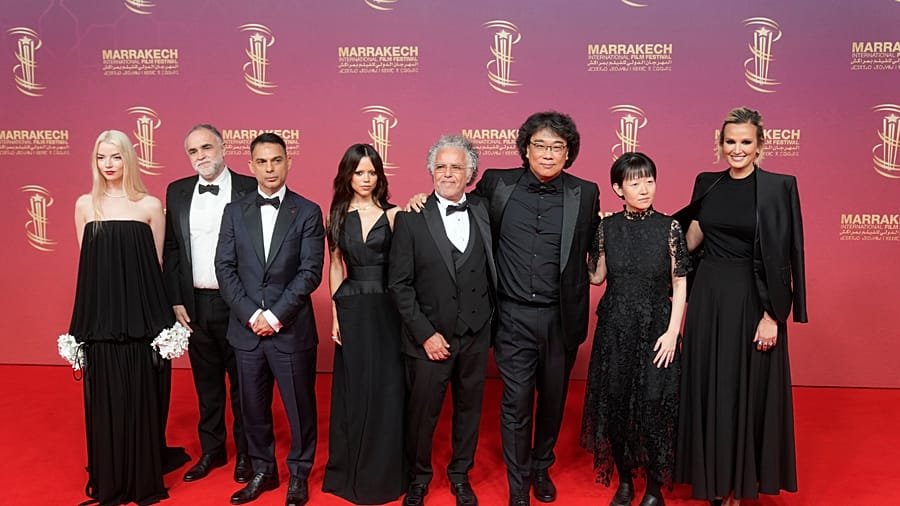
The jury that awarded "Promised Sky" its Golden Star was a constellation of cinematic talent. Chaired by Bong Joon-ho, the Oscar-winning South Korean director of "Parasite," the jury brought together voices from across the globe and across genres. Julia Ducournau, the French director who shocked the world with "Titane," sat alongside Jenna Ortega and Anya Taylor-Joy, two of Hollywood's most sought-after young actresses. Celine Song, the Korean-Canadian filmmaker behind "Past Lives," added her distinctive perspective, while Karim Aïnouz, Hakim Belabbes, and Payman Maadi represented the rich cinematic traditions of Brazil, Morocco, and Iran respectively.
The presence of such a jury elevated the festival's prestige and signaled that Marrakech is a destination for the world's most important filmmakers. Bong Joon-ho, in particular, brought a gravitas to the proceedings, his reputation as a filmmaker who bridges commercial and arthouse sensibilities making him an ideal leader for a jury tasked with honoring films that speak to both craft and vision. His chairmanship was a statement that Marrakech is not a regional festival with global pretensions, but a global festival with a distinctly African soul.
The red carpet at Marrakech was a parade of glamour and star power. Global and Arab stars mingled in the warm Moroccan evening, their presence a testament to the festival's growing international appeal. But the most moving moment of the festival's star-studded program came when American icon Jodie Foster received a lifetime achievement honor. Foster, who has been a fixture of world cinema for decades, took the stage to praise Morocco's "enthusiasm and warmth," words that resonated deeply with the local audience. Her presence was a reminder that Marrakech has become a place where legends are celebrated and new voices are born.
The opening night set the tone for the festival, with the presentation of the jury and a programme overview that promised a diverse and ambitious slate. From the opening film, Gus Van Sant's "Dead Man's Wire," to the closing film, Annemarie Jacir's "Palestine 36," the festival curated a selection that spanned genres, geographies, and generations. The opening ceremony was a celebration of cinema's power to bring people together, a theme that would recur throughout the festival's two weeks.
Marrakech as a Bridge for African and World Cinema
The Pan-African significance of the Marrakech festival cannot be overstated. The 22nd edition's competition featured a remarkable array of African stories, including "Promised Sky" (Tunisia/Ivory Coast), "My Father's Shadow" starring British-Nigerian actor Sope Dirisu, and the Libyan-set "My Father and Qaddafi." These films, each in their own way, grapple with the complexities of African identity, history, and contemporary life. Their presence in competition alongside films from Europe, Asia, and the Americas is a powerful statement about the continent's place in world cinema.
Sope Dirisu's Best Actor win for "My Father's Shadow" was another highlight for African cinema at the festival. Dirisu, a British-Nigerian actor who has made waves in international productions, delivered a performance that the jury found impossible to ignore. His win, alongside Naney's Best Actress award, meant that both top acting prizes went to performers in African films — a rare and welcome occurrence at any major international festival.
The Grand Jury Prize was shared between "My Father and Qaddafi" (directed by Jihan K) and "Memory" (directed by Vladlena Sandu), a decision that reflected the jury's appreciation for both the political and the personal in cinema. "My Father and Qaddafi," set in Libya, explores the complicated legacy of the deposed dictator through a deeply personal lens, while "Memory" offers a more intimate meditation on the past. The shared prize was a fitting acknowledgment of the diversity of voices in this year's competition.
Sehiri's acceptance speech was a moment of pure, unvarnished truth. "We act as if we weren't all living on the same continent, as if we weren't all Africans," she said, a statement that cut through the diplomatic niceties that often characterize festival speeches. She went further, dedicating the award to imprisoned Tunisian human rights activist Saadia Mosbah, a bold political statement that underscored the festival's commitment to freedom of expression. In a region where artists often face persecution, Sehiri's words were a reminder that cinema can be a form of resistance.
The festival's outreach programme was equally significant, engaging young adults and film students in Rabat and Marrakech with free screenings and workshops. This investment in the next generation of African filmmakers is perhaps the festival's most important legacy. By opening its doors to students and emerging artists, Marrakech is ensuring that the continent's cinematic future is in capable hands.

45,000 Spectators, Umm Kulthum, and the Power of Moroccan Audiences
The numbers tell a story of their own. This year's festival drew more than 45,000 spectators, up about 5,000 from the previous year. That growth is a testament to the festival's deepening connection with the Moroccan public, who have embraced Marrakech as their own cinematic celebration. The packed free screenings and lively debates that followed turned the festival into a citywide celebration, with cinemas, cafes, and public squares buzzing with conversation about the films on offer.
One of the festival's most unforgettable moments came with the world premiere of "El Set," a biopic of the legendary Egyptian singer Umm Kulthum. The screening drew a ten-minute standing ovation that broke into spontaneous dancing, a testament to the enduring power of Umm Kulthum's music and the deep connection Moroccan audiences feel to her legacy. Festival coordinator Ali Hajji noted that the Moroccan public has a deep connection to Umm Kulthum spanning all generations, a statement that was borne out by the emotional response to the film.
The festival also hosted a standing-room-only talk with Iranian director Jafar Panahi, a filmmaker whose career has been defined by his defiance of censorship and his commitment to artistic freedom. Panahi's presence in Marrakech was a powerful symbol of the festival's role as a platform for voices that are silenced elsewhere. His talk drew a packed audience eager to hear from a director who has risked everything to tell his stories.
The opening and closing films of the festival — Gus Van Sant's "Dead Man's Wire" and Annemarie Jacir's "Palestine 36" — bookended a programme that was as politically engaged as it was artistically ambitious. Jacir, a Palestinian director, brought a film that speaks to the ongoing struggles of her people, while Van Sant offered a more introspective meditation on violence and redemption. Together, they framed a festival that refuses to shy away from the world's complexities.
What to Watch For
For Sehiri, the Golden Star is not an endpoint but a launching pad. She has already announced plans for the third film in her trilogy about women at work in Tunisia, this one set in a luxury hotel in Hammamet. If "Under the Fig Trees" and "Promised Sky" are any indication, the final installment will be a worthy conclusion to a project that has established Sehiri as one of Africa's most important contemporary filmmakers. The international attention generated by her Marrakech win will undoubtedly open doors for the project.
The momentum of African cinema on the international festival circuit has been building for years, and Marrakech's 22nd edition added significant fuel to that fire. From Cannes to Venice to Toronto, African films are increasingly finding their way into prestigious sections and winning top prizes. The success of "Promised Sky" is part of a larger trend that is reshaping the global cinematic landscape, one in which African stories are told by African filmmakers with authenticity and artistic ambition.
Expectations for the next Marrakech edition will be high, but the festival has shown it is more than capable of meeting them. With record attendance, a star-studded jury, and a programme that balanced global appeal with local relevance, the 22nd edition set a new standard. The festival's organizers have demonstrated that Marrakech is not just a beautiful city with a film festival; it is a vital hub for the cinematic conversations that matter.
The festival's success also has implications for the creative economy in Morocco and across the continent. Film tourism is a growing industry, and Marrakech's reputation as a destination for filmmakers and film lovers alike is a significant economic asset. The festival's ability to attract international stars and industry professionals brings investment and attention to Morocco's film infrastructure, from studios to post-production facilities. Across the continent, the success of events like Marrakech is inspiring similar initiatives, creating a virtuous cycle of creativity and commerce.
The growing appetite for African stories told by African filmmakers is one of the most exciting developments in contemporary cinema. Audiences around the world are hungry for narratives that offer fresh perspectives, and African filmmakers are delivering. The Golden Star for "Promised Sky" is a symbol of this moment, a recognition that the continent's stories are not just worthy of international attention — they are essential to the global conversation. As the lights dimmed on the 22nd Marrakech International Film Festival, one thing was clear: African cinema's moment is not coming. It is here.
By Amara Diop, Staff Writer
This article was produced with AI-assisted research and editorial support. Sources: africanews, Deadline, Maghreb Magazine, African Perceptions, Marrakech International Film Festival.
What's Your Reaction?
 Like
0
Like
0
 Dislike
0
Dislike
0
 Love
0
Love
0
 Funny
0
Funny
0
 Wow
0
Wow
0
 Sad
0
Sad
0
 Angry
0
Angry
0

West Africa/Sahel Correspondent at Global1.News. Dakar-based journalist covering politics, security, climate, and development across Francophone and Anglophone West Africa. Tells the stories of a region undergoing profound transformation.














Comments (0)