
Bhangra After Knee Replacement: AAP Health Card Video Sparks Political Row
Five performers, including three senior citizens, dancing bhangra at Punjab's Independence Day celebrations in Ferozepur have ignited a political firestorm, with the Congress alleging the elderly men were health department employees paraded as beneficiaries of the state's flagship Mukh Mantri Sehat
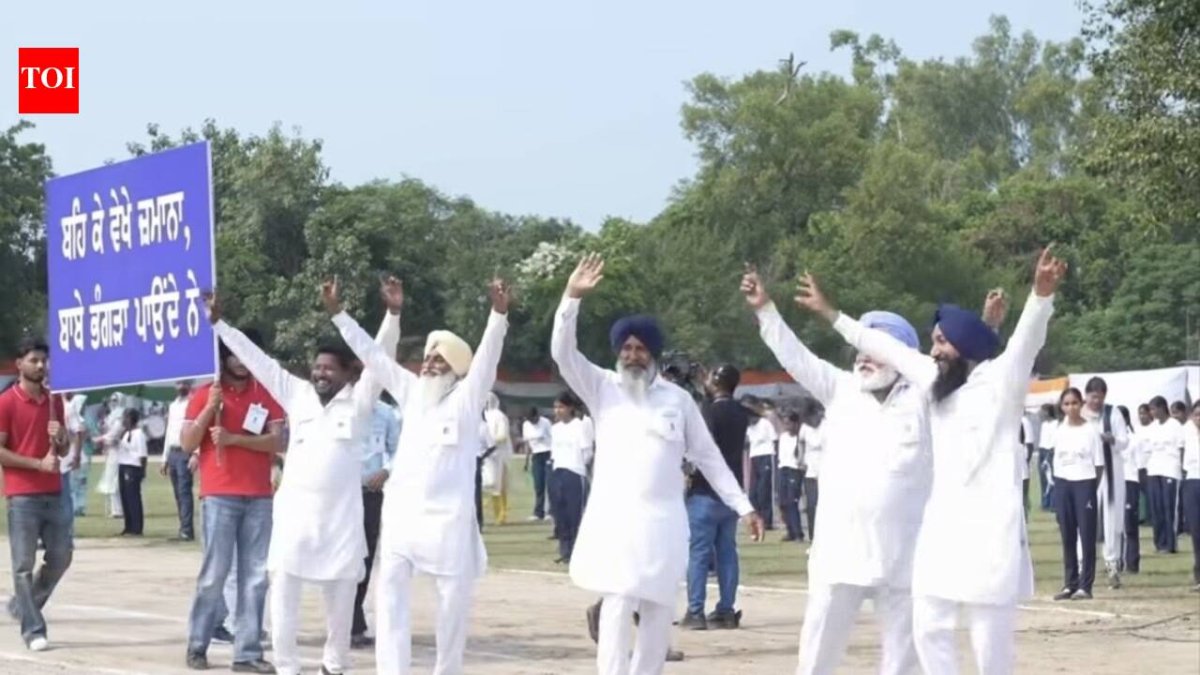
Five performers, including three senior citizens, dancing bhangra at Punjab's Independence Day celebrations in Ferozepur have ignited a political firestorm, with the Congress alleging the elderly men were health department employees paraded as beneficiaries of the state's flagship Mukh Mantri Sehat Yojana (MMSY). The controversy, which erupted on Sunday, August 17, 2026, threatens to overshadow the scheme's substantial clinical achievements—including nearly 4,600 free knee replacements and Rs 852 crore in cashless treatments delivered within six months—just as the state hurtles toward assembly elections.
The tableau, performed before Chief Minister Bhagwant Singh Mann, was meant to showcase MMSY's success. Instead, it has become a flashpoint over the ethics of using elderly citizens in political publicity and the verification burden that accompanies health scheme marketing in India's electoral arena.
Punjab MMSY Row: Bhangra Tableau Sparks Political Firestorm
Chandigarh, Punjab – August 17, 2026 — A health department tableau at Punjab's Independence Day function in Ferozepur has triggered a political row, with opposition leaders alleging that senior citizens who danced bhangra to promote the Mukh Mantri Sehat Yojana (MMSY) were actually health department employees, not genuine beneficiaries of the state's knee-replacement scheme. The performance, witnessed by Chief Minister Bhagwant Singh Mann, featured five people—including three elderly men—dancing to the popular Punjabi line 'Beh ke dekh jawana babe bhangra paunde ne' (Sit down, young men, and watch the seniors do the bhangra), as part of a tableau showcasing the cashless health scheme under which enrolled beneficiaries are eligible for treatment of up to Rs 10 lakh.
The Allegation and the Defence
Congress MLA Pargat Singh, a former international hockey player, did not mince words. "The elderly men shown dancing in the tableau before the CM Bhagwant Mann were Health Department employees, not patients," he said, adding, "Elderly people deserve dignity—not political exploitation." Singh's charge, reported by the Times of India's Neel Kamal, was echoed by sources within the health department who told TOI that the three elderly performers were indeed employees, not patients who had undergone knee-replacement procedures. The Ferozepur deputy commissioner and civil surgeon were unavailable for comment, leaving the conflicting claims unresolved.
Aam Aadmi Party (AAP) MLA from Ferozepur Urban, Ranbir Singh Bhullar, defended the performance as an authentic expression of beneficiaries' happiness. "They were not made to dance to promote the scheme; they danced because they are grateful," Bhullar said, denying any misrepresentation. The controversy first gained traction after Tractor2TwitterPunjab, an activism-related social media handle, described the performance as "peak clownery in Punjab," claiming that senior citizens who had received free knee-replacement treatment were made to dance for political optics.
What MMSY Has Actually Delivered
Amid the political noise, the scheme's clinical data tells a compelling story. Launched in January 2026 by Chief Minister Bhagwant Singh Mann and AAP National Convenor Arvind Kejriwal, MMSY provides cashless treatment up to Rs 10 lakh per family per year for all 3 crore residents of Punjab, administered through the State Health Agency, Punjab. Within six months, the scheme recorded over 47 lakh registrations, with 2.42 lakh patients receiving 4.79 lakh cashless treatments worth Rs 852 crore, according to an official Punjab government press release. A separate reporting window cited by Hindustan Times recorded 2.44 lakh cashless treatments worth over Rs 316 crore, underscoring the scheme's operational scale.
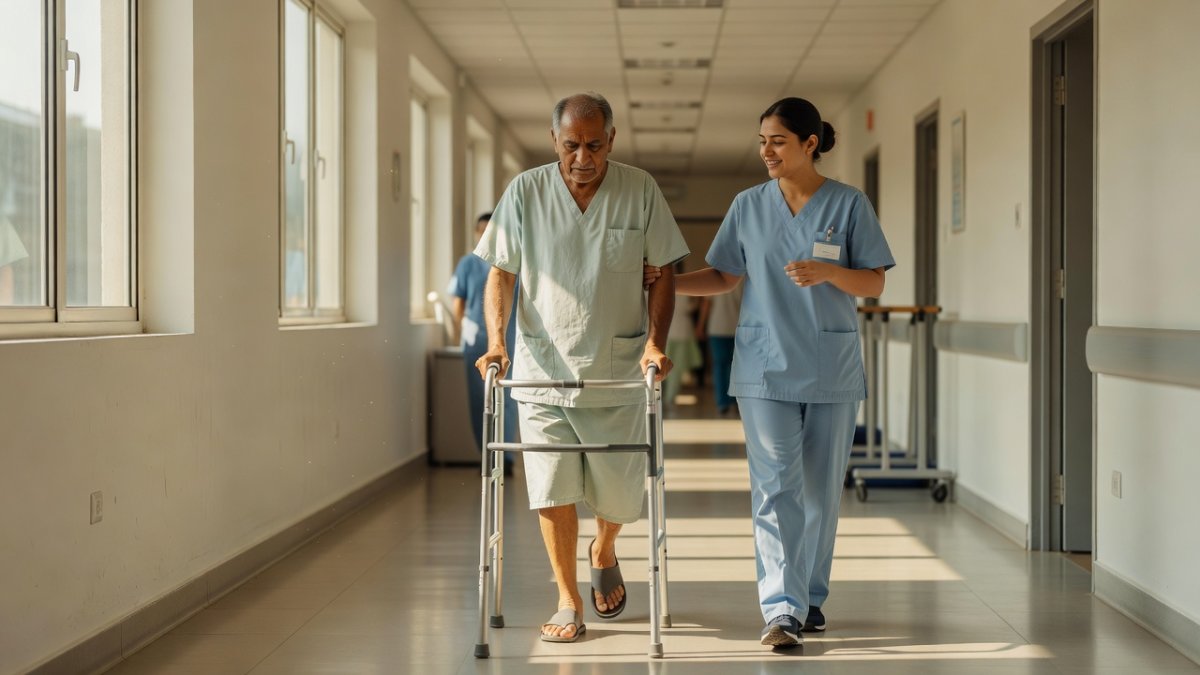
Orthopaedic care alone crossed Rs 84 crore under MMSY, covering bone, joint, and trauma treatments, per State Health Agency data. Nearly 4,600 free knee replacement surgeries were performed in the first three months of the scheme, as reported in April 2026. These are not trivial numbers; they represent families who would otherwise have faced catastrophic out-of-pocket expenditure in a country where knee replacement typically costs between Rs 1.5 lakh and Rs 4 lakh per joint in private hospitals.
Why Knee Replacement Is a Potent Political Symbol
Knee osteoarthritis is a silent epidemic in India, disproportionately affecting the ageing population, particularly women in rural and semi-urban areas. The condition is among the most common high-cost procedures that push Indian families into debt, often forcing them to sell assets or borrow at usurious rates. Ayushman Bharat-PMJAY, the national cashless care model, covers knee replacement in many empanelled hospitals, but its coverage is means-tested and often insufficient for the full procedure cost. State schemes like MMSY extend coverage beyond PMJAY, offering a more generous annual cap of Rs 10 lakh per family—a figure that can cover multiple procedures or complex tertiary care.
This is precisely why knee replacement has become a powerful symbol for public health schemes in India. It is a visible, life-transforming intervention: a patient who could barely walk before surgery is often dancing within months. The bhangra tableau was, in that sense, a clever piece of health communication—it visually demonstrated the scheme's impact in a culturally resonant way. But the row exposes the fragility of such communication when the verification burden is not met. If the performers were indeed employees, the tableau becomes not a celebration of patient outcomes but a staged advertisement, undermining the very trust that health schemes depend on.
The Ethics of Using Elderly Beneficiaries in Political Publicity
The ethical question here is not whether elderly beneficiaries should ever appear in public health campaigns—they should, and their testimonials can be powerful. The problem arises when the line between authentic patient experience and staged performance blurs. Elderly citizens, particularly those who have undergone major orthopaedic surgery, deserve dignity and agency. Using them as props in a political tableau, whether or not they were actual beneficiaries, risks reducing their lived experience to a campaign slogan. Pargat Singh's charge of "political exploitation" resonates because it taps into a deeper anxiety: that in the rush to claim credit for health achievements, the patients themselves become secondary to the political narrative.
This is not a Punjab-specific problem. Across India, state governments have increasingly used health scheme beneficiaries in publicity campaigns, often with little regard for their privacy or consent. The MMSY row should prompt a broader conversation about the ethics of health scheme communication—who gets to speak for patients, and under what conditions. The fact that the Ferozepur deputy commissioner and civil surgeon were unavailable for comment suggests a systemic failure of accountability, not just a one-off lapse in judgment.
What This Means for Punjab's Election Landscape
Punjab is election-bound, with assembly polls approaching, and the stakes could not be higher. The AAP government, led by Chief Minister Bhagwant Singh Mann, has staked significant political capital on MMSY as a flagship welfare achievement. The scheme's data—47 lakh registrations, Rs 852 crore in treatments, 4,600 knee replacements—is genuinely impressive and should be a source of pride. But the bhangra tableau controversy threatens to undercut that narrative by raising questions about the scheme's authenticity. If the opposition can successfully paint MMSY as a publicity stunt rather than a substantive health intervention, it could erode public trust in the government's broader welfare agenda.
The timing is particularly damaging. Independence Day functions are meant to be moments of national unity and civic pride, not partisan theatre. By staging a health department tableau that appears to misrepresent beneficiaries, the government has handed its opponents a ready-made campaign issue. The Congress, which has been struggling to find its footing in Punjab, will likely milk this for maximum political advantage. The AAP's defence—that the performers were genuinely happy beneficiaries—rings hollow if the evidence suggests otherwise. In an election season, perception is reality, and the perception of staged beneficiaries is a gift to the opposition.
The Verification Burden and Credibility of Health Schemes
The row also exposes a structural weakness in how Indian states communicate health scheme achievements. When a government claims that 4,600 knee replacements were performed, it must be prepared to verify those claims with patient-level data. The MMSY controversy is not just about who danced at a tableau; it is about whether the scheme's reported outcomes can withstand scrutiny. The State Health Agency, Punjab, has published impressive aggregate numbers, but the absence of a transparent mechanism to verify individual beneficiary stories creates a credibility gap. This is a lesson for all Indian states expanding cashless health coverage: the data must be auditable, and the human stories must be authentic, or the entire scheme risks being dismissed as political theatre.
For Indian patients and taxpayers, the implications are significant. Cashless health schemes like MMSY and PMJAY are lifelines for millions, but their long-term sustainability depends on public trust. Every instance of staged publicity or unverified claims chips away at that trust, making it harder for genuine beneficiaries to access care and for governments to justify continued funding. The MMSY row should serve as a wake-up call for health ministries across India: invest in robust verification mechanisms, protect beneficiary privacy, and let the data speak for itself.
The Wider Lesson for Indian States
India is in the midst of a historic expansion of cashless health coverage. Ayushman Bharat-PMJAY has covered over 30 crore families, and state schemes like MMSY, Delhi's Mohalla Clinics, and Tamil Nadu's Chief Minister's Comprehensive Health Insurance Scheme are extending the safety net further. This is a positive development, but it comes with responsibilities. The MMSY bhangra controversy is a cautionary tale about the dangers of conflating political marketing with public health communication. States must learn that health schemes are not just electoral assets; they are contracts between the government and its citizens, built on the promise of care when it is needed most.
For Punjab, the immediate challenge is damage control. The government must clarify who the dancers were, release the scheme's audited data, and reaffirm its commitment to transparent communication. For the rest of India, the lesson is simpler: in the age of cashless health coverage, the patient's story is the most powerful asset a government has—but only if it is true. The bhangra tableau may have been a momentary spectacle, but its fallout will be measured in the trust that Indian citizens place in their health systems for years to come.
— By Dr. Raj Patel, Staff Writer
This article was produced with AI-assisted research and editorial support. Reporting is based on sources cited in the article.
What's Your Reaction?
 Like
0
Like
0
 Dislike
0
Dislike
0
 Love
0
Love
0
 Funny
0
Funny
0
 Wow
0
Wow
0
 Sad
0
Sad
0
 Angry
0
Angry
0
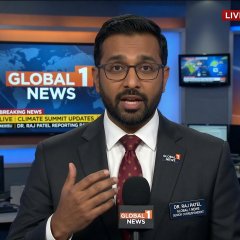
India/South Asia Correspondent at Global1.News. Analytical voice with a background in science and health journalism. Based in New Delhi, covering Indian politics, education, healthcare, technology, and policy. Breaks down complex data into clear, actionable reporting.












Comments (0)