
Possible EV link in June Aster fire prompts ferry bans, safety review
When the MV June Aster burst into flames on September 9, 2026, the blaze lit more than just the night sky over Manila Bay; it ignited a nationwide debate on how the Philippines will handle the growing tide of electric and hybrid vehicles (EVs) on its seas.
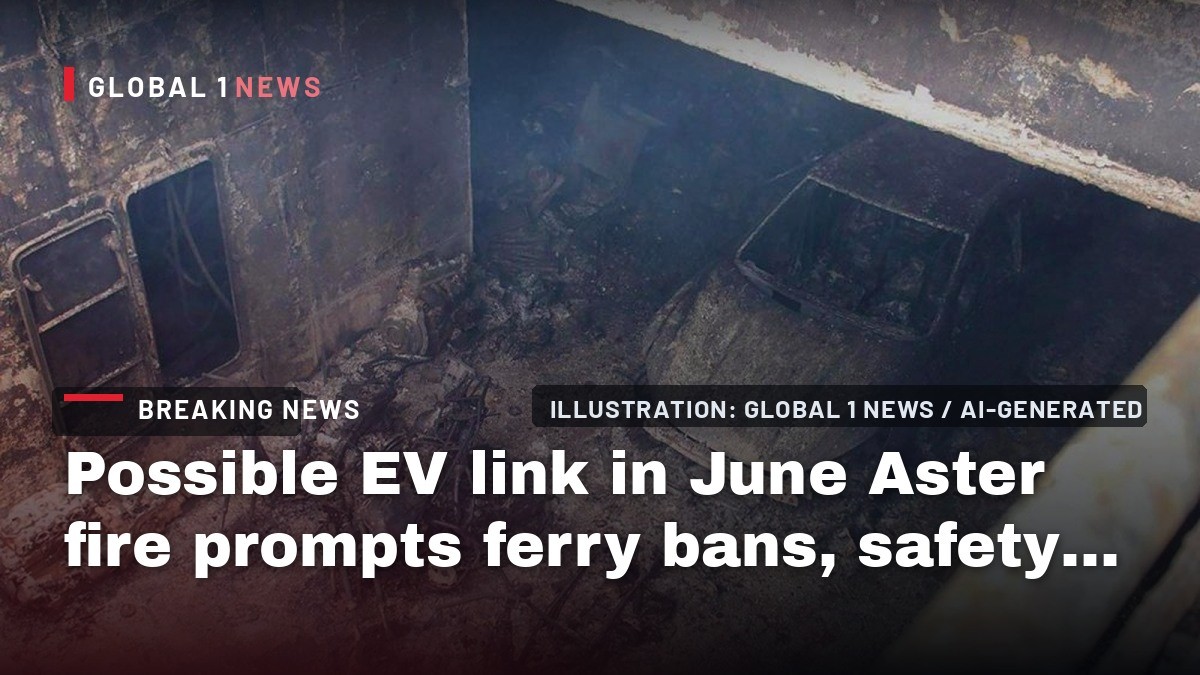
When the MV June Aster burst into flames on September 9, 2026, the blaze lit more than just the night sky over Manila Bay; it ignited a nationwide debate on how the Philippines will handle the growing tide of electric and hybrid vehicles (EVs) on its seas. Survivors reported hearing a deafening explosion from the cargo deck before the fire erupted, prompting the Philippine Coast Guard to launch a full‑scale investigation. While the exact cause remains undetermined, the possibility that an electric vehicle’s battery may have been involved has already reshaped policies of major shipping firms and set off a broader safety review among government agencies.
Investigators weigh possibilities
The Coast Guard’s probe is still in its early stages, but officials have publicly listed two leading theories: a terrorist attack or an accidental explosion linked to the EV on board. The agency emphasized that it has not yet reached a conclusion, underscoring the need for a careful, evidence‑based approach. This cautious stance reflects the Coast Guard’s standard practice of preserving the integrity of the scene while gathering testimony from survivors and examining the wreckage for forensic clues.
Survivors’ accounts of a sudden, loud blast from the cargo deck have become a focal point of the inquiry. Such an explosion could point to a battery failure, known in the industry as “thermal runaway,” where a lithium‑ion cell overheats and ignites surrounding materials. Yet, without concrete technical data, investigators must also keep open the possibility of an external sabotage, a scenario that would involve entirely different security protocols.
Shipping firms act swiftly
Even as the investigation unfolds, two major operators have taken precautionary steps. Montenegro Shipping Lines Inc., in a memorandum dated September 16, announced a blanket ban on both hybrid and electric vehicles aboard its passenger and cargo vessels across all routes. The company framed the move as a “preventive safety precaution” aimed at minimizing risks such as fire, explosion, and thermal runaway associated with high‑capacity battery systems.
Following suit, Island Water issued its own restriction on September 17, targeting EVs and hybrid vehicles on its passenger vessels. The memorandum highlighted “marine safety standards and risk management” as the driving forces behind the decision, stressing the need to protect passengers, crew, and cargo. Both companies’ actions signal a shift toward stricter cargo‑handling policies, even as they await clearer guidance from regulators.
Government agencies coordinate response
The Department of Energy (DOE) entered the conversation on September 17, acknowledging the safety concerns raised by the June Aster incident. While the DOE stopped short of issuing formal regulations, it pledged to work closely with the Maritime Industry Authority (MARINA) and other relevant bodies to develop comprehensive safety guidelines for transporting EVs by sea. This collaborative approach reflects the inter‑agency coordination often required for emerging technologies that cut across energy, transport, and safety domains.
MARINA, the agency tasked with overseeing the nation’s maritime industry, is expected to play a pivotal role in shaping any future rules. Its mandate includes ensuring that vessels meet international safety standards, and the recent incident may prompt a review of existing protocols that were originally designed for conventional cargo. The DOE’s involvement signals that the issue is not limited to maritime safety alone but also touches on broader energy policy and the country’s push toward greener transportation.
Impact on ordinary Filipinos
For many Filipinos, the June Aster fire is more than a headline; it directly affects families who rely on maritime transport for livelihood and mobility. Small‑scale traders who load motorcycles, pickup trucks, and even a single EV onto ferries now face uncertainty about what they can bring aboard. Barangay transport operators, who often ferry goods between islands, may need to adjust their cargo lists or seek alternative routes, potentially raising costs for end consumers.
Overseas Filipino workers (OFWs) who own electric scooters or plan to ship personal EVs back home also feel the ripple effect. The ban on EVs could delay the arrival of their vehicles, complicating plans to transition to cleaner transportation once they set foot on Philippine soil. Moreover, sari‑sari store owners who depend on regular deliveries may encounter schedule changes if shipping firms tighten cargo restrictions.
Industry perspective on battery safety
While the source material does not provide technical details, the references to “thermal runaway” and “high‑capacity battery systems” align with known challenges in handling lithium‑ion batteries on ships. Industry experts have long warned that batteries, when damaged or improperly stored, can generate intense heat and fire that spread rapidly through confined spaces. The maritime environment—characterized by vibration, humidity, and limited ventilation—exacerbates these risks.
Shipping companies, therefore, are understandably cautious. By pre‑emptively restricting EVs, they aim to avoid potential catastrophes that could endanger lives and damage vessels. However, such restrictions also risk stifling the adoption of greener transport solutions unless clear, science‑based guidelines are established. The balance between safety and innovation will likely shape future policy discussions.
Looking ahead: possible regulatory pathways
Given the current lack of definitive findings, the next steps will likely involve a joint effort among the Coast Guard, DOE, MARINA, and industry stakeholders. A plausible path includes drafting a set of standards that address packaging, stowage, and fire‑suppression requirements specific to EV batteries. Such standards could mirror those used in air cargo, where batteries are subject to strict labeling and segregation rules.
In parallel, the government may consider establishing a certification process for vessels that wish to carry EVs, similar to the “green ship” certifications already in use for environmentally friendly vessels. This would allow certain ships, equipped with specialized fire‑suppression systems and trained crew, to transport EVs safely while preserving the broader market’s access to electric mobility.
Community response and the road to resilience
Beyond policy and industry moves, the incident has sparked a wave of community dialogue. Residents of coastal barangays have organized town hall meetings to discuss safety concerns, while local NGOs are calling for transparent communication from both shipping firms and government agencies. Such grassroots engagement reflects the Filipino spirit of bayanihan—people coming together to address a common challenge.
As the investigation continues, the June Aster fire serves as a reminder that technological progress must be matched with robust safety frameworks. For the Philippines, a nation of over 7,000 islands, ensuring that the seas remain safe for all forms of cargo—including the emerging fleet of electric vehicles—will be essential to sustaining both economic vitality and the dream of a greener future.
This article was produced with AI-assisted research and editorial support. Reporting is based on the source material cited below. Sources: Philstar.com; Global1.News (19 September 2026).
By Bella Reyes, Staff Writer
What's Your Reaction?
 Like
0
Like
0
 Dislike
0
Dislike
0
 Love
0
Love
0
 Funny
0
Funny
0
 Wow
0
Wow
0
 Sad
0
Sad
0
 Angry
0
Angry
0

Philippines/Southeast Asia Correspondent at Global1.News. Manila-based journalist covering Philippine politics, environment, maritime security, and social issues. Passionate about marine conservation and the communities protecting the Philippines' natural heritage.














Comments (0)