
Police officer 'seriously bitten' in second night of disorder in Norfolk town over 'asylum seeker housing'
Thetford, Norfolk — Disorder flared for a second consecutive night as police officers faced physical attacks while responding to reports of people attempting to enter residential properties on Clover Way, highlighting the immediate pressures on local forces when asylum accommodation placements occur
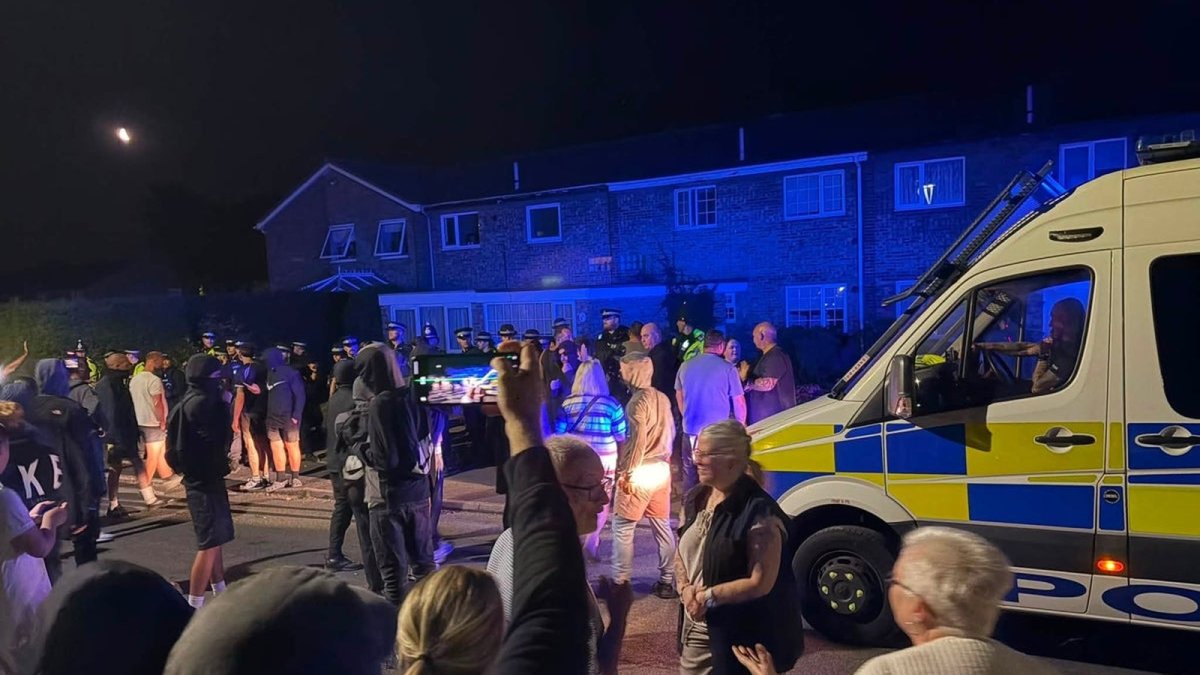
Second night of disorder sees police officers injured in Thetford
Norfolk Police deployed significant resources to Thetford on Wednesday night after a large group gathered outside properties on Clover Way. Officers responded to reports that people in the group were attempting to gain access to a residential property. As police intervened, members of the group became physically aggressive. A male officer was struck with a rock and taken to hospital. A female officer was seriously bitten, breaking the skin, and required hospital treatment. A third officer was spat at during the confrontation.
Footage from the scene showed dozens of people facing police lines outside the properties. One video captured a voice shouting that white British people would become a minority by 2050. Other clips appeared to show five men being escorted from houses by officers while an angry crowd booed and shouted "get out". Norfolk Police confirmed the crowd had earlier gathered outside the police station for an anti-immigration protest that remained largely peaceful before moving to Clover Way.
These events reflect broader patterns in how Home Office asylum accommodation decisions intersect with policing priorities in rural areas. When placements occur rapidly into residential streets, local forces must balance immediate public order demands with stretched resources that are typically geared toward routine community safety rather than sustained unrest. The physical aggression directed at officers illustrates how quickly such situations can strain operational capacity, diverting personnel from other duties across Norfolk.
Earlier incidents on Tuesday night across multiple streets
Police were first called to St John's Way at 8.12pm on Tuesday after reports that a group of people who did not live at the address were attempting to enter a property. The group smashed a window, damaged a fence panel and letter box, and prevented a workman from leaving. A resident reported between 30 and 50 people trying to get inside. Officers then attended Bracken Road where some of the same group smashed windows. A third incident occurred on Elm Road where a smaller group entered a property, forced out the resident and stole a mobile phone.
Local councillors stated that asylum seekers had been moved into a house in the Clover Way area by the Home Office. The government and police have not confirmed the placement. Councillor Scott Hussey said the property was a three-bed terraced house on a family estate next to a primary school. Norfolk County Council, led by Reform UK, indicated it would write to the chief constable for an urgent update on the situation.
Such placements without advance notice to local authorities often amplify existing strains on community infrastructure in towns like Thetford. County councils must then navigate competing pressures from residents concerned about neighbourhood cohesion while seeking clarity from central government on numbers and legal status. The sequence of incidents across multiple streets demonstrates how isolated housing decisions can rapidly involve wider areas when information remains limited.
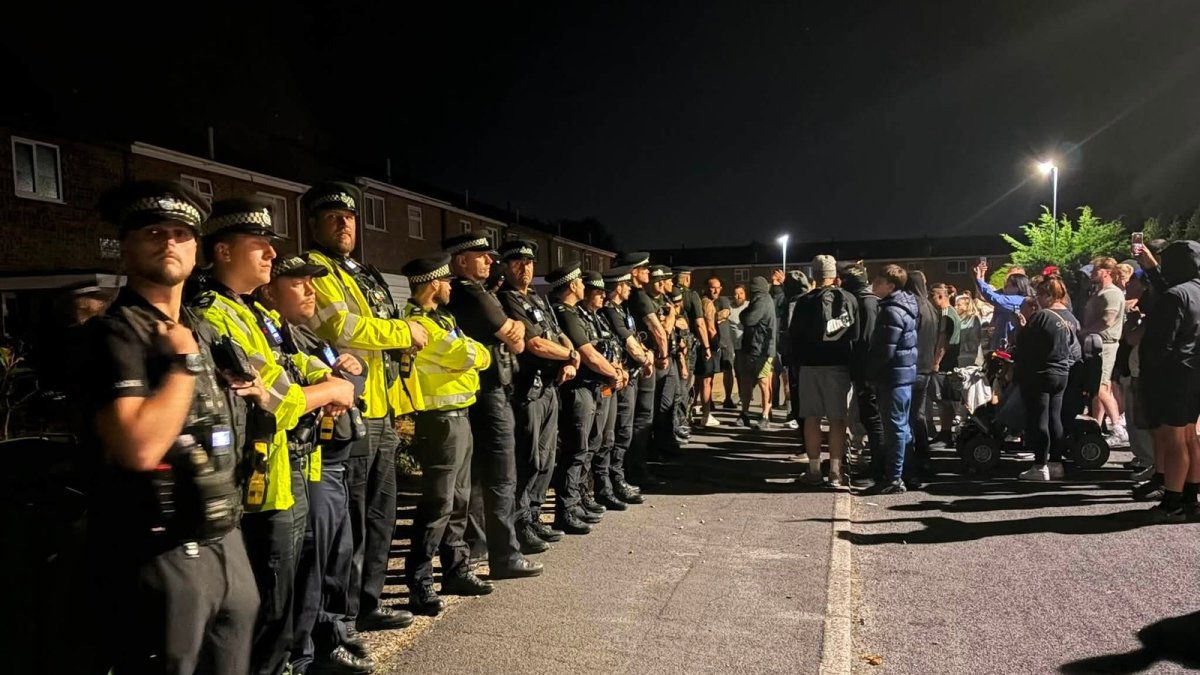
Arrests and charges follow Wednesday confrontation
Two men were arrested on Wednesday night for offences including public order, harassment and possession of an offensive weapon. One man aged in his 40s remains in custody. Brian Thompson, 68, of Fairfields, Thetford, has been charged with possession of an offensive weapon, namely a wooden bat. He was released on bail and is due to appear at Norwich Magistrates' Court on 25 August.
Norfolk Police said the two hospitalised officers were among those responding when the group tried to enter the residential property. The force emphasised that the earlier protest outside the police station had not involved violence.
Court proceedings in cases like these provide a formal mechanism for addressing public order breaches while testing evidence gathered under pressure. Magistrates' courts in the region routinely handle such matters, yet repeated nights of disorder place additional demands on both police investigation teams and the judicial process. The distinction drawn by Norfolk Police between the peaceful station protest and later violence highlights the importance of proportionate responses that protect lawful assembly alongside public safety.
Political figures respond to the unrest
Labour MP Terry Jermy, who represents South West Norfolk, condemned the "ugly scenes". He stated that people had been pulled from their homes, a place of safety, and forcibly removed, with reports of members of the public breaking into homes, taking property and smashing windows. Jermy described the events as utterly terrifying for those inside the properties and worrying for neighbouring residents. He added that many Thetford residents had contacted him with fears for their safety, while noting he did not know the immigration status of those placed in the properties but that they were human beings entitled to the same rights expected in this country.
Rupert Lowe, the Restore Britain leader and MP for Great Yarmouth, faced criticism on Thursday after claiming that by 2063 white British people will be a minority and declining to confirm whether he believes King Charles can be classified as a white Briton. Local councillor Scott Hussey highlighted the sudden placement of what he described as a group of young male asylum seekers into the three-bed house.
Responses from elected representatives across the political spectrum reveal the delicate balance required when addressing both resident anxieties and the legal obligations owed to individuals housed under asylum rules. MPs and councillors often serve as intermediaries between central policy and local realities, pressing for transparency while condemning violence. This dynamic plays out repeatedly in areas where Home Office decisions affect family estates without prior engagement with ward members or community leaders.
RAF Barnham proposals add to local concerns
Proposals to use RAF Barnham, near Thetford, to house up to 3,750 migrants have already prompted protests outside the base. Norfolk and Suffolk police forces have warned that such use would disrupt delivery of specialist training across the two constabularies. The site lies within the same region already experiencing tensions over smaller-scale placements in residential streets.
Residents in Thetford have expressed worries about the cumulative effect on community resources and public safety. The Home Office has not confirmed details of the Clover Way placement, leaving local authorities and police to manage immediate disorder without official clarification on numbers or legal status.
Larger-scale accommodation proposals at former military sites introduce additional layers of planning complexity for police and councils already managing smaller placements. Warnings from Norfolk and Suffolk forces about training disruption illustrate how national migration policy can affect operational capabilities far beyond housing alone. In regions facing multiple overlapping proposals, the absence of coordinated communication from the Home Office risks compounding local tensions over service provision and neighbourhood stability.
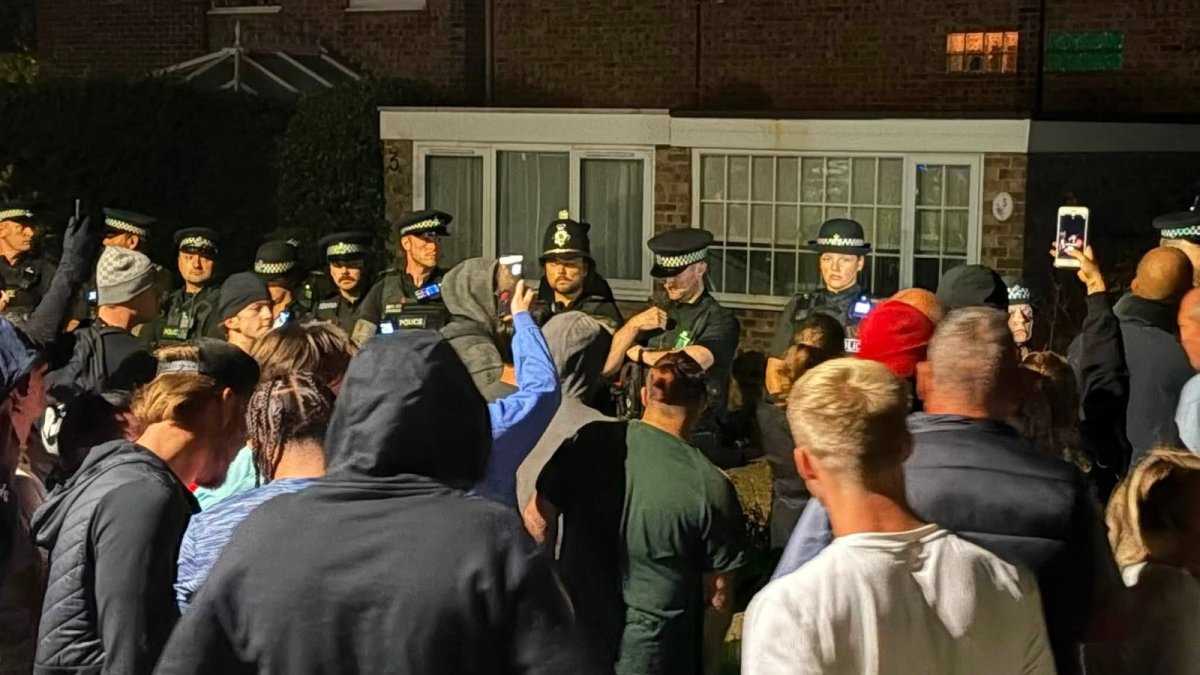
Community tensions and asylum accommodation policy
The disorder in Thetford reflects wider strains on asylum accommodation policy across England. Sudden placements into family estates without prior consultation have repeatedly triggered protests in market towns. Norfolk County Council's Reform UK leadership has signalled it will seek direct answers from the chief constable, while magistrates' courts such as Norwich will handle resulting cases in the coming weeks.
Police resources in rural Norfolk are finite, and repeated nights of disorder divert officers from routine duties. The incidents on St John's Way, Bracken Road and Elm Road, followed by the more serious violence on Clover Way, illustrate how quickly local disputes over housing can escalate when large groups gather. Both Jermy and Hussey have noted genuine resident concerns alongside condemnation of violence and property damage.
National debate over migration numbers intersects directly with daily life in towns like Thetford. The proposed scale at RAF Barnham would represent a significant increase in local population pressure, affecting schools, health services and policing priorities. Without clearer communication from the Home Office on placements, similar friction is likely to recur in other areas facing comparable decisions.
Historical patterns of asylum dispersal show that early engagement with local stakeholders can mitigate some flashpoints, though policy implementation often prioritises speed over consultation. In Norfolk, the combination of residential placements and larger site proposals creates a layered challenge for governance structures that must reconcile national targets with community cohesion objectives. Elected bodies continue to advocate for greater involvement in decision-making processes that directly shape street-level outcomes.
Outlook for policing and local governance
Norfolk Police have made clear that further disorder will be met with resources to protect public safety. The two arrests already made, including the charge against Thompson, will be tested at Norwich Magistrates' Court. Local councils and MPs continue to press for transparency on Home Office decisions that directly affect streets and estates in their constituencies.
The events of this week demonstrate the immediate consequences when asylum accommodation policy collides with unprepared communities. Residents, officers and elected representatives now await further updates on both the Clover Way properties and the larger RAF Barnham scheme.
Future management of similar situations will likely depend on improved information flows between central government and regional forces, allowing for more measured deployment of limited policing assets. Councils across England face parallel pressures to maintain service delivery while responding to resident feedback on housing policy impacts. The coming weeks will test whether existing mechanisms for dialogue can prevent escalation in other locations confronting comparable accommodation decisions.
By Erica Thornton, Staff WriterThis article was produced with AI-assisted research and editorial support. Reporting is based on sources cited in the article.
What's Your Reaction?
 Like
0
Like
0
 Dislike
0
Dislike
0
 Love
0
Love
0
 Funny
0
Funny
0
 Wow
0
Wow
0
 Sad
0
Sad
0
 Angry
0
Angry
0

US Politics and Policy Correspondent at Global1.News. Based in Washington DC, covering American politics, policy, elections, and the courts. Knows how the system works and tells you what it actually means.















Comments (0)