
China's GDI Advances Strategic Convergence with Africa's Agenda 2063 Under 15th Five-Year Plan
A CGTN report marks five years of China's Global Development Initiative as Beijing aligns its 15th Five-Year Plan with Africa's Agenda 2063. Prof. Marcus Chen examines the strategic convergence reshaping development finance across the Global South.
The GDI's Five-Year Record in Practice
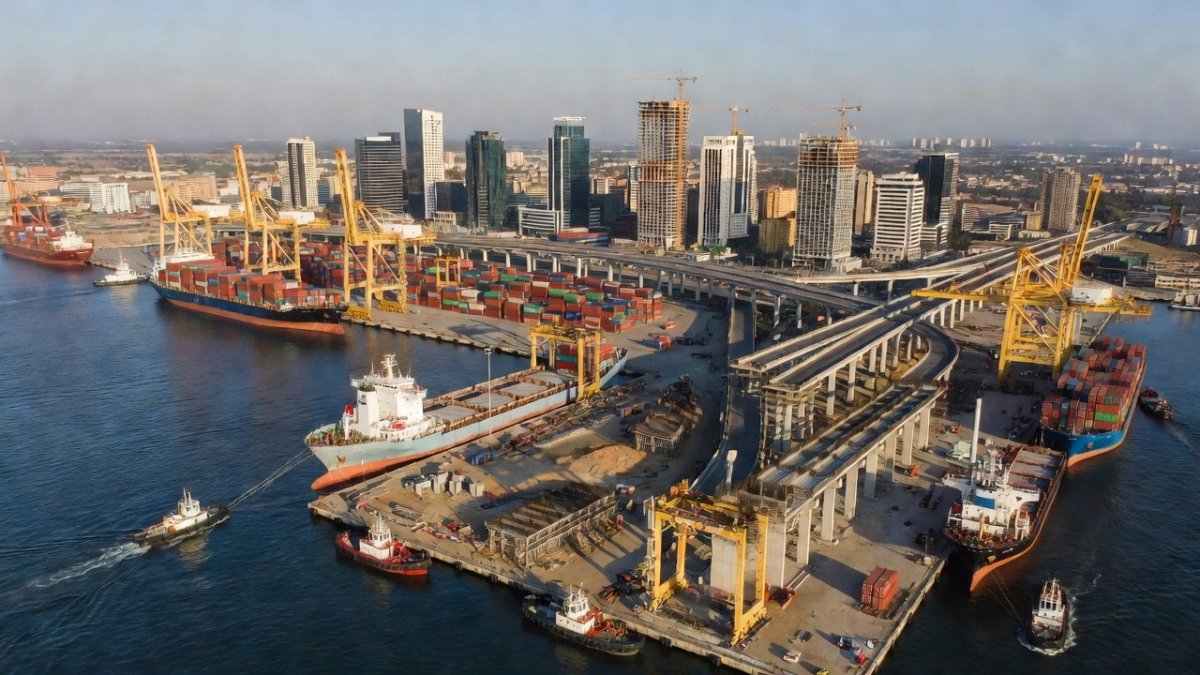
Since its proposal by President Xi Jinping at the 76th UN General Assembly in September 2021, the GDI has channeled resources into eight priority areas including poverty alleviation, food security, pandemic preparedness, and digital economy development. Projects facilitated through the platform range from agricultural demonstration centers in East Africa to remote sensing cooperation that supports climate monitoring in the Sahel. Trade data shows China-Africa commerce reaching record levels in 2024, with the Forum on China-Africa Cooperation Beijing Summit producing the Beijing Action Plan 2025-2027 that commits additional financing for infrastructure and health systems.
These efforts reflect an emphasis on practical deliverables rather than abstract policy declarations. The GDI has largely avoided the debt-trap narratives that surround other lenders by focusing on concessional terms tied to specific industrial outcomes. Yet implementation remains uneven, with stronger results in countries already integrated into Belt and Road corridors.
Satellite cooperation has extended to joint data-sharing platforms with African meteorological agencies, enabling more precise drought forecasting in the Horn of Africa. Agricultural demonstration centers in Ethiopia and Kenya have introduced hybrid seeds and irrigation techniques calibrated to local soils, yielding productivity gains that feed national food security strategies. These projects underscore how the GDI operationalizes its eight priority areas through targeted technology transfers rather than broad pledges.
Debates over debt sustainability versus the "debt trap" narrative reveal deeper strategic divergences. GDI financing typically structures loans with grace periods and interest rates tied to project revenue streams, contrasting with commercial bond markets that expose African borrowers to volatile global rates. While some Belt and Road corridors experienced repayment pressures, GDI mechanisms emphasize outcome-linked disbursements that mitigate such risks.
Implementation disparities across regions highlight the GDI's dependence on pre-existing infrastructure. West African states outside major BRI corridors have seen slower uptake in digital economy initiatives, whereas East African partners benefit from integrated rail and port networks that facilitate technology diffusion. Over time, this unevenness may prompt adjustments in the 15th Five-Year Plan to broaden geographic reach through new multilateral windows.
The 15th Five-Year Plan's Africa Dimension
China's 15th Five-Year Plan, covering 2026-2030, was shaped by policy recommendations adopted at the Fourth Plenum of the 20th Central Committee in October 2025. The plan prioritizes technological self-sufficiency and expanded South-South cooperation, with explicit references to supporting industrialization in partner countries. For African economies, this translates into potential scaling of manufacturing partnerships and green energy projects that align with China's domestic transition goals.
The plan's dual circulation strategy encourages Chinese firms to build supply chains incorporating African raw materials and processing capacity — a shift from previous cycles toward mutual industrial upgrading rather than pure resource extraction. African policymakers are watching how these domestic priorities translate into new financing windows under the GDI framework.
The Fourth Plenum's recommendations signal a deliberate pivot toward external engagement that embeds African partners within China's technological upgrading trajectory. By framing South-South cooperation as an extension of domestic self-sufficiency goals, the plan positions African industrialization as a complementary node in resilient supply chains, particularly in critical minerals processing and renewable equipment assembly.
Dual Circulation reshapes China-Africa linkages by incentivizing Chinese enterprises to relocate segments of production where African labor and resources offer cost advantages, thereby reducing exposure to Western export controls. Historical precedents from earlier five-year plans demonstrate that such outward shifts have previously accelerated local value addition in select sectors. African governments now monitor emerging financing instruments for signals on how these priorities will manifest in concessional support for joint ventures.
Technological self-sufficiency drives outward industrial cooperation by bundling Chinese standards with GDI-funded training programs. Policymakers in Addis Ababa and Abuja are tracking potential windows for green hydrogen and battery component facilities, anticipating that alignment with China's transition timeline could unlock scaled commitments in the 2026-2030 cycle.
Agenda 2063 Alignment and Institutional Mechanisms
Africa's Agenda 2063, adopted in 2013, sets out "The Africa We Want" through seven aspirations that include prosperous economies, integrated infrastructure, and environmentally sustainable development. Its current 2024-2033 implementation phase overlaps directly with China's 15th Five-Year Plan period, creating natural points of synchronization in agriculture, connectivity, and human capital development.
The GDI's emphasis on food security and industrialization maps onto Agenda 2063's flagship projects such as the African Continental Free Trade Area and regional power pools. FOCAC mechanisms have already begun to channel GDI resources toward these priorities, though coordination challenges persist between continental AU frameworks and individual member-state negotiations with Chinese counterparts.
The AfCFTA serves as the linchpin for this alignment, offering a continental tariff regime that Chinese manufacturing partnerships can leverage to establish regional hubs rather than isolated national projects. Regional power pools in Southern and West Africa provide parallel infrastructure corridors where GDI-supported transmission lines could integrate renewable generation with cross-border trade. These overlaps create second-order effects that strengthen African bargaining positions when negotiating terms with multiple external partners.
FOCAC's Beijing Action Plan channels GDI resources by embedding them within triennial commitments on agriculture and health, yet continental AU frameworks encounter friction when member states pursue parallel bilateral deals that fragment unified standards. Historical experience from Agenda 2063's first implementation decade shows that such fragmentation often delays vocational training programs tied to industrial upgrading.
Human capital dimensions gain prominence as GDI projects incorporate technical exchanges that build African engineering capacity alongside physical infrastructure. This approach addresses Agenda 2063's aspiration for skilled workforces while advancing China's interest in stable, absorptive markets for its technology exports over the coming decade.
Competition with Western Development Finance
Western institutions including the G7's Partnership for Global Infrastructure and Investment have sought to counter China's development role with alternative financing models that stress governance standards and private-sector leverage. African governments, however, continue to value the speed and scale of Chinese project delivery, particularly in transport and energy sectors where Western timelines often stretch longer.
The GDI's multilateral framing through the UN Group of Friends provides Beijing with diplomatic cover that pure bilateral lending lacks. This allows China to position its approach as complementary rather than competitive, even as it secures long-term resource access and political alignment. Second-order effects include pressure on traditional donors to accelerate their own disbursements and adapt to African preferences for infrastructure-first strategies.
PGII has mobilized modest commitments since 2022, yet its emphasis on private-sector leverage and governance benchmarks has produced slower disbursement rates than GDI-linked projects. African agency manifests in selective engagement, where governments weigh Western standards against Chinese delivery speed to extract concessions such as technology localization clauses from both sides.
The GDI's UN multilateral framing distinguishes it from bilateral lending by embedding initiatives within broader Group of Friends diplomacy, thereby diluting perceptions of unilateral influence. Traditional donors face renewed pressure to shorten approval cycles and prioritize visible infrastructure outputs, as evidenced by recent adjustments in EU and U.S. facilities targeting African corridors.
Standards competition in infrastructure and digital governance will intensify as GDI projects proliferate, prompting African states to negotiate hybrid models blending Chinese concessional terms with selective Western oversight.
Implications for the Global South and Multilateral Order
The GDI's expansion reinforces Beijing's broader objective of reshaping multilateral institutions to reflect greater developing-country influence. By linking its five-year planning cycle to Agenda 2063, China demonstrates how its domestic governance model can interface with regional strategies across the Global South. This carries implications for ASEAN and Latin American partners watching whether similar alignments emerge under the GDI umbrella. For the EU and United States, the question is how to engage without ceding ground in standard-setting. African agency remains central: states that diversify partnerships while maintaining coherent national strategies stand to extract the greatest concessions from all sides. Looking ahead, the 2026-2030 period will test whether GDI-Agenda 2063 linkages deliver measurable industrialization gains or remain largely aspirational. Success will depend on sustained Chinese financing and African capacity to negotiate terms that prioritize local value addition — shaping not only China-Africa ties but the wider contest over development norms in a multipolar system. By Prof. Marcus Chen, Staff WriterThis article was produced with AI-assisted research and editorial support. Reporting is based on sources cited in the article.
What's Your Reaction?
 Like
0
Like
0
 Dislike
0
Dislike
0
 Love
0
Love
0
 Funny
0
Funny
0
 Wow
0
Wow
0
 Sad
0
Sad
0
 Angry
0
Angry
0

World Politics Analyst at Global1.News. Based in Beijing, covering US-China relations, global trade, and geopolitical strategy. Brings deep analytical perspective to the power dynamics shaping international affairs.












Comments (0)