
Between Mandela and Morsi: Imran Khan and the sadism of the Pakistani state
Former prime minister Imran Khan, now seventy‑four, is being held in a Pakistani prison under conditions that his own lawyer describes as bordering on cruelty.
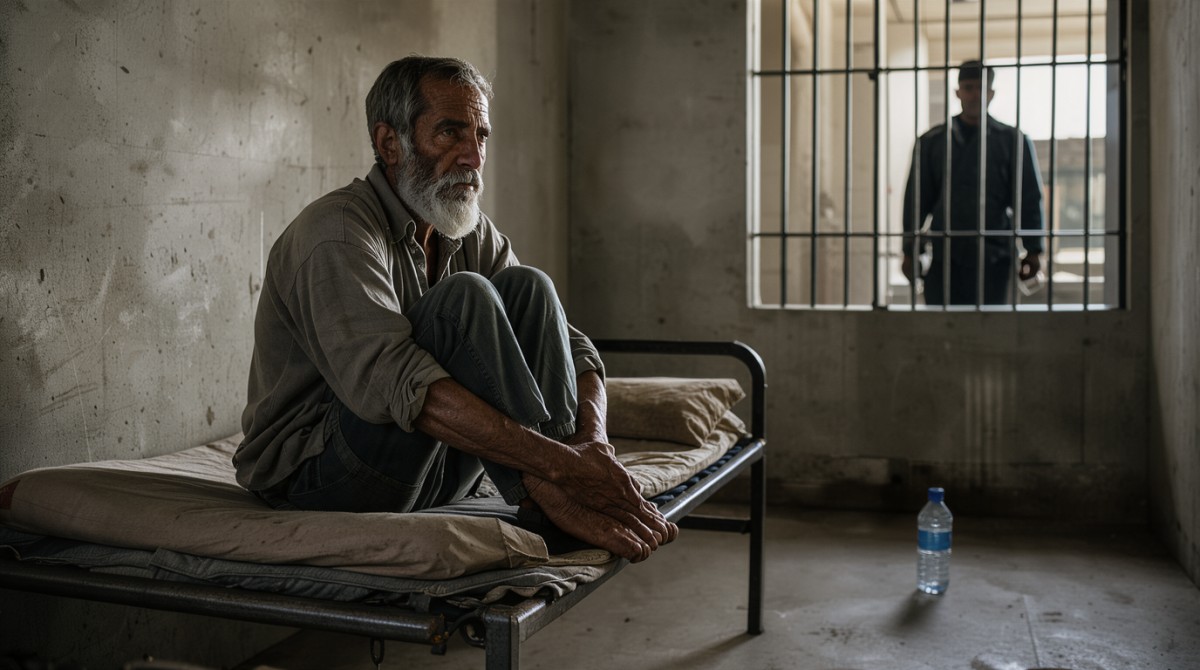
Former prime minister Imran Khan, now seventy‑four, is being held in a Pakistani prison under conditions that his own lawyer describes as bordering on cruelty. In a recent appeal to the nation’s Supreme Court, Khan’s counsel, Salman Safdar, detailed a regime of twenty‑two‑hour solitary confinement, severe limits on family and legal contact, a dramatic loss of vision in his right eye and a blood‑pressure reading that spiked to 193 mm Hg. Doctors, according to Khan, have warned of imminent brain haemorrhage, cardiac arrest and worsening heart damage. His wife, Bushra Bibi, faces the prospect of permanent visual impairment unless she can secure further surgery. The stark picture painted by Khan’s own words underscores a broader crisis: the systematic use of detention to silence a political figure whose influence now stretches far beyond Pakistan’s borders.
Allegations of medical neglect and enforced isolation
Khan’s appeal alleges that the Supreme Court’s order of 18 August, which mandated his treatment at Shifa International Hospital and the restoration of family contact, remains unimplemented. He claims that prison personnel are forbidden even to acknowledge his greetings or respond when he recites Qur’anic verses, a policy that, if true, would constitute a deliberate attempt to erase his humanity. The reported loss of 85 percent of vision in his right eye and the extreme blood‑pressure readings suggest that medical care is either insufficient or deliberately withheld, despite the authorities’ assertion that he has received attention.
The denial of basic human dignity—solitary confinement, restricted communication, and the prohibition of religious expression—mirrors practices condemned under international human‑rights law. The United Nations Standard Minimum Rules for the Treatment of Prisoners (the Nelson Mandela Rules) prohibit prolonged solitary confinement and require that prisoners have regular contact with family and legal counsel. Khan’s description of twenty‑two‑hour isolation each day, coupled with the reported ban on responding to his prayers, raises serious questions about compliance with these standards.
The political calculus behind the imprisonment
Pakistan’s military establishment, led by Field Marshal Asim Munir, and the civilian dynasties of the Sharif and Bhutto‑Zardari families, command a vast network of prisons, police, intelligence agencies and ministries. Their combined authority has been used to imprison Khan with the explicit aim of destroying his political influence. Yet, as the appeal makes clear, the strategy appears to have backfired. Rather than silencing him, the state has turned Khan into a revolutionary symbol whose stature now exceeds the reach of any single institution.
Khan’s unique blend of national fame as a World Cup‑winning cricketer, philanthropic work and political leadership has earned him admiration that transcends party lines, religious sects and even national borders. International cricket legends have publicly called for his humane treatment, and his advocacy for the rights of Kashmiris and Palestinians has resonated deeply with those communities. This broad base of support makes him a particularly dangerous opponent for a regime that relies on controlling dissent through intimidation and repression.
International resonance of Khan’s cause
For many Palestinians, Khan’s outspoken criticism of Israeli policies and his alignment with anti‑imperialist struggles have made him a figure of solidarity. His opposition to American drone warfare and Islamophobia further positions him as a vocal challenger to Western strategic interests in the region. The article notes that his advocacy “carries particular resonance” for those fighting occupation, highlighting how his imprisonment is viewed not merely as a domestic political issue but as part of a larger pattern of authoritarian suppression that affects the broader Muslim world.
The comparison drawn between Khan, Nelson Mandela and Mohamed Morsi underscores the symbolic weight of his detention. Mandela’s long incarceration amplified his status as a liberation icon, while Morsi’s imprisonment culminated in his death, illustrating the lethal potential of state‑sanctioned neglect. Khan now stands at a crossroads where his continued suffering could either cement his role as a global symbol of resistance or, tragically, turn him into a martyr of state cruelty.
Human‑rights implications under international law
The allegations of forced solitary confinement, denial of medical care and restriction of religious practice potentially violate several international covenants to which Pakistan is a party, including the International Covenant on Civil and Political Rights (ICCPR). Article 7 of the ICCPR prohibits torture or cruel, inhuman or degrading treatment, while Article 10 requires that all persons deprived of liberty be treated with humanity and respect for their inherent dignity. The reported conditions—particularly the prohibition on responding to Khan’s Qur’anic recitations—could be interpreted as a form of psychological torture designed to break his spirit.
Moreover, the denial of timely medical treatment, especially for life‑threatening conditions such as severe hypertension and impending brain haemorrhage, may contravene the right to health recognized in the International Covenant on Economic, Social and Cultural Rights (ICESCR). The United Nations’ Committee on the Rights of the Child and the Committee on the Elimination of Discrimination against Women have also emphasized the importance of ensuring that detainees receive adequate health care, a standard that appears to be ignored in Khan’s case.
The domestic political fallout
Within Pakistan, Khan’s detention has intensified public outrage and amplified calls for accountability. The Sharif and Bhutto‑Zardari families, who benefit from the exclusion of a strong opponent, now face criticism for delivering “solemn lectures about democracy” while simultaneously employing draconian measures to silence dissent. The article suggests that democracy is celebrated only when it does not threaten the entrenched power of the ruling elite.
The military’s involvement, particularly the notion that an independent ophthalmologist is “more dangerous than an invading army,” reveals the depth of the regime’s insecurity. By targeting a figure whose influence stems from both popular legitimacy and international recognition, the state appears to be attempting to compensate for its waning credibility through overt repression.
Potential pathways forward
International pressure could play a decisive role in shaping Khan’s fate. Human‑rights organisations, foreign governments and civil‑society groups have historically leveraged diplomatic channels, sanctions and public advocacy to compel states to adhere to basic standards of treatment for political prisoners. The article notes that Western governments and Muslim intellectual institutions have often treated Khan’s persecution with “conspicuous caution,” suggesting that a more robust and coordinated response is needed.
Legal avenues within Pakistan remain open, however. The Supreme Court’s 18 August order provides a concrete benchmark for compliance. If the judiciary can enforce the mandated medical treatment and family contact, it could set a precedent for limiting executive overreach. Moreover, sustained media coverage and public mobilization may force the authorities to reconsider the severity of Khan’s confinement, lest they risk turning him into a martyr whose death would further delegitimize the state’s claim to democratic governance.
Conclusion: The stakes of Khan’s imprisonment
Imran Khan’s ordeal encapsulates a broader struggle between authoritarian control and popular resistance in Pakistan and the wider Muslim world. The conditions described by his lawyer—prolonged solitary confinement, denied medical care and enforced silence—constitute not merely a punitive measure against a political rival but a calculated attempt to erase a symbol of dissent. Yet history shows that such attempts often backfire, amplifying the very opposition they seek to suppress.
As the international community watches, the question remains whether Khan will emerge, like Mandela, as an enduring emblem of liberation, or whether, like Morsi, his health will deteriorate to the point of death under state custody. The answer will hinge on the willingness of Pakistan’s institutions, civil society and global actors to uphold the fundamental human‑rights standards that protect the dignity of every prisoner, regardless of their political stature.
This article was produced with AI-assisted research and editorial support. Reporting is based on the source material cited below. Sources: Middle East Monitor; middleeastmonitor.com; Global1.News (18 November 2026).
By Fatima Al-Rashid, Staff Writer
What's Your Reaction?
 Like
0
 Dislike
0
 Love
0
 Funny
0
 Wow
0
 Sad
0
 Angry
0
Gulf/MENA Correspondent at Global1.News. Based in Doha, covering Gulf politics, energy markets, diplomacy, and development across the Middle East and North Africa. Tracks the economic transformation of the Gulf states.













Comments (0)