
Bahrain Intercepts Iranian Attacks and Accuses Tehran of Settling Scores on Its Soil
Bahrain's air defences intercepted Iranian aerial attacks for the first time since September and its foreign ministry accused Tehran of using the kingdom to settle scores, after the IRGC claimed six drones targeted a US radar at Al-Riffa base. No casualties or damage have been reported.
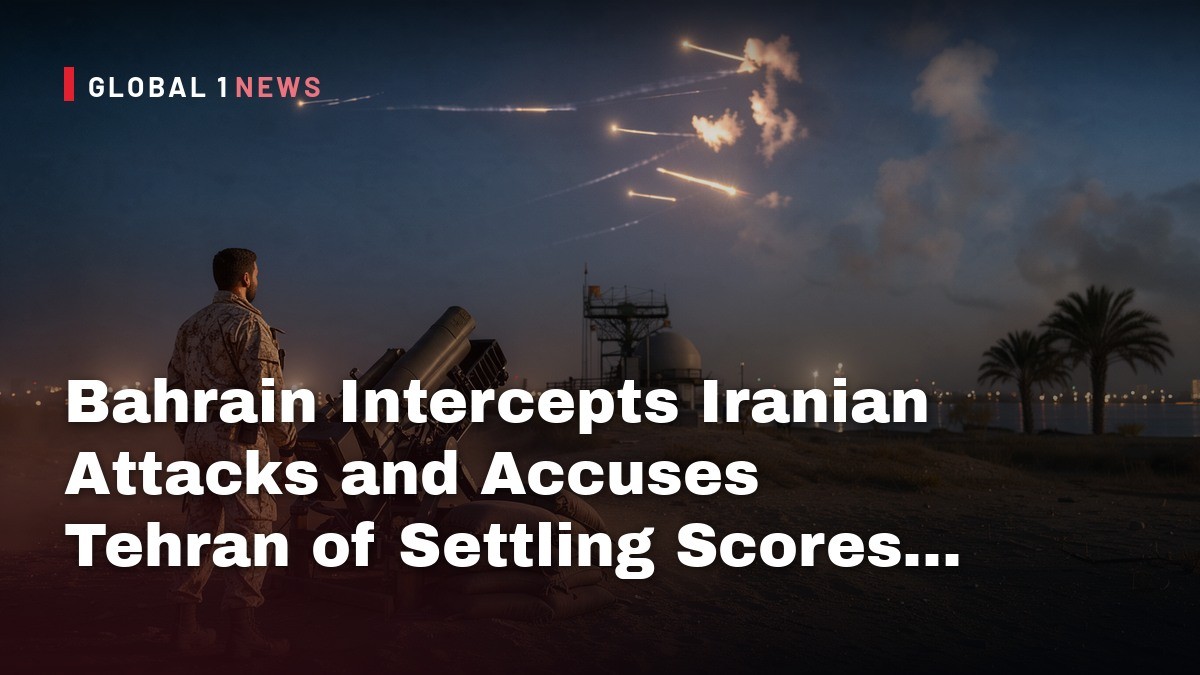
Bahrain's air defences fired in anger for the first time since September, and this time the kingdom's own military is announcing the shootdowns while the US military, which flatly denied Tehran's last claim two days ago, says nothing. Iran says it sent six drones at an American radar at a helicopter base outside Manama. Bahrain says it stopped "a number" of Iranian aerial attacks before they reached anything at all.
Bahrain Intercepts Iranian Attacks and Accuses Tehran of Settling Scores on Its Soil
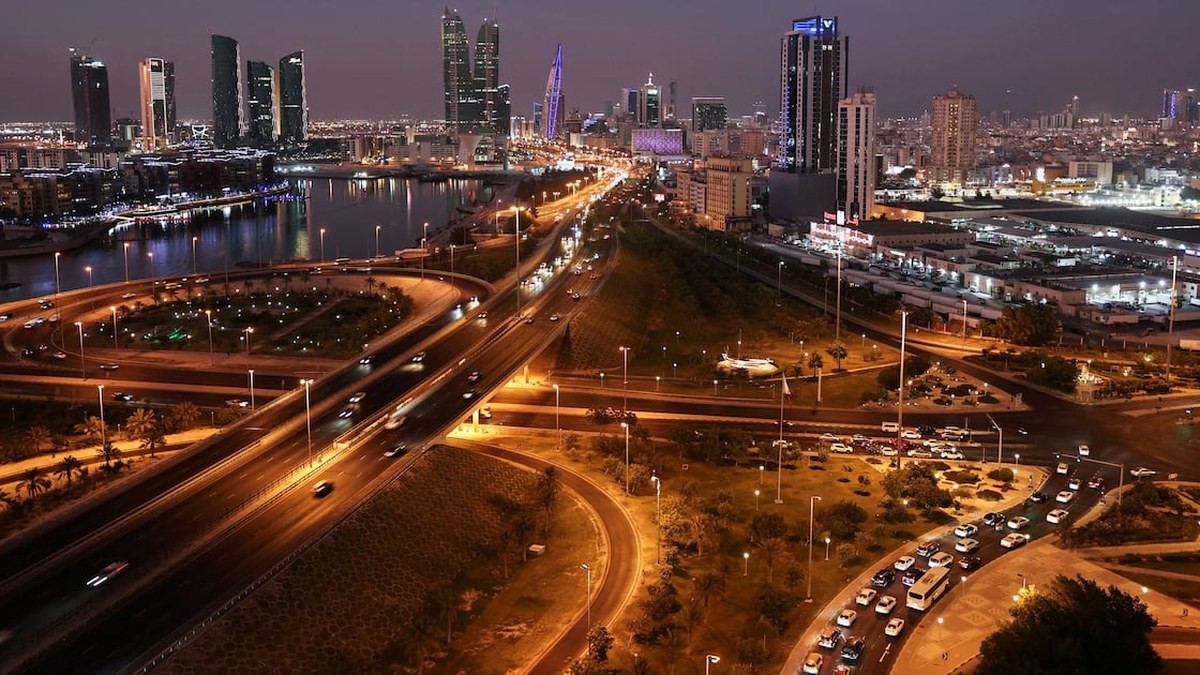
Manama, Bahrain — Explosions rolled over the kingdom twice on Sunday morning, sirens went off, and a country that hosts the United States Navy's Fifth Fleet told its residents to move to the nearest safe location. What followed was not a denial. It was an accusation.
Two Alerts, Three Hours, and a Sky Full of Interceptors
The first blasts were heard around 4 a.m. local time, or 0100 GMT, according to an AFP journalist in the kingdom. Residents reported a second series around 6:30 a.m. Bahrain's Interior Ministry issued two alerts within about three hours, the first at roughly 4:30 a.m., warning of a "potential threat" and urging people to seek shelter. It did not say what the threat was or who was behind it.
Posting on X, the ministry asked "residents to remain calm, proceed to the nearest safe location, and follow news through official channels." These were Bahrain's first nationwide public safety warnings since September, and Reuters reported they were the first interceptions by Bahraini air defences since that same month.
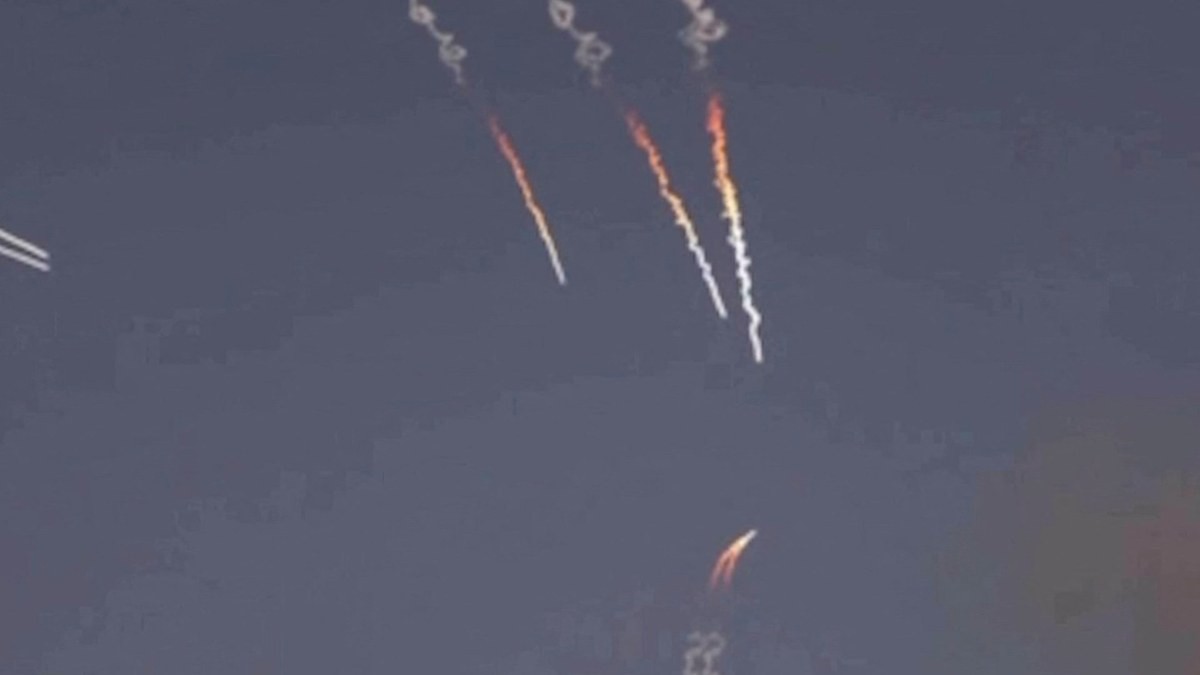
Then the Bahrain Defence Force went further. In a statement carried by the state-run Bahrain News Agency, the military said its air defence systems "confronted, intercepted and destroyed a number of Iranian aerial attacks today ... before they could achieve their objectives." It accused Tehran of continuing what it called a "systematic hostile approach" toward the kingdom.
What Tehran Says It Hit
The Islamic Revolutionary Guard Corps claimed the operation within hours, describing it as retaliation for "hostile US actions," according to the Fars news agency. The Guards' own account was more specific than Bahrain's. In a statement carried by Iranian state broadcaster IRIB and posted on Telegram, the IRGC said: "The US air defence radar system at the Al-Riffa helicopter base in Bahrain was targeted by six drones belonging to the IRGC Aerospace Force."
The same statement carried a warning about the waterway that has defined this war. "The Strait of Hormuz is closed, and any aggression by the American enemy will be met with an even harsher and more forceful response," it said. Iranian media described Sunday's operation as the second phase of the Guards' response to what Tehran calls American military aggression.
What nobody has confirmed is the result. There has been no confirmation from American or Bahraini authorities that the Al-Riffa installation was struck, and Anadolu Agency noted there were no claims or details of the drones having caused damage. Neither government has reported a casualty or an injury from Sunday's attacks.
The Denial That Stopped Coming
Friday is the reason Sunday matters. On 13 November the IRGC said it had destroyed a US early-warning radar in Bahrain, retaliation for what it called an air attack on a telecommunications tower in Sirik, in Iran's southern Hormozgan province near the Strait of Hormuz. It called that operation a "serious warning" about aerial provocations and oil smuggling, in a statement carried by the semi-official Tasnim news agency.
US Central Command answered within hours, and answered flatly. "The IRGC launched two one-way attack drones toward Bahrain and both were shot down by U.S. forces. There were no injuries or damage," CENTCOM posted on X at 12:54 p.m. on 13 November, labelling the radar claim false. Bahrain said it intercepted two drones that day.
On Sunday the same claim arrived with a bigger number, and this time Bahrain's own military confirmed interceptions before Washington said a word. Al Jazeera reported that the US military, having commented on Friday, had yet to comment on Sunday's claim. That silence is the story's centre of gravity.
Bahrain's Charge, and the Resolution It Wants Enforced
Bahrain's Ministry of Foreign Affairs did not stop at describing intercepts. It denounced what it called "a resumption of Iran's aggression," said the attacks launched by the IRGC violated international law, and declared that "no pretext can legitimise violations of state sovereignty."
Then the line that turns an air-defence report into a diplomatic complaint: "Bahrain also rejects the use of its territory to settle accounts and holds Iran fully responsible for the attacks and their consequences."
Manama has a document to point at. The Security Council adopted Resolution 2817 on 11 March 2026, at its 10,119th meeting, by 13 votes to none with China and Russia abstaining. Bahrain tabled it for the Gulf Cooperation Council and it drew 135 co-sponsors, which Arab News described as one of the largest shows of support for a Council resolution in recent years.
The text condemned "in the strongest terms" Iranian attacks against Bahrain, Kuwait, Oman, Qatar, Saudi Arabia, the United Arab Emirates and Jordan, and demanded Tehran "immediately and unconditionally" cease provocations against its neighbours, including through proxies. Bahrain has called for it to be fully implemented. Its ambassador to the UN is Jamal Alrowaiei.
Iran's Answer: Article 51 and the Whole Gulf
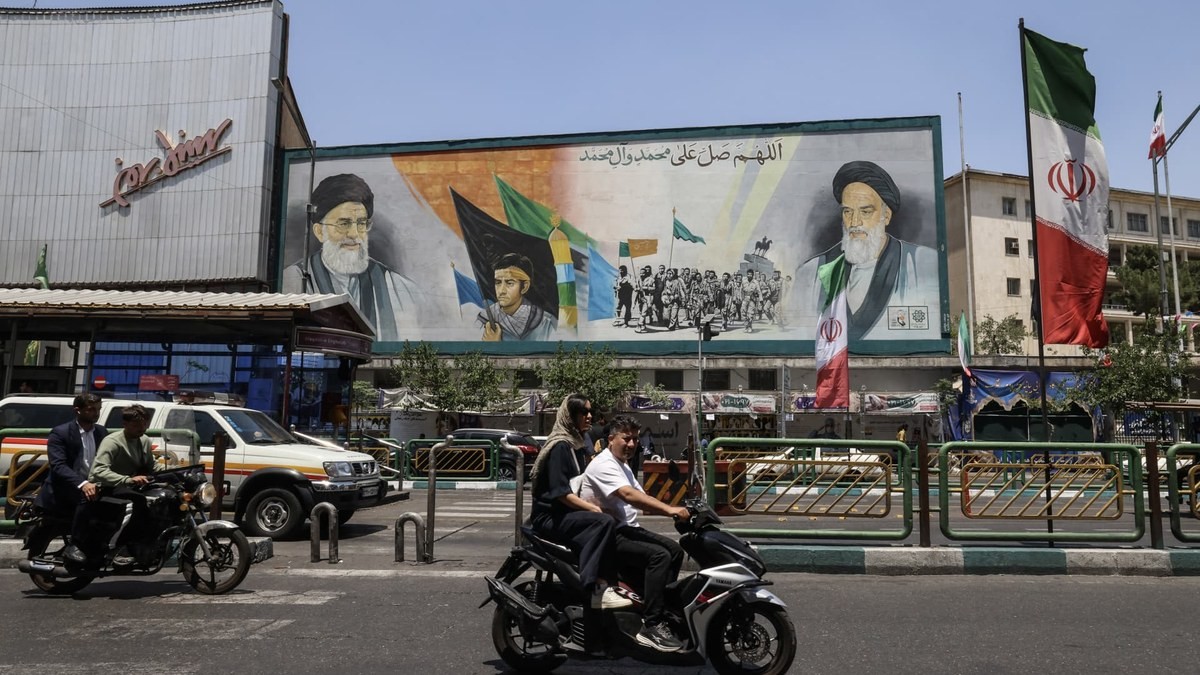
Tehran's foreign ministry did not treat Sunday as a violation of anything. Spokesman Esmaeil Baghaei told a news conference that attacks on Iran's neighbours were justified under Article 51 of the UN Charter, which sets out a state's right to defend itself, and he accused the Gulf states of helping Washington strike his country.
"All the cases that indicate the role of the countries of the region in helping the US to attack Iran have been documented," Baghaei said. He listed missiles, drones and aircraft launched from military bases in neighbouring countries, plus logistical support for US forces, as the evidence. Tehran, he said, was taking diplomatic action and would "follow up on this issue seriously."
His framing went wider than Bahrain. "The responsibility of this group of countries in the region for the consequences ... of the military aggression of the United States and the Zionist regime against Iran is clear," he said, using Iran's standard term for Israel. Tehran has also told the Security Council it would respond immediately to any renewed American or Israeli attack.
The Neighbours Close Ranks
Two Arab governments backed Manama publicly before the day was out, and both used the language of sovereignty rather than of de-escalation.
Jordan's Ministry of Foreign Affairs and Expatriates said on X that it "condemned Iran's brutal attacks on the sister kingdom of Bahrain as a flagrant violation of its sovereignty, a threat to its security, stability and territorial integrity." Saudi Arabia condemned the strikes as well, expressed full solidarity with Bahrain, and said it supported any measures the kingdom takes to protect its security. Riyadh called the attacks a violation of international law and demanded an immediate halt to what it described as "blatant Iranian attacks" in the region.
That is the pattern of this war in miniature. Resolution 2817 named seven front-line states, and the diplomatic cost to Tehran of each new strike is paid in exactly those capitals. Friday added another layer: Gulf Arab states demanded that Iran pay full compensation for damage from thousands of missile and drone attacks since February, and asked the Security Council to hold Tehran accountable.
A Deal Declared Unnecessary Three Days Earlier
Sunday's drones landed into a diplomatic vacuum that Washington created on Thursday. In a Truth Social post on 12 November, President Donald Trump wrote: "We don't need a deal with Iran. Those days have long since passed. We've got their money, Hundreds of Billions of Dollars, and we've got their Strait!"
In the same post he said he had asked Vice President JD Vance, who had been leading the Iran file, to turn his "complete and total attention" to "the Massive Corruption and Crime taking place in Democrat run Cities and States." Speaking to reporters after meeting Qatar's prime minister, Trump added: "At this point, taking the military action doesn't seem to be a very necessary thing – but we're locked and loaded, ready to go for any reason."
A White House official said the United States remains in a "very strong position," citing the blockade and control of the strait. Iran's side of the table is still staffed: chief negotiator Mohammad Bagher Ghalibaf told Al Jazeera last week that Tehran had sent seven conditions for a deal through a Qatari mediator and was waiting for an official American response, among them lifting the blockade and sanctions and formally declaring the war over.
The Strait, the Mines and the Tankers
Sunday's drones were not the only Iranian claim of the weekend, and the other one is far harder to check. Late on Saturday night the IRGC Navy said two oil tankers had exploded and caught fire after striking naval mines while trying to use what it called an "unauthorised" route south of the Strait of Hormuz. It said both vessels had switched off their navigation and identification systems to avoid detection, and that two more tankers turned back after warnings from its maritime traffic control centre.
No vessel identities, flags or owners were given. No maritime authority has confirmed that any ship struck a sea mine, and the claims have not been independently verified. Al Jazeera's Mohammed Vall, reporting from Tehran on Saturday, said there had been "two similar incidents yesterday" and that the number of tankers hitting mines has increased.
Iran's position on the waterway is absolute. Vall said Tehran claims the strait is under its "full control" and that "only Iran and Oman have the right to control it," a claim Washington rejects. The IRGC's Sunday statement repeated that the strait is closed.
The Other Sky: Riyadh and the Eastern Province
Bahrain was not the only Gulf sky busy on Sunday. The Saudi-led coalition said it had intercepted two ballistic missiles launched towards Riyadh by Yemen's Iran-backed Houthis, and three drones in the kingdom's oil-rich Eastern Province, according to the Saudi Press Agency.
That matters for the wider war because it shows the same weekend producing two separate Iranian-aligned fronts, one in the air over an island state and one over the Saudi capital. It also matters for the American calculation. Trump has said in recent days that he might hold off from attacking Iran if Washington faces no new provocations from Tehran or from the Houthis in Yemen, while keeping the naval blockade in place. Sunday delivered provocations on both counts, from both directions.
The war that began with US and Israeli strikes on Iran on 28 February is now 260 days old. It reached a ceasefire in April, resumed as negotiations stalled, and survived a memorandum of understanding signed in June. Iran has spent those months restricting shipping through Hormuz and striking airports, seaports, energy facilities and US assets across the region.
What Miscalculation Looks Like
The striking thing about Sunday is how small it was on paper: no confirmed damage, no reported casualties, a handful of drones and a foreign ministry statement. The escalation lives in the pattern rather than the payload. Saeid Golkar, the UC Foundation associate professor of political science at the University of Tennessee at Chattanooga, told Al Jazeera that the risk here is not intent. "Both sides may prefer to avoid a full-scale war, but the danger lies in miscalculation," he said. "Iran may continue limited maritime and regional escalation to increase pressure while Washington could respond militarily. Such exchanges could eventually lead to a broader conflict that neither side initially intended."
Al Jazeera's Resul Serdar, reporting from Tehran, put the shift more bluntly. Iran held back for weeks while the US ran what he called a low-intensity campaign against Iranian military assets, telecommunications towers in the country's south among them. Twice in three days it has now fired at Bahrain. "It seems this is now the new rule of engagement," Serdar said. The question Sunday left open is whether Washington answers — and whether the answer arrives as a denial, a statement, or something with a warhead on it.
By Jessica Ali, Staff Writer
This article was produced with AI-assisted research and editorial support. Sources: Reuters via CNBC, Al Jazeera, AFP via France 24, The National, Anadolu Agency, Moneycontrol, US Central Command, the United Nations Security Council (resolution 2817) and Arab News. Photographs: WANA via Reuters; AFP via Getty Images; Reuters via The National. Cover: Global 1 News editorial image.
What's Your Reaction?
 Like
0
 Dislike
0
 Love
0
 Funny
0
 Wow
0
 Sad
0
 Angry
0

Editor-in-Chief at Global1.News. Atlanta-based journalist who cuts through the BS and tells it like it is. Lead anchor, host, and the voice you hear when the spin stops and the truth starts.















Comments (0)