
Poland Says a Fire at a Starlink Ground Station Serving Ukraine Was Sabotage
Poland's deputy prime minister says a fire at a state-owned Starlink ground station near Warsaw was sabotage aimed at cutting internet access for Ukrainian institutions, though Russia's responsibility is not established.

A fire tore through the antenna installation of a satellite communications station in central Poland late Wednesday, and by Thursday morning the country's digital affairs minister was calling it sabotage aimed at cutting the internet lifeline to Ukraine's military. The station belongs to Exatel, a Polish state-owned telecom operator, and it sits in Wola Krobowska, Grojec county, Masovian Voivodeship — roughly 40 kilometers, or 25 miles, south of Warsaw.
A Fire at the Relay Station That Keeps Ukraine Online
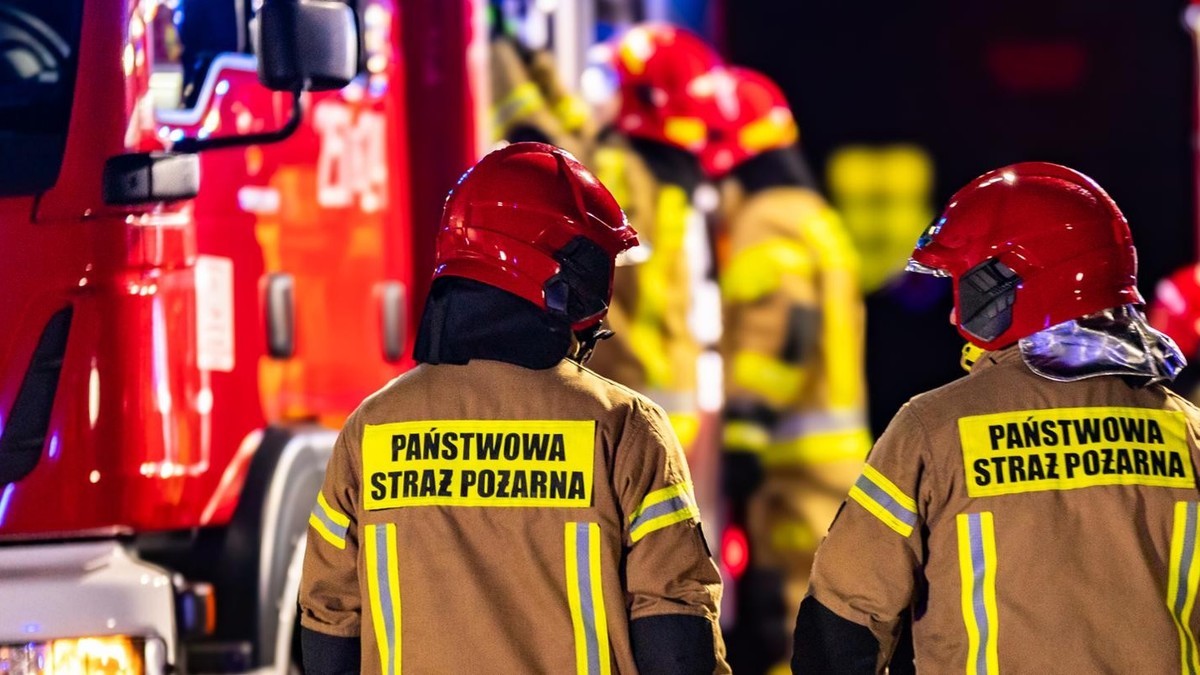
The call came into the Grojec county fire service command a few minutes after 9 p.m. on Wednesday, 23 September 2026, according to TVN Warszawa, which reported that the property owner dialed the emergency number after the antennas caught fire. Polsat News put the call at 21:07. Three fire brigades were dispatched to the scene and extinguished the blaze, TVN Warszawa reported. No one was injured. Deputy fire officer Michal Maroszek of the Grojec county State Fire Service command said, according to TVN Warszawa: "A fire occurred at the antenna installation of an IT company. Three fire brigades were dispatched to the site. The fire was extinguished. Further on-site actions were conducted by the police."
What the Fire Actually Damaged
The fire damaged the power station — the distribution board — and a generator, according to RMF FM and Digital Affairs Minister Krzysztof Gawkowski. Preliminary findings indicate the distribution board may have been set on fire deliberately, RMF24 reported via UNN, while a second scenario investigators are considering is a short circuit in the electrical system. Police and officers of the Internal Security Agency, the ABW, were dispatched to the scene, and the Central Police Investigation Bureau and the ABW were notified, Notes From Poland reported. The station is owned and operated by Exatel, a Polish state-owned telecommunications operator, Gawkowski said. It is equipped with more than ten spherical antennas, and acts alongside a similar installation in the Kaunas area of Lithuania as a satellite distribution hub for Central and Eastern Europe, according to Polish media reports.
"The Modus Operandi Is Clearly Russian"
Speaking Thursday on public broadcaster TVP, Gawkowski said, according to Reuters: "This act of sabotage was deliberately designed to disable the station ... disrupting internet access for various institutions, including the Ukrainian army." In the fuller Reuters rendering, he said: "The fire engulfed the power station and the generator; it is clear that this act of sabotage was deliberately designed to disable the station — effectively cutting off the internet connection ... and disrupting internet access for various institutions, including the Ukrainian military." On TVN, Gawkowski said "the modus operandi in this case is clearly Russian" and called it "another element of the hybrid warfare we are facing," according to Notes From Poland. He added, per Kyiv Post citing TVP World: "Sometimes we don't realize that it is precisely this type of telecommunications relay station that determines whether we will have internet access at all in a particular part of Poland, Europe, or Ukraine."
What the Investigators Will Not Say Yet
Attribution to Russia is not established. Gawkowski said it "was not established that Russia was responsible for the fire," Reuters reported, but added that "many signs suggest this aligns with Russia's new doctrine of attack." DW rendered the same line as "many indications" suggesting the incident "fits into this new Russian doctrine of attack." Jacek Dobrzynski, spokesman for Poland's security services, told TVN that "at this stage it is still too early to talk about the causes or motives of this fire" — while confirming that "everything points to arson," according to Notes From Poland. Justice Minister Waldemar Zurek told broadcaster RMF that "this could be an act of sabotage, and we are taking that into account, so nothing can be ruled out here, especially since these are sensitive elements that ensure satellite communications," per Notes From Poland. Russia has repeatedly denied carrying out sabotage on Polish territory, and Moscow has always denied any involvement in such attacks. Just days earlier, the Kremlin brushed off the Polish rail-sabotage case with the line that "it would have been really strange, if Russia hadn't been blamed first".
Poland's Long Hybrid Summer
On 17 September 2026, Prime Minister Donald Tusk told the Sejm that Polish and allied intelligence assessments indicate Russia could conduct hybrid drone and missile strikes against countries supporting Ukraine — specifically including Poland — outlining a scenario in which Russian weapons enter NATO territory and cause damage while Moscow calls the incidents accidental, creating uncertainty over whether the threshold for an allied response has been crossed, according to the official Sejm transcript of his statement. On 13 September, a Russian attack struck targets a few kilometers from the Polish border; after an emergency security meeting, Tusk warned the escalation was becoming reality and said Warsaw could no longer exclude the possibility that future escalation would affect Polish territory. Poland has extended the third-level CHARLIE alert for important railway infrastructure until 30 November, with BRAVO and BRAVO-CRP alerts in force more broadly; the Interior Ministry states these measures are connected to hybrid operations conducted by Russia and Belarus against Poland and other EU states. In July a Russian missile entered Polish airspace before landing in a field in eastern Poland, and on Wednesday — the same day the Wola Krobowska fire broke out — a Russian helicopter briefly entered Polish airspace, according to Notes From Poland.
The Rail Sabotage That Changed the Language
Poland accused Russia of "state terrorism" last year over an act of sabotage on the Polish rail network, DW reported. In the Warsaw-Lublin rail sabotage, a military-grade C4 charge was detonated near the village of Mika as a freight train passed, captured on CCTV; a previous attempt to derail a train using a steel clamp on the rail failed; and a second incident involved a train carrying 475 passengers braking suddenly because of damaged railway infrastructure, according to the BBC. Tusk called it "an unprecedented act of sabotage." Two Ukrainian citizens who long worked for Russian intelligence were identified as the suspects; one had already been convicted in absentia of acts of sabotage in Ukraine; both crossed into Poland from Belarus and returned via the Terespol border crossing, the BBC reported. Poland closed Russia's last remaining consulate in the country, in Gdansk. Tusk said 55 people had been detained since the start of last year on suspicion of assisting, preparing or committing acts of sabotage, and that 23 of them had been remanded in custody.
Why One Ground Station Matters
Ground stations are used by Starlink to connect its satellite constellation with terrestrial communications infrastructure, Defence24 reported via Notes From Poland. Other internet providers use Exatel's facility, including Elon Musk's SpaceX, the owner of Starlink, according to Notes From Poland. Gawkowski said the station "provides internet transmission through Poland, and also to Ukraine" and that Exatel "is one of the elements ensuring internet security, supplying internet, in particular, to Ukraine." He warned that shutting down such facilities could disrupt internet access and could therefore affect the operation of ATM networks, Kyiv Post reported. In August, Poland forced a Starlink U-turn over a roaming price hike, Euronews reported.
Thirty Thousand Terminals and a Single Point of Failure
Poland funds and maintains close to 30,000 Starlink terminals on Ukrainian territory — described as fundamental to keeping hospitals, public services, cash machines and the military front running, according to the news agency EFE. Gawkowski said "while everything is operational today, we must recognise — as Prime Minister Tusk recently noted — that this is an element of hybrid warfare," Reuters reported. He added, per DW: "There is much to suggest that we are dealing with an element of the next phase of hybrid warfare." Dr Michal Piekarski, a security specialist at the University of Wroclaw, says Russia is investing in a dispersed sabotage model in which "the group is anonymous, interchangeable and resistant to infiltration, because it often does not know the full context of what it is doing," according to a Kyiv Post analysis. Piekarski adds that the regulations governing critical infrastructure protection were written "20 years ago" for thieves, vandals and conventional terrorists, not for hybrid operations planned abroad and executed through dispersed intermediaries. A senior general quoted by the Polish daily Rzeczpospolita says rail routes "are not protected along their entire length."
Same Week, Same Warning From Copenhagen
On Thursday, 24 September, Denmark's defence intelligence service said in a new threat assessment that Russia is likely to intensify its hybrid war against the West in the coming months, Reuters reported. Also on 24 September, Russia struck Kyiv with ballistic and hypersonic missiles. Two people were killed in the capital, including one in the car park of a maternity hospital that was damaged; six people were killed and eight wounded in an attack on a farm in the Kharkiv region; at least eight people died across Ukraine, according to Al Jazeera and the Associated Press. Ukraine's air force said the assault included an unspecified number of hypersonic and ballistic missiles and 282 drones. In Kyiv's Podilskyi district the maternity hospital's windows and part of its facade were damaged, according to the Health Ministry; no casualties were reported inside the facility, Euromaidan Press reported. Zelensky said Ukrainian air defences intercepted 60 percent of the ballistic missiles targeting the capital. Poland's military said it deployed planes to secure its airspace in response to the attacks on Ukraine, and two Czech fighters were also deployed, Al Jazeera reported.
What Happens Next
The investigation into the Wola Krobowska fire continues, with arson and a short circuit both under consideration. Gawkowski said the systems are operational today. Ukraine and the United States were pursuing an energy ceasefire during the UN General Assembly in New York; Ukraine was ready to stop attacks on Russian energy facilities if Moscow agreed to stop striking Ukraine's energy system, Zelensky said after meeting Trump on 22 September, according to Euromaidan Press. The Marywilska 44 shopping complex fire in Warsaw was later tied by the Internal Security Agency and prosecutors to individuals acting on behalf of Russian services; the operation destroyed hundreds of small businesses and was immediately accompanied by an online campaign blaming Ukrainians, according to a Kyiv Post analysis. For a country that has spent two years being told the danger is creeping rather than crashing into it, one burning distribution board outside Warsaw is a reminder that the target list has already widened. The alert level on Poland's railways runs to the end of November.
By Jessica Ali, Staff Writer
This article was produced with AI-assisted research and editorial support. Sources: Reuters, Associated Press, BBC, DW, Euronews, Notes From Poland, Kyiv Post, Al Jazeera, TVN Warszawa, RMF FM, UNN, Euromaidan Press, EFE.
What's Your Reaction?
 Like
0
Like
0
 Dislike
0
Dislike
0
 Love
0
Love
0
 Funny
0
Funny
0
 Wow
0
Wow
0
 Sad
0
Sad
0
 Angry
0
Angry
0

Editor-in-Chief at Global1.News. Atlanta-based journalist who cuts through the BS and tells it like it is. Lead anchor, host, and the voice you hear when the spin stops and the truth starts.















Comments (0)