
Poilievre Demands Carney Release Rejected Trade Deal Text as Counter-Tariffs Begin
In a recent CBC News report, Conservative Leader Pierre Poilievre used the Labour Day holiday in Regina to demand Prime Minister Mark Carney release the full text of the rejected Canada-U.S. trade deal, hours before Canada's dollar-for-dollar counter-tariffs were set to take effect at midnight.
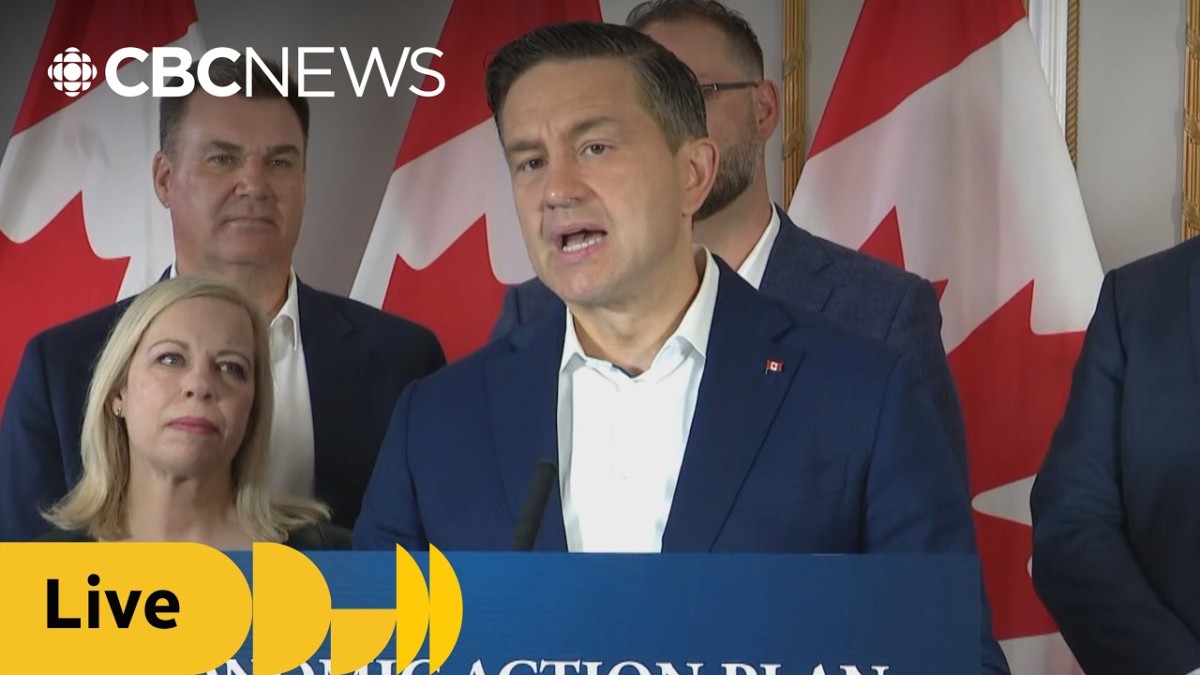
In a recent CBC News report, Conservative Leader Pierre Poilievre used the Labour Day holiday in Regina to demand Prime Minister Mark Carney release the full text of the rejected Canada-U.S. trade deal, hours before Canada's dollar-for-dollar counter-tariffs were set to take effect at midnight. Speaking to reporters after attending the Saskatchewan Roughriders' Labour Day Classic weekend festivities, Poilievre argued Canadians "deserve to see" what was on the table before the prime minister walked away.
The demand lands as the latest round of retaliatory tariffs — targeting roughly $27.6 billion worth of American goods — kicks in, escalating a trade conflict that now touches everything from steel and dairy to household appliances and construction materials.
Poilievre demands Carney release rejected trade deal text as counter-tariffs begin
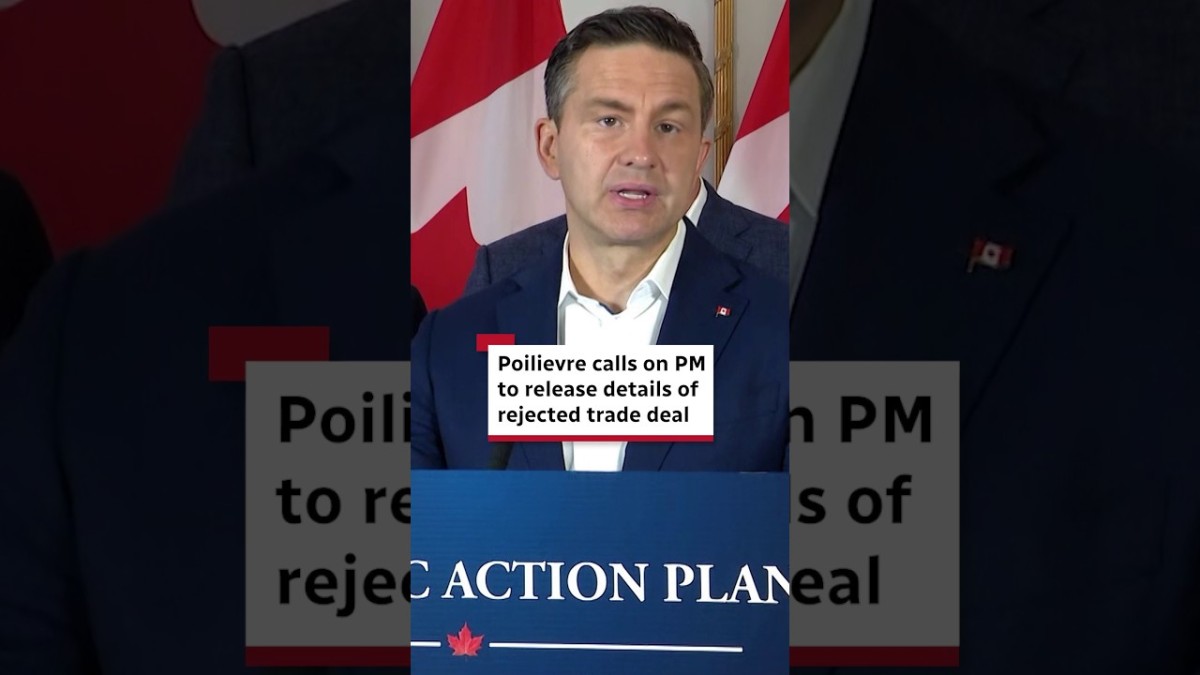
Regina, Saskatchewan – Labour Day Monday — Conservative Leader Pierre Poilievre pressed Prime Minister Mark Carney on Labour Day to publish the proposed Canada-U.S. trade agreement that Ottawa rejected last month, arguing Canadians need full transparency as the country's latest counter-tariffs against Washington take effect at midnight.
A Labour Day Demand for Answers
Poilievre held a news conference in Regina on Labour Day Monday, following a weekend appearance at a Saskatchewan Roughriders tailgate outside Mosaic Stadium for the Labour Day Classic against the Winnipeg Blue Bombers. His message was pointed: Canadians should not be in the dark about the deal Carney's negotiators walked away from on Aug. 21.
"Canadians deserve to know what is the deal that the prime minister at first planned to accept and then later decided to reject," Poilievre said, repeating a demand he first made in Windsor. "There are no national secrets in that text. It's already been shown to the United States administration."
The Conservative leader has repeatedly called on Carney to recall Parliament for an emergency session and to publish the government's cost analysis of the counter-tariff strategy. In Regina, he framed the issue in terms of household budgets.
"I think it's time that Mr. Carney tells Canadians what the counter-tariffs will cost them," Poilievre said, pointing to food, appliances and home construction as areas where Canadians could face higher prices. Speaking in French, he added: "We want the Prime Minister to publish all the documents that show the cost linked to these policies."
What Carney Has Said About the Collapsed Deal
Carney has acknowledged that some retaliatory measures will increase costs and reduce choice for Canadians, but he has argued retaliation is necessary after Canada rejected what he characterized as a bad trade deal with Washington. His position, repeated in recent weeks, is that "no deal is better than a bad deal."
The prime minister ordered Canada's negotiators to walk away from the table on Aug. 21, saying the U.S. made last-minute demands that included limiting Canada's ability to strike trade deals with other countries, exempting heavy-duty Canadian trucks from auto tariff relief, and targeting rules that boost French content online. He called the move a "power play" touching on Canadian sovereignty and told Canadians, "We are masters in our own home."
U.S. officials dispute that account. U.S. Trade Representative Jamieson Greer told CNBC that Canada was offered "the best access to the United States of any country in the world" but "they wanted more." Greer said Washington was willing to cut steel and aluminum tariffs in half and extensively reduce them on autos and lumber, and he dismissed Canadian claims about French-language protections as a "funny, fake story." Treasury Secretary Scott Bessent and Commerce Secretary Howard Lutnick have both said Canada walked away from the best deal on offer for political reasons. Greer has said no new talks are planned.
Counter-Tariffs Take Effect at Midnight
The timing of Poilievre's demand is not coincidental. Canada's latest counter-tariffs — matching new U.S. tariffs dollar-for-dollar — were set to take effect at midnight as Labour Day ended. The measures target about $27.6 billion (Cdn) worth of American goods, covering roughly 700 products in sectors including steel and aluminum, dairy, appliances, agricultural equipment, pulp and paper, plastics and electronics.
The trigger was new 50 per cent U.S. tariffs on roughly $28 billion of Canadian goods that came into effect over the weekend. U.S. President Donald Trump has threatened further retaliation, leaving the door open to an escalating cycle of tariffs that economists warn could raise costs on both sides of the border.
For Canadian consumers, the practical impact will be felt in specific categories: dairy products from the United States, household appliances, agricultural equipment and construction materials are all in the crosshairs. Poilievre's reference to food, appliances and home construction in Regina was a direct appeal to the pocketbook concerns of families who may see prices rise in the coming weeks.
The Transparency Debate
The Conservative leader's demand for full disclosure has drawn a sharp response from the government and from trade veterans who caution against releasing un-concluded negotiating texts.
A Prime Minister's Office spokesperson had "nothing to say" about the exact terms of the rejected deal. Finance Minister François-Philippe Champagne defended the government's approach, saying, "This is probably the most publicly advertised negotiation of a trade agreement I could recall... Canadians have been able to follow that even on a daily basis."
Dimitri Soudas, a former director of communications under Prime Minister Stephen Harper, said releasing an un-concluded text would be "irresponsible" and would expose Canada's negotiating playbook. "No serious government would ever release confidential text," Soudas said. "You'll never reach a deal, even with a normal administration."
Poilievre rejects that argument, citing the Gordie Howe International Bridge file as a cautionary tale. He says the government gave false information on that project that was later contradicted by published text. "Canadians deserve to know what was on the table, so all of us can know what we are fighting for and what we're fighting against," he said in Regina.
What This Means for Canadian Pocketbooks
The stakes for Canadian households are significant. The counter-tariffs are designed to pressure U.S. exporters, but they also carry costs for Canadian consumers and businesses that rely on American inputs. Appliances, for example, are a major category in the tariff list — a reality that will be felt by families shopping for refrigerators or washing machines in the months ahead.
Home construction is another area of concern. With agricultural equipment, steel, aluminum and pulp and paper all targeted, the cost of building materials could rise, putting additional pressure on an already strained housing market. Food prices, particularly for dairy products, are also in play.
Poilievre's preferred outcome is clear: "Our goal is to fight for tariff free trade," he said. "Tariff-free trade is good for Americans and Canadians." He framed the Conservative approach as a fight "to put an end to tariffs on both sides of the border, to reduce the cost of living and protect Canadian jobs."
The Political Stakes for Poilievre and Carney
The trade file has become a central political battleground, and the timing is difficult for Poilievre. Carney's Liberals swept three federal byelections earlier this month, including flipping the Conservative-held Quebec riding of Chicoutimi—Le Fjord. Poilievre has faced questions about his leadership after a series of Conservative MPs crossed the floor to the Liberals in recent months, and opinion polls have shown the Liberals with a sustained lead.
Labour Day in Regina — a city in the heart of Conservative-supporting Saskatchewan — was an opportunity for Poilievre to reset the narrative. By focusing on transparency and the cost of counter-tariffs, he is attempting to turn the trade file into a question of government accountability rather than a test of who can be toughest with Washington.
For Carney, the challenge is different. He must convince Canadians that walking away from the deal was the right call, even as the economic costs of retaliation become more tangible. His "masters in our own home" framing is designed to appeal to Canadian sovereignty concerns, but it will be tested if prices rise and the trade conflict drags on without a resolution.
What Happens Next
The immediate question is whether Poilievre's demand for an emergency session of Parliament will gain traction. With the House of Commons not scheduled to sit, the Conservative leader is using the summer recess to pressure the government on transparency. Whether other parties will join that call remains unclear.
On the trade front, the path forward is uncertain. Greer has said no new talks are planned, and Trump has threatened further retaliation. The CUSMA agreement was not extended in July, triggering an annual rolling review. Mexico and the United States have begun formal CUSMA negotiations, but Ottawa and Washington have not — leaving Canada in a precarious position as its two North American partners move ahead without it.
For Canadians, the coming weeks will reveal whether the counter-tariffs achieve their intended effect or simply raise costs at home. The government's argument is that retaliation is necessary to defend Canadian sovereignty and long-term economic interests. The Conservative argument is that Canadians deserve to know exactly what was rejected and what the fight is costing them.
Labour Day Monday in Regina brought those two visions into sharp focus. As the counter-tariffs took effect at midnight, Poilievre's demand for transparency now moves from a political talking point to a question of public accountability — one that will only grow louder if the economic costs of the trade war become more visible in Canadian households.
By Alex Thompson, Staff Writer
This article was produced with AI-assisted research and editorial support. Sources: CBC News, the Toronto Star, 650 CKOM.
What's Your Reaction?
 Like
0
Like
0
 Dislike
0
Dislike
0
 Love
0
Love
0
 Funny
0
Funny
0
 Wow
0
Wow
0
 Sad
0
Sad
0
 Angry
0
Angry
0

Canada Correspondent at Global1.News. Based in Toronto, covering Canadian politics, energy, trade, and US-Canada relations. Provides the Canadian perspective on North American and global affairs.














Comments (0)