
Trump Says Mexico Has 'Nothing' the U.S. Needs. Trade Data Says Otherwise
WASHINGTON — At an Oval Office media availability on Friday, September 4, 2026, U.S. President Donald Trump reasserted that Mexico has "nothing" the United States needs — apart from "hot tamales" and "tomatoes" — and suggested the United States could cease trading with its...
Trump Says Mexico Has 'Nothing' the U.S. Needs. Trade Data Says Otherwise
WASHINGTON — At an Oval Office media availability on Friday, September 4, 2026, U.S. President Donald Trump reasserted that Mexico has "nothing" the United States needs — apart from "hot tamales" and "tomatoes" — and suggested the United States could cease trading with its southern neighbor altogether. The remarks, delivered with characteristic bluntness, dismissed the work of millions of Mexican workers and farmers whose labor feeds American tables and powers U.S. factories.
"We lose with the European Union $200 billion a year. If I didn't trade with them, we'd lose nothing — just one swipe of the pen. We lose with Mexico $195 billion a year," Trump said, referring to the U.S. trade deficit with Mexico in 2025. "They have nothing that we have to have — I mean hot tamales, tomatoes, a couple of things."
Trump did, however, soften his stance when speaking of President Claudia Sheinbaum. He said he did not want to end trade with Mexico "because we get along very well" with her administration. "We like the president, we respect her a lot," he said.
The comments echo a pattern of dismissive rhetoric from the U.S. president. On June 10, 2026, Trump said of Mexico and Canada: "We don't need their cars, we don't need their lumber, we don't need their energy, we don't need anything that they have." Around three weeks later, in early July 2026, the United States announced it had declined to renew the USMCA (known in Mexico as the T-MEC) free trade agreement in its "current form," a move that paved the way for annual reviews of the pact, which remains in force.
A Dignity Question for Mexican Families
For the families in Sinaloa who harvest tomatoes before dawn, for the workers in maquiladoras along the border who assemble medical devices and electronics, for the engineers in Monterrey who build auto parts that cross the frontier multiple times before a finished car rolls off a U.S. assembly line — the president's words carry weight. They dismiss not just products, but people.
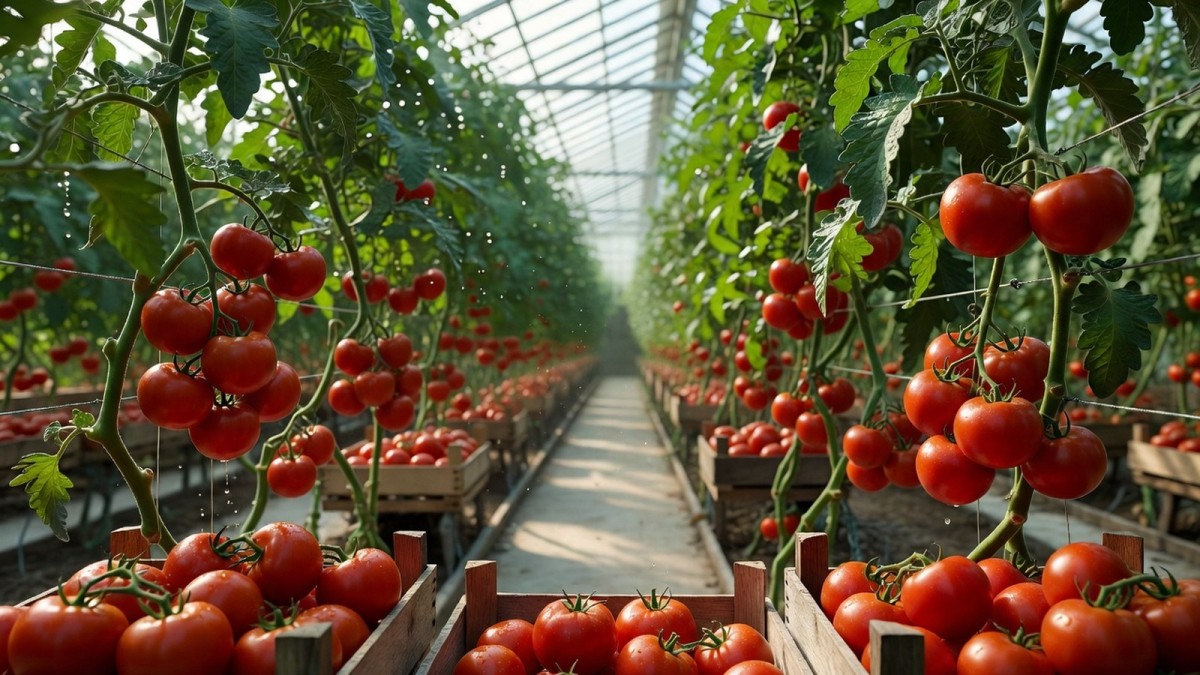
In the farming communities of Baja California and Sinaloa, tomato cultivation is not a casual enterprise. It is a livelihood passed down through generations, a source of pride and a pillar of local economies. When a U.S. president says Mexico has "nothing" the United States needs, he overlooks the fact that Mexican fields supply roughly nine of every ten fresh tomatoes the United States imports. According to USDA data, Mexican tomato exports held a 93% U.S. market share in 2025, forecast at 1.83 million metric tons worth about US$2.98 billion.
The remark also stings for the millions of Mexican workers whose daily labor is invisible to those who only see trade statistics. The maquiladora worker in Ciudad Juárez who solders circuit boards, the truck driver hauling cargo through Port Laredo, the woman in a Tijuana factory assembling ventilators — these are not abstract economic actors. They are mothers, fathers, sons and daughters whose work feeds U.S. hospitals, homes and highways.
Mexican officials have responded with measured dignity. President Sheinbaum said last week that the relationship with Washington has had "its challenges," but added: "In trade matters, we maintain a permanent dialogue with the U.S. government and hope to reach an understanding." Her tone reflects a government that seeks cooperation, not confrontation, even when provoked.
What the Trade Data Actually Shows
The numbers tell a story far richer than the president's characterization. Mexico was the United States' largest trading partner for the third consecutive year in 2025. Two-way U.S.-Mexico goods trade reached a record US$872.83 billion in 2025, up 3.9% from US$840 billion in 2024, according to U.S. Census Bureau data. Canada ranked second at US$712.76 billion, and China third at US$414.69 billion — down sharply from previous years.
On the deficit question, the data partially supports Trump's framing. USTR figures show 2025 U.S. goods exports to Mexico were US$337.3 billion, while U.S. goods imports from Mexico totaled US$534.3 billion. The resulting U.S. goods trade deficit with Mexico was US$197 billion in 2025 — close to the $195 billion Trump cited. But trade deficits are not simple losses. They reflect the deep integration of two economies that build things together.
Mexico sent more than US$60 billion worth of exports to the United States in July 2026 alone. That is not the flow of a country with "nothing" to offer. That is the output of a nation that has become indispensable to U.S. supply chains, particularly as Washington has sought to reduce reliance on Chinese manufacturing.
What Mexico Actually Sends North
The list of Mexican exports to the United States reads like a catalog of modern American life. Vehicles and auto parts top the list, followed by machinery, electrical machinery and medical devices. But the sophistication goes further: Mexico now exports AI servers, a sign of its growing role in high-technology supply chains. Alcoholic beverages — beer and distilled spirits — flow north by the millions of barrels, as do fresh fruits and vegetables.
Agricultural exports from Mexico to the United States exceed US$48 billion a year, encompassing fresh vegetables, beer, distilled spirits and fresh fruit. Beyond tomatoes, Mexican avocados have become a staple of U.S. kitchens, and Mexican beer brands are among the best-selling in the American market. These are not luxury items or niche products; they are everyday goods found in U.S. grocery stores, restaurants and homes.
Mexico is also a top market for U.S. goods. U.S. exports to Mexico include electrical machinery, machinery, energy products, vehicles, plastics and more than US$30 billion in agricultural products — corn, pork, dairy and soybeans. When U.S. farmers sell their harvest, when U.S. manufacturers ship their machinery, when U.S. energy companies export their products, Mexico is often the destination. More than 80% of Mexico's goods exports go to the United States, and more than 40% of Mexico's goods imports come from the United States. The two economies are not rivals; they are partners in production.
Deep Integration and Investment
The relationship extends far beyond goods crossing a border. The United States holds the largest stock of foreign direct investment in Mexico, at US$159.2 billion in 2024. In 2025, the U.S. was the largest source of FDI flows to Mexico, accounting for 39% of the total — about US$15.9 billion. American companies have built factories, hired Mexican workers and created products that serve both markets.
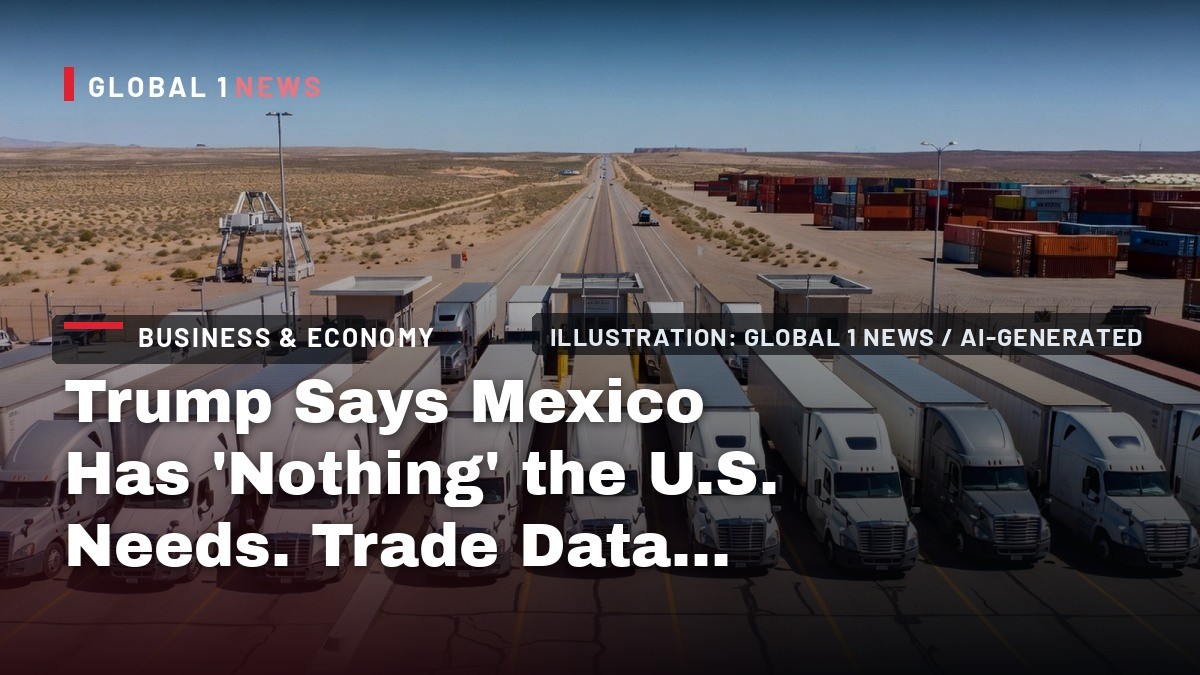
Port Laredo, Texas — the busiest inland port in the United States — handled US$354 billion in two-way trade in 2025. Every day, thousands of trucks cross the border there, carrying components south and finished goods north. The supply chains for autos, electronics and medical devices are so intertwined that a single product may cross the border multiple times before reaching its final destination.
This integration is not accidental. It was built deliberately through the North American Free Trade Agreement and its successor, the USMCA, which underpins nearly US$2 trillion in regional trade. The agreement created a framework that allowed companies to optimize production across borders, benefiting workers and consumers in all three countries. To suggest the United States could simply walk away ignores the physical reality of factories, supply chains and investments that cannot be relocated overnight.
Mexican Official Response and the USMCA Review
Mexican officials have responded to the recent remarks with a combination of patience and firmness. Economy Secretary Marcelo Ebrard has been a vocal defender of the T-MEC, emphasizing Mexico's importance as a customer for U.S. goods. "Mexico is the United States' number one customer — no one buys more from the United States than Mexico. If you add China, Germany and Japan, we buy more from the United States," Ebrard said earlier this year. He added that Mexico holds the best trade deal, "which also explains why our exports to the United States have grown."
Behind the scenes, Mexico is taking practical steps to address U.S. concerns. The Sheinbaum administration is evaluating increased purchases of U.S. goods to help narrow the bilateral trade surplus, which stood at about US$102.6 billion in the first half of 2026. This approach reflects a willingness to engage constructively, even as U.S. rhetoric grows more combative.
The immediate focus is the upcoming USMCA review. Mexico Business News reported that the fourth USMCA joint-review negotiating round is scheduled for September 2026 in Washington. A joint review of the pact is scheduled for 2026, and the July decision not to renew the agreement in its "current form" has set the stage for annual reviews. These negotiations will determine the future of North American trade and, with it, the livelihoods of millions of workers on both sides of the border.
What to Watch For
The September 2026 review round in Washington will be a critical test of the relationship. Mexican officials enter the talks with a strong hand: the data showing Mexico's centrality to U.S. trade, the deep investment ties and the reality that U.S. consumers and companies depend on Mexican goods and supply chains. But they also face a U.S. administration that has shown willingness to disrupt long-standing arrangements.
Tariff threats remain a live concern. The context of tomato duties, which have fluctuated over the years, serves as a reminder that trade disputes can flare even between close partners. The broader question is whether the USMCA can survive its annual reviews intact, or whether the agreement will be gradually hollowed out through renegotiation.
For Mexican workers and farmers, the stakes could not be higher. The tomato grower in Sinaloa, the auto worker in Puebla, the medical device assembler in Tijuana — all depend on access to the U.S. market. But the relationship is not one-sided. U.S. farmers sell billions of dollars of corn and pork to Mexico. U.S. manufacturers rely on Mexican components. U.S. consumers enjoy Mexican produce and products at prices that reflect efficient cross-border production.
The president's dismissive words do not change these realities. Trade data, investment flows and the daily movement of goods across the border tell a story of interdependence that no amount of rhetoric can erase. As the September talks approach, Mexican officials will continue to make the case that the United States and Mexico are not just neighbors but essential partners — each with much to offer the other.
By Rosa Martinez, Staff Writer
This article was produced with AI-assisted research and editorial support. Sources: Mexico News Daily; Office of the U.S. Trade Representative; U.S. Census Bureau; Congressional Research Service; USDA Foreign Agricultural Service; Mexico Business News.
What's Your Reaction?
 Like
0
Like
0
 Dislike
0
Dislike
0
 Love
0
Love
0
 Funny
0
Funny
0
 Wow
0
Wow
0
 Sad
0
Sad
0
 Angry
0
Angry
0

Latin America/Andes Correspondent at Global1.News. Based in Bogota, covering politics, environment, energy, and social movements across the Andean region. Passionate about environmental journalism and communities protecting their land.















Comments (0)