
Philippine GDP Growth Slows to 2.3 Percent in Q2 2026
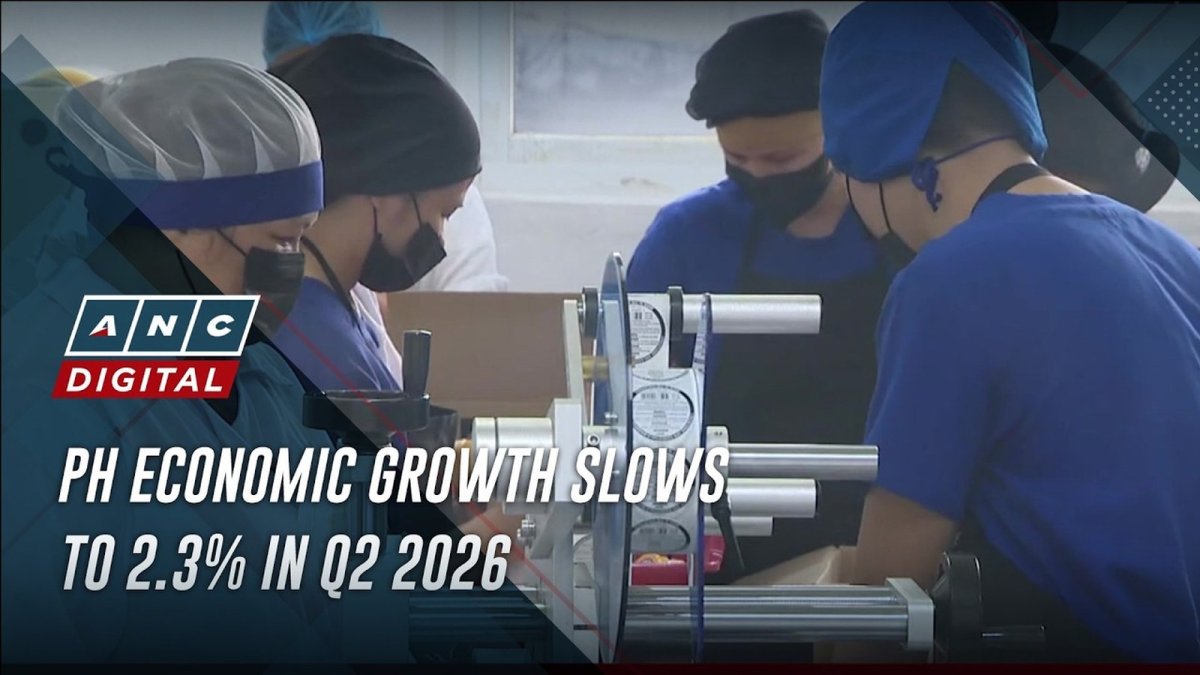
In a recent ANC 24/7 report on the Q2 2026 GDP figure, the Philippine Statistics Authority announced that the economy expanded just 2.3 percent year-on-year, the weakest pace since 2009 outside the pandemic years.
In a recent ANC 24/7 report on the Q2 2026 GDP figure, the Philippine Statistics Authority announced that the economy expanded just 2.3 percent year-on-year, the weakest pace since 2009 outside the pandemic years. The slowdown directly touches ordinary Filipinos through higher costs at sari-sari stores in Quezon City, smaller remittance buffers for families in Cebu, and stalled construction jobs in Davao. Households across Manila barangays now face tighter budgets as inflation remains elevated.
Philippine GDP Growth Slows to 2.3 Percent in Q2 2026, Weakest Since 2009
Manila, Philippines – Friday — The Philippine Statistics Authority reported on Friday, August 7, 2026, that gross domestic product grew 2.3 percent year-on-year in the second quarter, down from 2.8 percent in Q1 2026 and 5.4 percent in Q2 2025. Gross national income rose 2.2 percent over the same period. The first-half average stood at 2.6 percent, well below the 5.4 percent recorded in the first half of 2025.
PSA Report Details
The 2.3 percent reading fell short of the 2.8 percent forecast in a Reuters poll of economists. It marks the lowest pre-pandemic expansion since the fourth quarter of 2009, when growth reached 1.8 percent. The Philippine Statistics Authority data cover income earned inside the country's borders, separate from the broader GNI measure that includes overseas Filipino worker remittances and foreign investments.
Sector Performance Breakdown
The services sector grew 4.5 percent and contributed 2.8 percentage points to overall GDP growth. Agriculture, forestry and fishing expanded 2.7 percent, adding 0.2 percentage points, aided by favorable weather. Industry contracted 2.4 percent and subtracted 0.7 percentage points, led by declines in construction and durable equipment. Within industry, wholesale and retail trade grew 4.6 percent, education rose 12.7 percent, and manufacturing increased 2.6 percent.
The resilience of services, powered by wholesale and retail trade, education, and steady public-sector payrolls, sustains employment for teachers and school staff from Quezon City to provincial barangays in the Visayas. These gains allow families in education-dependent communities to maintain household consumption even as overall growth weakens, preserving local sari-sari store revenues tied to steady salaries.
Industry's 2.4 percent contraction, led by sharp drops in construction and durable equipment, directly cuts shifts for construction workers on halted public projects in Metro Manila and factory employees assembling equipment in export zones around Laguna. Manufacturing's modest 2.6 percent rise offers limited offset, leaving many daily wage earners without the overtime that previously supported remittances to rural households.
Agriculture's 2.7 percent gain from favorable weather provides some relief for farmers in rice-producing regions like Nueva Ecija, yet the overall drag from industry limits broader job creation that would otherwise circulate spending through jeepney routes and small vendors nationwide.
Demand-Side Contributors
Household consumption rose 2.8 percent while government spending climbed 8.3 percent. Exports of goods and services increased 12.2 percent. Gross capital formation, however, dropped 9.2 percent and served as the primary drag on growth. DepDev tied the investment decline directly to the sharp fall in public construction.
Key Factors Behind the Slowdown
Department of Economy, Planning, and Development (DepDev) Secretary Arsenio Balisacan stated at the August 7 press conference that the sharp decline in public construction was the main contributor to the 9.2 percent drop in investment. The halt followed last year's flood control corruption scandal and subsequent House quad committee investigations. The US-Iran conflict, which peaked in Q2 2026, drove up imported fuel costs for the Philippines. Headline inflation eased to 6.2 percent in July 2026 from 6.4 percent in June, yet remained above target, prompting the Bangko Sentral ng Pilipinas to raise its benchmark rate by 25 basis points to 4.75 percent on June 18.
The scandal's chilling effect reached far beyond halted contracts. House quad committee hearings kept the spotlight on infrastructure procurement, and provinces long dependent on government construction outlays felt the freeze first — contractors laid off crews, and small suppliers of gravel, cement, and steel saw orders dry up.
US-Iran conflict escalation in Q2 2026 raised imported fuel costs for a Philippines reliant on foreign oil, pushing transport expenses higher for jeepney drivers along EDSA and provincial routes while commuters in urban centers absorb fare adjustments that strain already tight household budgets.
The central bank's rate hike to 4.75 percent raised borrowing costs for sari-sari store owners and small family enterprises in places like Cebu City, limiting their ability to restock inventory and forcing many to delay expansions that would have created local jobs amid the slowdown.
Impact on Filipino Families
Construction workers in Metro Manila and factory staff in industrial zones face reduced hours from the industry contraction, forcing families to cut portions at the dinner table while 6.2 percent July inflation elevates prices for rice and basic goods purchased at neighborhood sari-sari stores.
Sari-sari store owners and jeepney drivers absorb higher fuel and borrowing costs after the central bank's latest hike, trimming daily margins that once covered school fees for children in barangays from Batangas to Davao, where OFW remittances now stretch thinner to cover gaps.
Farmers benefiting from favorable weather still contend with elevated transport expenses that raise market prices, while students in public schools experience indirect effects as household budgets tighten under 4.75 percent interest rates that limit family investments in education supplies and nutrition.
Administration's Recovery Plans
Balisacan said the economy is already entering the early stages of recovery and that the second half must grow at least 4.4 percent to meet the lowered annual target of 3.5 to 4.5 percent. The government plans to accelerate high-impact infrastructure projects, implement catch-up plans with clear milestones, pursue governance and business reforms, protect purchasing power, and strengthen food and energy security. Malacañang described the slowdown as temporary and expects a rebound in the second half through increased infrastructure and government spending.
Achieving that pace demands accelerated high-impact infrastructure spending with explicit milestones and accountability measures — a direct effort to restore the public construction activity that previously supported workers across multiple regions.
Catch-up infrastructure plans paired with worker preparation for emerging industries such as artificial intelligence aim to shift employment toward higher-value roles, helping families in OFW-sending areas transition from construction and manufacturing jobs disrupted in the first half of 2026.
Reaching upper-middle-income country status this year, with GNI per capita at $4,850 above the World Bank's $4,636 threshold, signals institutional progress — yet sustaining that standing depends on governance reforms that protect purchasing power and secure food and energy supplies for vulnerable communities.
Reactions and Responses
Economists and business groups read the 2.3 percent print as a wake-up call, urging faster agency coordination to restore business confidence through resumed large-scale infrastructure outlays in the second half.
Early recovery signs are already visible, according to the Palace, with agencies restarting major projects and business sentiment improving — gains that could lift government spending and support workers in construction and related trades across the country.
Public stakeholders in transport and retail sectors emphasize the need for urgent measures against Middle East risks and El Niño threats, stressing that H2 improvements must reach jeepney operators and small vendors quickly to prevent further erosion of daily earnings in urban and rural communities alike.
What to Watch For
Balisacan warned of risks from Middle East conflict uncertainty, elevated oil prices, tighter financial conditions, and the prospect of El Niño and further typhoons. Families in provinces reliant on agriculture and construction will monitor whether promised catch-up spending reaches barangay-level projects before the end of the year.
The second-half rebound will determine whether workers in manufacturing hubs and OFW households see relief from elevated living costs or face continued pressure on daily expenses. Government coordination across agencies will prove decisive for restoring momentum in public construction and investment.
By Bella Reyes, Staff Writer
This article was produced with AI-assisted research and editorial support. Reporting is based on sources cited in the article.
What's Your Reaction?
 Like
0
Like
0
 Dislike
0
Dislike
0
 Love
0
Love
0
 Funny
0
Funny
0
 Wow
0
Wow
0
 Sad
0
Sad
0
 Angry
0
Angry
0

Philippines/Southeast Asia Correspondent at Global1.News. Manila-based journalist covering Philippine politics, environment, maritime security, and social issues. Passionate about marine conservation and the communities protecting the Philippines' natural heritage.















Comments (0)