
Vatican Envoy Holds Mass for Missing at Basilica of Guadalupe, Renews Papal Invitation
Cardinal Pietro Parolin opened his Mexico visit with a Mass for the missing at the Basilica of Guadalupe and met President Sheinbaum, who renewed the invitation for Pope Leo XIV to visit as families continue searching for 132,534 disappeared people.
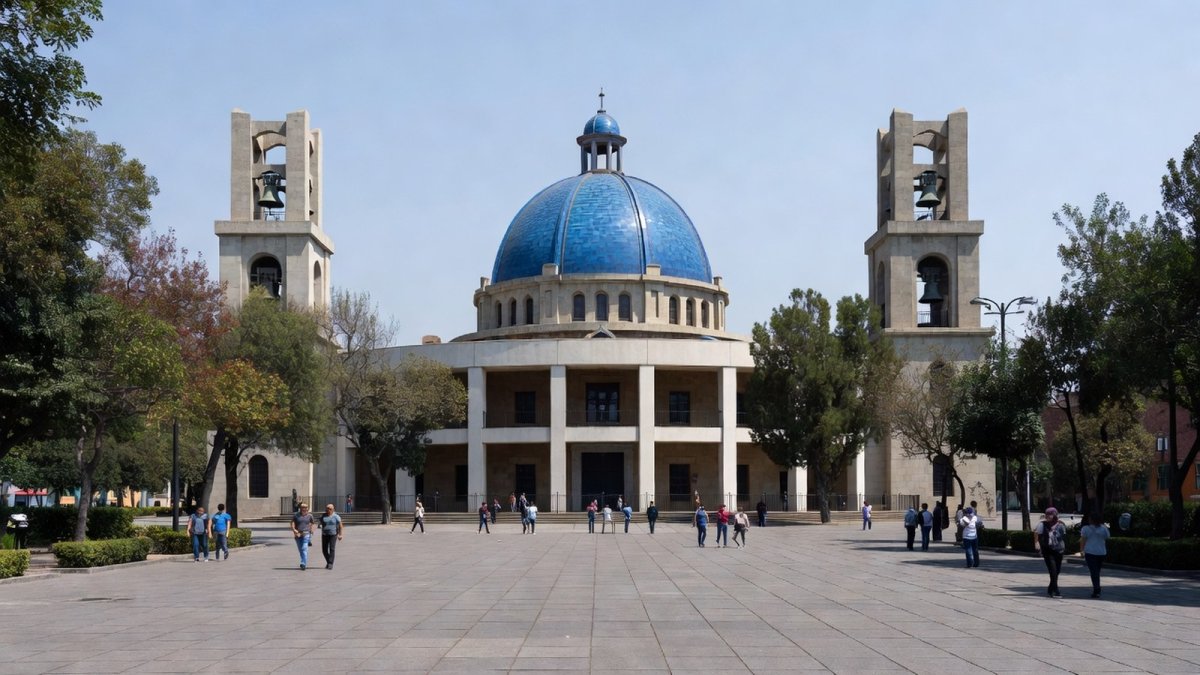
Cardinal Parolin Opens Visit with Mass at Basilica of Guadalupe
Cardinal Pietro Parolin, Secretary of State of the Holy See, began his visit to Mexico by presiding over a solemn Mass for the missing at the Basilica of Guadalupe. The service took place on Wednesday, August 5, 2026, and drew pilgrims from the Diocese of Torreón. The Basilica stands as the spiritual heart of the American continent, where the faithful gather to honor the Virgen de Guadalupe.
Parolin recounted the fourth-century legend of the miracle of the snow at the Basilica of Saint Mary Major in Rome and connected it to the miracle of Guadalupe, when roses appeared on Juan Diego's tilma. He conveyed the special blessing of Pope Leo XIV to the pilgrims. The date also marked the liturgical memorial of the dedication of Saint Mary Major.
The Mass highlighted the presence of the Virgin, her words to Juan Diego, "Am I not here, I who am your Mother?" Parolin urged the faithful to offer that same presence to the needy, the marginalized, migrants, and foreigners. Many in attendance carried the weight of families still waiting for answers about their loved ones.
Meeting Sheinbaum at Palacio Nacional to Renew Papal Invitation
Cardinal Parolin met President Claudia Sheinbaum at Palacio Nacional for more than an hour on the same day. He arrived at 9:55 and departed at 11:10. Sheinbaum used the meeting to reaffirm Mexico's invitation for Pope Leo XIV to visit the country.
She recalled writing a letter of invitation and speaking with the Pope on December 12, 2025. Sheinbaum stated that with this important visit from the Vatican envoy, Mexico would continue to insist on the Pope's presence. She linked the invitation to the Pope's first encyclical, Magnifica Humanitas, published May 25, 2025, which focuses entirely on artificial intelligence.
Sheinbaum described the encyclical as a global reference point for debates on who controls platforms, defines content, designs algorithms, and shapes humanity's future. She noted the Pope's call for public regulation of artificial intelligence while emphasizing that Mexico maintains separation of Church and State.
The conversation positioned the Pope as an international reference on humanitarian issues. Sheinbaum expressed hope that the visit would strengthen ties and bring attention to challenges facing ordinary Mexican families.
Homily Honors Searching Mothers and Their Faith
In his homily, Cardinal Parolin spoke directly about the mothers who continue searching for their missing children. He said their example resonates with special force in Mexico, where so many mothers search with steadfastness and faith. Nothing stops them from doing everything possible to help their children, he noted.
Parolin called on everyone to help through prayers so that, like the woman in the Gospel, their perseverance and faith may be rewarded. He drew three lessons from the sanctuary: presence, witness, and prayer. These lessons encouraged the faithful to stand with those who suffer.
The message reached families in colonias and rural communities who have waited years for news. Many searching mothers attended or heard about the homily, finding renewed strength in the recognition of their daily struggle.
The Scale of Mexico's Missing Persons Crisis
Official figures from the Registro Nacional de Personas Desaparecidas y No Localizadas show 132,534 missing and unlocated people as of the federal cut on March 26, 2026. Marcela Figueroa, head of the Secretariado Ejecutivo del Sistema Nacional de Seguridad Pública, presented the data at President Sheinbaum's mañanera on March 27, 2026. This marked the first time SESNSP led the review rather than the Secretaría de Gobernación.
More than 394,000 reports of missing persons have been documented in the registry's history, with 132,534 still unlocated. Of these, 2,356 cases date between 1952 and 2005 and link to the period of state repression known as the Guerra Sucia.
Breakdowns reveal 36 percent of cases have insufficient data for an effective search, about 46,724 files. Another 31 percent show some administrative activity after the report, roughly 40,308 cases where people may still be alive. The remaining 33 percent, about 43,700 people, have complete data but no trace afterward, the most critical group. Only 3,869 of those have an open investigation file in a prosecutor's office.
Civil organizations have long highlighted overwhelmed state prosecutor's offices, insufficient forensic capacity, and in some cases lack of will to investigate. These numbers affect families in every region, from urban colonias to remote pueblos.
When more than nine in ten registry entries come from state prosecutors and search commissions, the empty spaces in those files point back to how authorities chose to record each case rather than to any silence from relatives. Inside the block of cases with full information yet no trace, the handful of open investigations reveals how thin the official net remains. Overwhelmed offices, limited forensic capacity, and occasional reluctance to dig deeper leave thousands of families waiting while unidentified remains accumulate in morgues across the country, forcing mothers and searchers to step into the gaps themselves.
Buscadoras of La Laguna and Communities Continue Their Work
The La Laguna region, spanning Coahuila and Durango, remains one of the epicenters of forced disappearance in Mexico. Silvia Ortiz, mother of disappeared daughter Fanny and founder of the Grupo Vida collective, has been searching for 20 years. On May 10, 2025, madres buscadoras de La Laguna marched from the Plaza de Armas in Torreón and the Torre Eiffel in Gómez Palacio.
They met at the dry bed of the Nazas River for a Mass, carrying a criba, the sieve that helps them search for remains. Search collectives operate across Jalisco, Estado de México, Guanajuato, and other states, digging through mass graves, finding bones, and carrying them to forensic labs that take years to process.
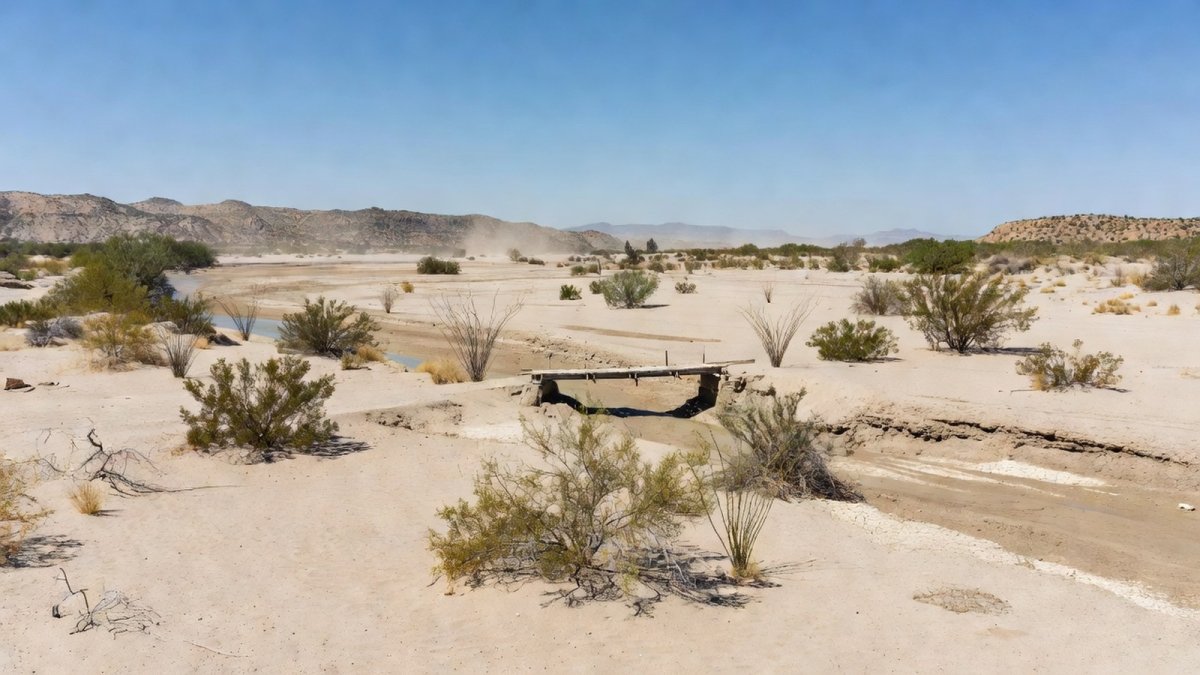
Across Mexico the buscadoras movement has grown into a living network of collectives, many steered by women who refuse to let absence become the final word. These groups have located hundreds of clandestine graves and remains that official channels had not reached, turning private grief into shared, determined action.
In La Laguna, Silvia Ortiz of Grupo Vida has walked this path for twenty years while searching for her daughter Fanny, always urging families to speak up quickly so no trail grows cold. Because the Diocese of Torreón reaches deep into the region, the pilgrimage of its faithful to the Basilica of Guadalupe on August 5 creates a direct thread between these local acts of remembrance and the wider hope carried by a papal visit.
Hopes for a Papal Visit and What Communities Watch For
A visit by Pope Leo XIV would mark the first since Pope Francis toured five states in 2016. Earlier visits came from Benedict XVI in 2012 and John Paul II on five occasions between 1979 and 2002. Sheinbaum's renewed invitation ties the trip to urgent humanitarian concerns, including the search for the missing.
Communities across Mexico hope such a visit would bring international attention to the 132,534 people still unlocated and the daily efforts of the buscadoras, whose perseverance has become a symbol of the country's unresolved pain.
Ordinary people in Torreón, Mexico City, and beyond look to the Vatican envoy's words as a sign that their struggles are seen. Families in ejidos and colonias continue their searches while holding onto faith and community support.
Observers will watch for any further steps from the Sheinbaum administration and the Holy See that could turn the invitation into a concrete plan. The warmth of Mexican hospitality stands ready to welcome the Pope whenever he arrives.
A papal visit to Mexico requires careful coordination between the Holy See and the Mexican government, especially through the Secretaría de Relaciones Exteriores, and centers on large public gatherings at the Basilica of Guadalupe. Families of the disappeared watch these diplomatic steps closely, knowing that such an event could open space for national attention to their search. Pope Leo XIV, the first American pope and a mathematics graduate, brings a distinctive voice shaped by his May 2025 encyclical Magnifica Humanitas, which insists artificial intelligence must serve human dignity rather than erode it and calls for public oversight of its power over labor and democracy.
President Sheinbaum linked the invitation to that encyclical, describing the Pope as an international reference on humanitarian questions while affirming that church-state separation will remain firm. The December 12, 2025 phone conversation and the formal letter she sent mark the first concrete steps toward a visit that would follow those of earlier pontiffs. For searching mothers and collectives, the possibility carries quiet hope that the moment might draw fresh eyes and steady support to the forensic crisis and the daily work of locating the missing.
Tags: Cardinal Parolin, Basilica of Guadalupe, missing persons, Claudia Sheinbaum, Pope Leo XIV, buscadoras, La Laguna, Vatican visit
By Rosa Martinez, Staff Writer
This article was produced with AI-assisted research and editorial support. Reporting is based on sources cited in the article.
What's Your Reaction?
 Like
0
Like
0
 Dislike
0
Dislike
0
 Love
0
Love
0
 Funny
0
Funny
0
 Wow
0
Wow
0
 Sad
0
Sad
0
 Angry
0
Angry
0
Latin America/Andes Correspondent at Global1.News. Based in Bogota, covering politics, environment, energy, and social movements across the Andean region. Passionate about environmental journalism and communities protecting their land.












Comments (0)