
Pennsylvania reports first measles deaths in 35 years
Pennsylvania has recorded its first measles deaths in 35 years, with both victims unvaccinated residents of Lancaster County. The deaths come amid a historic US resurgence, with 2,777 cases this year as MMR vaccination rates fall below the immunity threshold.
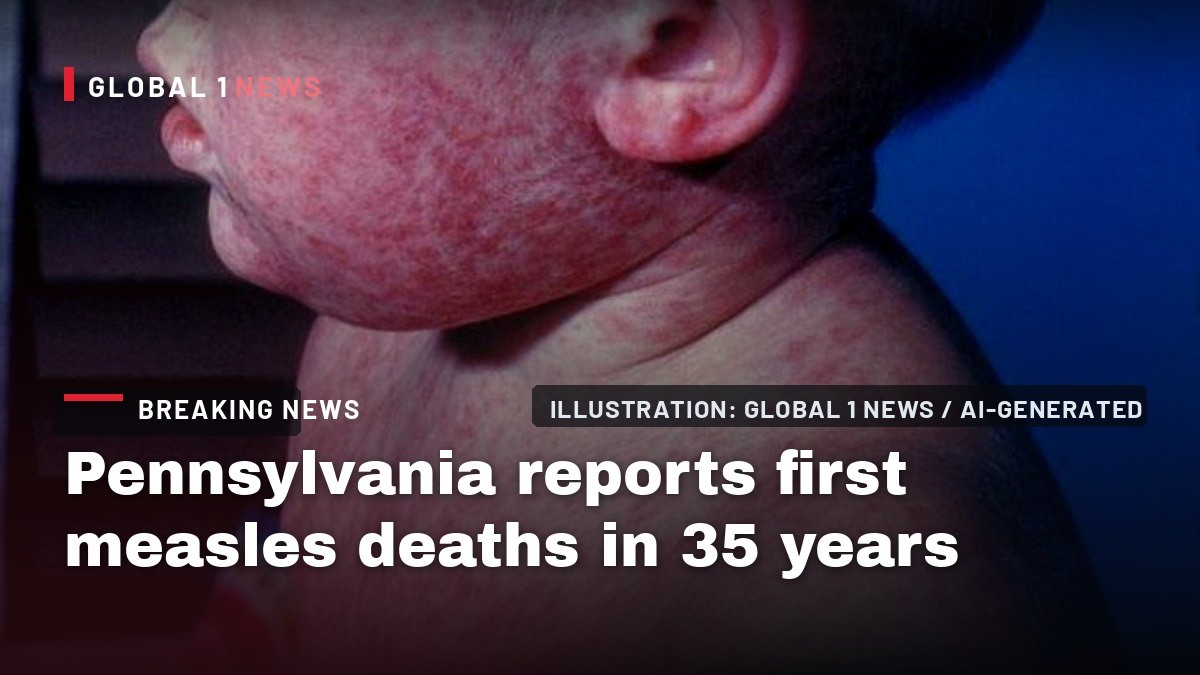
Pennsylvania reports first measles deaths in 35 years as US outbreak exposes the deadly cost of vaccine hesitancy
A preventable tragedy in Lancaster County
Pennsylvania has recorded its first measles deaths in 35 years, with both victims unvaccinated residents of Lancaster County. The state health department, which has declined to identify the deceased, confirmed the fatalities on Tuesday, marking the first US measles deaths of 2026 and underscoring the human toll of a disease that was declared eliminated in America a quarter of a century ago.
The deaths come amid a historic resurgence of the highly contagious virus, which can cause fever, pneumonia, brain swelling and, in severe cases, death. Dr Paul Offit, an infectious disease expert at the Children's Hospital of Philadelphia, did not mince words when contacted by The Independent. "All of this suffering and hospitalization and death is entirely preventable," he said. "Why is it that the most vulnerable among us, our children, are forced to suffer our ignorance?"
Pennsylvania's Secretary of Health, Dr Debra Bogen, struck a similarly sombre note, acknowledging that the Commonwealth's success in eliminating measles for more than three decades had bred a dangerous complacency. "Because measles was largely eliminated in the Commonwealth for more than three decades, people are not familiar with this disease and don't fully understand the potential severity of the illness," she said.
The scale of the 2026 American outbreak
The numbers are stark. The Centers for Disease Control and Prevention (CDC) has confirmed 2,777 measles cases across 47 states and the District of Columbia so far this year, the majority in children and teenagers. Thirty-six new outbreaks have been identified nationwide, accounting for the bulk of infections. Pennsylvania alone has recorded 393 confirmed cases, with 86 reported in the past week alone.
In neighbouring Maryland, health officials declared measles outbreaks in three counties on Monday following an investigation into 14 new cases among unvaccinated residents. The state has logged 31 cases in total, 27 of them reported since 15 July. The Maryland health department sought to reassure the public, noting that "no public exposures have been identified in these cases" and that "there is currently no evidence of widespread community transmission, as most cases occurred among household contacts."
Yet the reassurance rings hollow against the broader national picture. The CDC says two doses of the measles-mumps-rubella (MMR) vaccine provide 97 per cent lifetime protection. Without it, there is a 90 per cent chance of infection after breathing in infected particles or touching contaminated surfaces. The virus can linger in the air for up to two hours after an infected person has left the room.
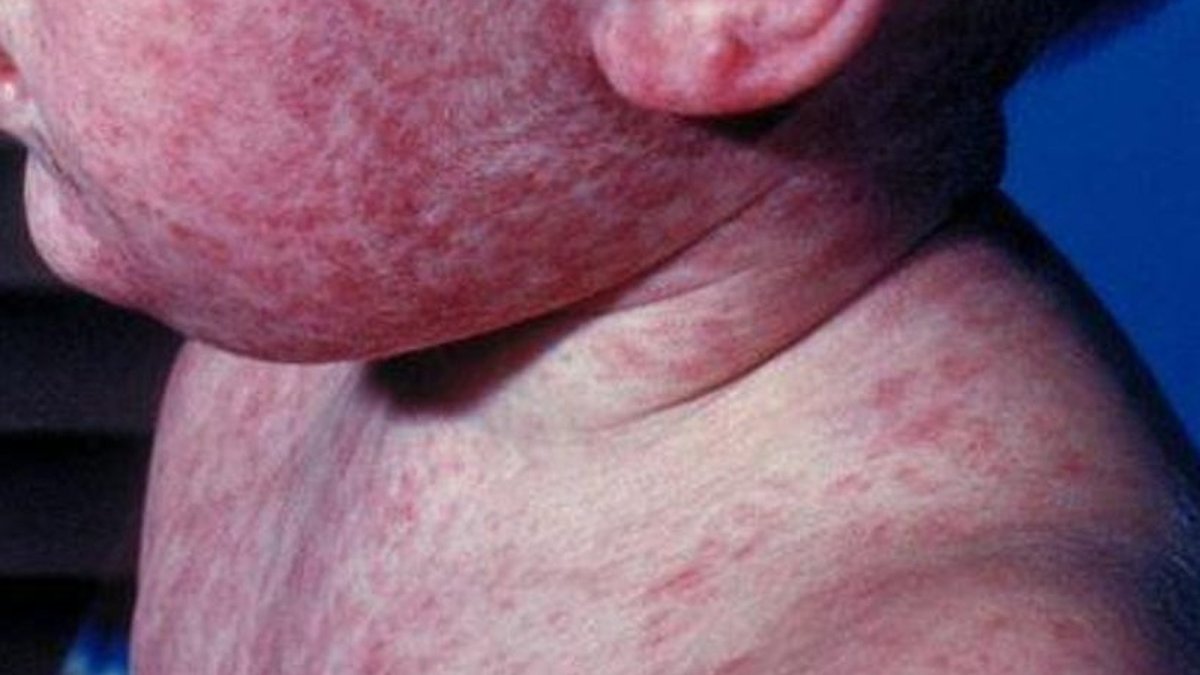
Vaccination rates fall below the critical threshold
The root cause of this resurgence is not difficult to identify. Pennsylvania's MMR vaccination rate among kindergarteners stood at 92.7 per cent over the last school year — below the 95 per cent threshold required for community immunity, the level at which the disease struggles to spread. In Lancaster County, the epicentre of the current outbreak, the figure is even more alarming: just under 86 per cent of kindergarten-age children have received the vaccine, according to data shared by LancasterOnline.
This is not a failure of science but a failure of public health messaging. Experts say vaccine hesitancy, which has worsened since the pandemic, is largely to blame for the rising measles rates. The gap between 92.7 per cent and 95 per cent may seem small, but in epidemiological terms it is a chasm. It represents thousands of unprotected children in classrooms, playgrounds and waiting rooms, each one a potential vector for a virus that is among the most infectious known to humanity.
The political context: Washington's war on vaccines
Into this public health crisis steps an administration that appears determined to make matters worse. The Trump administration's public health strategy, spearheaded by Health Secretary Robert F. Kennedy Jr, has seen vaccine sceptics added to federal advisory panels and misinformation about vaccines aired inside the government itself. The administration has also floated plans to split the MMR shot into its component parts, a move experts warn could further erode uptake by complicating the vaccination schedule and giving hesitant parents more opportunities to decline.
President Donald Trump's own comments have done little to inspire confidence. "They give — I mean, for a little baby to be injected with that much fluid?" he told reporters in September. "Even beyond the actual ingredients, they have sometimes 80 different vaccines ... It's like you're shooting up a horse." The claim is demonstrably false — doctors say the number of vaccinations before the age of 18 is typically between 30 and 50 — but in the age of viral misinformation, the retraction never travels as fast as the original soundbite.
The Department of Health and Human Services, for its part, has sought to project competence, stating in a social media post that "CDC is working closely with state and local health departments to strengthen response efforts, rapidly support affected communities across the state and communicate the steps people can take to slow the spread of measles." The post added, almost as an afterthought: "The MMR vaccine provides the most effective protection against measles and helps prevent its spread."
The UK angle: a warning from across the Atlantic
For British readers, the American tragedy carries an uncomfortable resonance. The United Kingdom has been here before, and the scars are still visible. In 2024, outbreaks in Birmingham and London forced the UK Health Security Agency to declare a national incident, with more than 300 confirmed cases in the West Midlands alone. The cause was the same as in Pennsylvania: MMR uptake had fallen below the 95 per cent threshold required for herd immunity, with some London boroughs reporting rates as low as 75 per cent.
The NHS has spent the intervening years trying to claw back lost ground, launching catch-up campaigns targeting millions of children who missed routine jabs during the pandemic. The efforts have had some success — NHS England reported that more than 100,000 additional MMR doses were administered in the year following the Birmingham outbreak — but the underlying problem persists. As of the latest data, England's MMR coverage for two doses by age five stands at around 92 per cent, still short of the World Health Organisation's 95 per cent target.
The lessons from Pennsylvania are clear. Measles does not respect borders, and it does not discriminate between American and British children. The disease is so infectious that a single traveller can spark an outbreak in any community where vaccination rates have slipped. The UK's own vaccine hesitancy, fuelled by the discredited Andrew Wakefield research and amplified by social media algorithms, has never been fully extinguished. It simmers beneath the surface, waiting for the next crisis to reignite it.
What this means for public health messaging
The Pennsylvania deaths should serve as a wake-up call, but the question is whether anyone is listening. Public health officials on both sides of the Atlantic face a common enemy: not measles itself, but the misinformation ecosystem that allows it to flourish. The challenge is not simply to provide accurate information — that has always been available — but to compete in an attention economy where a viral TikTok video questioning vaccine safety reaches more people than a carefully worded NHS leaflet.
Dr Offit's frustration is palpable, and it is shared by public health professionals everywhere. The science has not changed. The MMR vaccine is safe, effective and has saved millions of lives since its introduction in the 1960s. What has changed is the willingness of a significant minority of parents to trust it. The consequences are now being measured in funeral arrangements in Lancaster County, Pennsylvania.
The political dimension cannot be ignored. When the most powerful man in the United States publicly questions the safety of childhood vaccination, when his health secretary fills advisory panels with vaccine sceptics, when the federal government contemplates dismantling a vaccine schedule that has worked for decades, the message to hesitant parents is clear: your doubts are justified. It is a message that will kill more children before it is corrected.
For the UK, the lesson is that public health cannot be taken for granted. The NHS's catch-up campaigns are welcome, but they are reactive. What is needed is a sustained, proactive effort to rebuild trust in vaccination — not just through advertising, but through community engagement, school-based programmes and the kind of personal outreach that convinces a hesitant parent to make that appointment. The alternative is what we are witnessing in Pennsylvania: entirely preventable deaths, and a disease that was supposed to be consigned to history making a deadly comeback.
By Erica Thornton, Staff Writer
This article was produced with AI-assisted research and editorial support. Reporting is based on sources cited in the article.
What's Your Reaction?
 Like
0
Like
0
 Dislike
0
Dislike
0
 Love
0
Love
0
 Funny
0
Funny
0
 Wow
0
Wow
0
 Sad
0
Sad
0
 Angry
0
Angry
0

US Politics and Policy Correspondent at Global1.News. Based in Washington DC, covering American politics, policy, elections, and the courts. Knows how the system works and tells you what it actually means.











Comments (0)