
Burnham's 'Smoke-Free Britain' Policy Worries Cuba and Dominican Republic
The aroma of a finely aged cigar carries centuries of tradition, the labour of skilled hands, and the economic hopes of entire rural communities across the Caribbean and Latin America.
Burnham's 'Smoke-Free Britain' Policy Worries Cuba and Dominican Republic
The aroma of a finely aged cigar carries centuries of tradition, the labour of skilled hands, and the economic hopes of entire rural communities across the Caribbean and Latin America. But that heritage now finds itself at the centre of a diplomatic storm brewing across the Atlantic, as United Kingdom Prime Minister Andy Burnham’s ambitious "smoke-free Britain" agenda collides head-on with the economic realities of Cuba, Honduras, and the Dominican Republic.
Leaked diplomatic correspondence, revealed by The Telegraph, shows that the ambassadors of these three nations have been writing to the UK Government since 2024, expressing grave concerns over the generational tobacco ban. This is not a small squabble over trade regulations; for these countries, it is a fight for survival of a craft industry that supports thousands of farming and rolling jobs, many in rural areas where alternative employment is scarce. As we in the Caribbean know all too well, when a major market sneezes, our small open economies can catch a cold. The question now is whether the UK is listening.
The Generational Ban: A Timeline of Concern
The heart of the dispute lies in the UK's Tobacco and Vapes Act 2026, which introduces a generational smoking ban. Under these rules, retailers are prohibited from selling tobacco products to anyone born after 1 January 2009, in perpetuity. The ban is coming into force on 1 January 2027, and it applies not just to cigarettes but to all tobacco products, including the premium handmade cigars that are the pride of Cuba and a significant export for the Dominican Republic and Honduras. The diplomatic pushback has been sustained and organised. Since 2024, the ambassadors have been pressing their case, arguing that the legislation fails to distinguish between mass-market cigarettes and the artisanal, hand-rolled cigars that are central to their cultural heritage. Cuba, in particular, urged the UK to exempt handmade cigars from the generational ban. That exemption was rejected when the legislation was drawn up, and the dispute has been inherited by Prime Minister Burnham after he took office. It is a thorny issue that refuses to disappear, and the leaked letters suggest the frustration is mounting. For the UK, the policy is a public health milestone, designed to create a smoke-free generation. For the producers, it represents an existential threat. The generational ban effectively means that, over time, the legal market for their premium products in the UK will shrink to zero. It is a slow-motion economic embargo, and the Caribbean and Latin American nations are feeling the heat long before the first day of enforcement arrives.Premium Cigars: A Craft, Not a Cigarette
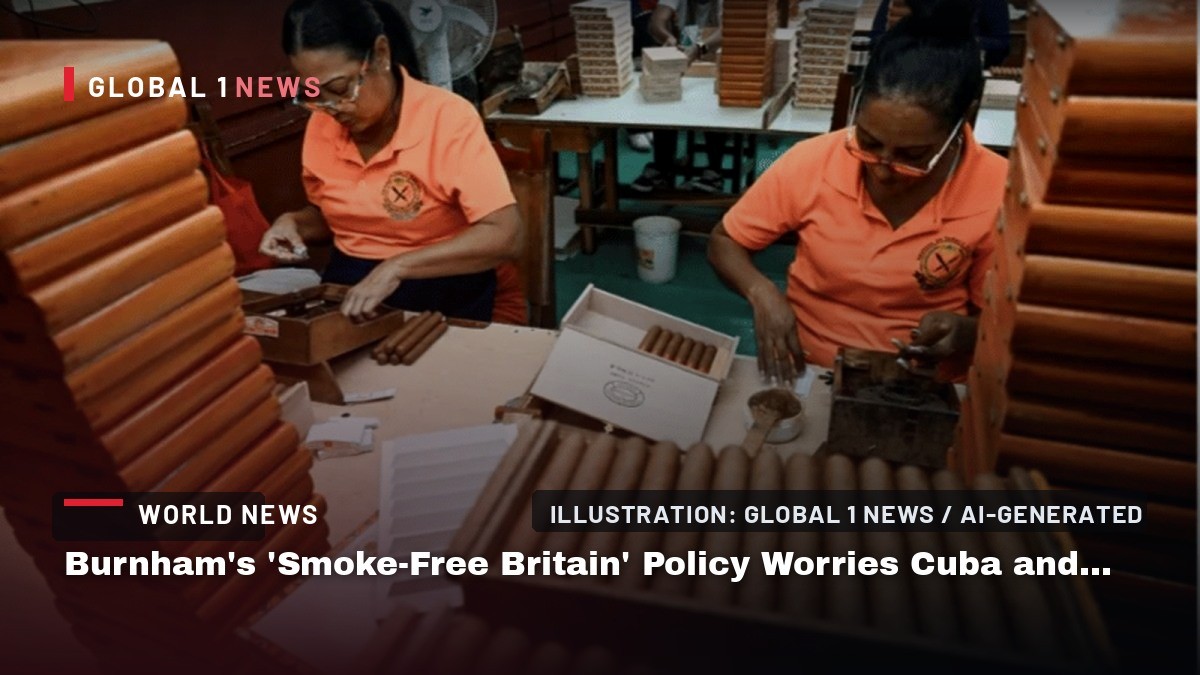
To understand the depth of the concern, one must appreciate the fundamental difference between a premium handmade cigar and a pack of cigarettes. These cigars are not mass-produced; they are aged, hand-rolled, and crafted with a level of skill that takes years to master. In Cuba, the Habanos brand is world-famous, a symbol of national pride and a key driver of tourism. Visitors to Havana flock to see the rollers at work, their deft fingers transforming tobacco leaves into works of art. The Dominican Republic is the world's largest exporter of premium cigars by volume, while Honduras is also a major producer. For these nations, the cigar industry is not a niche luxury trade; it is a pillar of the rural economy. The cultivation of tobacco, the curing of leaves, and the rolling of cigars provide livelihoods for thousands of families. In many communities, it is the primary source of income, and the skills are passed down from generation to generation. Industry analysts note that while campaigners argue the generational ban is necessary for public health, producers maintain that premium cigars are a different product entirely. They are consumed occasionally by adults, often as a celebratory indulgence, and are not associated with the daily, addictive habits of cigarette smoking. The producers argue that treating a hand-rolled cigar, aged for years and enjoyed over an hour, in the same category as a pack of cigarettes is both scientifically dubious and culturally insensitive. It is a distinction that seems to be lost in the blunt instrument of the legislation.The UK Market: A Precious and Fragile Connection
The UK is one of the most important markets for premium cigars in Europe. British connoisseurs have long appreciated the craftsmanship of Cuban, Dominican, and Honduran products, and London's gentlemen's clubs and specialist tobacconists have been bastions of cigar culture for centuries. This is not just a commercial relationship; it is a cultural one, steeped in history and tradition. The concern now is not just the generational ban itself, but the accompanying plain-packaging consultation being run by the UK Government. If this consultation results in new rules, industry sources warn that it could render the UK premium cigar market commercially unviable within years. Plain packaging strips away the branding, the heritage, and the distinctiveness of the product. For a luxury item that relies heavily on its image and provenance, this could be a death knell. Cutting off the UK market would be a significant blow to Cuba, which relies heavily on its cigar exports for foreign revenue. The Dominican Republic and Honduras would also feel the pinch. For these countries, the UK is not just another customer; it is a gateway to the European market and a symbol of prestige. Losing that access would be a major setback, forcing producers to scramble for alternative markets in Asia and the Middle East, where demand is growing but is not yet sufficient to replace the loss of the UK.A Caribbean Perspective: Solidarity and Shared Stakes
From our vantage point in Trinidad and Tobago, this dispute resonates deeply. We understand the vulnerability of small economies that depend on a few key exports. We know what it is like to have our primary industries threatened by external policies over which we have little control. The Caribbean community has long stood in solidarity with Cuba, and this issue is no different. The fight to protect the premium cigar industry is a fight for economic sovereignty and cultural preservation. The Caribbean diaspora in the UK also has a stake in this outcome. Many Britons of Caribbean descent have family ties to these producing nations, and the cigar industry is part of the broader cultural tapestry of the region. There is a sense that the UK, in its zeal to improve public health, is trampling on the livelihoods of people in developing nations without fully considering the consequences. Moreover, the timing is particularly sensitive. The UK is a major partner for CARICOM nations, and this dispute could cast a shadow over broader trade and diplomatic relations. The ambassadors of Cuba, Honduras, and the Dominican Republic are not just fighting for their own industries; they are fighting for a principle of fair treatment in international trade. If a major power can unilaterally legislate a product out of existence without regard for the producing nations, it sets a dangerous precedent.What Lies Ahead: Negotiation or Confrontation?
As the 1 January 2027 enforcement date approaches, the pressure is mounting on all sides. Prime Minister Burnham has inherited a difficult legacy, and he must balance the public health imperatives of his "smoke-free Britain" agenda with the diplomatic and economic fallout of the policy. The leaked letters suggest that the producing nations are not willing to let this go quietly. They are seeking a carve-out for handmade cigars, arguing that a distinction can be made between the addictive, mass-market cigarette and the occasional, artisanal cigar. The industry is also mobilising. Cigar enthusiasts, retailers, and producers are making their voices heard, arguing that the ban is an overreach that will do little to improve public health while devastating legitimate businesses. They point to the fact that premium cigar smokers are a small, distinct demographic, and that the generational ban is a disproportionate response to a problem that is primarily associated with cigarettes. The coming months will be crucial. Will the UK Government show flexibility and exempt handmade cigars, or will it hold the line and risk a full-blown trade dispute with three nations that have deep historical and cultural ties to Britain? For the farmers in the Vuelta Abajo region of Cuba, the rollers in Santiago, and the exporters in Santiago de los Caballeros, the answer cannot come soon enough. The clock is ticking, and the future of an entire industry hangs in the balance. This article was produced with AI-assisted research and editorial support. Sources: Caribbean360, The Telegraph, GB News, Cubanet, CiberCuba, Cigar Aficionado. By Sharon Sahatoo, Staff WriterWhat's Your Reaction?
 Like
0
Like
0
 Dislike
0
Dislike
0
 Love
0
Love
0
 Funny
0
Funny
0
 Wow
0
Wow
0
 Sad
0
Sad
0
 Angry
0
Angry
0

Sharon Sahatoo
Caribbean Correspondent at Global1.News. Based in Port of Spain, Trinidad, covering Caribbean politics, economy, energy, climate, and culture. Amplifying the voices and stories of the Caribbean region.












Comments (0)