
Canada Hits Back: Counter-Tariffs on $27.6 Billion of U.S. Goods Take Effect Sept. 8
OTTAWA — The federal government has unveiled a sweeping retaliatory package against the United States, imposing dollar-for-dollar counter-tariffs on C$27.6 billion (about US$19.94 billion) worth of American goods. The measures, announced Tuesday by Finance Minister Francois-Philippe Champagne and Industry Minister Melanie Joly, are set to come into force at 12:01 a.m. on Tuesday, September 8, 2026.
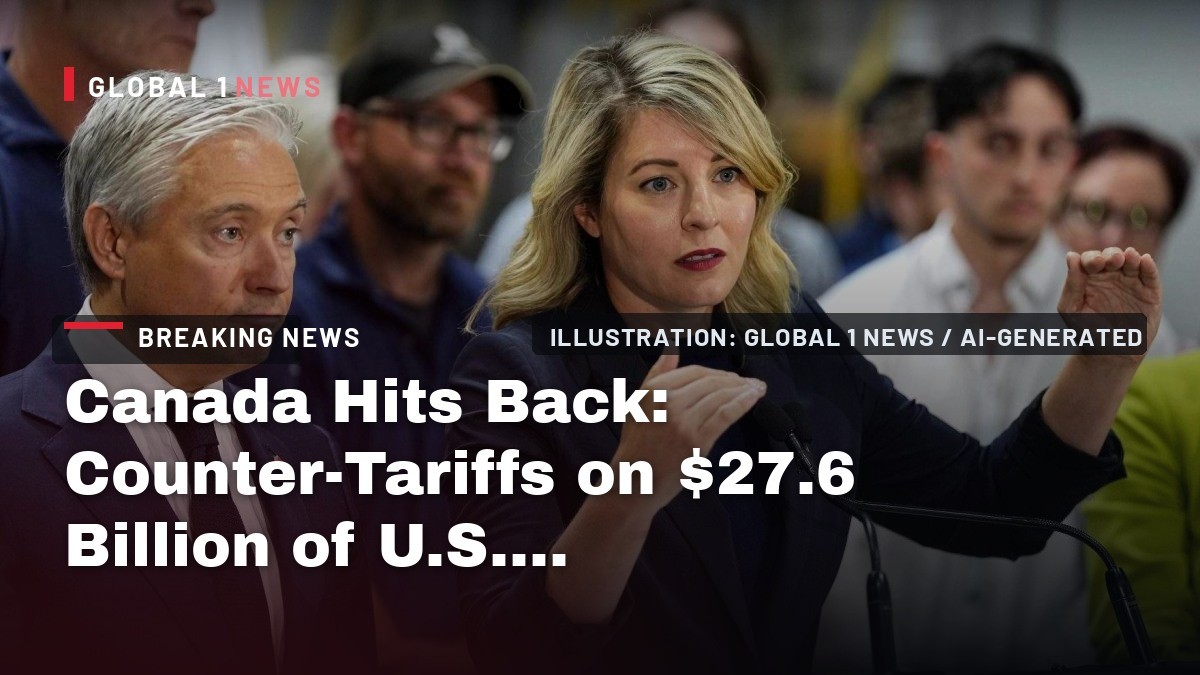
Canada Hits Back: Counter-Tariffs on $27.6 Billion of U.S. Goods Take Effect Sept. 8
OTTAWA — The federal government has unveiled a sweeping retaliatory package against the United States, imposing dollar-for-dollar counter-tariffs on C$27.6 billion (about US$19.94 billion) worth of American goods. The measures, announced Tuesday by Finance Minister Francois-Philippe Champagne and Industry Minister Melanie Joly, are set to come into force at 12:01 a.m. on Tuesday, September 8, 2026.
The announcement marks a significant escalation in the ongoing trade dispute, triggered by the Trump administration's decision to impose 50 per cent tariffs on roughly five per cent of Canadian imports. Those U.S. duties took effect Saturday, August 22, after Canada-U.S. trade talks collapsed on Friday, August 21. Prime Minister Mark Carney has vowed to match the American tariffs "dollar for dollar," stating that the U.S. asked "too much, offered too little" as negotiations failed.
The counter-tariffs apply across more than 700 American products, with rates of 15, 25 and 50 per cent. The rate for each product has been calibrated to match the corresponding U.S. duty, drawn from Washington's Section 338 and Section 232 tariff regimes. This is not a blanket measure, but a targeted, product-by-product response designed to hit American exporters where it hurts most while minimising collateral damage to Canadian supply chains.
A Targeted List: From Steel to Smartphones
The list of affected goods is extensive and strategically chosen. Steel and aluminum are at the forefront, with Canada doubling its existing counter-tariffs on these materials to 50 per cent. This move directly challenges the U.S. Section 232 tariffs, which have long been a point of contention between the two trading partners. The doubling signals that Ottawa is no longer willing to absorb the cost of these duties without a proportional response.
Beyond metals, the tariff list spans a wide range of consumer and industrial goods. Dairy products, a politically sensitive sector in Canada, are included, as are appliances, furniture, and clothing and apparel. Agricultural equipment, pulp and paper, and plastics also feature prominently. In a move that will be felt directly by American tech giants, the list includes electronics such as video-game consoles and smartphones.
The inclusion of consumer electronics is particularly notable. It suggests the federal government is willing to target high-profile American products that Canadian consumers recognise, amplifying the political pressure on U.S. manufacturers and retailers. The Department of Finance Canada has indicated that the government "has negotiated intensively and in good faith" toward a fair trade agreement, but that in recent days, talks broke down.
Champagne's Pledge: "Whatever It Takes, For As Long As It Takes"
Speaking at a press conference in Ottawa, Finance Minister Champagne framed the counter-tariffs as a measured but firm response. "We will support our workers, our businesses and our industries with whatever it takes, for as long as it takes," he said. He described Canada's response as "proportionate, targeted, and strategic," emphasising that the goal is not escalation for its own sake, but the defence of Canadian economic interests.
Industry Minister Melanie Joly echoed those sentiments, focusing on the domestic impact. The government is acutely aware that while these tariffs are aimed at the U.S., they will also create friction for Canadian businesses that rely on cross-border supply chains. To mitigate this, Ottawa is introducing a $7.5 billion package of new and enhanced measures to support Canadian workers and businesses in tariff-impacted industries.
Champagne described these supports as "fast, simple and agile," with a specific focus on helping small- and medium-sized enterprises (SMEs) navigate the new trade landscape. The details of the support package are still being finalised, but the government has committed to ensuring that funds flow quickly to sectors most exposed to the tariffs, including manufacturing and agriculture.
Provincial Pushback: B.C. Takes a Hard Line on American Alcohol
The federal response is being matched by aggressive action at the provincial level. British Columbia Premier David Eby has taken a particularly hard line, staging a live event at a BC Liquor Store to announce the province's measures. B.C. has already removed American alcohol from store shelves and stopped importing it entirely.
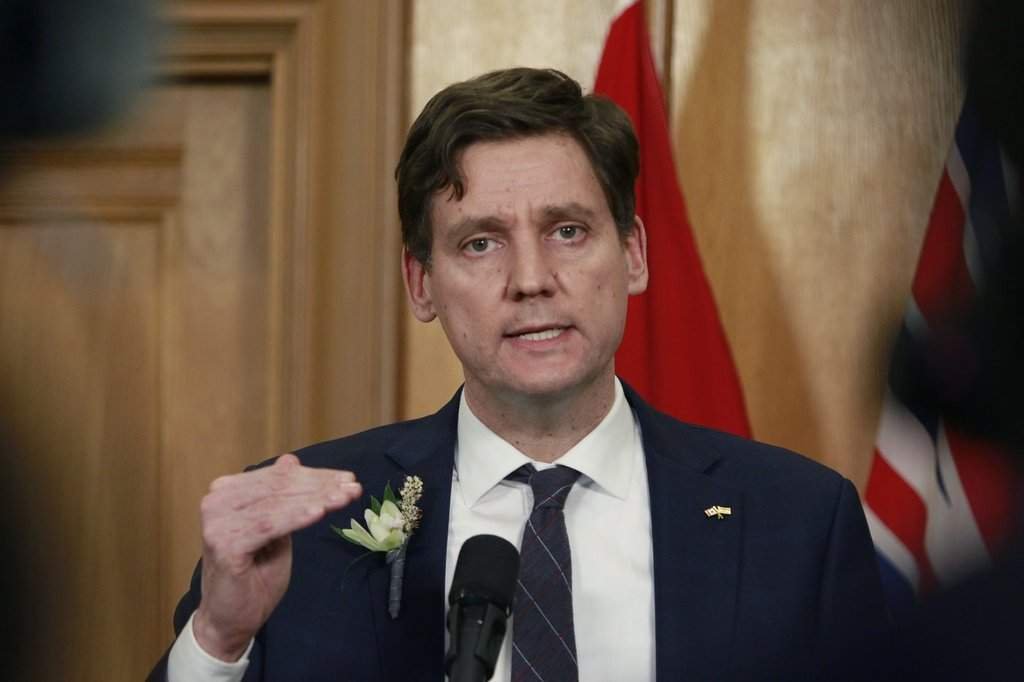
"There is not a chance in hell that U.S. alcohol is going back on the shelf in British Columbia," Eby said, delivering a blunt message to American distillers and vintners. The move is significant because BC Liquor is one of the largest buyers of alcohol in the world. By removing American liquor, the province is effectively cutting off tens of millions of dollars in annual revenue for U.S. manufacturers.
Eby's stance highlights the federal-provincial coordination on this file, but also the varying degrees of intensity. While Ottawa has framed its response as strategic, provincial leaders are feeling the immediate pressure from local industries and are responding with their own, sometimes more aggressive, measures. This dynamic will be crucial to watch as the September 8 deadline approaches.
Economic Impact and the Road Ahead
The $27.6 billion figure represents a substantial portion of Canada-U.S. trade, but it is carefully calibrated. By matching the U.S. tariffs dollar-for-dollar, Ottawa is aiming to create a level playing field rather than engaging in a race to the bottom. The 15, 25 and 50 per cent rates are designed to mirror the specific duties imposed by Washington, ensuring that Canadian countermeasures are seen as defensive rather than provocative.
However, the economic consequences will be real. Canadian consumers may see price increases on affected goods, particularly electronics and appliances. Manufacturers who rely on American steel or aluminum components will face higher input costs. The $7.5 billion support package is intended to cushion these blows, but the government acknowledges that some sectors will struggle.
The collapse of trade talks on August 21 was a pivotal moment. Prime Minister Carney's assessment that the U.S. asked "too much, offered too little" suggests a fundamental disconnect between the two sides. With the counter-tariffs set to take effect in less than two weeks, there is little time for a last-minute reprieve. The onus is now on Washington to reconsider its position, but the rhetoric from Ottawa suggests they are prepared for a prolonged standoff.
As September 8 approaches, businesses on both sides of the border are bracing for impact. The federal government has promised to monitor the situation closely and adjust its approach as needed. For now, the message from Ottawa is clear: Canada will not be pushed around, and it is prepared to defend its economic sovereignty with every tool at its disposal.
Tags: Canada tariffs, U.S. trade war, counter-tariffs, Francois-Philippe Champagne, Mark Carney, $27.6 billion, steel aluminum tariffs, dairy tariffs, Canadian economy, trade talks collapse, BC Liquor, David Eby, Melanie Joly, Section 232, Section 338
By Alex Thompson, Staff Writer
This article was produced with AI-assisted research and editorial support. Reporting is based on sources cited in the article.
What's Your Reaction?
 Like
0
Like
0
 Dislike
0
Dislike
0
 Love
0
Love
0
 Funny
0
Funny
0
 Wow
0
Wow
0
 Sad
0
Sad
0
 Angry
0
Angry
0

Canada Correspondent at Global1.News. Based in Toronto, covering Canadian politics, energy, trade, and US-Canada relations. Provides the Canadian perspective on North American and global affairs.















Comments (0)