
Panama Canal to cut number of ships passing through due to El Niño
Panama Canal Authority cuts daily ship transits from 36 to 34 on 3 September and to 32 by 15 September as El Niño-driven drought drains the waterway's reservoirs, threatening global trade and Latin American supply chains.
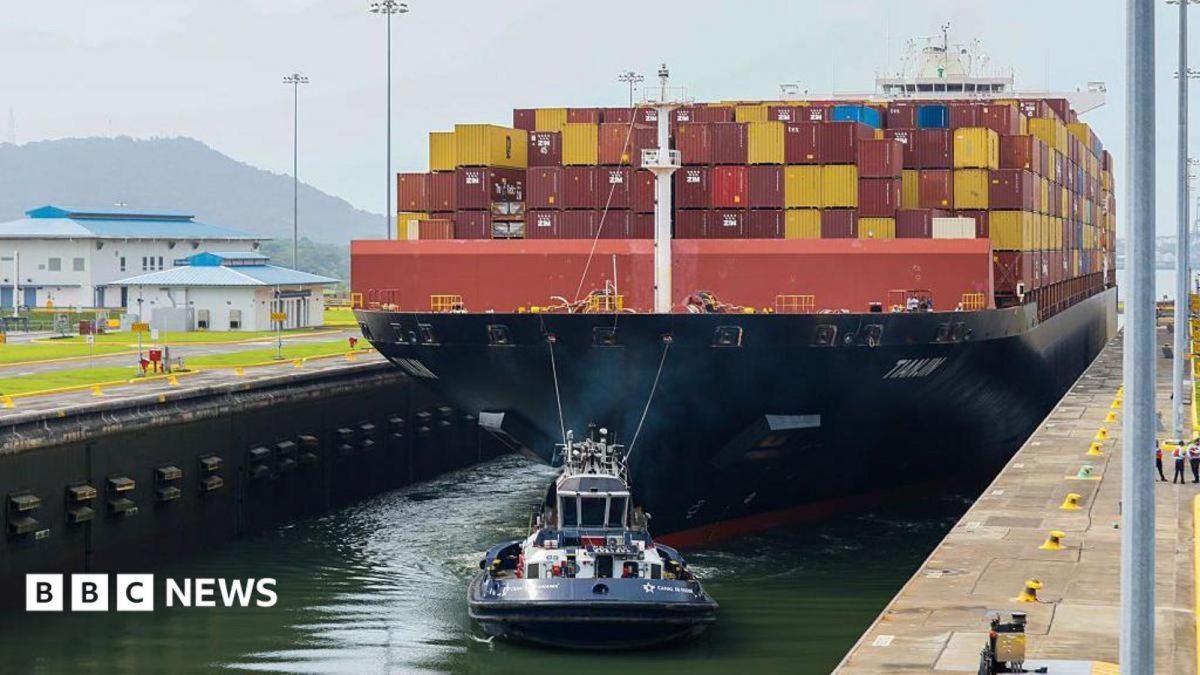
The Panama Canal Authority (ACP) has informed shipping companies that it will slash the number of daily vessel transits through the critical waterway, a direct response to a punishing drought driven by the El Niño climate pattern. The cuts, announced on Thursday, will reduce daily passages from 36 to 34 beginning 3 September, and then further to 32 per day by 15 September. This phased reduction is a stark admission that the artificial lakes feeding the canal's locks are running dangerously low, threatening the reliability of a route that handles roughly 14,000 ships annually and generates about $3 billion in revenue for Panama each year.
Panama City, Panama — The announcement has sent ripples through global shipping markets already reeling from war-related disruptions in the Middle East. The ACP framed the decision as a necessary sacrifice to preserve service reliability and safeguard water resources for human consumption, stating that despite the arrival of the rainy season in Central America and existing water-saving measures, additional action was needed "to support the long-term sustainability of transit operations." For a nation whose economy is deeply intertwined with the canal's fortunes, the move underscores a growing regional reality: climate change is no longer a distant threat but a present-day operational constraint.
Phased Reductions and the Calculus of Water
The ACP's directive, delivered directly to shipping firms on Thursday, outlines a two-step reduction over the coming weeks. The first cut, dropping from 36 to 34 daily transits, takes effect on 3 September. The second, more severe reduction to 32 vessels per day, follows less than two weeks later on 15 September. These numbers are not arbitrary; they reflect the ACP's engineering assessment of how much water can be safely drawn from Lake Gatún and Lake Alajuela, the two reservoirs that supply the canal's lock system and provide drinking water for Panama City and its surrounding areas.
Each transit through the canal's locks consumes millions of gallons of fresh water, which is released into the sea after use. When reservoir levels fall, the ACP faces an impossible choice: prioritize commercial shipping or ensure the population has potable water. In recent days, the authority has emphasized that human consumption takes precedence, a stance that resonates deeply in a country where the canal and the city's water supply are inextricably linked. The phased approach, according to ACP statements, is designed to give shipping lines predictable schedules while the authority monitors rainfall and reservoir recovery through the remainder of the wet season.
El Niño's Grip: A Forecast for a Strong Event
El Niño, a naturally occurring pattern of periodic sea surface warming in the equatorial Pacific, has a well-documented history of disrupting weather systems across the globe. For Panama, it typically means a significant reduction in rainfall during the critical months that replenish the canal's reservoirs. This year, however, meteorologists are warning that the event could be one of the strongest ever recorded, with its effects made more intense by the underlying trend of climate change.
The current El Niño has already produced a pronounced dry spell across Central America, with Panama experiencing rainfall deficits that have left the canal's lakes at levels well below their historical averages for this time of year. The ACP's decision to cut transits now, rather than wait for the peak of the dry season, signals that the authority is bracing for a prolonged period of water stress. The combination of a powerful El Niño superimposed on a warming planet creates a scenario where extreme weather events—both droughts and floods—become more frequent and more severe, placing infrastructure like the canal under unprecedented strain.
The Canal's Vital Role in Global and Regional Trade
The Panama Canal is more than a national asset; it is a linchpin of global commerce. By providing a shortcut between the Atlantic and Pacific oceans, it eliminates the need for ships to navigate the treacherous route around Cape Horn at the southern tip of South America. This saves time, fuel, and money for shippers moving goods between Asia, Europe, and the Americas. The waterway operates 24 hours a day, 365 days a year, and its efficiency is critical for just-in-time supply chains that span the globe.
For Latin America, the canal's health is a matter of direct economic concern. Ports on the Pacific coast of countries like Chile, Peru, and Ecuador rely on the canal to reach Atlantic markets in the United States and Europe. Conversely, Atlantic-facing nations like Brazil and Argentina use it to ship agricultural products—soybeans, corn, beef—to Asian markets, particularly China. When the canal restricts transits, it creates a bottleneck that can delay shipments, increase freight costs, and ultimately raise prices for consumers across the region. The ripple effects are felt from the docks of Santos in Brazil to the fishing ports of Valparaíso in Chile.
A Precedent of Drought: Lessons from 2023
This is not the first time the ACP has been forced to ration its waterway. In 2023, during the last El Niño period, the authority cut the number of vessels using the canal after Panama experienced its driest October since records began in 1950. That event served as a wake-up call, prompting the ACP to implement a series of water-saving measures, including the use of water-saving basins in the locks, which recycle a portion of the water used in each transit.
Despite these improvements, the current situation demonstrates that incremental efficiency gains are insufficient to offset the scale of the rainfall deficit. The ACP has acknowledged that the measures taken since 2023, while helpful, have not been enough to build the resilience needed to weather a strong El Niño. The authority is now exploring longer-term solutions, including the construction of additional reservoirs and the potential for desalination plants, but these projects are years away from completion. In the interim, the canal remains vulnerable to the whims of the weather, a precarious position for a piece of infrastructure that underpins so much of the region's trade.
Global Shipping Under Siege: The Strait of Hormuz Factor
The Panama Canal's troubles arrive at a particularly inopportune moment for the global shipping industry. The ongoing Iran war has caused a large reduction in the number of vessels passing through the Strait of Hormuz, a chokepoint for a significant portion of the world's oil and liquefied natural gas. Shipping companies have been forced to reroute vessels, adjust schedules, and absorb higher insurance premiums in the region. Now, with the Panama Canal imposing transit limits, the industry faces a dual constraint on two of the world's most important maritime passages.
The convergence of these disruptions is creating a perfect storm for supply chains. Freight rates on routes that depend on the canal have already begun to climb, and shipping executives are warning of potential delays for consumer goods, electronics, and agricultural products. For Latin American exporters, the timing is particularly painful. The region is entering its peak harvest season for several key commodities, and the reduced canal capacity threatens to strand goods at ports or force costly detours through the Suez Canal or around the Cape of Good Hope, adding weeks to transit times and significantly increasing costs.
Climate Resilience and Latin America's Water Future
The crisis at the Panama Canal is a microcosm of a broader challenge facing Latin America: the region's critical infrastructure is increasingly vulnerable to the impacts of climate change. From the drought-stricken reservoirs of São Paulo to the melting glaciers of the Andes that supply water to cities like La Paz and Quito, the region is grappling with water scarcity on multiple fronts. The canal's predicament highlights the urgent need for investment in climate-resilient infrastructure, not just in Panama but across the continent.
Governments and businesses in Latin America must confront the reality that the weather patterns of the past are no longer a reliable guide for the future. The ACP's decision to cut transits is a rational response to a changing climate, but it is also a warning sign. If the region's water infrastructure—canals, dams, reservoirs, and aqueducts—is not upgraded and expanded, the economic and social costs will be immense. The Panama Canal, a marvel of 20th-century engineering, is now a test case for how 21st-century climate adaptation will unfold. The world will be watching to see if Panama can navigate this crisis, and what lessons it can offer to a region that is learning, often painfully, to live with a hotter, drier, and more unpredictable climate.
This article was produced with AI-assisted research and editorial support. Sources: BBC News, The Energy Tribune, Panama Canal Authority.
By Elena Vasquez, Staff Writer
What's Your Reaction?
 Like
0
Like
0
 Dislike
0
Dislike
0
 Love
0
Love
0
 Funny
0
Funny
0
 Wow
0
Wow
0
 Sad
0
Sad
0
 Angry
0
Angry
0

Latin America Correspondent at Global1.News. Based in Mexico City, covering politics, economics, energy, and culture across the region. Brings an on-the-ground perspective to stories spanning from the Rio Grande to Patagonia.













Comments (0)