
Israel Seizes UNRWA Qalandia Training Centre in East Jerusalem
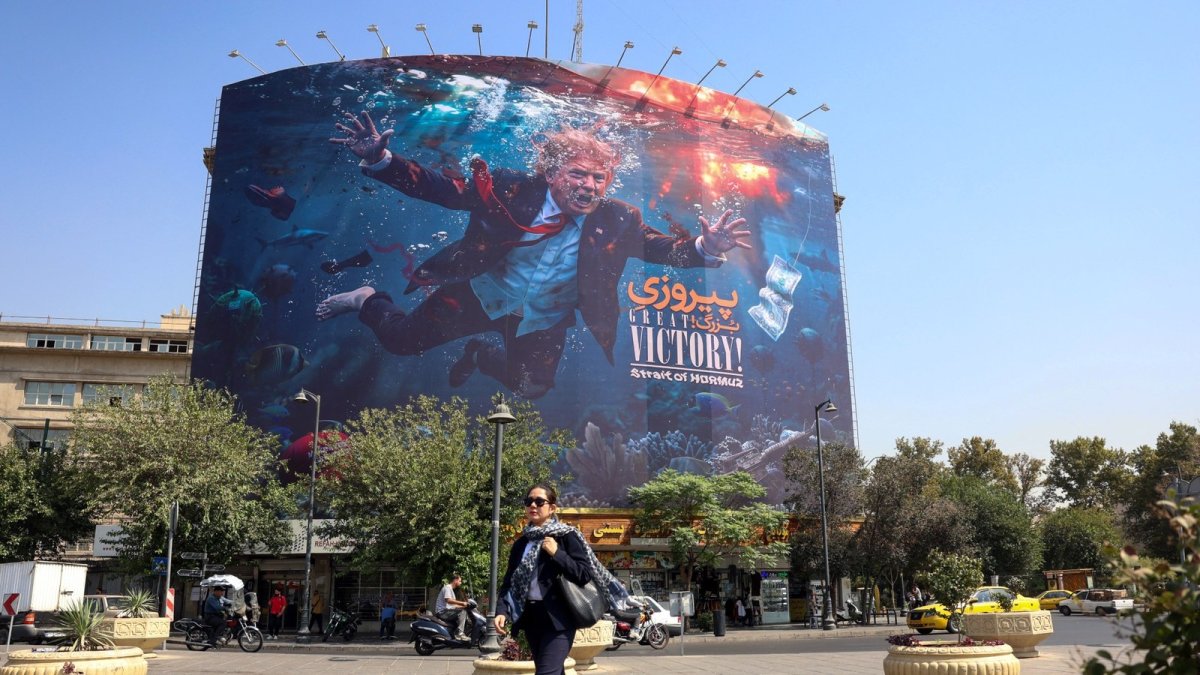
Israeli forces seized UNRWA's Qalandia Training Centre in occupied East Jerusalem on Tuesday, raising an Israeli flag and beginning demolition of parts of the site. Ordered by Netanyahu and joined by Ben-Gvir, the raid drew condemnation from the UN, Jordan and the Palestinian Foreign Ministry.
The forcible seizure of UNRWA's Qalandia Training Centre by Israeli security forces on Tuesday marks a dramatic escalation in the long-running campaign to dismantle the UN agency's presence in Jerusalem and the occupied Palestinian territory. The raid, ordered directly by Prime Minister Benjamin Netanyahu and joined by far-right National Security Minister Itamar Ben-Gvir, directly challenges the inviolability of UN premises and comes less than a year after the International Court of Justice (ICJ) affirmed Israel's obligation to facilitate humanitarian relief, including through UNRWA. This is not merely a property dispute; it is a calculated test of the international legal order and a signal of the shifting balance of power in the occupied West Bank.
Israel's Seizure of UNRWA's Qalandia Centre: A Direct Challenge to International Law and the UN's Authority
Beirut, Lebanon – August 25, 2026 — At approximately 10:00 am local time, at least four armoured vehicles and more than 50 Israeli security personnel breached the gates of the Qalandia Training Centre (KTC) in Kafr Aqab, a Palestinian neighbourhood in occupied East Jerusalem. The operation, which involved the closure of the adjacent Qalandiya checkpoint and heavy deployments through Kafr Aqab and the Qalandia refugee camp, saw the detention and questioning of around 40 people, including some 20 UNRWA staff members on site. Within hours, an Israeli flag was raised over the compound, and demolition of parts of the facility had begun.

A Premeditated Escalation: The Prime Minister's Directive
The operation was not a spontaneous act by rogue elements. Prime Minister Benjamin Netanyahu's office issued a statement confirming his direct order, framing the seizure as the execution of the Knesset's October 2024 legislation banning UNRWA operations on Israeli territory. "In accordance with my directive and following the law we passed, today the evacuation of the UNRWA compound in Kafr Aqab in Jerusalem has begun," the statement read. Netanyahu justified the move by asserting that Israel "will not allow an organisation whose employees were involved in terrorism and in the October 7 massacre to operate within its territory." This framing, which has been repeatedly challenged by independent reviews, provides the political cover for what is a significant land grab in a strategically vital area.
The presence of National Security Minister Itamar Ben-Gvir at the scene underscores the ideological drivers of the operation. Ben-Gvir, who posted a photo of the flag with the caption "UNRWA in our hands," called the raid "making history," declaring "there is no place for the agency in Jerusalem and Israel." His participation transforms a security operation into a political statement, aimed squarely at his far-right constituency and designed to cement facts on the ground before any potential diplomatic intervention.
UNRWA's Response: A Violation of Inviolability
UNRWA's reaction was swift and unequivocal. The agency described the incursion as "unauthorised and deeply concerning," stating that "the entry of armed security forces into a United Nations facility, without the authorisation or consent of the United Nations, is unacceptable." The centre, established in 1952 as UNRWA's oldest vocational training facility, is a "United Nations facility protected by the privileges and immunities afforded to the Organisation under international law. Its inviolability must be fully respected."
Roland Friedrich, UNRWA's director of affairs in the West Bank, highlighted the human cost, calling it "a violation of the right of young Palestinians to quality education." The KTC provides free vocational training to approximately 320-340 Palestinian refugees annually, serving a broader community of around 16,000 refugees from Qalandia camp and across the West Bank. The destruction of this facility is a direct blow to the future prospects of a generation already grappling with the economic and social fallout of the occupation.
The UN and the ICJ: A Legal Chasm
UN Secretary-General António Guterres, via spokesperson Stephane Dujarric, "condemned in the strongest terms" the Israeli action, expressing that he was "greatly alarmed." Dujarric reiterated that UNRWA premises "are premises of the United Nations. They are inviolable and immune from any form of interference." Critically, he noted this was the fifth instance of unauthorized entry by Israeli authorities at the centre since May 2026, indicating a pattern of escalating pressure rather than a singular incident.
The legal context is stark. On 22 October 2025, the ICJ delivered an advisory opinion holding that Israel is under an unequivocal obligation to agree to and facilitate humanitarian relief, including through UNRWA, and to respect the privileges and immunities of the UN. Lawyer Mohammad Dahleh, a human-rights advocate from East Jerusalem, stated plainly: "It's a clear violation of international law, and it's a clear violation of the advisory opinion rendered by the International Court of Justice." Israel's actions, therefore, are not just a breach of bilateral agreements but a direct repudiation of the world court's authority.
Israel's Counter-Narrative: Property Rights and a "New Complex"
Israel's Foreign Ministry has pre-emptively framed the seizure as a development project. It claims the Jerusalem Municipality has begun work to turn the property into a "new educational and community complex" for Kafr Aqab residents, including additional schools, a mosque, sports grounds, and health centres, with an investment of 40 million shekels. The ministry asserts that the land has been owned by the Jewish National Fund since 1937 and that UNRWA "walled off the land for decades" without property rights. Israel's UN ambassador, Danny Danon, has sent a letter to Guterres reiterating this claim, stating that Israel had notified the agency in advance.
This narrative, however, ignores the fundamental issue of the occupation. East Jerusalem was occupied and annexed by Israel in 1967, a move not recognised by most of the international community. The ICJ has consistently held that the occupation itself is unlawful, and the Fourth Geneva Convention prohibits an occupying power from appropriating private or public property. The offer of a "new complex" is a unilateral attempt to legitimise a seizure that has no basis in international law, a classic example of creating facts on the ground to pre-empt a negotiated settlement.
Regional and International Reactions: A Diplomatic Storm
The raid has triggered a wave of condemnation. The Palestinian Foreign Ministry condemned the action as seeking "to challenge the status and immunities of the United Nations and to impose facts on the ground by force." Jordan, which has a peace treaty with Israel, condemned the raid and forced eviction, as did the Organisation of Islamic Cooperation (OIC). Even Slovakia, a country often aligned with Israel, condemned Ben-Gvir's remarks, highlighting the diplomatic isolation of the move. Hamas denounced it as a "blatant attack" on a UN institution.
The timing is particularly provocative. The raid came just one day after representatives from more than 25 diplomatic missions and international organisations visited the site to witness the threats to the facilities. The Qalandia Camp Popular Committee has stated that the raid was a direct response to that diplomatic visit, a deliberate snub to the international community's efforts to protect the agency. This suggests a strategy of escalation designed to force the issue before any new diplomatic initiative can gain traction.
The Broader West Bank Context: A Surge in Violence
This seizure must be understood within the context of a dramatic surge in violence in the West Bank since October 7, 2023. The Palestinian Central Bureau of Statistics records at least 1,183 Palestinians killed in the West Bank since then, including 210 children. The Palestinian Prisoners' Society estimates more than 21,000 Palestinians have been detained. The Colonization and Wall Resistance Commission documented 1,819 violations in March 2026 alone, with 1,322 by Israeli forces and 497 by settlers. The UNRWA raid is the latest and most symbolic of these violations, targeting not just individuals but the institutional framework of the international community's presence.
Even within Israel's own political system, the move has created friction. On the same day, far-right lawmaker Zvi Sukkot smashed a monument in Madama with a sledgehammer, prompting a rare public rebuke from Netanyahu, who stated that "taking the law into one's own hands, particularly by public figures, is unacceptable." This internal tension reveals a government struggling to balance its ideological base with the operational needs of the military and the diplomatic costs of its actions.
Strategic Calculus: What Does Israel Want?
The strategic calculus behind the raid is multi-layered. For Netanyahu, it is a bid to solidify his coalition with the far-right by delivering on a core ideological promise: the removal of UNRWA from Jerusalem. For Ben-Gvir, it is a stepping stone towards the broader goal of annexation and the displacement of the Palestinian refugee population. For the Israeli state, it is a test of the limits of international tolerance. By seizing a UN facility, Israel is probing whether the international community, including the United States, will enforce the ICJ ruling or merely issue statements of condemnation.
The second-order effects are significant. The destruction of the KTC will likely accelerate the decline of UNRWA's operations in the West Bank, deepening the service vacuum for refugee communities who depend on the agency for education, health care and training. It also sets a dangerous precedent for other UN facilities and international organisations, potentially undermining the entire humanitarian architecture in the occupied territories. Furthermore, it sets a dangerous precedent for other UN facilities and international organisations, potentially undermining the entire humanitarian architecture in the occupied territories.
Conclusion: A Defining Moment for International Law
The seizure of the Qalandia Training Centre is a defining moment. It is a direct, forceful challenge to the authority of the United Nations and the International Court of Justice. The international community's response—whether it remains at the level of condemnation or moves to concrete measures—will determine the future of the rules-based order in the Middle East. For the 16,000 refugees served by the KTC, and the millions across the region who rely on UNRWA, the stakes could not be higher. The world is watching to see if the inviolability of UN premises is a principle or merely a suggestion.
By Malik Hassan, Staff Writer
This article was produced with AI-assisted research and editorial support. Reporting is based on sources cited in the article.
What's Your Reaction?
 Like
0
Like
0
 Dislike
0
Dislike
0
 Love
0
Love
0
 Funny
0
Funny
0
 Wow
0
Wow
0
 Sad
0
Sad
0
 Angry
0
Angry
0
Middle East Correspondent at Global1.News. Based in Beirut, covering politics, conflict, energy, and society across the Middle East. Brings context and depth to a region often reduced to headlines.











Comments (0)