
Panama Canal Cuts Ship Transits as El Nino Drought Tightens
Panama Canal cuts daily transits from 36 to 32 due to El Nino drought, threatening global trade and Panama City's drinking water. The 2023-24 crisis repeats, exposing Latin America's water vulnerability and the urgent need for long-term infrastructure and climate adaptation.
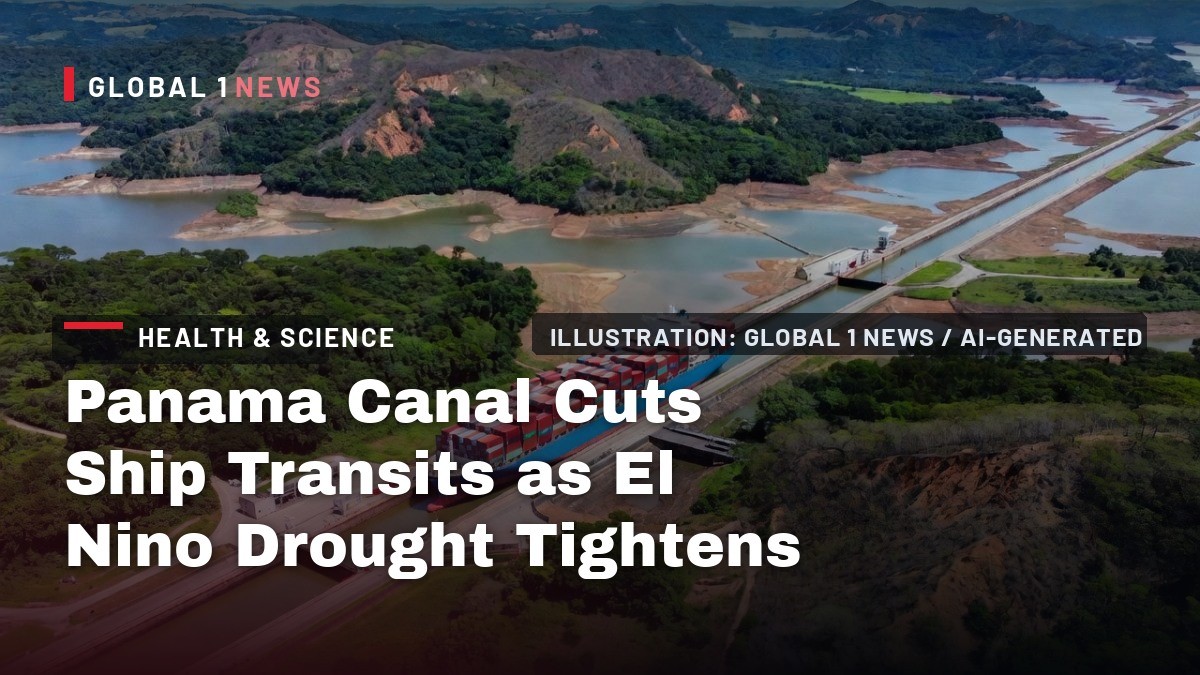
The Panama Canal is tightening its belt again, and the message from the ACP is unmistakable: the water crisis that nearly crippled global shipping two years ago was not an anomaly, but a warning. On Thursday, the Panama Canal Authority (ACP) announced a new round of transit reductions, cutting daily vessel passages from 36 to 34 starting September 3, and then down to 32 by September 15. The culprit is the same familiar foe — an El Nino-driven drought that has left the canal's two artificial lakes, Gatun and Alhajuela, critically low after months of below-average rainfall.
Panama City, Panama — The announcement, which came after days of speculation and a cryptic statement from ACP administrator Ricaurte Vasquez, confirms what many in the shipping industry had already begun to price in. The reductions are not just about keeping the canal operational; they are about keeping the taps running for the nearly two million people in Panama City who depend on Gatun Lake for their drinking water. This is the central tension of the canal's existence: a global trade artery that runs on the same freshwater reserves as a capital city, and the scales are tipping toward the city.
El Nino Returns With a Vengeance
The meteorological backdrop is stark. The US National Oceanic and Atmospheric Administration (NOAA) has confirmed that El Nino conditions developed in 2026, and forecasters are warning that the event could strengthen through the year and persist into early 2027. For Panama, El Nino is not a vague weather phenomenon; it is a direct assault on the country's hydrological cycle. The pattern typically suppresses rainfall across the Isthmus, and this year's iteration is already proving its mettle. The lakes that feed the canal's lock system are the canaries in the coal mine, and they are singing a grim tune.
The ACP's decision to reduce transits is a preemptive strike, a move to conserve what water remains in the system. The math is brutal: each ship that passes through the Neopanamax locks uses millions of gallons of freshwater, water that is then lost to the sea. With the lakes at reduced levels, every transit is a calculated sacrifice. The authority has been here before, and the scars of the 2023-24 crisis are still fresh. That drought saw transits slashed to as low as 18-24 per day, a shipping auction where a single vessel paid nearly $4 million to jump the queue, and a $100 million hit to canal revenues. The memory of those images — tankers lined up for miles, waiting for a slot that might never come — is a powerful motivator for action.
The Human Cost Behind the Shipping Lanes
While the world's attention is focused on the container ships and the rising cost of goods, the real story is unfolding in the watersheds of central Panama. Gatun Lake is not just a piece of infrastructure; it is the lifeblood of the nation. It provides drinking water to Panama City and the surrounding communities, and its health is now a matter of public health, not just commercial logistics. The ACP has explicitly stated that preserving municipal water supply is part of the calculus, a tacit admission that the canal's operational needs must now yield to the basic needs of the population.
This is a profound shift in priorities, and it reflects a broader regional reality. Across Latin America, the specter of water scarcity is rising. The Amazon is drying out, with river levels hitting record lows in recent years. Brazil has faced its own water crises, from the catastrophic collapse of the São Francisco River basin to the rationing in major cities. Central America's Dry Corridor, a strip of land that runs from Guatemala to Panama, is a chronic hunger zone where drought is a recurring nightmare. Panama's predicament is not an isolated event; it is a symptom of a continent-wide vulnerability to climate variability, and El Nino is the accelerant.
Shipping Costs Climb as Global Trade Stumbles
The immediate economic impact is being felt on the water. Several major container carriers have already introduced Panama Canal surcharges in recent weeks, and shipping costs are climbing. This comes at a time when global shipping is already strained, with disruptions in the Red Sea and other chokepoints forcing carriers to reroute and absorb higher fuel costs. The canal handles roughly 5 percent of global maritime trade, including grains, oil, and manufactured goods. Every reduction in capacity sends ripples through supply chains, from the soybean farmers in Brazil's Mato Grosso to the electronics manufacturers in East Asia.
The ACP has kept the water-saving measures introduced after the 2023-24 drought, including greater use of the Neopanamax locks' water-saving basins, simultaneous lockages for smaller vessels, and the use of interior lock gates. They have also reduced hydroelectric generation at Gatun Dam, a move that saves water but puts additional strain on the national grid. A draft restriction for the larger Neopanamax locks — a 48-foot limit that had been scheduled for late August — was postponed, with authorities monitoring lake levels weekly. This is a delicate dance, a series of incremental adjustments designed to stretch the water supply as far as possible.
Shipping Lines Reroute as the Costs Climb
The math is brutal, and the carriers know it. This week, several major container lines slapped new surcharges on Panama Canal transits, and the numbers only go one way: up. We saw this movie during the 2023-24 drought, when ships took the long, desperate detour around Cape Horn or up through the Suez, adding weeks to every voyage and burning fuel like there was no tomorrow. That's not speculation—that's documented behavior. Now, with the canal cutting daily transits from 36 to 34 ships on September 3, and then down to 32 by September 15, the slots are shrinking. Fewer slots mean tighter competition, and tighter competition means premium prices for anyone who wants to jump the line.
Let's be clear about what's at stake here. The canal moves roughly 5 percent of global maritime trade—grains, oil, manufactured goods, the stuff that fills our ports and our pantries. When a lock in Panama has less water, the ripple effect doesn't stop at the dock. It lands on the shelves of a supermarket in São Paulo or a tienda in Bogotá, where the price of imported pasta or cooking oil creeps up again. The freight cost isn't absorbed by the shipping giants; it's passed down, dollar by dollar, to families who are already stretching every paycheck.
And that's the part that gets me. We talk about logistics like it's a sterile spreadsheet, but this is about real people. A mother in Medellín doesn't care about the engineering of a neopanamax lock—she cares that the rice on the shelf costs more than it did last month. The rerouting isn't just a corporate headache; it's a tax on the most vulnerable households across Latin America. Next month, when the cuts tighten further, expect those premiums to spike again. The carriers will call it "market adjustment." I call it a quiet crisis, and it's not going away.
What Happens Next: A Dry Forecast
The numbers are already on the board, and they are not kind. Next month, the Panama Canal Authority tightens the screws again—from 36 to 34 ships a day on September 3, then down to 32 by mid-September. That is not a technical adjustment; that is a throttle being pulled on the veins of global commerce. And the worst part? The rain is not coming to save us.
NOAA has confirmed what many of us in the region have felt in our bones: El Niño is here, and it is strengthening. The forecast points to drier-than-normal conditions for Panama stretching through the end of this year and into early 2027. That is not a seasonal hiccup. That is a structural shift in the weather we have to plan around, not just pray through. The ACP updates its lake-level projections weekly, and they have already warned that further cuts are possible if the rainfall stays below average.
Watch this week for the postponed 48-foot draft restriction on the Neopanamax locks. Authorities pulled it back in late August, but they are monitoring the lakes daily. If the levels keep dropping, that restriction comes back—and with it, heavier ships will have to lighten their loads, meaning fewer containers per crossing. The cost of that inefficiency is already showing up in surcharges from major carriers. Shipping rates are climbing, and that bill lands on every shelf in Latin America.
Do not mistake this for a temporary squeeze. In the 2023-24 drought, transits fell to as low as 18 to 24 ships a day. We are not there yet, but the trajectory is familiar. The canal moves roughly 5 percent of global maritime trade—that is not a footnote, that is a lifeline. Every government from Mexico to Chile should be watching these weekly projections like a stock ticker, because when the canal slows, so do their ports, their prices, and their people.
The coming weeks will tell us if this is a managed decline or a full-blown crisis. The ACP has tools left—more draft cuts, more transit reductions—but each one is a tax on the region's economy. I have covered droughts that broke economies and rains that saved them. This one is not breaking yet, but the forecast is dry, and the clock is ticking. We need to plan for the worst, not hope for a storm that may never come.
A Call for Long-Term Vision, Not Short-Term Fixes
As a journalist who has covered the region's water wars for years, I am deeply skeptical of the "wait and see" approach. The ACP's weekly monitoring and incremental cuts are a stopgap, not a solution. The canal is a 110-year-old system that was designed for a climate that no longer exists. The 2023-24 crisis was a wake-up call, and the fact that we are back here again, just two years later, suggests that the lessons have not been fully absorbed. The proposed solutions — building new reservoirs, desalination plants, or even rerouting water from other rivers — are expensive, politically fraught, and years away from completion.
The tension between shipping revenue and drinking water is not going to resolve itself. The canal is Panama's golden goose, generating billions in annual revenue and employing thousands. But a goose that drinks from the same well as the people is a recipe for conflict. The ACP must be forced to prioritize long-term water security over short-term transit numbers. This means investing in new water infrastructure, yes, but it also means a fundamental rethinking of how the canal operates. It means accepting that the era of unlimited transits is over, and that the canal's future lies in efficiency, not volume.
For the rest of Latin America, Panama's struggle is a preview of what is to come. The region is disproportionately vulnerable to El Nino, and climate change is making these events more frequent and more intense. The Dry Corridor is already a humanitarian disaster zone, and the Amazon is approaching a tipping point. If Panama, with its immense wealth and strategic importance, cannot solve its water crisis, what hope is there for the smaller, poorer nations that are already on the brink? The answer is not in more dams or more desalination plants, but in a fundamental shift in how we value and manage water. It is a resource that cannot be commodified, and it is the foundation of all life and all commerce. The canal's crisis is a warning to us all.
This article was produced with AI-assisted research and editorial support. Sources: BBC News, The Guardian, France 24, Anadolu Agency, Reuters, Panama Canal Authority statements, NOAA.
By Elena Vasquez, Staff Writer
What's Your Reaction?
 Like
0
Like
0
 Dislike
0
Dislike
0
 Love
0
Love
0
 Funny
0
Funny
0
 Wow
0
Wow
0
 Sad
0
Sad
0
 Angry
0
Angry
0

Latin America Correspondent at Global1.News. Based in Mexico City, covering politics, economics, energy, and culture across the region. Brings an on-the-ground perspective to stories spanning from the Rio Grande to Patagonia.















Comments (0)