
Bank of Jerusalem Funds New Rehabilitation Center at Soroka Medical Center
Bank of Jerusalem donates hundreds of thousands of shekels to build a new rehabilitation center at Soroka Medical Center in Beersheba, restoring services lost when an Iranian missile struck the hospital last June. It also adds the South's first pediatric inpatient service.
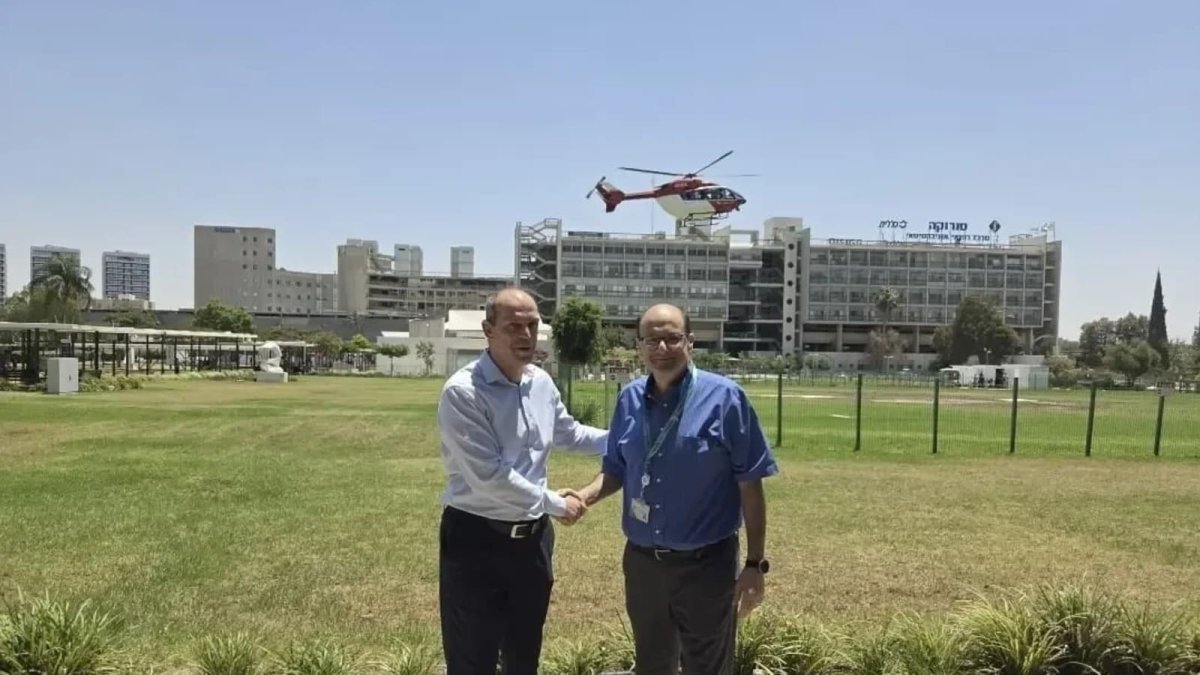
The donation announcement and what it funds
In recent days Bank of Jerusalem announced a donation of hundreds of thousands of shekels to help establish a new rehabilitation center at Soroka Medical Center in Beersheba. The contribution will support the southern region's first pediatric inpatient rehabilitation service and restore capacity lost when an Iranian missile struck the hospital last June. Hospital officials said the funds will accelerate construction so that residents of the Negev can regain access to essential services without further delay.
The June 2025 Iranian missile strike and the damage to Soroka
Last June an Iranian missile scored a direct hit on the northern surgical inpatient building at Soroka Medical Center. The strike forced the immediate closure of inpatient wards, laboratories and multiple medical services housed in that structure. Two adjacent buildings were evacuated because of blast-wave damage, and sections of those facilities remain unfit for use more than a year later. The attack ranked among the most severe strikes on Israel's healthcare system during the conflict with Iran.
The ballistic missile barrage last June underscored how quickly regional escalation can reach civilian infrastructure far from front lines. A direct impact on Soroka highlighted the exposure of major medical centers to long-range strikes, even as similar damage appeared in central areas such as Ramat Gan. This pattern suggests that future rounds of fighting may test the resilience of hospitals across multiple districts simultaneously.
Analysts note that the strike arrived amid an already stretched national health network still recovering from earlier rounds of conflict. The fact that Soroka serves such a wide southern catchment area meant any disruption carried immediate ripple effects for trauma and routine care alike. Observers point to the episode as evidence that healthcare facilities now rank among high-value targets in exchanges between Israel and Iran.
A rehabilitation system knocked out at the worst moment
The rehabilitation department had been operating inside the damaged northern building when the missile struck. Following the attack, Soroka transferred its rehabilitation patients to the Harvey and Gloria Kaylie Rehabilitation Medical Center at ADI Negev-Nahalat Eran to maintain continuity of care in a secure location. The timing compounded existing pressures on the southern healthcare network, which had already absorbed increased demand after the October 7, 2023 terrorist attack. Residents of the Negev continued to require expanded rehabilitation services even as the main facility sat partially out of service.
The strike hit southern rehabilitation services at their most vulnerable moment, with demand for trauma and PTSD-related treatment already elevated since October 2023. The sudden loss of Soroka's capacity forced rapid relocation of patients to secure alternative sites. This shift revealed how fragile continuity of care can become when a single regional hub is compromised.
Health planners have long warned that rehabilitation needs in the Negev outpace available beds and specialized staff. The interruption arrived precisely when many patients required ongoing therapy following acute treatment, illustrating the tight linkage between trauma units and downstream recovery programs. The episode has prompted renewed discussion about redundant capacity in peripheral regions.
Doubling inpatient rehabilitation capacity in the South
The planned center is designed to double the scope of inpatient rehabilitation available in the South. Officials at Soroka noted that current demand already exceeds pre-strike levels, driven by both the lingering effects of October 7 and ongoing security challenges. By restoring and expanding beds, the new facility aims to reduce waiting times and allow more patients from Beersheba and surrounding communities to receive treatment closer to home rather than traveling north.
Reconstruction efforts now underway aim to expand Soroka's rehabilitation footprint through added beds and a dedicated resilience unit. Such growth would address the documented shortfall in southern facilities that currently forces transfers or delays for many residents. The emphasis on a larger, more protected environment reflects lessons drawn from the recent strike and earlier conflicts.
Private-sector contributions, including support from institutions like Bank of Jerusalem, form part of a wider pattern of philanthropic backing for healthcare infrastructure after years of fighting. These investments target not only physical expansion but also the integration of services that link trauma care with long-term rehabilitation. The result could ease pressure on the region's overstretched hospital network, where a single university-level medical center carries much of the load.
First pediatric inpatient rehabilitation service in the Negev
Alongside the increase in adult capacity, the project will introduce the region's first dedicated inpatient rehabilitation service for children. Families in the Negev have previously had to arrange care outside the area when pediatric rehabilitation was required. Hospital leaders described the addition as significant news for residents, particularly those whose children sustained injuries in recent years and now face lengthy recovery periods.
Yair Kaplan: why Bank of Jerusalem joined the effort
Bank of Jerusalem CEO Yair Kaplan visited Soroka and met with hospital director Prof. Shlomi Kodesh to discuss the project. Kaplan stated: "The healthcare system in the Negev is a national asset, and in these times its importance is greater than ever. After the extent of the damage to the hospital became clear, along with the urgent need to establish an alternative rehabilitation center, it was clear to us that we had to join the effort. The donation is intended to help ensure the continued provision of care to the residents of the South at the highest medical standard, precisely during this period. We wish a speedy recovery to all the wounded and strengthen the medical teams, who act with extraordinary devotion."
Prof. Shlomi Kodesh: a partnership of mutual responsibility
Prof. Shlomi Kodesh welcomed the contribution as a step toward reopening and expanding services. He stated: "We thank Bank of Jerusalem for the significant donation, which will help advance the opening of Soroka's new rehabilitation center. The new center will double the scope of inpatient rehabilitation in the South and will also include an inpatient rehabilitation service for children - significant news for residents of the region. Partnerships with leading entities in the economy, especially during this challenging period, are an expression of mutual responsibility and a true commitment to strengthening the healthcare system in the South. I am certain that this is the beginning of an excellent partnership that will contribute greatly to the residents of the Negev and the State of Israel."
Rebuilding larger, safer, stronger
One year after the missile impact, Soroka continues reconstruction efforts described by officials as building a larger, safer, more innovative and stronger medical center. Plans include additional beds, a resilience unit and upgraded facilities across the campus. The rehabilitation center forms one element of this broader program, which seeks both to replace lost infrastructure and to prepare the hospital for future security threats in a region that covers roughly 63 percent of Israel's territory and serves more than a million residents.
What this means for the Negev and Israel's healthcare system
Soroka Medical Center remains the only university-level hospital serving southern Israel. Its rehabilitation services directly affect daily life for families across the Negev who depend on local access for recovery from trauma and injury. The Bank of Jerusalem donation illustrates how private-sector support can complement government reconstruction budgets at a time when security concerns continue to shape healthcare planning. By restoring and expanding capacity, the project aims to strengthen regional resilience while addressing the growing clinical needs that followed October 7 and the subsequent conflict with Iran. Observers in Beersheba note that such partnerships may set a precedent for other institutions facing similar recovery challenges in border regions.
The experience at Soroka has sharpened focus on the geographic imbalance in specialized medical services. A facility that functions as the sole university medical center for such a vast territory must now incorporate hardening measures alongside clinical growth. This dual requirement shapes planning for other peripheral hospitals that face similar exposure.
Regional leaders argue that sustained investment in southern rehabilitation is essential to prevent bottlenecks that affect the entire care pathway from emergency wards to outpatient follow-up. The combination of physical reconstruction and private support signals recognition that healthcare resilience in the Negev is both a local and national priority. Future preparedness will likely hinge on whether these expansions keep pace with recurring security challenges.
By Hannah Berg, Staff Writer
This article was produced with AI-assisted research and editorial support. Reporting is based on sources cited in the article.
What's Your Reaction?
 Like
0
Like
0
 Dislike
0
Dislike
0
 Love
0
Love
0
 Funny
0
Funny
0
 Wow
0
Wow
0
 Sad
0
Sad
0
 Angry
0
Angry
0
Israel Correspondent at Global1.News. Based in Tel Aviv, covering Israeli politics, security, technology, and society. Provides balanced, deeply-sourced reporting on one of the most closely-watched regions in the world.















Comments (0)