
Operation Economic Outcast: Washington's New Sanctions Push and the China Question
In a recent CGTN "The Heat" panel discussion, analysts dissected the latest escalation in Washington's economic warfare against Tehran, a move that has sent ripples through global energy markets and reignited questions about the limits of unilateral coercion.
Operation Economic Outcast: Washington's New Sanctions Push and the China Question
In a recent CGTN "The Heat" panel discussion, analysts dissected the latest escalation in Washington's economic warfare against Tehran, a move that has sent ripples through global energy markets and reignited questions about the limits of unilateral coercion. The debate centered on US Treasury Secretary Scott Bessent's August 24, 2026 announcement of a sweeping new sanctions package, dubbed "Operation Economic Outcast," which targets not just Iran but a sprawling international network of brokers, companies, and shadow fleet vessels. While the immediate focus is on strangling the Iranian economy, the strategic subtext is unmistakably about Beijing. With China historically purchasing roughly 90 percent of Iran's oil, the new measures are as much a test of Washington's ability to police global financial flows as they are a pressure campaign against the Islamic Republic. The stakes could not be higher: a potential confrontation with Chinese financial institutions, a further rupture in Gulf energy supplies, and a hardening of the Global South's resolve to build alternatives to the dollar-dominated system.
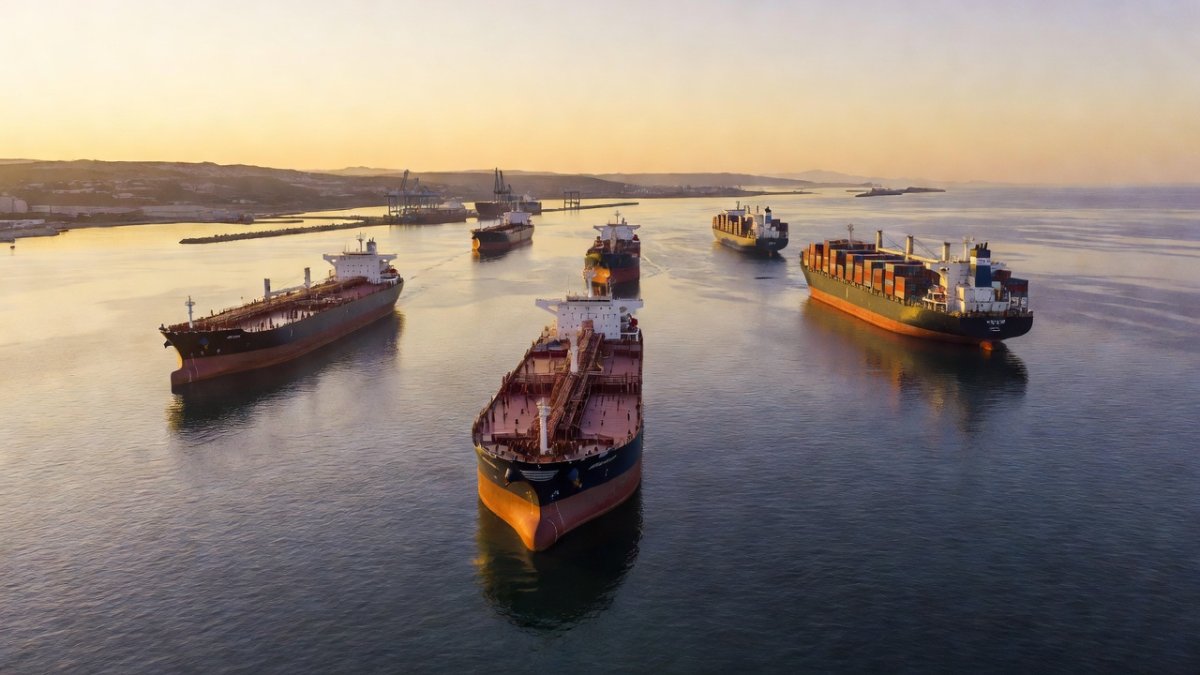
Operation Economic Outcast: What Washington Is Targeting
The Treasury Department's latest action represents a qualitative leap in the scale and scope of US sanctions on Iran. Secretary Bessent framed the initiative in stark, almost apocalyptic terms, declaring the objective is to "sever every economic lifeline that sustains this tyrannical regime until Tehran stands alone." The package covers more than 60 entities, individuals, and vessels, according to the New York Times, specifically targeting networks that facilitate the transport of Iranian oil and channel revenue to the Islamic Revolutionary Guard Corps-Qods Force (IRGC-QF). The geographic sweep is telling: the UAE, Hong Kong, China, Singapore, Switzerland, and Europe are all named as jurisdictions where these enabling networks operate. This is not a symbolic gesture. The administration has described the push as "D-Day" for the Iranian economy, a phrase that signals an intent to move beyond the incremental sanctions of previous years. The Treasury's Office of Foreign Assets Control (OFAC) simultaneously posted a Notice of Suspension of Certain Iranian Transactions and Sanctions Regulations General Licenses, effectively closing off legal loopholes that had allowed some humanitarian trade to continue. For Beijing, the inclusion of Hong Kong and mainland Chinese entities in the designations is a direct challenge. It forces Chinese banks and trading houses to choose between lucrative energy deals with Iran and access to the US financial system—a choice Washington is deliberately engineering.
China at the Center: The 90 Percent Question
The central analytical question is whether Washington will follow through on its implicit threat to target Chinese banks directly. Secretary Bessent's public criticism of China's oil purchases was pointed, and his refusal to rule out action against Chinese financial institutions—stating "no one is above the reach of U.S. sanctions"—was a clear warning shot. However, his simultaneous remark, "Why would I want to blow up the global financial system?" reveals a profound dilemma. Sanctioning major Chinese banks would trigger a systemic shock, potentially freezing billions in trade finance and destabilizing global markets in ways that even Washington cannot fully control. For Beijing, the calculus is equally complex. Iran is not merely a customer; it is a critical node in China's Belt and Road Initiative and a key partner in its energy security strategy. The "shadow fleet" of vessels that transport Iranian crude operates with tacit Chinese approval, often using opaque ownership structures and ship-to-ship transfers to evade detection. This is not just about oil—it is about establishing a parallel financial and logistical architecture that reduces dependence on US-controlled systems. The Chinese government has consistently framed such trade as legitimate, sovereign commerce, and has invested heavily in de-dollarization mechanisms, including bilateral currency swaps and the Cross-Border Interbank Payment System (CIPS). The US sanctions push, therefore, is a direct assault on Beijing's long-term strategy of building resilient supply chains insulated from American leverage.Tehran's Response: Seismic Threats and the Strait of Hormuz
Iran's leadership has responded with characteristic defiance, but the rhetoric carries a new edge of desperation. Mohsen Rezaei, a former Revolutionary Guard commander and now a military adviser to Supreme Leader Mojtaba Khamenei, has vowed retaliation in a "seismic manner." His warning to Gulf states is particularly significant: any country partnering in the new restrictions would be considered an enemy and a target. This is not idle talk. Since the US-Israel war on Iran began around February 2026, Tehran has already attacked US bases in Jordan, the UAE, Kuwait, and Saudi Arabia, with some attacks resulting in serious injuries and fatalities. The most potent weapon in Iran's arsenal remains its ability to disrupt the Strait of Hormuz. Rezaei's threat that "not even a single drop of oil will leave the region" is a direct challenge to global energy security. Energy exports from the Gulf have already suffered the biggest disruption in their history due to the conflict and Iran's closure of the strait. A renewed, intensified campaign against oil tankers would send crude prices skyrocketing, inflicting pain on the global economy, including the United States and its allies. This is Tehran's asymmetric leverage: it cannot match US military or economic power, but it can impose costs that make Washington's victory pyrrhic. The question is whether the US naval blockade, which has already cut off most goods, can be sustained indefinitely against a determined adversary with anti-ship missiles and a willingness to escalate.The Human Cost of Economic Warfare
Behind the geopolitical maneuvering lies a humanitarian catastrophe that is often overlooked in policy debates. Iran's economy is in freefall. The Statistical Center of Iran reports inflation near 90 percent, while the rial has plunged past 2 million to the dollar. Ordinary Iranians face acute medicine shortages, rolling power cuts, and rising unemployment. The new sanctions will only deepen these hardships, targeting the financial channels that pay for essential imports. The US administration frames this as pressure on the regime, but the immediate victims are the Iranian people, many of whom have taken to the streets in sporadic protests over the past year. This raises a moral and strategic question: can economic warfare be calibrated to hurt the leadership without devastating the population? History suggests not. The Trump administration's "maximum pressure" campaign of 2018-2020 did not topple the regime; it entrenched hardliners and drove Iran closer to Russia and China. The current "Operation Economic Outcast" risks repeating this cycle, but with far higher stakes given the ongoing military conflict. For the Global South, the spectacle of a superpower using its financial hegemony to starve a nation of 90 million people is a powerful argument for diversifying away from dollar-based trade. China, in particular, has positioned itself as a champion of this diversification, and the humanitarian toll of US sanctions only strengthens Beijing's narrative that the current international financial order is a weapon of coercion.Can Sanctions Alone Bend Iran?
The skepticism among veteran diplomats is palpable. Alan Eyre, a former American diplomat who served on the US nuclear negotiating team until 2015, told NPR that "there are no new sanctions that are effective" after Washington has already targeted "the low-hanging fruit, the mid-hanging fruit, the high-hanging fruit, the tree." His point is that Iran has spent decades adapting to sanctions, developing sophisticated evasion networks, and building economic resilience through partnerships with non-Western powers. The Iranian economy is in dire straits, but it has not collapsed, and the regime retains a firm grip on power. The fundamental flaw in the sanctions-only approach is that it assumes economic pain will translate into political change. This has rarely been the case with Iran. The regime's survival instinct is strong, and it has proven adept at blaming external enemies for domestic woes. Moreover, the US has limited credibility in demanding compliance from countries like China and Russia, which have their own reasons to defy Washington. The "opportunity to remedy bad behavior" that Bessent mentioned is a diplomatic fiction if the remedy requires abandoning lucrative trade relationships. The real question is whether Washington is prepared to enforce its sanctions with military means, a prospect that carries the risk of a direct confrontation with China or Russia. Given the existing naval blockade and the ongoing war, the escalation ladder is dangerously short.What to Watch: Beijing's Next Move
The coming weeks will reveal whether Washington's gambit succeeds or backfires. The key indicator is Beijing's response. If China publicly condemns the sanctions and announces countermeasures—such as expanding CIPS usage or signing new energy deals with Iran—it will signal a decisive break with the US-led financial order. If, however, Chinese banks quietly comply with US demands to avoid secondary sanctions, it would represent a significant victory for Washington and a blow to Beijing's credibility as a counterweight to American power. There are also diplomatic dimensions to monitor. The US is reportedly making phone calls to world leaders with specific requests to cease interactions with Iran. How the UAE, Saudi Arabia, and other Gulf states respond will be critical. They are caught between their security dependence on the US and their economic interests in regional stability. Iran's threats to target them directly may push them closer to Washington, but it could also drive them to seek a modus vivendi with Tehran. For the Global South, the broader lesson is clear: the era of unipolar financial dominance is ending, but the transition is fraught with peril. As the CGTN panel noted, the world is watching whether "Operation Economic Outcast" becomes a template for future coercion or a cautionary tale about the limits of power. For Beijing, the stakes are existential—not just for its relationship with Iran, but for its vision of a multipolar world order. By Prof. Marcus Chen, Staff WriterThis article was produced with AI-assisted research and editorial support. Reporting is based on sources cited in the article.
What's Your Reaction?
 Like
0
Like
0
 Dislike
0
Dislike
0
 Love
0
Love
0
 Funny
0
Funny
0
 Wow
0
Wow
0
 Sad
0
Sad
0
 Angry
0
Angry
0

Marcus Chen
World Politics Analyst at Global1.News. Based in Beijing, covering US-China relations, global trade, and geopolitical strategy. Brings deep analytical perspective to the power dynamics shaping international affairs.










Comments (0)