
Memory in Images: The Documentary Bringing Maurice Pellosh's Portraits Back to Life
There is a moment in every family's history when an old photograph stops being just paper and becomes memory. In a packed auditorium in Pointe-Noire, that moment arrived for Bernard and Romuald — two men who rediscovered portraits of themselves taken more than four decades ago, thanks to a docu
There is a moment in every family's history when an old photograph stops being just paper and becomes memory. In a packed auditorium in Pointe-Noire, that moment arrived for Bernard and Romuald — two men who rediscovered portraits of themselves taken more than four decades ago, thanks to a documentary about the late Congolese photographer Maurice Pellosh.
Memory in Images: The Documentary Bringing Maurice Pellosh's Portraits Back to Life
Pointe-Noire, Republic of Congo — The documentary "Maurice Pellosh: Memory in Images" has turned a personal archive into shared heritage, screening for audiences who had all but forgotten the studio portraits of their youth. In a film that travels through homes, historic neighbourhoods and iconic locations, an entire social and cultural memory comes back to life.
A Premiere Full of Emotion
The air in the auditorium was thick with anticipation, the kind of silence that precedes a flood of tears or a burst of laughter. When the first images flickered on the screen — faces frozen in time, young men in bell-bottom trousers, women with towering afros and proud smiles — a collective gasp rippled through the crowd. This was not just a film screening; this was a homecoming. The premiere of "Maurice Pellosh: Memory in Images" (in French, "Maurice Pellosh, la mémoire en images") had drawn a full house in Pointe-Noire, Republic of Congo, and no one in that room was untouched by what they saw.
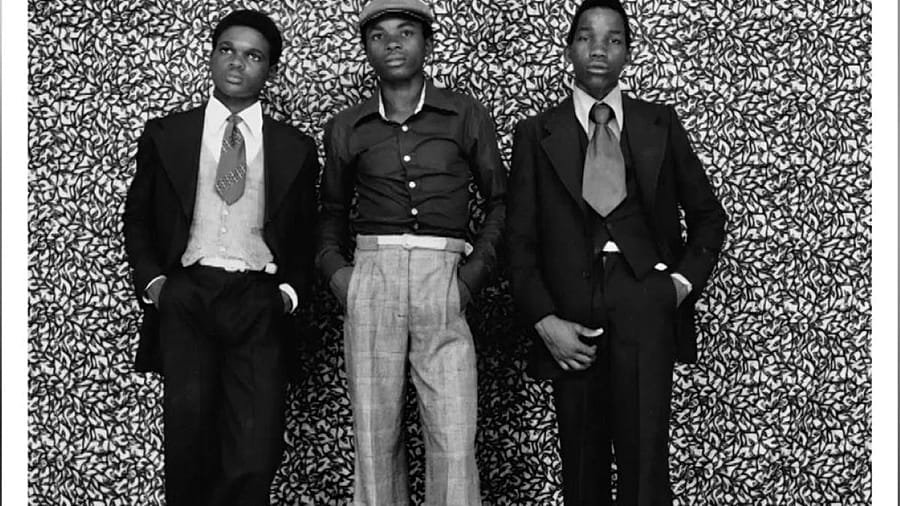
Bernard sat near the front, his eyes fixed on the screen, his hands clasped tightly in his lap. When a particular portrait appeared — a young man with a confident tilt of his head, dressed in the sharp style of the 1970s — Bernard let out a sound that was half laugh, half sob. That young man was him, photographed more than 40 years ago by Maurice Pellosh. Beside him, Romuald gripped his arm, pointing at another image: his own face, impossibly young, staring back at him from a time he had almost forgotten existed.
After the screening, the two men could barely contain themselves. Romuald, his voice thick with emotion, told the crowd, "It's an emotional moment for us, because we are part of this film." He paused, looking around the room at neighbours, friends, and strangers who had shared this journey with him. "We were young, we were hopeful, and here we are again, seeing ourselves as we were. It is like meeting an old friend you thought you had lost."
Bernard, still visibly shaken, stepped forward to speak. "Today, when I see this again, I first want to congratulate Maniélé (Emmanuèle), who has brought Maurice Pellosh out of obscurity and takes us back to our childhood. So there's a double impact, and I'm very moved." His words hung in the air, and the room erupted in applause. The emotion was palpable in the auditorium during the premiere — tears flowed freely, hands reached out to touch neighbours, and for a long moment, the past and the present merged into one.
For many in the audience, this was not merely entertainment. It was a reckoning with their own history, a confirmation that their lives mattered enough to be recorded, preserved, and celebrated. The screening showed how photography can become part of a shared heritage, and in that packed room in Pointe-Noire, the message landed with the force of a revelation.
Maurice Pellosh: Keeper of a Nation's Faces
Maurice Pellosh was not just a photographer; he was a keeper of faces, a chronicler of a generation. In the 1970s, when studio photography was the only way for ordinary people to capture their likeness, Pellosh stood out as one of the rare portrait photographers of that era who preserved his negatives to this day. While others discarded their glass plates and film rolls once prints were made, Pellosh carefully stored every negative, every image, every fleeting moment of Congolese life.
The documentary retraces the journey of one of the rare portrait photographers of the 1970s, following his camera through homes, iconic locations and historic neighbourhoods searching for former clients. The film's directors, Emmanuèle Béthery and Eddy Mikolo, travelled across Pointe-Noire and beyond, knocking on doors, showing old photographs, and asking a simple question: "Do you remember this face? Do you remember this day?" The answers they received were often tearful, sometimes joyful, always profound.
Pellosh's archive is a treasure trove of Congolese history. His studio was a stage where workers, students, brides, and children came to present themselves to the world. Each portrait tells a story of aspiration and dignity — a man in his Sunday best, a woman with her hair perfectly styled, a family gathered in matching outfits. These were not just photographs; they were declarations of existence, proof that these lives mattered.
The value of preserving negatives as a form of cultural memory cannot be overstated. In a region where written records are often scarce, photographs become the primary documents of everyday life. Pellosh's archive captures decades of Congolese life, from the optimism of independence to the struggles and triumphs of subsequent years. His images are a visual encyclopedia of style, family, and community.
What makes Pellosh's work even more remarkable is his humility. He did not photograph celebrities or politicians exclusively; he photographed everyone. The film brings an entire social and cultural memory back to life, showing that history is not only made by the powerful but also by the ordinary people who live, love, and dream. In preserving their faces, Pellosh preserved their stories.
The Director Who Was Chosen by the Photographer
Emmanuèle Béthery is a French director with a deep love for African stories, but she insists that this project chose her, not the other way around. "I didn't choose Pellosh — Pellosh chose me. We were put in contact, and he wanted to share his photographic work with me and asked me to showcase it." Those words, spoken during the premiere, reveal the serendipitous nature of this collaboration. It was Pellosh, in his later years, who sought out Béthery, entrusting her with his life's work.
Working alongside Eddy Mikolo, a Congolese filmmaker, Béthery embarked on a journey that would take her deep into the heart of Congolese memory. The collaboration across cultures was not always easy, but it was fruitful. Mikolo brought local knowledge and connections, while Béthery brought a fresh perspective and a filmmaker's eye. Together, they searched for former clients across the city, following leads, knocking on doors, and piecing together the puzzle of Pellosh's archive.
The search was painstaking. Some of the people in the photographs had moved, others had passed away, and many had aged beyond recognition. But the filmmakers persisted, driven by the belief that these images deserved to be reunited with their subjects. The film became a bridge between France and Congo, a testament to the power of collaboration across borders and generations.
Béthery's approach was deeply respectful. She did not treat Pellosh's subjects as curiosities but as protagonists of their own stories. The film gives voice to the people in the photographs, allowing them to reflect on their younger selves and the passage of time. It is a rare and beautiful thing to see a documentary that treats its subjects with such tenderness.
For Béthery, the project was also a personal journey. She has spoken about the responsibility of handling someone else's memories, of ensuring that Pellosh's legacy is honoured. The result is a film that is as much about the photographer as it is about the people he photographed — a dual portrait of an artist and his community.
Photography as Shared Heritage
The impact of Pellosh's work extends far beyond the screening room in Pointe-Noire. More than 500 portraits by Pellosh are exhibited in Paris and the United States, drawing audiences who have never set foot in Congo but who are moved by the universal language of a human face. These exhibitions have become pilgrimage sites for the Congolese diaspora, who come to rediscover loved ones in the portraits — a grandmother in her youth, a father before he was a father, an uncle who emigrated and never returned.
One of the most striking moments in the documentary is the appearance of Alain Mabanckou, the internationally renowned Congolese writer, in a photograph at age nine. Mabanckou, who has since become a literary giant, appears as a small boy with serious eyes, dressed in his school clothes. The image is a reminder that greatness often begins in humble circumstances, and that every child in a studio portrait could be the author of their own extraordinary story.
The screening showed how photography can become part of a shared heritage, transcending individual memory to become collective history. When Bernard and Romuald saw their younger selves on screen, they were not just seeing their own past; they were seeing the past of their community, their city, their nation. The photographs belong to them, but they also belong to everyone who shares that history.
The role of archives in preserving African cultural memory is a theme that runs throughout the film. Too often, African histories have been written by outsiders, or lost altogether due to neglect and conflict. Pellosh's archive is a counter-narrative, a self-portrait of a people by one of their own. It is a reminder that African stories must be preserved by Africans, for Africans, and for the world.
Photography as a way to preserve the everyday lives of ordinary people is at the heart of this project. Pellosh did not set out to make art; he set out to make a living, photographing whoever came through his door. But in doing so, he created something far more valuable than art — he created a record of a people, a time, and a place that would otherwise have been lost to memory.
Images That Outlive the Artist
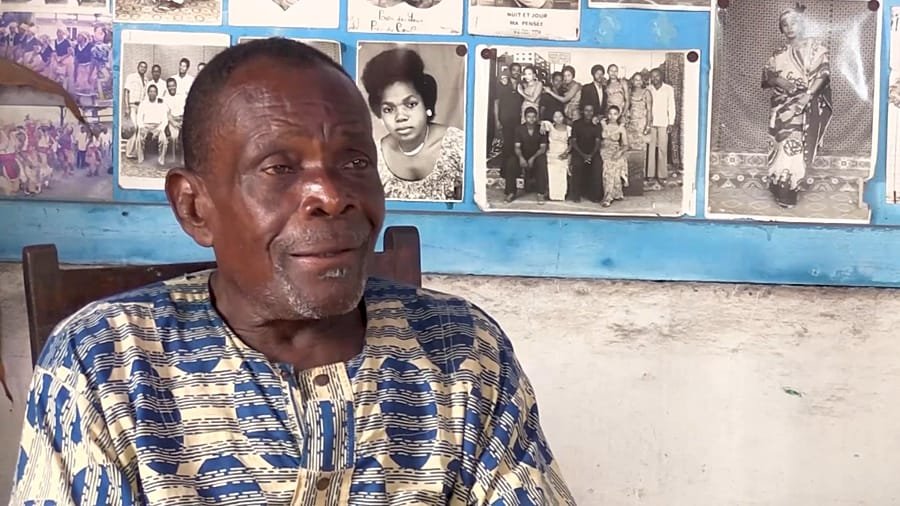
Maurice Pellosh passed away in 2023, before the film's release. He did not live to see the packed auditorium in Pointe-Noire, did not hear the applause or witness the tears of joy from the men and women he had photographed decades earlier. But his images continue to tell the story, and in that sense, he is still very much present. The documentary is an act of memory that honours a photographer who preserved decades of Congolese faces, ensuring that his work will outlive him by generations.
There is something profoundly moving about a legacy that continues after death. Pellosh's photographs are not just relics of the past; they are living documents that speak to the present and the future. Young Congolese people who watch the documentary see their parents and grandparents as young, vibrant, full of hope. They see a history that is not taught in schools but is preserved in images, waiting to be discovered.
The documentary also raises important questions about what this means for African visual archives and the preservation of everyday lives. Across the continent, there are countless photographers like Pellosh whose work is at risk of being lost. Negatives deteriorate, studios close, and memories fade. The film is a call to action, urging institutions and individuals to preserve these archives before it is too late.
There is a growing interest in African studio photography in galleries worldwide, from London to New York to Paris. Collectors and curators are beginning to recognise the artistic and historical value of these images. But the real value lies not in the art market but in the communities that these photographs represent. They are not just objects to be bought and sold; they are memories to be cherished and shared.
Pellosh's passing is a loss, but his work ensures that he will not be forgotten. The documentary is a fitting tribute, a way of saying thank you to a man who gave his community the gift of visibility. In a world where so many are invisible, Pellosh made sure that his subjects were seen, recorded, and remembered.
What to Watch For
The documentary's journey is just beginning. After its premiere in Pointe-Noire, "Maurice Pellosh: Memory in Images" is set to reach wider audiences, with screenings planned in other Congolese cities and international festivals. Africanews reported the story in its "This Is Culture" programme in February 2026, bringing the film to viewers across the continent and beyond. The buzz is growing, and with it, the recognition of Pellosh's contribution to Congolese culture.
There is also the possibility of more exhibitions of Pellosh's 500+ portraits. The success of the Paris and American shows has sparked interest from other galleries, and there are discussions about bringing the collection to more African cities. Imagine the power of these images being shown in Brazzaville, in Kinshasa, in cities where the descendants of Pellosh's subjects now live. The photographs would not just be art; they would be homecomings.
Across Africa, filmmakers and archivists are rediscovering studio photography, recognising its value as a historical record and an artistic form. Projects like this one are inspiring a new generation to look at old photographs with fresh eyes, to see them not as outdated relics but as vital documents of African life. The preservation of these archives is becoming a priority for cultural institutions, and Pellosh's work is leading the way.
The significance of preserving everyday African life on film cannot be overstated. History books often focus on kings, wars, and political movements, but the true texture of life is found in the faces of ordinary people. Pellosh's photographs capture that texture — the clothes, the hairstyles, the poses, the expressions. They are a record of how Congolese people saw themselves and wanted to be seen.
For young African creatives, the message is clear: your work matters, and your archives are valuable. The documentary is a reminder that today's photographs are tomorrow's history, and that preserving them is an act of love for future generations. Pellosh did not know that his negatives would become treasures, but he kept them anyway. His instinct was right, and his legacy is a lesson for us all.
As the lights came up in the Pointe-Noire auditorium, Bernard and Romuald stood together, arms around each other's shoulders, still marvelling at what they had seen. They were no longer just two men in a crowd; they were living proof that memory endures, that images outlive their creators, and that a photographer's work can become a nation's heritage. The film is a gift, and it keeps giving.
By Amara Diop, Staff Writer
This article was produced with AI-assisted research and editorial support. Reporting is based on sources cited in the article.
What's Your Reaction?
 Like
0
Like
0
 Dislike
0
Dislike
0
 Love
0
Love
0
 Funny
0
Funny
0
 Wow
0
Wow
0
 Sad
0
Sad
0
 Angry
0
Angry
0

West Africa/Sahel Correspondent at Global1.News. Dakar-based journalist covering politics, security, climate, and development across Francophone and Anglophone West Africa. Tells the stories of a region undergoing profound transformation.












Comments (0)