
Nous-Hermes-13B: Run a Powerhouse AI Model on Your Own Machine
Nous-Hermes-13B is an open-weights AI model fine-tuned on 300k instructions, running locally on consumer GPUs. It erodes paid-subscription AI moats, offering privacy, no fees, and full control. The Hermes lineage continues, empowering creators and coders to own their AI future.
Folks, if you’re still forking over twenty bucks a month for a chatbot that occasionally forgets your name, I’ve got a story that’s going to make you spit out your coffee. The AI world just got a massive wake-up call, and it’s not coming from Silicon Valley’s glass towers. It’s coming from your own damn computer. We’re talking about the open-source revolution, the one that lets you run a powerhouse language model right on your gaming rig, with zero cloud dependency, zero data leaks, and zero monthly bills. The name on everyone’s lips is Nous-Hermes-13B, and it’s not just a piece of software—it’s a declaration of independence.
Headline: The AI Moat Is Dead: How Nous-Hermes-13B Is Putting a Supercomputer in Your Living Room
Let’s cut through the noise. For the last year, we’ve been told that advanced AI is a luxury good, something you rent from corporate overlords. They want you to believe that intelligence is a subscription service. But a ragtag team of researchers and open-source fanatics just flipped that model on its head. They’ve taken Meta’s Llama 2, a solid but generic base model, and supercharged it with over 300,000 instructions, mostly generated by GPT-4. The result is Nous-Hermes-13B, a model that doesn’t just answer questions—it reasons, it writes, it codes, and it does it all without ever sending a single byte of your data to a server farm in Virginia. This is the story of how the little guys took back the future.
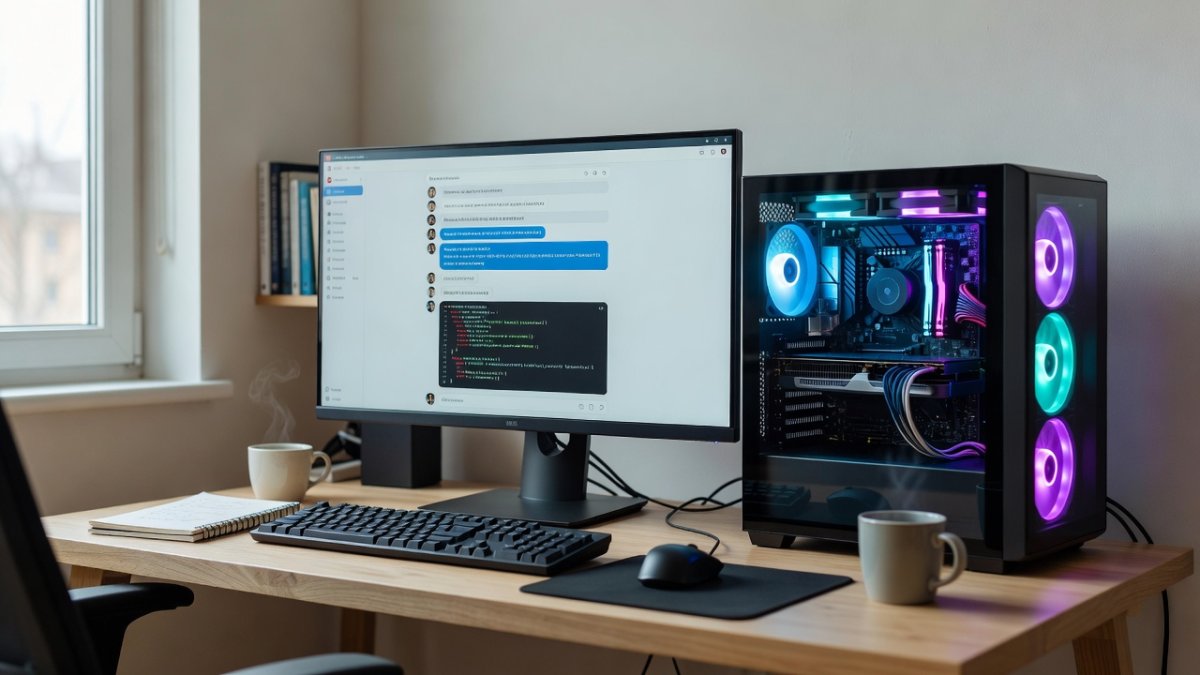
The Hermes Origin Story: Not Your Average Fine-Tune
Here’s the thing about fine-tuning: most of it is garbage. Companies slap a few thousand examples on a base model and call it a day. Nous Research didn’t do that. They went nuclear. Led by the dynamic duo of Teknium and Karan4D, they curated a dataset that would make most corporate AI labs weep with envy. We’re talking about the Nous Research Instruct Dataset, a meticulously crafted collection of prompts and responses, combined with Microsoft’s GPT4-LLM and Unnatural Instructions datasets. This wasn’t a quick hack; it was a surgical operation to inject raw reasoning power into the Llama 2 13B architecture. And they didn’t do it alone—Redmond AI stepped up to sponsor the compute, proving that the open-source ecosystem isn’t just about hobbyists in basements. It’s about serious infrastructure and serious ambition.
Why 13B Parameters Is the Sweet Spot
Now, let’s talk specs, because I know you nerds love a good spec sheet. Nous-Hermes-13B is based on Meta’s Llama 2, released in July 2023 under a permissive community license. That license is the key that unlocked everything. It allowed Nous Research to take the base model and turn it into a precision instrument. But why 13B? Why not the massive 70B models that require a nuclear power plant to run? Because 13B is the Goldilocks zone. It’s small enough to run on a consumer GPU—think an RTX 3090 or even a 4090—but large enough to punch way above its weight class. You get the intelligence of a much larger model without the insane hardware requirements. It’s the difference between driving a Formula 1 car and a tuned-up sports car that can actually handle the daily commute. This is the model that makes local AI practical, not just a theoretical exercise for people with data centers in their basements.
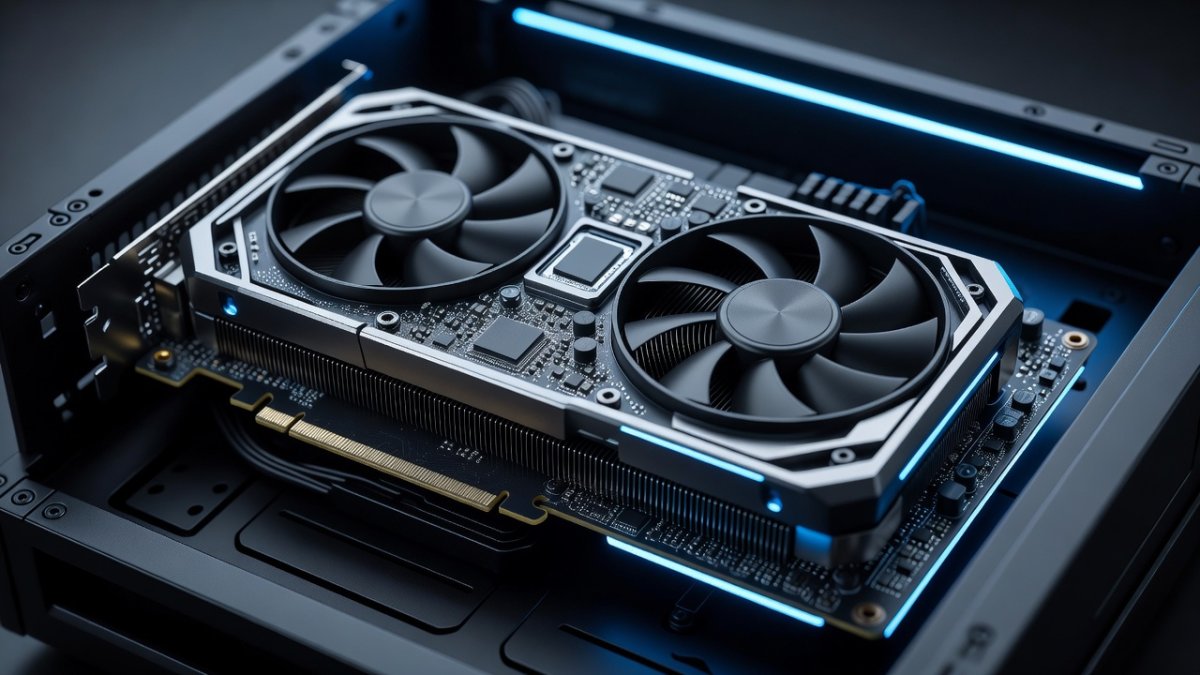
Running It Locally: No More Digital Leashes
Here’s where the rubber meets the road. The whole point of this movement is liberation. When you run Nous-Hermes-13B locally, you are severing the digital leash that ties you to corporate servers. No more API fees that spike when you actually start using the service. No more rate limits that throttle your creativity at 3 AM. And most importantly, no more data leaving your machine. If you’re a lawyer, a doctor, or just someone who values their privacy, this is a game-changer. You can feed this model your most sensitive documents, your private code, your personal journal, and it all stays right there on your hard drive. The tools to do this are already here: text-generation-webui for the GUI lovers, llama.cpp for the command-line purists, and GGUF quantizations—popularized by the legendary TheBloke—that compress the model so it runs efficiently on consumer hardware. This isn’t science fiction; this is a Saturday afternoon project.
The Bloke and the Quantization Revolution
We have to give credit where credit is due. The open-source community is full of unsung heroes, but few are as impactful as TheBloke. This person took the raw model weights and made them accessible to the masses through GGUF quantization. What does that mean? It means they figured out how to shrink the model file size without destroying its intelligence, making it possible to run on machines with 8GB or 12GB of VRAM. Without this work, Nous-Hermes-13B would be a toy for the ultra-rich. Instead, it’s a tool for everyone. This is the ecosystem at its finest: Nous Research builds the brain, TheBloke packages it for the people, and the community tests it, breaks it, and improves it. This is the antithesis of the closed, black-box approach that Big Tech wants you to accept. This is transparency, collaboration, and raw, unadulterated progress.
The Hermes Lineage: From 13B to a Full-Blown Agent Platform
This isn’t a one-hit wonder. The Hermes lineage has become a dynasty. After the success of the 13B model, Nous Research didn’t rest on their laurels. They released Hermes 2, then Hermes 3, and eventually Hermes 4, each iteration pushing the boundaries of what open-source models can do. But they didn’t stop at just language models. They built the Hermes Agent platform, a framework that allows these models to interact with tools, browse the web, and execute complex tasks autonomously. This is the evolution from a chatbot to a digital worker. The 13B model was the spark, but the fire is still burning. It proved that open-source AI isn’t just a cheap imitation of the proprietary giants; it’s a parallel universe where innovation moves at the speed of community, not the speed of corporate bureaucracy.
The Erosion of the Paid-Subscription Moat
Let’s be brutally honest about what this means for the business models of the big players. The paid-subscription AI moat is eroding, and it’s eroding fast. Why would a developer pay for a closed API when they can run a comparable model locally for free? Why would a privacy-conscious enterprise risk sending proprietary data to a third party when they can deploy an open-weight model on their own servers? The answer is: they wouldn’t. The open-weight movement has fundamentally changed the economics of AI. It has democratized access to cutting-edge technology, and it has forced the incumbents to justify their prices. They can no longer rely on scarcity; they have to compete on value, on ease of use, and on actual performance. This is a massive power shift, and it’s happening right in front of our eyes.
Who Is This For? Creators, Coders, and the Privacy-Conscious
So, who should care about this? If you’re a content creator, this is your new ghostwriter. If you’re a coder, this is your pair programmer that never sleeps and never judges. If you’re a privacy-conscious individual, this is your digital vault. The use cases are endless. You can run a local writing assistant that knows your style. You can build a code generator that works on your proprietary codebase without leaking it. You can create a personal knowledge base that answers questions based on your own documents. This isn’t just for tech wizards; the tools are becoming so user-friendly that anyone with a decent computer can get started. The barrier to entry is lower than it’s ever been, and it’s only going to get lower.

How to Get Started: Your Action Plan
Alright, enough theory. Let’s get you up and running. First, head over to Hugging Face and search for "Nous-Hermes-13B-GGUF." You’ll find the quantized versions from TheBloke. Download the Q5_K_M version—it’s a great balance of quality and performance. Next, download a front-end like text-generation-webui or use the llama.cpp command-line tool. If you have an NVIDIA GPU, make sure you have CUDA installed. If you don’t have a GPU, don’t panic; you can run it on CPU, it’ll just be slower. Once you’ve got the model loaded, start experimenting. Ask it to write a poem, debug a script, or explain quantum physics. The moment you see it respond, you’ll understand why this movement is so powerful. You’re not renting intelligence anymore; you own it.
What This Means
This is the end of the beginning. The release of Nous-Hermes-13B and the broader open-weight movement signals a fundamental shift in the balance of power. It means that the future of AI is not controlled by a handful of corporations in California. It means that innovation is no longer gated by access to capital, but by access to curiosity and skill. It means that privacy is not a luxury, but a default setting. The moat has been breached, and the floodgates are open. We are entering an era where the most powerful tools in the world are available to anyone with a computer and a willingness to learn. This is not just a technological advancement; it’s a political and economic statement. It’s a declaration that intelligence should be free, that data should be sovereign, and that the power of AI belongs to the people. So, what are you waiting for? Go download the model. Take back your digital life. The future is local, and it’s already here.
-- Jessica Ali, Global 1 News -- cutting through the BS, one story at a time.
This article was produced with AI-assisted research and editorial support. Reporting is based on sources cited in the article.
What's Your Reaction?
 Like
0
Like
0
 Dislike
0
Dislike
0
 Love
0
Love
0
 Funny
0
Funny
0
 Wow
0
Wow
0
 Sad
0
Sad
0
 Angry
0
Angry
0

Editor-in-Chief at Global1.News. Atlanta-based journalist who cuts through the BS and tells it like it is. Lead anchor, host, and the voice you hear when the spin stops and the truth starts.











Comments (0)