
Brazilian Drug Gangs Turn Bolivia's Amazon Port Into a Battleground
The Mamore River glistens under the August sun, but the sweat on the brows of the people of Guayaramerin is not from the heat alone. This is a town of roughly 40,000 souls in Bolivia’s Beni department, a river port that has become the epicenter of a violent new chapter in Latin America’s drug war. As travelers pour off boats from the Brazilian border city of Guajara-Mirim, they pass an immigration office where no one looks up.
The Mamore River glistens under the August sun, but the sweat on the brows of the people of Guayaramerin is not from the heat alone. This is a town of roughly 40,000 souls in Bolivia’s Beni department, a river port that has become the epicenter of a violent new chapter in Latin America’s drug war. As travelers pour off boats from the Brazilian border city of Guajara-Mirim, they pass an immigration office where no one looks up. The old pacts that kept this region quiet are shattering, and the Amazon is paying the price in blood and trees.
Mafia Peace Broken: Brazilian Drug Gangs Turn Bolivia's Amazon Port Into a Battleground
Guayaramerin, Beni Department, Bolivia – August 20, 2026 — The Mamore River port that once thrived on quiet cross-border trade now sits at the center of a violent fight between Brazil's two most powerful crime syndicates. More than 200 Bolivian police and military officers have been sent to the border, while residents of this 40,000-strong Amazon town describe a place where a man was shot more than 80 times in the main square and families are afraid to leave their homes.
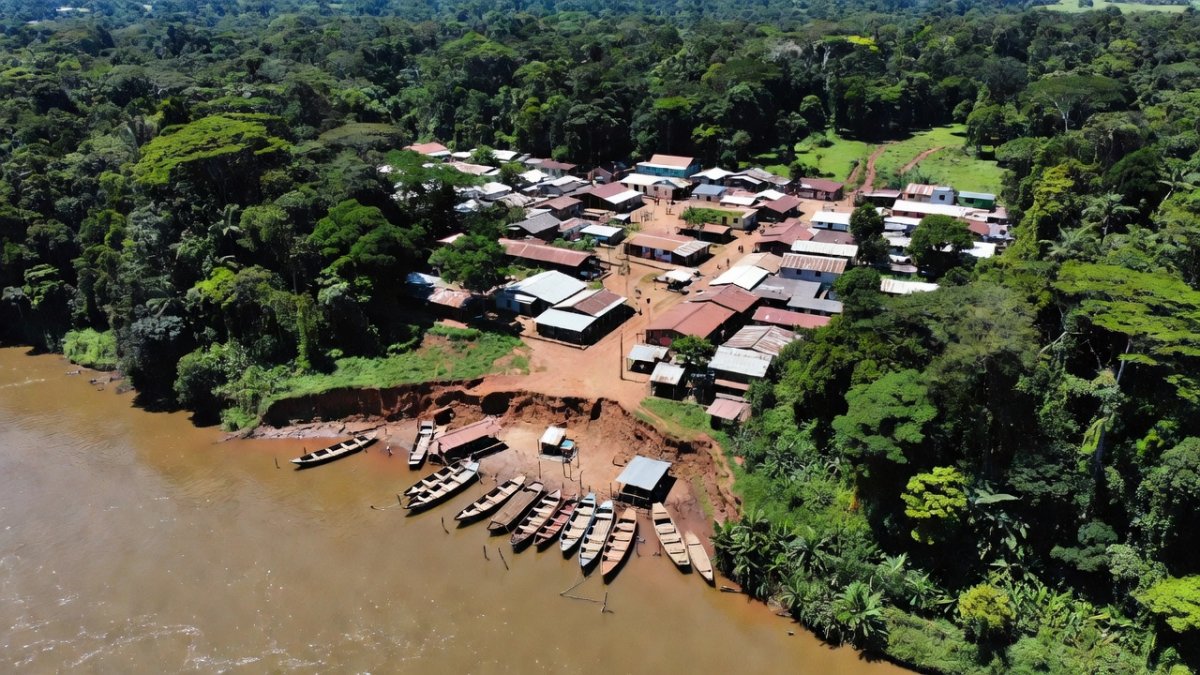
The Amazon Port Under Siege
Guayaramerin sits on the Mamore River, one of the largest tributaries of the Amazon, a natural border that separates Bolivia—the world’s third-largest cocaine producer—from Brazil, the key exit point for drug shipments to Europe. The crossing is a formality in name only. "Nobody ever checks (papers)," Donald Somoza, a 75-year-old retired bricklayer, told reporters, gesturing at the immigration booth that has become a revolving door for criminals. The lack of oversight has turned this sleepy port into a strategic chokepoint, where the cocaine paste from Bolivia’s jungles meets the logistics networks of Brazil’s most powerful syndicates.
The violence arrived with a brutal exclamation point. Somoza witnessed a Brazilian man shot more than 80 times in Guayaramerin’s main square, an execution so excessive it could only be a message. The victim, a figure in the drug trade, was left as a warning in broad daylight. Residents now speak in hushed tones about the armed men who patrol the docks, the motorcycles that race through the streets at night, and the boats that move upriver without lights. The port, once a lifeline for trade and family connections across the border, has become a staging ground for a war that Bolivians never asked to join.
For decades, this border region was a quiet backwater, a place where the state’s presence was minimal but the violence was even less. That equilibrium has collapsed. The river that connects two nations now carries a different cargo: fear. And as the sun sets over the Mamore, the people of Guayaramerin lock their doors, wondering which gang will claim the streets next.
Brazil's Two Most Powerful Gangs Cross the Border
The Primeiro Comando da Capital (PCC) and the Comando Vermelho (CV), both designated terrorist organizations by the United States, have crossed the border with a vengeance. These are not petty smugglers; they are transnational criminal enterprises with military-grade weaponry and international money-laundering networks. In recent weeks, a dozen murders on the Bolivian side of the border have been linked directly to the PCC and CV, marking a terrifying escalation for a country that has largely been spared the cartel-style carnage seen in Mexico or Colombia.
The brutality is unprecedented. A massacre of a family, the discovery of decapitated bodies, and the murder of a police officer have shocked Bolivia to its core. These are not random acts of violence; they are calculated moves in a territorial dispute over the cocaine trafficking routes that run through the Amazon. Joaquin Chacin, an organized crime investigator, explained that Bolivia was "a very safe country until a few years ago." The state, he said, turned a blind eye to trafficking, allowing a "mafia peace" to prevail. "And this has somehow been broken," he added, his words carrying the weight of a nation waking up to a nightmare.
The PCC, born in the prisons of Sao Paulo, has expanded its reach across South America, controlling cocaine supply chains from Peru to the Atlantic coast. The Comando Vermelho, based in Rio de Janeiro, is its fiercest rival. In Bolivia’s Amazon hinterlands, they are fighting for the same prize: control of the corridors that move cocaine to Brazil’s ports. The violence in Guayaramerin is not an isolated incident; it is the front line of a war that threatens to destabilize the entire region. The "mafia peace" that Chacin describes was a fragile bargain—the state ignored the traffickers, and the traffickers kept the violence out of the cities. That bargain is now dead, and the Amazon is burning with its ashes.
A Murder Wave With No Precedent
The numbers tell a story of a country spiraling. Between January and September 2025, Bolivia reported 774 homicides, compared to 325 in the same period the previous year—an increase of 138 percent, according to official data. This is not a statistical blip; it is a murder wave with no precedent in modern Bolivian history. The violence is not confined to the border. Residents of Guayaramerin report a surge in armed robberies and kidnappings, crimes that were once rare in this community.
Adhemar Zapata, a currency trader who changes money near the port, was attacked on the street by two men, one of them Brazilian. "They pointed their gun at me to subdue me and to take the money I have for my work, along with my motorcycle, my cell phone," he recounted, his voice trembling with the memory. Zapata’s story is not unique. Shopkeepers, taxi drivers, and ordinary citizens are being targeted by gangs that see Bolivia as a soft target, a country where the rule of law is weak and the rewards are high.
Historically, Bolivia was an anomaly in Latin America—a country with deep poverty and political instability, but relatively low levels of criminal violence. The murder rate was a fraction of that in Brazil or Colombia. That is changing with terrifying speed. The influx of Brazilian gangs has brought with them a culture of extreme violence, a willingness to kill without hesitation. The police, understaffed and under-equipped, are struggling to respond. The state’s response has been reactive, sending troops to the border after the violence erupts, but the root causes—poverty, corruption, and the immense profitability of the cocaine trade—remain unaddressed. The people of Guayaramerin are caught in the crossfire, their daily lives now punctuated by the sound of gunfire and the fear of the next attack.
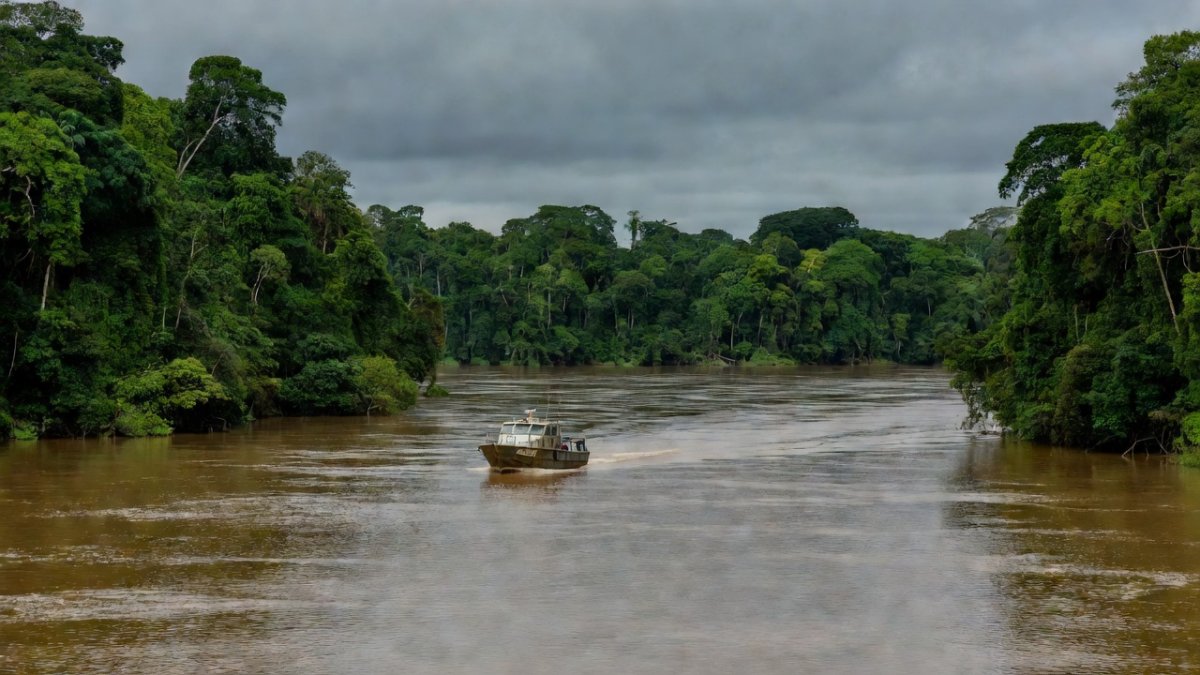
The Cocaine Corridor and the Forest
The violence on the streets is mirrored by a quieter, more insidious destruction in the forest. The UNODC 2024 Coca Crop Monitoring Report, published in December 2025, paints a stark picture: Bolivia’s coca cultivation reached 34,000 hectares in 2024, up 10 percent from 31,000 hectares in 2023. The potential sun-dried coca leaf production is estimated at 72,887 metric tons, valued at US$618 million. If all that coca leaf were used for cocaine, the potential yield is estimated at 394 metric tons. The UNODC separately warned that Bolivia could produce up to 143 metric tons of cocaine from coca grown outside legally authorized zones—a shadow economy that operates beyond the reach of the state.
Bolivia is now the world’s third-largest cocaine producer, after Colombia and Peru, and its Amazon hinterlands have become a drug trafficking corridor to Brazil. In the departments of Pando, Beni, and Santa Cruz, primitive camps for cocaine production have sprung up in the middle of forest reserves. These are not sophisticated laboratories; they are makeshift operations where coca paste is processed into cocaine hydrochloride, using chemicals that are dumped directly into the rivers and soil. The environmental damage is catastrophic, but it is invisible to the international community, which focuses on the violence rather than the ecological toll.
The Manuripi National Amazonian Wildlife Reserve in Pando department is a case in point. The reserve borders a 67-kilometer stretch used by timber and drug traffickers, who clear the forest to plant coca, build laboratories, and construct illegal airstrips. Climate Diplomacy analysis has documented how drug traffickers are clearing forest in national parks, not just for coca cultivation but also for the infrastructure of the drug trade. The cocaine economy is not just a criminal problem; it is an environmental crime that is destroying the very lungs of the planet. The forest that once provided a buffer against the outside world is now being carved up by chainsaws and bulldozers, its riches converted into cash for the gangs that terrorize the border towns.
Bolivia's Amazon at a Tipping Point
The data from MAAP (Amazon Conservation), published in June 2026, reveals a region at a tipping point. In 2025, Amazon non-fire primary forest loss was led by Brazil at 55 percent (approximately 560,475 hectares, the lowest on record since 2002), but Bolivia accounted for 20 percent (approximately 200,000 hectares), a historically high figure and the fourth highest on record. Peru contributed 14 percent and Colombia 6 percent, bringing the total 2025 Amazon deforestation to approximately 736,484 hectares. The trend is clear: as Brazil clamps down on deforestation, the pressure is shifting to its neighbors, and Bolivia is bearing the brunt.
Bloomberg reported on August 8, 2026, that Bolivia is now a hotbed of Amazon deforestation, a direct consequence of Brazil’s more aggressive environmental enforcement. ClimateCosmos noted in May 2026 that Bolivia recorded approximately 1.5 million acres of primary forest cleared in 2025, surpassing all nations except Brazil. This is not just a statistic; it is a tragedy unfolding in real time. The forest is being cleared for cattle ranching, soy cultivation, and—increasingly—for the coca plantations and cocaine laboratories that fuel the drug trade.
The link between the drug economy and deforestation is undeniable. Traffickers clear land to establish coca fields, build airstrips, and create buffer zones where they can operate without detection. The chemicals used in cocaine production contaminate the soil and water, making the land unusable for future generations. The Amazon, which plays a critical role in regulating the global climate, is being sacrificed for a product that destroys lives. The international community has focused on the violence, but the environmental crime is equally urgent. If Bolivia’s Amazon continues to be cleared at this rate, the consequences will be felt far beyond the borders of this Andean nation.
The State Responds: Plan Fronteras Seguras
President Rodrigo Paz, a center-right leader who took office in November 2025, has made the fight against crime a cornerstone of his administration. He accuses the socialists, who ruled for two decades before being voted out last year, of allowing crime to flourish. Since taking office, Paz has overseen the capture of 17 international crime bosses, including Uruguayan drug trafficker Sebastian Marset, one of South America’s most-wanted men, captured in March 2026, and Gerson Palermo, a top PCC commander. These are significant victories, but they have not stemmed the tide of violence.
On August 5, 2026, Bolivia sent more than 200 police and military officers to the border with Brazil after nine murders in Santa Cruz department in less than seven days, all linked to the PCC-CV dispute for control of trafficking routes. The joint "Safe Borders Plan" (Plan Fronteras Seguras) with Brazil was launched, with elite units deployed to Cobija, Guayaramerin, and San Matias. During a visit to Guayaramerin last week, Paz announced plans to deploy more police to the border and boost intelligence sharing with Brazil. The message was clear: the state is fighting back.
But the police chief of Guayaramerin, Johnny Rivas, is realistic about the challenges ahead. He warned that violence "will increase" and "will require us to increase our personnel." The deployment of troops is a stopgap measure, not a solution. The gangs are well-funded, well-armed, and deeply entrenched in the local economy. They have the advantage of operating in a region where the state’s presence has historically been minimal. The question is whether the government can sustain this level of commitment or whether it will falter as the political spotlight moves elsewhere. The people of Guayaramerin are watching, hoping that the soldiers who have arrived will stay long enough to make a difference.
The Bridge That Could Become a Criminal Thoroughfare
Amid the security crackdown, President Paz has also announced plans to build a bridge across the Mamore River at Guayaramerin, part of a planned road corridor from Brazil to the Pacific coast in Peru—the so-called bioceanic corridor. The project is a dream for many, promising to boost cross-border trade and connect the Atlantic and Pacific oceans through the heart of South America. But for the people of Guayaramerin, the bridge is a double-edged sword. Yestin Duran, a 31-year-old beverage vendor, voiced the fears of many: "Gangsters and robbers can cross over" more easily from Brazil.
The bridge would be a boon for legitimate commerce, but it would also be a thoroughfare for criminals. The same roads that carry soybeans and timber could carry cocaine and weapons. The same trucks that transport goods to the Pacific could be used to move drugs in the opposite direction. The bioceanic corridor is a vision of integration, but it also represents a vulnerability—a new artery for the drug trade to exploit. Locals have mixed feelings, torn between the promise of economic development and the fear of more violence.
Joaquin Chacin, the organized crime investigator, argues that tackling organized crime requires following the money. "A serious plan is needed, but we don't hear of anything like that being worked on," he said, pointing to the lack of focus on money laundering. The bridge, he suggests, could become a tool for laundering illicit funds, a way to legitimize the profits of the drug trade. The government’s focus on security is necessary, but it is not sufficient. Without a comprehensive strategy to investigate and dismantle the financial networks that sustain the gangs, the violence will continue. The bridge is a symbol of hope for some, but for others, it is a reminder that the challenges facing this region are as vast as the Amazon itself.
The Bottom Line — A Warning for Latin America's Amazon
The situation in Guayaramerin is a warning for the entire Amazon region. The drug economy is not just a criminal problem; it is an environmental crime that is driving deforestation, displacing communities, and undermining the rule of law. The PCC and Comando Vermelho are not just fighting for control of trafficking routes; they are fighting for control of the forest itself. The coca fields, the laboratories, the airstrips—all of these are carved out of the jungle, leaving scars that will take generations to heal.
For Latin America, the lesson is clear: the fight against drugs and the fight for the Amazon are one and the same. Regional cooperation is essential. Brazil’s clampdown on deforestation has pushed the problem to Bolivia, but the gangs are not confined by borders. They will move wherever the enforcement is weakest, wherever the forest is most vulnerable. The bioceanic corridor, the bridge at Guayaramerin, the security plans—all of these are pieces of a larger puzzle that requires a coordinated response.
The communities on the front lines—the people of Guayaramerin, the farmers of Pando, the indigenous groups who call the forest home—deserve more than soldiers and promises. They deserve justice, economic opportunity, and a future that does not involve choosing between survival and the destruction of their environment. The Amazon is not just a resource to be exploited; it is a living system that sustains us all. The drug trade is a cancer that is eating away at it, and the time to act is now. The world is watching, but the people of the Amazon are waiting for more than words. They are waiting for action.
By Elena Vasquez, Staff Writer
This article was produced with AI-assisted research and editorial support. Reporting is based on sources cited in the article.
What's Your Reaction?
 Like
0
Like
0
 Dislike
0
Dislike
0
 Love
0
Love
0
 Funny
0
Funny
0
 Wow
0
Wow
0
 Sad
0
Sad
0
 Angry
0
Angry
0

Latin America Correspondent at Global1.News. Based in Mexico City, covering politics, economics, energy, and culture across the region. Brings an on-the-ground perspective to stories spanning from the Rio Grande to Patagonia.












Comments (0)