
Nobel rewards Navi Pillay’s anti-Israel crusade
On 10 October 2026 the Nobel Committee announced its Peace Prize laureate for 2026, naming South‑African jurist Navi Pillay as the recipient. During her tenure she adopted a stance that, according to critics, aligned with a “neo‑antisemitic” narrative that seeks to delegitimize Israel.
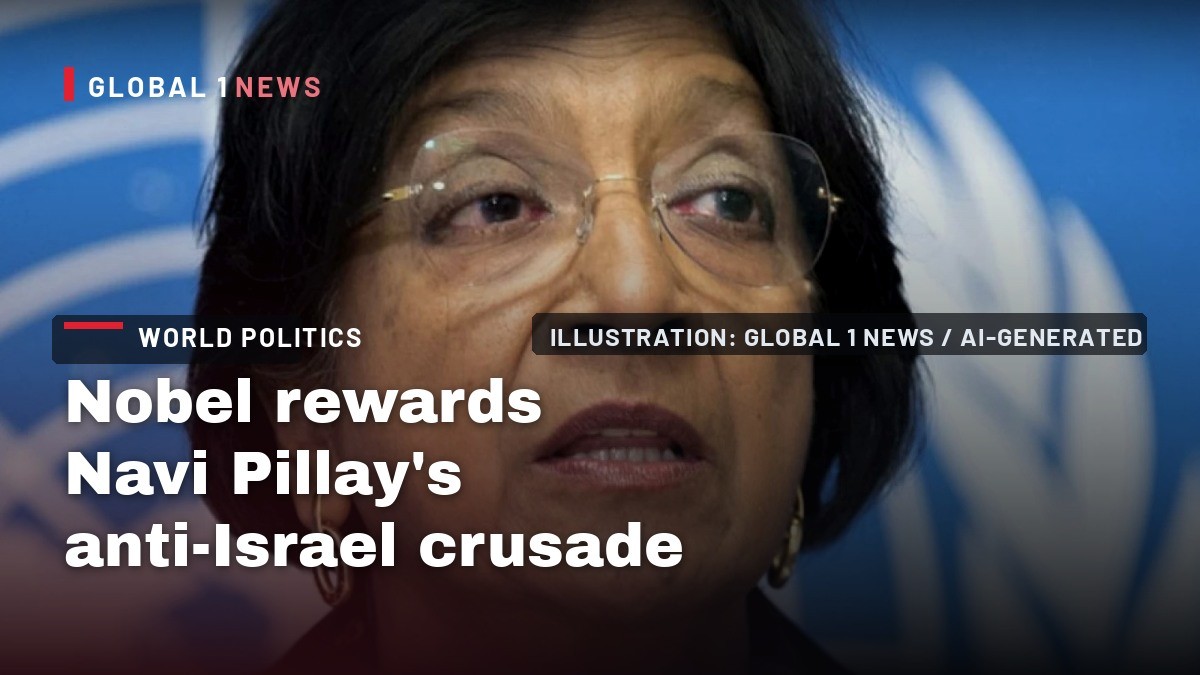
On 10 October 2026 the Nobel Committee announced its Peace Prize laureate for 2026, naming South‑African jurist Navi Pillay as the recipient. Pillay, who chairs the United Nations Commission of Inquiry that issued a genocide accusation against Israel in September 2025, has become a lightning rod for debate in Israel and abroad. The award, traditionally associated with efforts to advance human rights and resolve conflict, has ignited a fierce clash of narratives: one that portrays Pillay as a champion of global justice, and another that frames her as a conduit for anti‑Israeli sentiment within the United Nations system. This article examines the background of Pillay’s career, the specific allegations that led to her Nobel recognition, and the broader implications for Israel’s diplomatic standing, security concerns, and innovation ecosystem.
From UN High Commissioner to Nobel Laureate: Pillay’s Career Trajectory
Born in South Africa, Navi Pillay entered the international human‑rights arena as the United Nations High Commissioner for Human Rights in 2008. During her tenure she adopted a stance that, according to critics, aligned with a “neo‑antisemitic” narrative that seeks to delegitimize Israel. The source material notes that she repeatedly framed Israel’s actions as colonialism, a characterization that has long been contested by Israeli officials and scholars.
In 2010 Pillay endorsed the Goldstone mission, a UN‑mandated fact‑finding effort led by former judge Richard Goldstone. The mission’s report accused Israel of committing war crimes, a conclusion later repudiated by Goldstone himself. Pillay’s continued support for the report, despite its retraction, reinforced her reputation among some UN circles as a staunch critic of Israeli policy.
The 2025 Genocide Accusation and Its Aftermath
On 28 October 2025 Pillay’s commission issued a formal accusation that Israel’s military operations in Gaza amounted to genocide. The claim, made without a judicial ruling, sparked immediate condemnation from the Israeli government, which labeled it “baseless” and warned of its potential to inflame international opinion. The source material emphasizes that the accusation coincided with ongoing proceedings at the International Court of Justice, further entangling legal and diplomatic dimensions.
International reaction was mixed. While a segment of the global press and political establishment welcomed the commission’s findings, other observers, including NGOs such as NGO Monitor and UN Watch, had previously objected to Pillay’s appointment, citing concerns about bias. The Nobel Committee’s decision to honor her appears to have amplified those concerns, suggesting a convergence of UN‑based human‑rights advocacy and the Nobel platform.
Links to the BDS Movement and Calls for Sanctions
Since 2017 Pillay has been identified as a prominent supporter of the Boycott, Divestment, Sanctions (BDS) campaign. She signed statements urging “Sanction Apartheid Israel!” and expressed hope that the “Palestinian struggle against colonization” would lead to broader economic boycotts. The source material records her involvement in drafting letters to world leaders, including a 2021 appeal to U.S. President Joe Biden denouncing what she termed “the oppression of the Palestinian people.”
These actions have placed Pillay at the center of a broader debate over whether BDS constitutes a legitimate form of protest or a discriminatory campaign against Israel. Israeli officials argue that the movement undermines the country’s security and economic stability, while supporters claim it is a non‑violent means of pressuring Israel to change its policies.
Political Repercussions Within the United Nations
The Nobel award has reverberated through UN corridors. In July 2022 Pillay defended a commission member, Miloon Kothari, after he criticized what he called “the Jewish lobby.” This defense, noted in the source material, illustrates Pillay’s willingness to confront perceived pro‑Israel influences within international institutions. Critics contend that such positions further entrench a narrative that frames Israel as an outlier in global human‑rights discourse.
Despite objections from NGOs, Pillay’s appointment proceeded, underscoring a divide within the UN system between member states supportive of her approach and those wary of her perceived bias. The Nobel Prize, by spotlighting her work, may deepen this divide, potentially affecting future UN deliberations on the Israeli‑Palestinian conflict.
Implications for Israel’s Security and Innovation Landscape
Beyond diplomatic symbolism, the Nobel decision carries practical ramifications for Israel’s security and economic sectors. The source material references Pillay’s earlier criticism that Gaza had not been provided with the Iron Dome defense system during the 2014 conflict. Such statements, amplified by a Nobel accolade, can influence public opinion abroad and embolden adversaries who seek to portray Israel as a violator of international law.
Israel’s high‑tech and innovation economy, a cornerstone of its resilience, relies heavily on international partnerships and export markets. Heightened scrutiny or sanctions driven by Pillay’s narrative could jeopardize collaborations, especially in regions where BDS sentiment is strong. The Ministry of Economy and the Israel Innovation Authority have historically worked to mitigate such risks, but the Nobel endorsement of a figure associated with anti‑Israeli campaigns adds a new layer of complexity to diplomatic outreach.
Domestic Reactions and the Media Landscape
Within Israel, media coverage of the Nobel award has been sharply divided. Outlets aligned with the government have highlighted Pillay’s history of supporting BDS and her role in the genocide accusation, framing the prize as a “political statement” rather than a genuine recognition of peace‑building. Conversely, some liberal voices argue that the Nobel Committee’s choice reflects a broader international desire to hold all parties accountable, including Israel.
The source material’s tone suggests a perception among certain Israeli commentators that the award represents an “ideological confirmation” of anti‑Israeli bias in global institutions. This sentiment resonates with a segment of the public that views the Nobel decision as part of a pattern of delegitimization, reinforcing calls for stronger diplomatic defenses and more robust public‑relations campaigns abroad.
Looking Ahead: The Future of the Nobel Peace Prize and UN‑Israel Relations
The 2026 Nobel Peace Prize to Navi Pillay may set a precedent for future awards, signaling that the Committee is willing to honor individuals whose work is deeply intertwined with contentious geopolitical issues. For Israel, the award underscores the importance of maintaining vigilance over UN mechanisms and ensuring that its narrative is represented in international forums.
As the Israeli government continues to navigate a complex regional environment—balancing security concerns with the need to sustain its innovation‑driven economy—the Pillay episode illustrates how diplomatic, legal, and reputational challenges intersect. The Ministry of Economy, the Israel Innovation Authority, and the Ministry of Foreign Affairs will likely coordinate more closely to counteract potential sanctions, protect research collaborations, and promote Israel’s contributions to global technology and health sectors.
In the months ahead, the international community will watch how Israel responds to the Nobel decision, both on the diplomatic front and in the arena of public opinion. Whether the award amplifies calls for accountability or fuels further polarization will depend on how effectively Israeli officials can articulate their security realities while engaging constructively with the broader human‑rights discourse that Pillay embodies.
This article was produced with AI-assisted research and editorial support. Reporting is based on the source material cited below. Sources: JNS (Jewish News Syndicate); jns.org; Global1.News (11 October 2026).
By Hannah Berg, Staff Writer
What's Your Reaction?
 Like
0
Like
0
 Dislike
0
Dislike
0
 Love
0
Love
0
 Funny
0
Funny
0
 Wow
0
Wow
0
 Sad
0
Sad
0
 Angry
0
Angry
0

Israel Correspondent at Global1.News. Based in Tel Aviv, covering Israeli politics, security, technology, and society. Provides balanced, deeply-sourced reporting on one of the most closely-watched regions in the world.













Comments (0)