
Nestle Wants Say In India's Food Warning Label Debate
The Supreme Court of India has delivered what it calls a "last chance" ultimatum to the Food Safety and Standards Authority of India (FSSAI) over front-of-pack warning labels, setting the stage for a regulatory showdown that pits public health imperatives against the commercial interests of the world's largest food conglomerates.
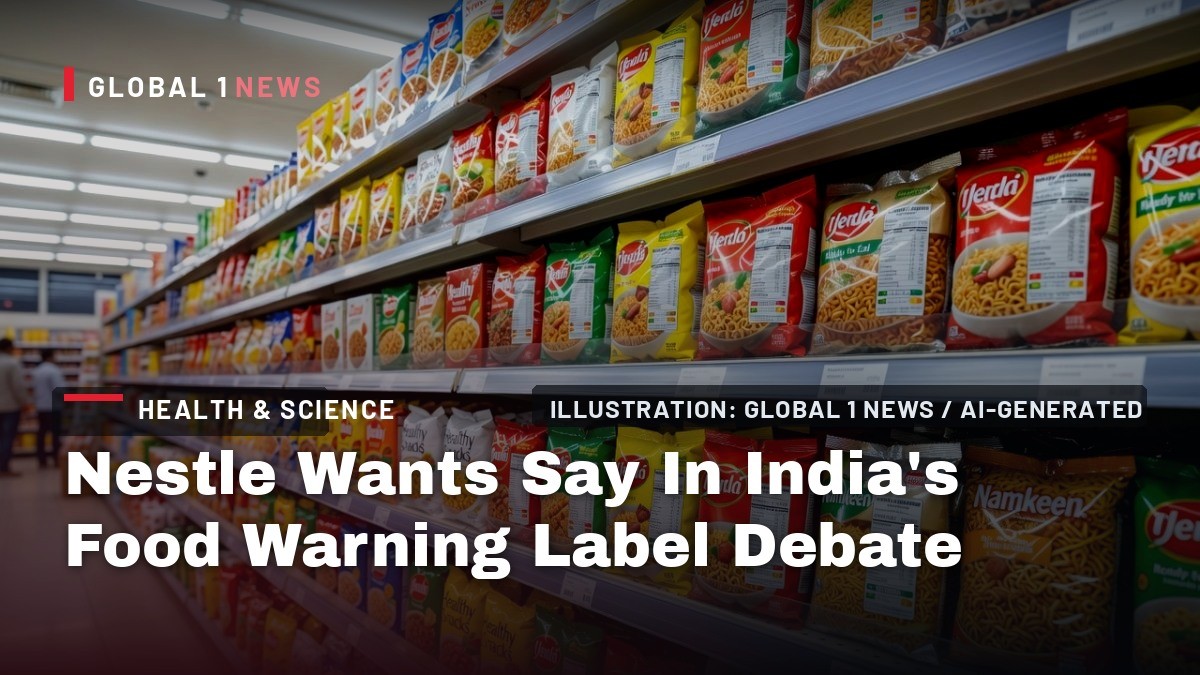
The Supreme Court of India has delivered what it calls a "last chance" ultimatum to the Food Safety and Standards Authority of India (FSSAI) over front-of-pack warning labels, setting the stage for a regulatory showdown that pits public health imperatives against the commercial interests of the world's largest food conglomerates. The development comes as Nestle, the maker of Maggi noodles, publicly endorsed the concept of warning labels while demanding a seat at the drafting table, a position that health activists say is a thinly veiled attempt to dilute the rules.
Nestle Seeks Industry Voice as Supreme Court Deadline Looms on India's Food Warning Labels
New Delhi, India - August 28, 2026 - The battle over what Indians see on the front of their packaged food packets has reached a critical juncture. With the Supreme Court threatening to "dictate the judgement" if FSSAI fails to act, and Nestle publicly lobbying for a consultative process, the next few weeks will determine whether India joins the 44 countries that have already adopted interpretive warning labels or continues to rely on voluntary industry compliance. At the heart of the dispute is a fundamental question: should the consumer be warned in colour, or informed in black and white?
The Supreme Court's Stern Warning to FSSAI
The Supreme Court of India has run out of patience. Hearing a plea filed by health activists, the bench warned the Centre and FSSAI that continued delays on front-of-pack warning labels for packaged foods high in sugar, salt and saturated fat would no longer be tolerated. "This is your last chance. Next time we will dictate the judgement," the court stated, according to reports from NDTV and Reuters. The judges criticised the central government for what they described as prolonged procrastination on a matter that directly affects the health of over 1.4 billion citizens.
The case, which has been pending for years, centres on demands for mandatory warning labels similar to those used in Chile, Mexico, and Brazil. These labels, typically black octagons or stop-sign shapes, alert consumers to excessive levels of nutrients of concern. The court's frustration is understandable: India has one of the highest rates of diet-related non-communicable diseases in the world, with the Indian Council of Medical Research (ICMR) reporting that over 250 million Indians are hypertensive and more than 100 million live with diabetes. The court's message is clear: the time for study groups and stakeholder consultations has passed.
Nestle's Calculated Endorsement
Into this charged atmosphere stepped Nestle CEO Philipp Navratil. Speaking to Reuters, Navratil stated that Nestle supports front-of-pack labelling for products high in sugar, salt and fat, but insisted that manufacturers should be part of the process. "Regulations should be developed scientifically," he said, urging India to consult companies while drafting the rules. The statement is a masterclass in corporate positioning: endorse the concept publicly while reserving the right to shape its implementation.
The irony of Nestle's position is not lost on health experts in Mumbai and New Delhi. Nestle's Maggi instant noodles, a staple in Indian households, carry red front-of-pack warning labels in Britain for high salt content. Many of those Maggi packets sold in the UK are actually manufactured in India. Yet the same product sold in India carries no such warning. Furthermore, Maggi variants sold in India are made with palm oil, while many UK versions use sunflower oil, a difference that nutritionists say is significant in terms of saturated fat content. Nestle has voluntarily adopted these labels in European markets for years, alongside Coca-Cola, yet resists the same transparency in its fastest-growing market.
The FSSAI's Retreat and the March Reversal
The current impasse has a recent history that explains the Supreme Court's anger. In March 2026, the Indian government dropped a labelling proposal after opposition from companies including Coca-Cola and industry groups representing Nestle. The FSSAI, which had earlier floated plans for interpretive, colour-coded front-of-pack labels, stepped back from that position. Instead, it proposed a simpler black-and-white nutrition disclosure, a format that public health experts argue is less effective at capturing consumer attention and comprehension.
The March reversal was a significant victory for the food and beverage industry, which has consistently argued that warning labels stigmatise products and hurt sales. However, the Supreme Court's recent intervention has shifted the balance of power. The court's warning that it will "dictate the judgement" if FSSAI fails to act suggests that the judiciary is prepared to impose a specific labelling regime, potentially one modelled on the octagonal warning systems used in Latin America. For FSSAI, which has been caught between industry pressure and judicial scrutiny, the path forward is now constrained by a hard deadline.
What the New Rules Mean for Packaged Foods
Amidst the legal and corporate manoeuvring, FSSAI is proceeding with a separate but related regulatory change. From October 1, 2026, the authority will tighten front-of-pack nutrition labelling for packaged ready-to-eat meals, with a six-month transition window for manufacturers to comply. Notably, cloud kitchens are not exempt from this requirement, a decision that brings the booming online food delivery sector under the same regulatory umbrella as traditional packaged goods.
This October deadline applies specifically to ready-to-eat meals, a category that includes instant noodles, frozen dinners, and shelf-stable curries. The new rules will require these products to display nutritional information more prominently on the front of the pack, moving away from the fine print on the back. For consumers in cities like Bengaluru and Pune, where cloud kitchens have proliferated, this means greater transparency about what is actually in their delivered meals. The six-month transition window, ending in March 2027, gives manufacturers time to redesign packaging, but the direction of travel is unmistakable.
The Global Precedent and India's Choice
India's debate is not happening in a vacuum. Forty-four countries have already implemented front-of-pack warning labels, and the evidence from these jurisdictions is compelling. Chile, which introduced black octagonal warning labels in 2016, saw a significant reduction in the purchase of high-sugar beverages and a reformulation of products by major manufacturers. Mexico followed suit, and Brazil has adopted a similar model. The World Health Organization has endorsed these labels as a cost-effective public health intervention.
Nestle and Coca-Cola have voluntarily placed such labels on their products in many European markets for years, acknowledging that consumers in those markets demand transparency. The question for India is why its consumers should be treated differently. The answer, according to industry insiders, lies in market dynamics: Indian consumers are more price-sensitive and less brand-loyal, making the potential sales impact of warning labels more severe. But public health experts counter that this is precisely the point. If a product is high in sugar, salt, or saturated fat, the consumer has a right to know before purchase, not after.
Implications for Indian Consumers and the Regulatory Landscape
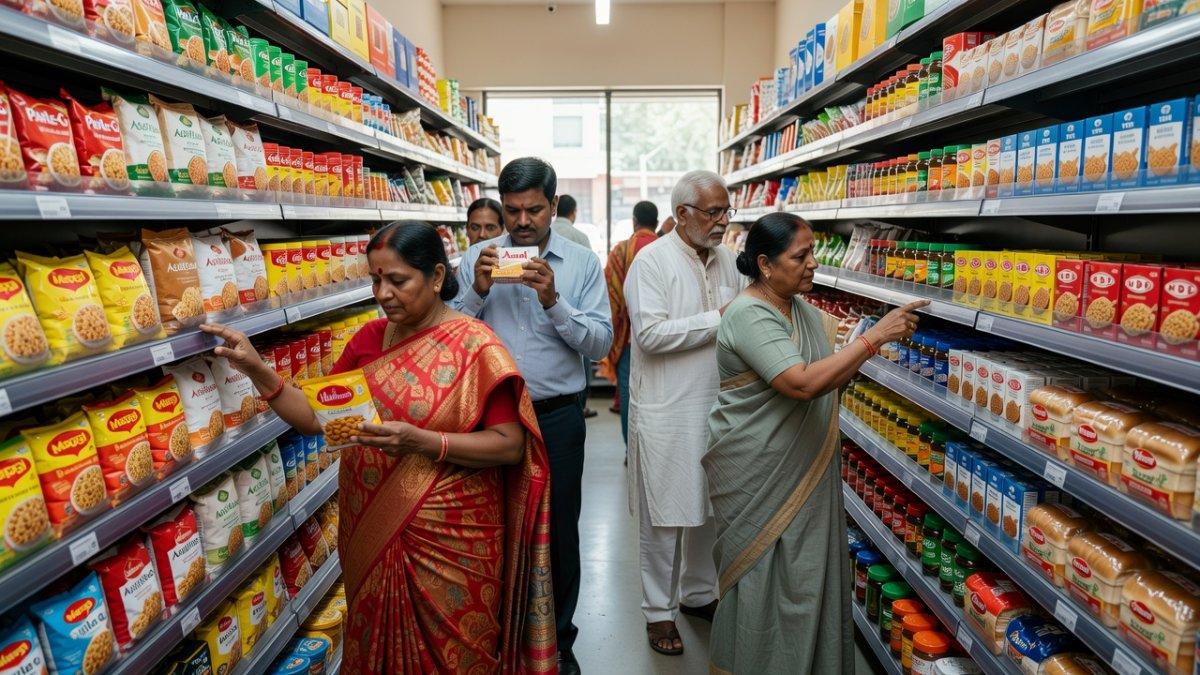
For the average Indian consumer, the outcome of this dispute will determine how they shop for groceries in the coming years. A move to interpretive, colour-coded labels would make it easier for a busy mother in a Delhi supermarket to identify a high-sugar breakfast cereal at a glance. A black-and-white nutrition disclosure, while informative, requires literacy and numeracy that many consumers lack. The Supreme Court's intervention suggests that the judiciary recognises this disparity and is pushing for a system that works for all Indians, not just the educated elite.
The economic implications are equally significant. India's packaged food market is growing rapidly, with the sector valued at over $30 billion and expanding at a double-digit rate. Any labelling regulation will have a profound impact on product formulations, marketing strategies, and ultimately, consumer trust. The March reversal, driven by industry lobbying, demonstrated the power of corporate interests in shaping policy. The Supreme Court's "last chance" warning signals that the judiciary is willing to override those interests in the name of public health.
FSSAI, for its part, has not responded to Reuters' queries on the matter, leaving the public to speculate on its next move. The authority is caught in a pincer movement: the Supreme Court demands action, while industry groups demand consultation. The October 1 deadline for ready-to-eat meals suggests that FSSAI is moving forward on at least one front, but the broader question of warning labels for all packaged foods remains unresolved. With the court's patience exhausted, the next hearing could produce a landmark judgement that reshapes India's food regulatory landscape for decades.
The stakes could not be higher. India is in the midst of a nutrition transition, with rising incomes leading to increased consumption of processed and packaged foods. The ICMR has warned that this trend, if unchecked, will lead to a public health crisis of catastrophic proportions. The Supreme Court's intervention is a recognition that voluntary measures have failed and that the state must act decisively. Whether Nestle and its peers are willing to accept a regulatory framework they do not fully control remains to be seen. But the message from the court is unambiguous: the time for consultation is over, and the time for action has begun.
-- By Dr. Raj Patel, Staff Writer
This article was produced with AI-assisted research and editorial support. Sources: Reuters, NDTV, Economic Times, India Today, Hindustan Times.
What's Your Reaction?
 Like
0
Like
0
 Dislike
0
Dislike
0
 Love
0
Love
0
 Funny
0
Funny
0
 Wow
0
Wow
0
 Sad
0
Sad
0
 Angry
0
Angry
0

India/South Asia Correspondent at Global1.News. Analytical voice with a background in science and health journalism. Based in New Delhi, covering Indian politics, education, healthcare, technology, and policy. Breaks down complex data into clear, actionable reporting.















Comments (0)