
Expired Medicines Dumped in Odisha River: Mayurbhanj Inquiry Ordered
Baripada, Odisha — On August 26, 2026, a discovery along the banks of a river near the Mayurbhanj District Headquarters Hospital (DHH) in Baripada, Odisha, exposed a systemic vulnerability in India's healthcare waste management. Large quantities of expired medicines, reportedly worth crores of rupees, were found dumped into the waterway. The waste included antibiotics, masks, syringes, testing kits, and other essential medicines. The Mayurbhanj district administration has.
Baripada, Odisha — On August 26, 2026, a discovery along the banks of a river near the Mayurbhanj District Headquarters Hospital (DHH) in Baripada, Odisha, exposed a systemic vulnerability in India's healthcare waste management. Large quantities of expired medicines, reportedly worth crores of rupees, were found dumped into the waterway. The waste included antibiotics, masks, syringes, testing kits, and other essential medicines. The Mayurbhanj district administration has ordered an inquiry, but the incident raises urgent questions about pharmaceutical waste disposal, environmental contamination, and the looming threat of antimicrobial resistance (AMR) in one of India's most tribal-dominated districts.
Expired Medicines Dumped in Odisha River: India's Medical Waste Crisis
The Discovery at Mayurbhanj DHH and the Official Response
The incident came to light when media reports and local sources alerted the district administration to the illegal dumping. Additional District Magistrate (ADM) Netrananda Mallick confirmed that an inquiry would be initiated. "If the matter is found to be true, I will intimate the District Magistrate, and we will conduct an inquiry. Action will be taken as per the provisions of law. There will be no escape," Mallick stated. He added, "Medicines should not be misused. The government is giving top priority to healthcare, education and sanitation." The waste material, which included expired antibiotics, syringes, masks, and diagnostic kits, was found in quantities that suggest a large-scale disposal operation. The district administration has not yet established the exact quantity, monetary value, or source of the material. Crucially, officials have not confirmed whether the waste originated from the DHH itself. The District Collector has since convened a meeting with medical officers, directing them to focus on rural healthcare, particularly the needs of tribal populations in the district. Mayurbhanj is a landlocked district in northern Odisha, spanning 10,418 square kilometers with its headquarters at Baripada. It borders West Bengal's Medinipur district and Jharkhand's Singhbhum district. More than 39 percent of its population is tribal, making it one of the most significant tribal belts in eastern India. The district's healthcare infrastructure has recently seen a major upgrade with the inauguration of the 650-bed Teaching Hospital of Pandit Raghunath Murmu Medical College and Hospital in Baripada in June 2026, a project Odisha Chief Minister Mohan Charan Majhi described as a landmark in transforming medical services across north Odisha.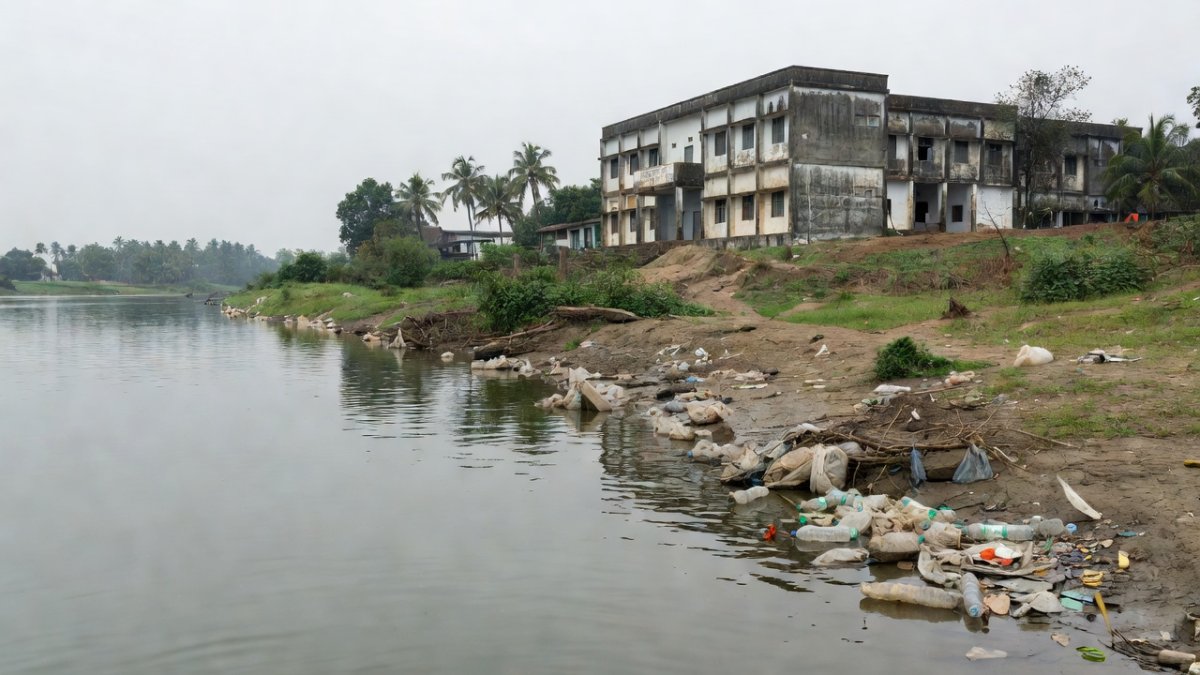
Why Dumping Medicines in Rivers Is a Public Health Hazard
The dumping of pharmaceutical waste into water bodies is not merely an aesthetic or regulatory issue; it is a direct threat to public health and ecological integrity. The World Health Organization (WHO) estimates that approximately 15 percent of waste generated by healthcare activities is hazardous, including infectious, toxic, or radioactive material. This fraction, when improperly disposed of, can leach into groundwater, contaminate drinking water sources, and enter the food chain. Pharmaceutical contamination of water bodies has been documented globally, with antibiotics being a particular concern. When antibiotics enter aquatic ecosystems, they exert selective pressure on environmental bacteria, accelerating the development of resistance. The WHO has explicitly warned that environmental pollution, including contamination involving antibiotics, can contribute to antimicrobial resistance (AMR). This is not a distant theoretical risk; it is an immediate biological reality that undermines the efficacy of life-saving drugs. For a district like Mayurbhanj, where a significant portion of the population relies on public healthcare facilities and where water sources are often shared between humans and livestock, the contamination of a river with expired antibiotics and syringes poses a direct risk. The presence of syringes and testing kits in the dumped waste also raises concerns about needle-stick injuries and the potential transmission of blood-borne pathogens, including Hepatitis B, Hepatitis C, and HIV, to waste pickers and local communities.India's Medical Waste Problem in Numbers
The Mayurbhanj incident is not an isolated case but a symptom of a larger national challenge. India generates an estimated 500 to 600 tonnes of biomedical waste daily, according to data from the Central Pollution Control Board (CPCB). While the regulatory framework exists, enforcement and compliance remain inconsistent across states and districts. A study published in Nature Communications in 2024 provided a stark quantification of India's pharmaceutical pollution problem. Researchers analysed 381 sewage samples collected across six Indian states between June and December 2023. The findings were alarming: they detected 11 antibiotics from seven drug classes and identified 82 antimicrobial-resistance genes associated with 80 mobile genetic elements. Mobile genetic elements are segments of DNA that can transfer resistance genes between different bacterial species, accelerating the spread of AMR in environmental and clinical settings. This data underscores a critical point: India's water systems are already reservoirs of antibiotic resistance. The illegal dumping of expired antibiotics into rivers like the one in Mayurbhanj adds to this burden, creating hotspots of resistance that can eventually reach clinical settings. The National Action Plan on Antimicrobial Resistance (NAP-AMR), launched by the Government of India in 2017, lists AMR as a national health priority. However, the gap between policy intent and on-ground implementation remains wide, as evidenced by incidents like the one in Baripada.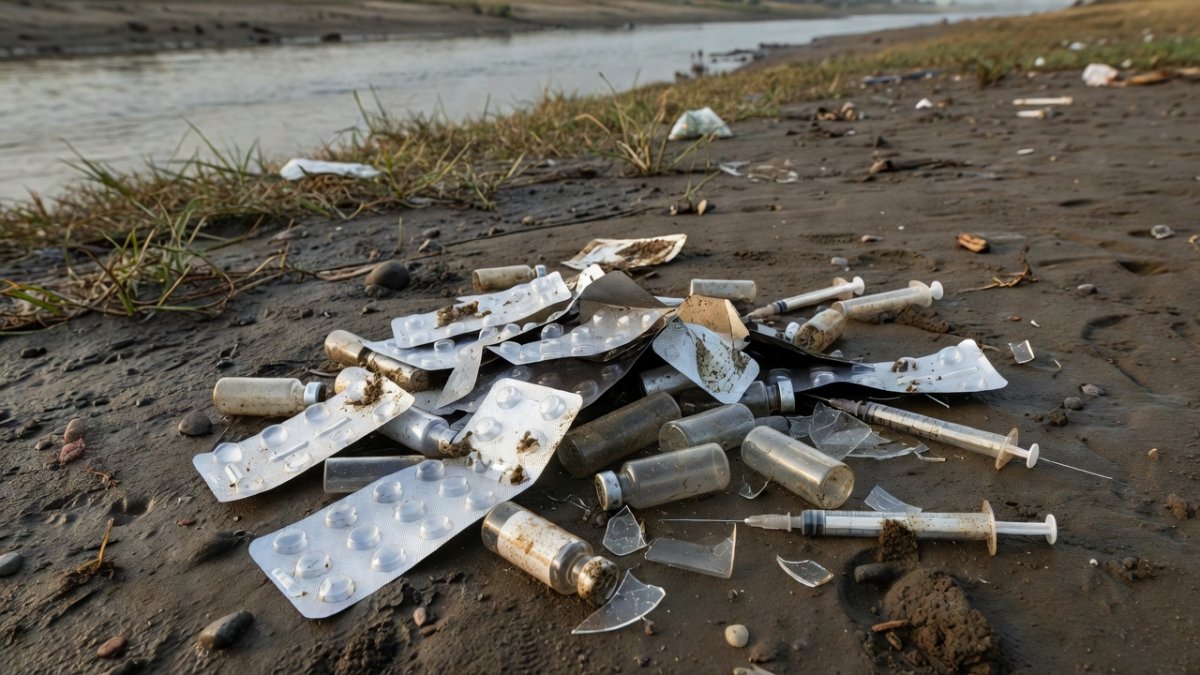
The Regulatory Framework: Rules on Paper, Gaps in Practice
India's biomedical waste management is governed by the Bio-Medical Waste Management Rules, 2016, which replaced the earlier 1998 rules. The framework categorises biomedical waste into colour-coded segregation pathways: yellow (human anatomical waste, expired medicines, and cytotoxic drugs), red (contaminated recyclable waste), blue/white (sharp waste), and black (incineration ash). The rules place clear duties on occupiers—healthcare facilities—and operators of Common Biomedical Waste Treatment Facilities (CBWTFs). The Central Pollution Control Board (CPCB) oversees implementation at the national level, with State Pollution Control Boards (SPCBs) responsible for enforcement. Under these rules, expired medicines fall under the yellow category and must be disposed of through incineration or plasma pyrolysis at authorised facilities. Dumping them into a river is a direct violation of multiple provisions of the 2016 rules, including those related to segregation, storage, transportation, and treatment. The Mayurbhanj DHH, as a government healthcare facility, is an occupier under the rules and is legally obligated to ensure that its waste is handled through authorised channels. However, the regulatory framework faces significant implementation challenges. Many smaller healthcare facilities, particularly in rural and tribal areas, lack the infrastructure and training to comply with the rules. CBWTFs are often concentrated in urban centres, making transportation of waste from remote districts like Mayurbhanj logistically difficult and expensive. This creates incentives for illegal dumping, particularly when facilities face pressure to clear storage areas quickly. The ADM's statement that "action will be taken as per the provisions of law" is reassuring, but the district administration must also investigate whether the DHH has a functional waste management plan, whether staff are trained in segregation protocols, and whether the facility has a valid agreement with an authorised CBWTF. The inquiry must go beyond identifying the culprits and address the systemic failures that allowed this to happen.What This Means for Tribal and Rural Health in Mayurbhanj
Mayurbhanj's demographic profile makes this incident particularly concerning. With over 39 percent of its population belonging to tribal communities, the district has unique healthcare needs. Tribal populations often face barriers to accessing healthcare, including geographical isolation, language differences, and socio-economic marginalisation. The district administration's directive to focus on rural healthcare, particularly tribal needs, is a step in the right direction, but incidents like this undermine public trust in the healthcare system. The newly inaugurated 650-bed Teaching Hospital at Pandit Raghunath Murmu Medical College and Hospital represents a significant investment in the region's healthcare infrastructure. However, infrastructure alone is insufficient. The safe management of medical waste is a core component of healthcare delivery. A hospital that cannot safely dispose of its expired medicines is not fully serving its patients or its community. For tribal communities in Mayurbhanj, the contamination of a river with pharmaceutical waste has immediate and long-term implications. Many tribal households depend on rivers for drinking water, bathing, and fishing. The presence of antibiotics and other pharmaceuticals in the water supply can lead to chronic low-dose exposure, which may have unknown health effects. More critically, it contributes to the environmental reservoir of AMR, which could eventually compromise the effectiveness of antibiotics used to treat common infections in the district. The District Collector's meeting with medical officers, with a focus on rural healthcare, must include concrete measures for waste management. This includes establishing clear protocols for the disposal of expired medicines, training staff at all levels, and ensuring that the DHH and other facilities in the district have functional agreements with authorised CBWTFs. The district administration should also consider setting up a local waste treatment facility or a collection point to reduce the logistical barriers to proper disposal.The Bottom Line: Enforcement, Accountability, and India's Health Security
The Mayurbhanj incident is a test case for India's commitment to healthcare safety and environmental protection. The district administration's promise of an inquiry is necessary, but it must be followed by swift and transparent action. The inquiry should establish the source of the waste, the quantity involved, and the chain of custody that led to the dumping. If the DHH is found responsible, disciplinary action must be taken against the officials involved. If the waste came from another source, the investigation must identify the responsible parties and hold them accountable. Beyond the immediate inquiry, this incident highlights the need for stronger enforcement of the Bio-Medical Waste Management Rules, 2016. The CPCB and state pollution control boards must conduct regular, unannounced inspections of healthcare facilities, particularly in rural and tribal districts. The rules should be amended to impose stricter penalties for violations, including the suspension of operating licenses for repeat offenders. The AMR threat is a national health security issue. India's NAP-AMR, launched in 2017, sets out a comprehensive strategy to combat antimicrobial resistance, but its implementation has been uneven. The findings of the Nature Communications study—82 AMR genes in sewage samples across six states—should serve as a wake-up call. Every instance of improper antibiotic disposal, whether in Mayurbhanj or elsewhere, adds to the environmental burden of resistance. For the people of Mayurbhanj, the immediate priority is to ensure that the contaminated river is assessed and, if necessary, cleaned. The district administration should work with the State Pollution Control Board and the Odisha State Disaster Management Authority to evaluate the extent of contamination and take remedial action. Public health messaging should inform local communities about the risks and advise them on safe water practices. The incident at Mayurbhanj DHH is a reminder that healthcare is not just about treating patients; it is about protecting the environment and the community. The government's stated priority on healthcare, education, and sanitation must be matched by rigorous enforcement of waste management rules. The people of Mayurbhanj, particularly its tribal communities, deserve nothing less.— By Dr. Raj Patel, Staff Writer
This article was produced with AI-assisted research and editorial support. Sources: India Today, Rediff.com, The Logical Indian, OMMCOM News, World Health Organization.
What's Your Reaction?
 Like
0
Like
0
 Dislike
0
Dislike
0
 Love
0
Love
0
 Funny
0
Funny
0
 Wow
0
Wow
0
 Sad
0
Sad
0
 Angry
0
Angry
0

India/South Asia Correspondent at Global1.News. Analytical voice with a background in science and health journalism. Based in New Delhi, covering Indian politics, education, healthcare, technology, and policy. Breaks down complex data into clear, actionable reporting.















Comments (0)