
Catastrophic floods kill over 270 in Nepal and Tibet, with more than 1,300 missing
On Wednesday morning, the earth itself seemed to turn against the mountain communities of Nepal. At approximately 8:40am local time, a wall of water and mud, several stories high, tore through the lush valleys along the Nepal-Tibet border, swallowing homes, bridges, and people in a matter of minutes. For those of us in Thailand who have felt the sting of sudden floodwaters, the images from Devighat are both haunting and deeply familiar, a reminder of nature's terrifying power
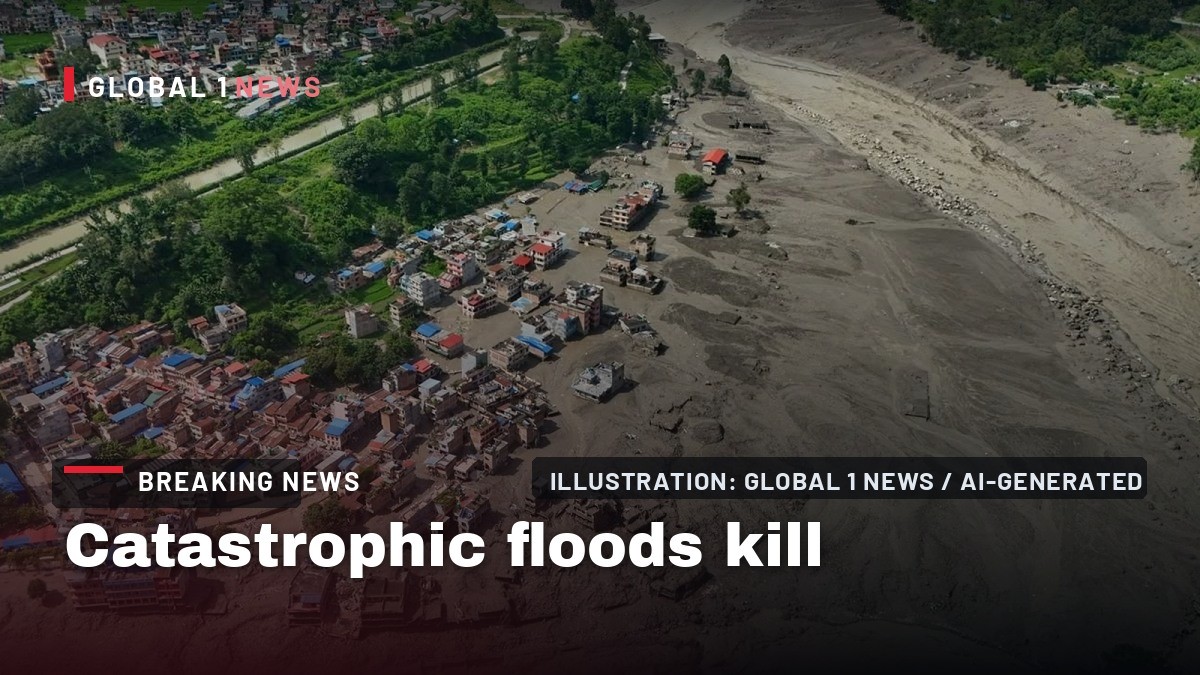
On Wednesday morning, the earth itself seemed to turn against the mountain communities of Nepal. At approximately 8:40am local time, a wall of water and mud, several stories high, tore through the lush valleys along the Nepal-Tibet border, swallowing homes, bridges, and people in a matter of minutes. For those of us in Thailand who have felt the sting of sudden floodwaters, the images from Devighat are both haunting and deeply familiar, a reminder of nature's terrifying power over human life.
What Happened
The catastrophe began high in the Himalayas when part of a glacier collapsed, sending a catastrophic cascade of ice, rock, and debris down the mountainside. The resulting flash floods and mudslides swept through mountainous areas along the Bhote Koshi River and Trishuli River, impacting Nepal's Rasuwa, Nuwakot, Dhading, Gorkha, and Chitwan districts. The hardest-hit area was around Devighat in Nuwakot district, a settlement located roughly 65 kilometres north of Kathmandu, where the force of the water left buildings looking as though a giant hand had scraped them clean of their lower floors.
Videos of the disaster, shared widely on social media, showed people running for their lives before the floodwaters swallowed them up, washing out buildings and bridges in their path. The steep slopes and lush valleys below the Himalayan range, home to many of the world's highest peaks and remaining glaciers, are especially vulnerable to such flooding and landslides. In the aftermath, images revealed the second floors of buildings in Nuwakot slathered in thick mud, debris hanging from tree branches and wires, vehicles buried under tonnes of sediment, and stunned survivors caked in mud, wandering through the ruins of their former lives.
A Rising Toll
As rescue teams searched through Thursday, the human cost of this disaster became staggeringly clear. At least 273 people have been confirmed killed, with more than 1,300 still missing, including foreigners and pilgrims who had come to the region for trekking and spiritual journeys. The toll continued to rise through the day, with some outlets reporting more than 390 dead and more than 1,400 missing. Among the missing are more than 400 tourists, including approximately 340 foreign nationals from countries such as the United States, Malaysia, India, and the United Kingdom.
The scale of the tragedy is difficult to comprehend. Rescuers found bodies hundreds of kilometres downstream in Chitwan district, a testament to the sheer force and reach of the floodwaters. In Kathmandu, hospitals posted lists of the injured on their walls, and desperate families gathered outside, scanning the names for loved ones. In China's Tibet region, Gyirong County feared "major casualties" with at least three confirmed dead. The Nepalese army has been conducting helicopter operations, successfully rescuing more than 100 people, but the search for the missing continues against a backdrop of mud, debris, and grief.
Why the Water Came So Fast
The speed and ferocity of the flood have raised critical questions among scientists and engineers. Amorn Pimanmas, president of the Structural Engineers Association of Thailand and an engineering lecturer at Kasetsart University, offered a compelling analysis in a social media post that resonated with experts across the region. He noted that there were reportedly no heavy rains in the affected area at the time, which rules out a conventional flash flood caused by monsoon downpours.
Instead, Pimanmas suggested a more terrifying scenario: the collapse of a large mass of glacial ice and rock may have blocked a waterway, forming a temporary natural dam. When that dam failed under mounting water pressure, it released a colossal volume of water mixed with rocks, ice, trees, and other debris. The rapid rise of water levels, he observed, resembled a dam-break event, a destructive force capable of severely damaging buildings and infrastructure. The US Geological Survey initially registered a seismic signal that was mistaken for a magnitude 4.4 earthquake, but has since clarified that the seismic activity was caused by the ice and rock collapse itself, not by tectonic movement. The mountain did not shake; it simply fell.
No Thais Reported Among the Victims
For Thai travellers and their families back home, there is a measure of relief in the official statements from Bangkok. The Thai Ministry of Foreign Affairs confirmed on Thursday that there have been no reports of Thai nationals being injured, killed, or missing following the floods. Spokeswoman Jaithai Upakarnitikaset stated clearly: "So far, there have been no reports of Thai nationals being injured or killed in the incident."
This news will come as a comfort to the many Thais who visit Nepal each year, drawn not only by the majestic Himalayan treks but also by deep spiritual ties. Nepal is home to Lumbini, the birthplace of the Buddha, making it a popular destination for Thai travellers on Buddhist pilgrimages. For those who may be affected or require assistance, the Thai Embassy in Kathmandu has established a 24-hour emergency hotline at +977-9818749944. Thai citizens in the region are advised to stay informed, avoid affected areas, and maintain contact with the embassy. The Thai government's swift response reflects a broader regional understanding of the importance of consular protection in times of crisis.
A Warning Written in the Himalayas
This disaster is not an isolated event; it is a warning written in the melting ice of the world's highest mountains. Melting glaciers have become more common because of human-caused climate change, and the Himalayas are warming at an alarming rate. As glaciers retreat, they leave behind unstable slopes and precarious glacial lakes, increasing the risk of catastrophic collapses like the one that struck on Wednesday. The steep valleys below are natural channels for destruction, funnelling water and debris with devastating speed.
For Thailand, a country that knows the pain of severe flooding all too well, this event carries profound implications. The 2011 Bangkok floods, which submerged large parts of the capital for months, remain a vivid memory. More recently, northern Thailand has faced recurring monsoon flooding that displaces communities and damages livelihoods. The Himalayan glaciers are the source of major rivers that sustain millions of people across South and Southeast Asia, including the Mekong, which flows through Thailand's northeastern Isaan region. Changes in the cryosphere — the frozen parts of the Earth — will have cascading effects on regional water security, agriculture, and hydropower. What happens in the high mountains does not stay in the high mountains; it flows downstream to all of us.
What Comes Next
As the immediate rescue efforts begin to transition, the focus is shifting to the long and difficult road to recovery. Bishal Kumar Bhandari, chairman of the Nepal Red Cross Society, announced that they have shifted focus from rescue to large-scale relief operations in the flood-hit districts. The needs are immense: shelter for the displaced, clean water, medical care, and the grim task of recovering the missing. The Nepalese army continues its helicopter operations, but the challenging terrain and the sheer scale of destruction make every mission difficult.
For the region, this disaster is a call to action. It underscores the urgent need for better monitoring of glacial lakes and unstable slopes, improved early warning systems, and regional cooperation on disaster preparedness. Thailand, with its own experience in flood management and its position as a regional leader in ASEAN, can play a role in supporting Nepal's recovery and in advocating for greater climate resilience across the region. The bonds between Thailand and Nepal are strong, rooted in shared Buddhist heritage and mutual respect. In times of tragedy, those bonds become even more important.
As the people of Nepal begin the slow process of rebuilding, they do so with the knowledge that the world is watching and, in many cases, reaching out to help. For Thai readers, this story is a reminder of our shared vulnerability and our shared humanity. The mountains may be far away, but the lessons they teach us about nature, climate, and community are close to home.
By Ann Srisawat, Staff Writer
This article was produced with AI-assisted research and editorial support. Sources: Khaosod English (AP), Bangkok Post, Al Jazeera, CBC News, TIME, The Guardian
What's Your Reaction?
 Like
0
Like
0
 Dislike
0
Dislike
0
 Love
0
Love
0
 Funny
0
Funny
0
 Wow
0
Wow
0
 Sad
0
Sad
0
 Angry
0
Angry
0

Southeast Asia Correspondent at Global1.News. Based in Bangkok, covering Thai and Southeast Asian politics, economy, technology, and culture. Deep regional perspective on one of the world's most dynamic regions.














Comments (0)