
Nepal-Tibet Border Disaster: Death Toll Reaches 626, Missing Toll Approaches 3,000
Nepal-Tibet border disaster: death toll reaches 626 in Nepal with 2,426 missing, including 517 foreign nationals; Tibet reports 7 dead and 554 missing. A glacier-triggered debris flow destroyed border communities; rescue was suspended due to weather.
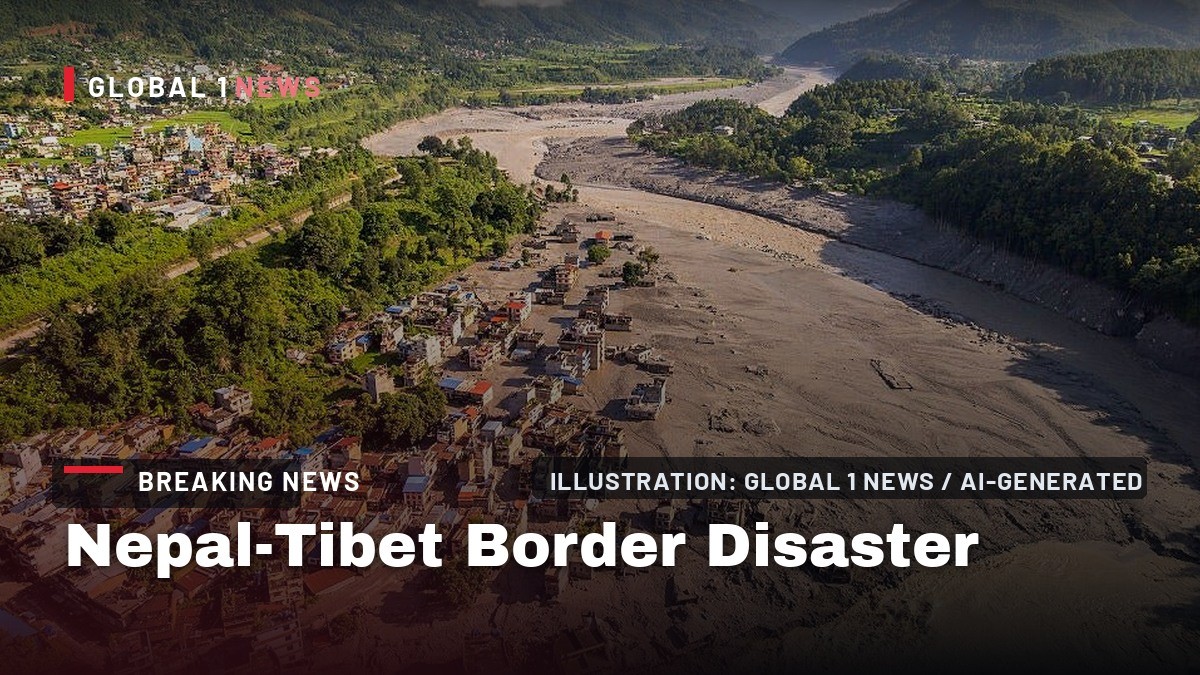
The catastrophic flash flooding and landslide disaster that struck the Nepal-China border region on Wednesday, August 26, 2026, has claimed at least 626 lives in Nepal, with 2,426 people still missing, according to the latest figures released Saturday by Nepal's National Disaster Risk Reduction and Management Authority (NDRRMA). The missing include 517 foreign nationals, a number that has continued to climb as rescue teams face increasingly difficult conditions.
On the Tibetan side, Chinese state media outlet Xinhua reported Saturday that 7 people have been confirmed dead with 554 still missing in Gyirong County. Combined, the missing toll across both sides of the border now approaches 3,000 — CNN reported Saturday that it passes 3,000. Experts are calling it one of the worst natural disasters to hit the region in years.
The disaster unfolded with terrifying speed. The U.S. Geological Survey (USGS) Landslide Hazards Program said the event was likely triggered by rapid slope failure involving a glacier in Langtang National Park, near the border with China. An ice-rock avalanche blocked the Lhende Khola, a tributary of the Bhotekoshi and Trishuli river system; the natural dam then failed and released a wall of water down the Bhote Koshi gorge.
A Wall of Water With No Warning
The Kathmandu Post reported that an avalanche on the Chinese side of the border triggered the wall of water with no warning, sweeping through trekking routes and towns along the Bhotekoshi river. The first impact hit Timure, near Nepal's border with China at Rasuwagadhi in Rasuwa District, before floodwaters ripped through Trishuli Bazar in Nuwakot District. CNN reported that massive landslides and catastrophic flash floods destroyed houses and wiped out bridges across the entire border region.
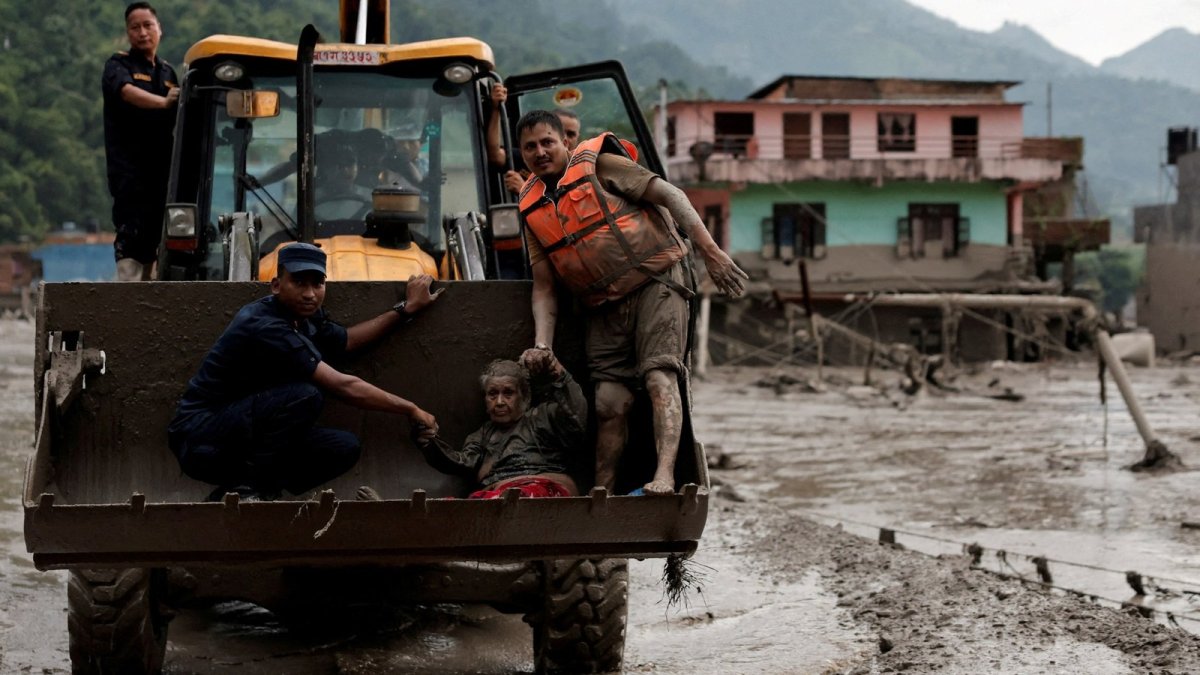
Some preliminary accounts noted a magnitude 5.2 tremor about seven minutes before floodwaters hit the Gyirong Port border crossing, but the detail has not been fully corroborated by seismic authorities. DevGhat village in Nuwakot District was among the settlements buried under mud and debris, according to CBS News aerial imagery. NDTV reported rescuers scouring deep, leg-sucking mud for survivors against the constant threat of further landslides.
Escalating Death Toll and Missing Counts
Casualty figures have escalated dramatically over four days. On Wednesday, early counts varied widely: the New York Post reported at least 72 dead, Bloomberg at least 100, CNBC at least 157, and the Himalayan Times at least 162; The Diplomat put the toll at 160 with 900 missing. By Thursday, Nepali officials reported 826 people missing, including about 341 foreigners, while Chinese state broadcaster CCTV said 558 people were missing in Gyirong County, including 260 foreign nationals, with at least 3 dead there.
On Friday, Nepal's NDRRMA reported at least 579 dead and 977 missing, with 3,742 people rescued and 14,829 security personnel mobilized, and Chinese state media confirmed 5 dead in Tibet. As of Saturday, the NDRRMA toll stands at 626 dead in Nepal with 2,426 missing, and Xinhua reports 7 dead and 554 missing on the Tibetan side. Another 101 injured people were undergoing hospital treatment as of Friday. The Independent Power Producers' Association Nepal (IPPAN) counts 934 hydropower workers unaccounted for across 11 projects.
Foreign Nationals Among the Missing
The international dimension of this disaster is profound. India has reported 255 nationals uncontactable, with 84 rescued as of August 28. Australia has raised its count to 41 nationals missing and pledged A$1 million to the Emergency Action Alliance for locally led recovery. Mapping analysis suggests about 90 Americans are unaccounted for, and Bloomberg reported Americans and Brits among the hundreds missing.
Many of those caught up in the disaster were pilgrims travelling toward Mount Kailash and Lake Mansarovar in Tibet, according to Al Jazeera — sacred sites that draw thousands of pilgrims annually from across South Asia. The presence of so many foreign nationals in such a remote area has complicated rescue and identification efforts, with diplomatic missions from multiple countries now engaged in the response.
The disaster also destroyed key border infrastructure, including the Rasuwagadhi border crossing area, a major trade and travel gateway between Nepal and China — severing a critical economic lifeline for the region.
Rescue Operations Suspended Due to Weather
Nepal suspended search-and-rescue operations on Saturday, August 29, due to bad weather, according to Reuters. The suspension comes at a critical juncture, with families and governments desperately awaiting news of the missing. Teams have been battling treacherous terrain, unstable slopes, and now deteriorating weather that threatens further landslides and hampers aerial operations.
The mobilization has nonetheless been immense. Nepal's NDRRMA reported 14,829 security personnel deployed, working alongside international teams and local volunteers through deep mud, debris fields, and the constant risk of secondary disasters. China has deployed more than 570 emergency personnel and rescue equipment to Gyirong County to assist search efforts, according to CGTN via the New York Post. China also agreed to inform Nepal as soon as water flows begin to rise on its side of the border — a critical early-warning measure, as reported by the Kathmandu Post.
Nepal Reverses Decision on International Help
In a significant policy shift, Nepal reversed an earlier decision to decline international search-and-rescue help after intense diplomatic pressure from countries whose nationals are missing, according to the Kathmandu Post on August 28. The reversal reflects recognition that the scale of the disaster exceeds Nepal's domestic capacity to respond effectively.
Nepal's foreign minister, however, has clarified that the country needs foreign technical help, not search-and-rescue teams, to cope with the flood's aftermath, according to Reuters on August 29 — a sign that the operation is shifting from immediate search toward longer-term recovery. A Nepali minister said the cost of rebuilding is likely to be in the billions of dollars, per The Guardian's live blog.
The economic impact is staggering: the disaster destroyed homes, communities, bridges, roads, and hydropower facilities. The 934 hydropower workers unaccounted for across 11 projects represent a significant blow to Nepal's energy sector, a key driver of the economy and a major source of export revenue.
Downstream Flood Alerts Issued in India
The disaster's reach extends beyond the immediate border region. India issued flood alerts in the downstream states of Bihar and Uttar Pradesh, according to The Guardian. The Bhotekoshi and Trishuli river systems flow south into India, and the massive volume of water and debris released by the disaster poses a continuing threat to communities further downstream.
The alerts highlight the transboundary nature of Himalayan river systems and the need for coordinated disaster response across national borders. They also raise questions about early-warning systems: the Kathmandu Post reported the wall of water arrived with no warning, and the preliminary 5.2 tremor report suggests seismic monitoring could offer some advance notice — but current systems are insufficient for the speed and scale of this event.
Climate Context: The Warming Himalayas
The disaster has renewed attention on the vulnerability of the Himalayan region to climate change. The range, spanning Nepal, India, China, Bhutan and Pakistan, is warming roughly twice as fast as the global average, according to The Guardian's explainer, putting the region at increased risk of avalanches, landslides and glacier-collapse floods — precisely the type of event that occurred on August 26.
The USGS's preliminary assessment of rapid slope failure involving a glacier in Langtang National Park is consistent with the broader pattern of glacial instability observed across the region in recent years. As glaciers retreat and permafrost thaws, mountain slopes become less stable, increasing the likelihood of catastrophic failures. The affected communities are among the region's most vulnerable, with limited infrastructure to cope with such events.
The rebuilding effort, estimated to cost billions of dollars, will need climate-resilient design and improved early-warning systems to reduce the risk of future disasters. The international community's response will be measured not only in the immediate rescue and relief efforts, but in the long-term commitment to helping the region adapt to a rapidly changing climate.
This article was produced with AI-assisted research and editorial support. Sources: CNN, Reuters, AP, Al Jazeera, CBS News, The Guardian, Kathmandu Post, NDRRMA, Xinhua.
By Jessica Ali, Staff Writer
What's Your Reaction?
 Like
0
Like
0
 Dislike
0
Dislike
0
 Love
0
Love
0
 Funny
0
Funny
0
 Wow
0
Wow
0
 Sad
0
Sad
0
 Angry
0
Angry
0

Editor-in-Chief at Global1.News. Atlanta-based journalist who cuts through the BS and tells it like it is. Lead anchor, host, and the voice you hear when the spin stops and the truth starts.














Comments (0)