
El Niño Floods and Mudslides Devastate the Andes
The roar of water where there should be silence. The crack of mud swallowing homes. The desperate bleat of starving llamas in snow that has no business falling. In late August 2026, the Andes mountains—the backbone of South America—have become a crucible of climate chaos.
The roar of water where there should be silence. The crack of mud swallowing homes. The desperate bleat of starving llamas in snow that has no business falling. In late August 2026, the Andes mountains—the backbone of South America—have become a crucible of climate chaos. Catastrophic floods, unprecedented snow, and lethal mudslides are tearing through Chile, Peru, and Bolivia, forcing presidents to declare states of emergency and exposing the deep vulnerability of a region already on the front lines of a warming planet. This is not a distant forecast; it is the brutal, wet, and muddy reality of an El Niño that scientists now warn could be one of the strongest on record.
El Niño Floods and Mudslides Devastate the Andes
Santiago, Chile – August 29, 2026 — Across Peru, Chile, and Bolivia, the ground is still moving and the water still rising, and the forecasters are warning that this El Niño has not yet shown its full strength.
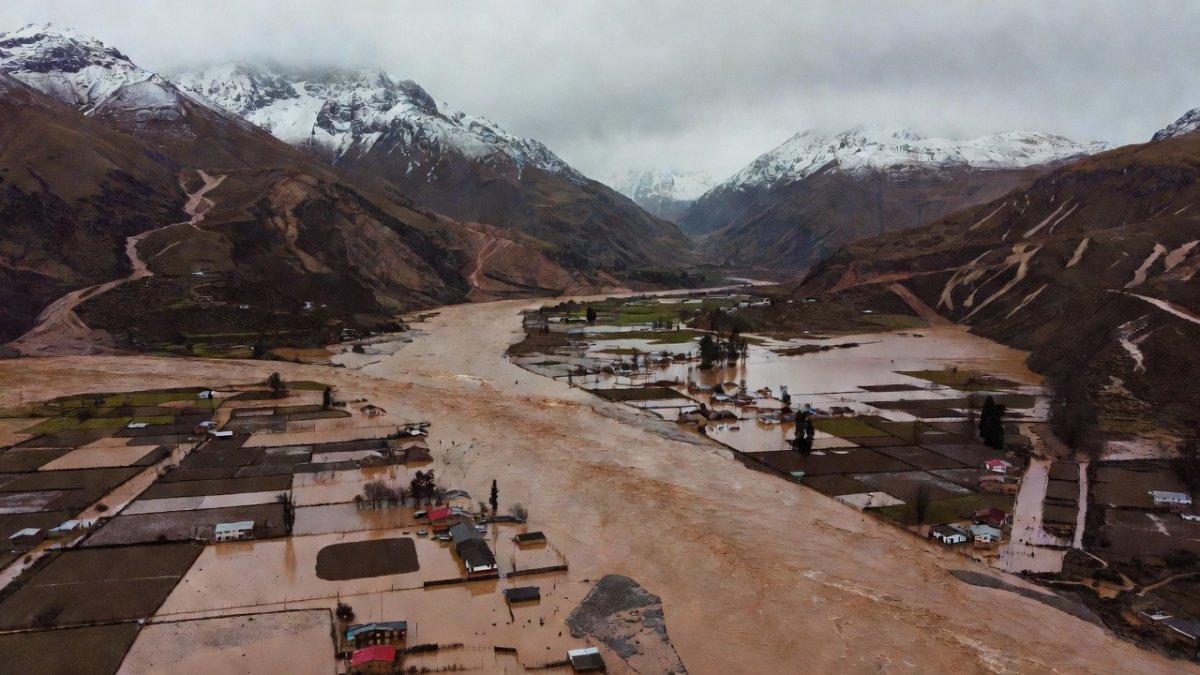
The Andes Under Water — A Regional Emergency
The scale of the disaster unfolding across the Andes is staggering, transforming the region’s iconic peaks and valleys into channels of destruction. In late August 2026, a relentless assault of torrential rain, melting snow, and unstable terrain has triggered a cascade of floods and mudslides that have hit Chile, Peru, and Bolivia with equal ferocity. The human toll is mounting by the day, with entire communities cut off, thousands displaced, and critical infrastructure—roads, bridges, water systems—washed away in a matter of hours. The emergency is not isolated to a single valley or a single nation; it is a synchronized regional crisis, a testament to the sheer power of the El Niño phenomenon when it collides with the steep, fragile geography of the Andes.
Peru has been forced into a state of emergency, with authorities issuing stark warnings that up to 1.2 million people could be affected by the coming months of intense weather. The situation is equally dire in Chile, where the government has declared a state of catastrophe, deploying the army to rescue stranded residents and repair shattered infrastructure in the northern desert. Bolivia, meanwhile, is battling a different but equally devastating front: unprecedented snowstorms in the highlands that are threatening the livelihoods of tens of thousands of indigenous herders and their livestock. The common thread is El Niño, a naturally occurring Pacific ocean-atmosphere pattern that occurs every 5-7 years, but which is now being amplified by the background warming of the climate system, turning a known phenomenon into a catastrophic regional event. The Andes, a region that has always lived with climate variability, is now facing a new, more violent reality.
Peru: 1.2 Million in the Crosshairs
Peru is bracing for a humanitarian crisis of significant proportions. At a press conference on August 27, Peru’s minister, Vázquez, delivered a sobering forecast: El Niño will intensify in November, unleashing flooding and mudslides across 10 regions. The figure of 1.2 million potentially affected people is not a guess; it is based on historical data of regions impacted by past El Niño events, painting a clear picture of the scale of the threat. This warning comes on the heels of a series of preemptive emergency declarations that show just how seriously the government is taking the threat. As early as July 2, 2026, Peru had already declared a 60-day state of emergency in 796 districts across 22 of its 24 departments plus Callao—roughly 40% of the country—citing the imminent danger of heavy rain from the 2026-2027 El Niño.
The preparations have been extensive, but the reality on the ground is already grim. Days of torrential rain have triggered landslides that have destroyed homes and left thousands displaced, with the emergency declarations now a constant feature of national life. On August 13, a separate 60-day emergency was declared for 607 districts across 16 Andean and Amazonian regions, this time over the potential for an ENSO-driven drought. Then, on August 19, an emergency decree transferred more than 179 million soles to Peru’s National Water Authority (ANA) for prevention works in six critical regions, a desperate attempt to shore up defenses. Finally, on August 23, Peru issued four separate emergency decrees covering earthquakes, El Niño, and storms/flooding for 60 days each, plus a 120-day nationwide fisheries decree. The administrative machinery is in overdrive, but the question remains whether it can outpace the force of nature.
Chile's Atacama: Rain in the Driest Desert on Earth
In northern Chile, the impossible has happened: it rained in the Atacama Desert, the driest place on Earth, and the results have been catastrophic. Days of sudden, intense rainfall in the Antofagasta region triggered severe flooding and mudslides on August 18-19, with the coastal city of Tocopilla—home to roughly 25,000 people—bearing the brunt of the destruction. The statistics are almost incomprehensible: the rainfall was roughly six times Tocopilla’s annual average of just 5 millimetres. This is a place where rain is a statistical anomaly, and when it came, it came as a violent wall of water and mud, sweeping away vehicles and sending residents fleeing for their lives.
The chaos was vividly described by evacuee Sergio Vargas, who recounted how the Coloso ravine surged without warning, even after the rain had stopped, a terrifying reminder that in the desert, the danger can come from the mountains long after the clouds have cleared. Chile declared a state of catastrophe, and the army was immediately deployed to join rescue and repair work. The official toll from SENAPRED, Chile’s National Disaster Prevention and Response Service, is stark: 1 dead, 3 injured, 580 people directly affected, 1,166 evacuated to temporary shelters, 22 isolated, and hundreds of homes damaged. Adding to the surreal nature of the event, snow even fell in the Atacama, stretching from the Andes almost to the Pacific Ocean—a bizarre confluence of El Niño’s moisture and cold air that turned the world’s driest landscape into a scene of wintry devastation.
Bolivia: Snowstorms and the Llamas of the High Andes
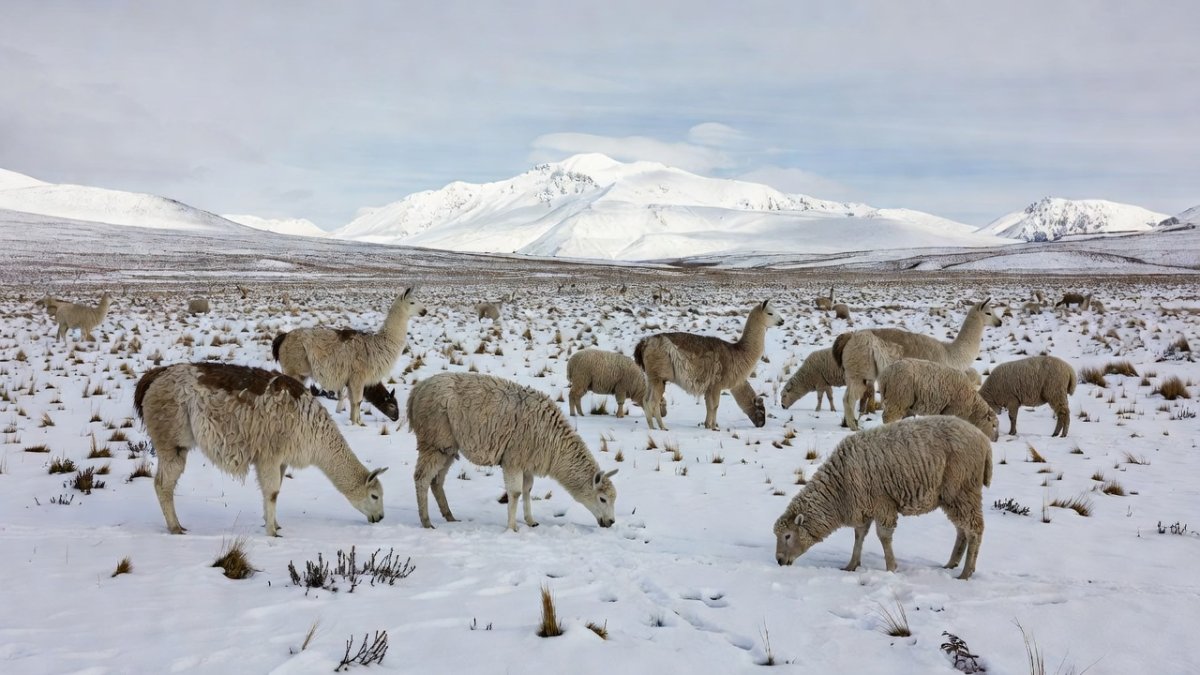
While Peru and Chile grapple with floods and mudslides, Bolivia is facing a slow-motion disaster in its high-altitude plains. Unprecedented snowstorms in the Andes are threatening tens of thousands of llamas and sheep, the lifeblood of the region’s indigenous communities. Herder Elizabeth Calle is on the front lines of this crisis, moving her starving animals to lower ground in a desperate search for food. The snow has buried the natural pastures, and the animals, already weakened by the cold, are facing starvation. This is not just an economic loss; it is a cultural and existential blow to communities whose entire way of life is intertwined with their herds.
The scale of the weather emergency in Bolivia is immense, affecting more than 114,000 families across six departments since August 11. The damage to crops and livestock is extensive, threatening food security and livelihoods for the foreseeable future. The snowstorms are a direct result of the same El Niño-driven weather patterns that are causing flooding elsewhere, but in the high Andes, the manifestation is a brutal, freezing blanket of white. The irony is not lost on observers: a phenomenon known for warming Pacific waters is bringing record cold and snow to the Bolivian altiplano. The vulnerability of these communities is acute, with limited infrastructure and resources to adapt to such extreme and unexpected weather events. As the snow continues to fall, the race is on to save the animals and the people who depend on them, but the long-term outlook remains bleak without significant intervention.
What Is Driving This El Niño?
To understand the chaos, one must look to the Pacific Ocean, where the engine of this disaster is revving at historic levels. El Niño is a naturally occurring pattern of ocean-atmosphere interaction that happens every 5-7 years, but the current event is far from typical. The National Oceanic and Atmospheric Administration (NOAA) estimates there is roughly a 70% probability that El Niño will reach historic or high strength between October and December 2026. This is not just a strong event; it is potentially one for the record books, and its effects are being felt across the entire hemisphere, from the flooded streets of Tocopilla to the snow-covered pastures of Bolivia.
The mechanism is well understood: warmer-than-average sea surface temperatures in the central and eastern Pacific alter global atmospheric circulation, shifting jet streams and storm tracks. For the Andes, this typically means increased moisture and instability, but the current intensity is off the charts. The combination of a powerful El Niño with the background warming of the climate system is creating a "super-charged" atmosphere that holds more moisture and releases it in more violent bursts. This explains the bizarre weather: torrential rain in the Atacama, snow in the high Andes, and the relentless storms battering Peru. The data from NOAA is clear, and the warnings from regional governments are urgent. This is not a random act of nature; it is a predictable, yet amplified, climate event that is testing the limits of the region’s resilience. The question is no longer if the El Niño will hit, but how much more damage it will do before it finally weakens.
Voices from the Ground
Behind the statistics and emergency decrees are the human stories of fear, loss, and resilience. In Chile, Sergio Vargas’s account of the Coloso ravine surging to life is a chilling reminder of the suddenness of the danger. "It came without warning, after the rain had stopped," he said, his voice a testament to the trauma of watching a wall of mud and water consume everything in its path. His experience is shared by the 1,166 people in Chile who were evacuated to temporary shelters, their homes now filled with silt and debris. In Bolivia, Elizabeth Calle’s daily struggle to move her starving llamas to lower ground is a quiet, desperate act of survival. She is not just saving animals; she is preserving a heritage, a way of life that has endured for centuries in the high Andes.
Al Jazeera’s Lucia Newman, reporting from central Chile, adds another layer of anxiety to the narrative. She warns that melting Andes snow and another storm front forecast for the coming weekend could bring fresh flooding, with the region’s usual rainy season still to come. The current disaster is not the end; it is merely the beginning of a prolonged period of danger. The voices from the ground paint a picture of a region on edge, where the next storm is always on the horizon. They speak of the fear of the unknown, the frustration with the slow pace of aid, and the determination to rebuild. These are not just victims; they are survivors navigating a new, more hostile climate reality. Their stories are the true measure of the crisis, a human cost that cannot be captured in a single data point or a government press release.
The Bottom Line — What Comes Next
The immediate crisis is far from over, and the outlook for the coming months is deeply concerning. The warning from Peru’s minister Vázquez that El Niño will intensify in November suggests that the worst is yet to come, with the potential for flooding and mudslides across 10 regions and the 1.2 million people in their path. The region’s usual rainy season has not even begun, as Lucia Newman pointed out, meaning the saturated ground and swollen rivers have no time to recover. The emergency declarations, from Peru’s multiple decrees to Chile’s state of catastrophe and even Panama’s nationwide state of emergency over intense El Niño-driven rains, show a region bracing for a prolonged battle. The funds allocated, such as the 179 million soles for Peru’s ANA, are a drop in the bucket compared to the potential cost of the damage.
The bottom line is that the Andes, and indeed all of Latin America, is facing a new reality where El Niño events are more intense and more destructive. The region’s vulnerability is a complex mix of geography, poverty, and inadequate infrastructure, and this event has exposed all of these fault lines. The 70% probability from NOAA of a historic-strength El Niño means that governments must move beyond reactive emergency declarations and invest in long-term climate resilience. The snow in the Atacama and the starving llamas in Bolivia are not anomalies; they are previews of a future that is already here. The international community must pay attention, not just with sympathy, but with concrete support for adaptation and disaster preparedness. The Andes are under water, but the flood of consequences will be felt far beyond their peaks.
By Elena Vasquez, Staff Writer
This article was produced with AI-assisted research and editorial support. Reporting is based on sources cited in the article.
What's Your Reaction?
 Like
0
Like
0
 Dislike
0
Dislike
0
 Love
0
Love
0
 Funny
0
Funny
0
 Wow
0
Wow
0
 Sad
0
Sad
0
 Angry
0
Angry
0

Latin America Correspondent at Global1.News. Based in Mexico City, covering politics, economics, energy, and culture across the region. Brings an on-the-ground perspective to stories spanning from the Rio Grande to Patagonia.














Comments (0)