
An Nvidia insider-turned-VC on why robotics hasn’t hit its ChatGPT moment, yet
In a recent Equity podcast, she painted today’s robotics landscape as a sprawling “Lego era,” where the basic bricks—actuators, robotic hands, software stacks, and safety standards—are still being reshaped.
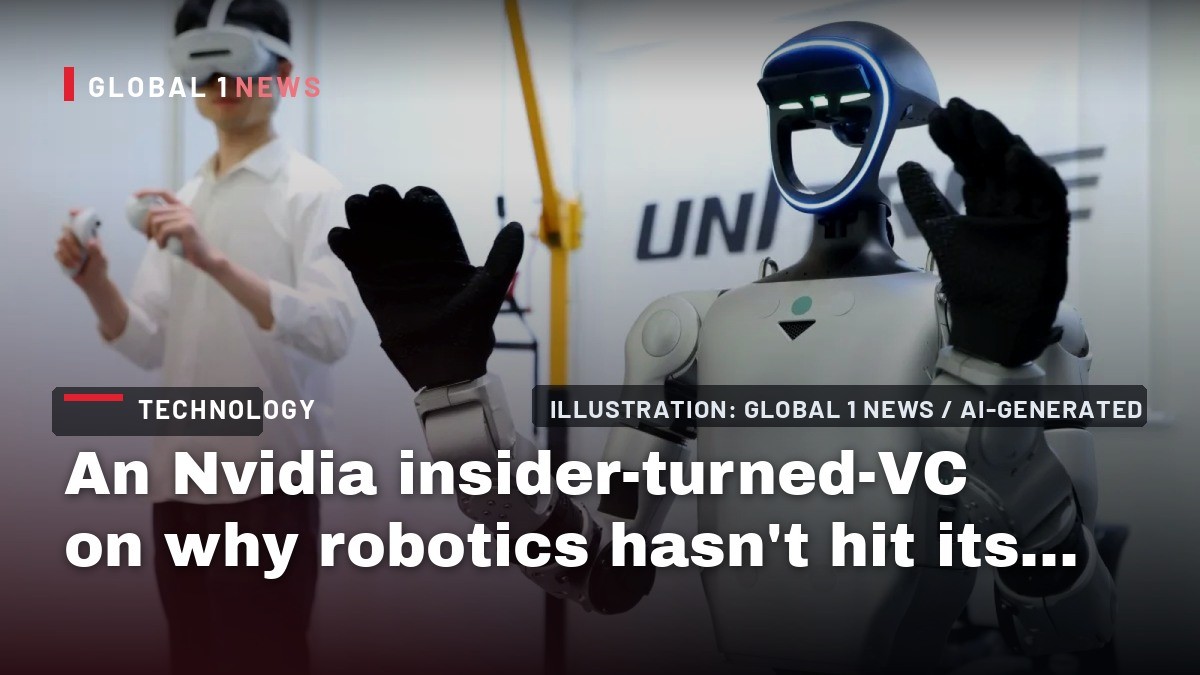
Amulya Vishwanath walked away from NVIDIA after seven years of steering product marketing for the chip‑maker’s robotics platforms, only to launch Techable VC with a clear‑cut thesis: the next wave of physical AI will be built on sturdier, more modular foundations than the hype‑driven “ChatGPT moment” some pundits predict. In a recent Equity podcast, she painted today’s robotics landscape as a sprawling “Lego era,” where the basic bricks—actuators, robotic hands, software stacks, and safety standards—are still being reshaped. That view, she argues, is a more realistic compass for investors, founders, and the workers who will eventually live alongside these machines.
Why the “Lego era” matters more than a single foundation model
Vishwanath’s framing puts the spotlight on the physical components that still lag behind the flash of large language models. She notes that while the software world has been turbo‑charged by general‑purpose foundation models since the launch of ChatGPT in late 2022, robotics still depends on a patchwork of hardware and low‑level control systems that need to be standardized before any single AI model can truly dominate. In her words, the industry is “still rebuilding” core pieces like actuators and safety protocols.
This assessment runs counter to the narrative championed by General Intuition’s CEO Pim de Witte, who told Equity earlier this year that a single general foundation model would render much of today’s specialized robotics work redundant. Vishwanath’s counter‑argument is that without reliable, interoperable hardware, even the most sophisticated model will be stuck in a lab rather than on a factory floor or a warehouse aisle.
From NVIDIA product marketing to early‑stage VC
Leaving a titanic AI hardware player for a boutique fund is a move that signals both confidence and caution. Vishwanath is among the first women executives to spin out of NVIDIA and start an early‑stage firm focused on “physical AI” across robotics, materials science, and life sciences. As founder and managing partner of Techable, she is already writing her first checks, targeting startups that can bridge the gap between the “Lego bricks” she describes and the intelligent applications that will eventually sit on top of them.
The shift also reflects a broader trend: investors who once chased pure‑software AI are now eyeing the hardware side of the equation, recognizing that the next commercial breakthrough will likely involve a seamless blend of sensors, actuators, and AI‑driven control. Vishwanath’s insider perspective gives Techable a unique edge in spotting which hardware innovations are ready for scale and which are still in the prototype phase.
What “physical AI” actually looks like today
In the podcast, Vishwanath highlighted three concrete domains where physical AI is already moving beyond the lab: collaborative robots that can safely share space with humans, advanced prosthetic hands that mimic the dexterity of a human grip, and autonomous inspection drones that can navigate complex industrial environments. Each of these examples depends on a reliable stack of actuators, perception sensors, and safety‑first software—exactly the components she says are still being re‑engineered.
She also pointed to the emerging standards around safety and interoperability as a critical frontier. Without industry‑wide agreements on how robots should behave around people, any breakthrough in AI capabilities risks being throttled by regulatory or liability concerns. The “Lego era” therefore isn’t just a technical phase; it’s a regulatory and standards‑building phase that will shape how quickly robots can be deployed at scale.
Why the hype around a single foundation model is premature
The idea that a single, all‑encompassing model could replace the myriad specialized systems that power today’s robots sounds seductive, but Vishwanath argues it overlooks the physics of the problem. A language model can generate instructions, but those instructions must be translated into torque, force, and motion—tasks that still require dedicated hardware controllers and real‑time feedback loops.
She also notes that the “ChatGPT moment” for robotics would require a level of reliability and safety that current foundation models have not yet demonstrated. In contrast, the incremental improvements in actuator precision, sensor fusion, and modular software frameworks are delivering tangible performance gains that can be measured in real‑world deployments, from warehouse picking to surgical assistance.
Techable’s investment focus: betting on the building blocks
Techable’s thesis is to back startups that are solving the “Lego” challenges head‑on. This includes companies developing next‑generation actuators with higher power‑to‑weight ratios, modular robotic hands that can be swapped out for different tasks, and open‑source safety layers that can be embedded into any robotic system. By targeting these foundational pieces, Techable hopes to create a portfolio that collectively lifts the entire robotics stack.
Vishwanath also mentioned a willingness to explore cross‑disciplinary ventures that blend robotics with materials science and life sciences. For example, a startup that engineers bio‑compatible soft actuators could unlock new medical robots, while a materials‑focused firm that creates ultra‑lightweight composites could make mobile robots more agile. This cross‑pollination reflects her belief that the next wave of innovation will come from the convergence of physical engineering and AI, not from AI alone.
The broader market context: where robotics sits in 2026
While the podcast itself didn’t dive into market size, the surrounding TechCrunch coverage provides a snapshot of the AI ecosystem in October 2026. Companies like Anthropic are reshaping internal workforce dynamics, Tesla is unveiling SpaceX‑powered concepts, and Meta is releasing frontier models. These headlines illustrate a sector that is still heavily focused on software breakthroughs.
Against that backdrop, Vishwanath’s emphasis on hardware underscores a market imbalance: the surge of foundation‑model hype has outpaced the maturation of the physical platforms needed to act on those models. The “Lego era” therefore represents both a bottleneck and an opportunity. Investors who ignore the hardware constraints risk backing over‑promised visions, while those who fund the underlying components stand to capture the upside when the next generation of robots finally breaks out of the lab.
What this means for everyday users and workers
For the average consumer, the current “Lego” phase translates into slower rollout of household robots that can truly understand and safely interact with people. Instead of a sudden flood of AI‑powered assistants that can clean, cook, and care, we’ll likely see incremental upgrades—more reliable vacuum bots, better assistive prosthetics, and industrial robots that keep factories running smoother.
For workers, the shift signals a changing skill set. As robots become more modular and safe, the demand for technicians who can assemble, program, and maintain these “Lego bricks” will rise. Vishwanath’s focus on safety standards also hints at a future where regulatory compliance becomes a core competency for manufacturers, potentially creating new jobs in certification and standards development.
In short, the robotics sector is not on the brink of a single, game‑changing AI moment, but it is steadily building the sturdy, interchangeable parts that will eventually let AI shine in the physical world. Vishwanath’s insider perspective, now channeled through Techable, offers a grounded roadmap for investors, founders, and the public alike: first perfect the bricks, then watch the castle rise.
This article was produced with AI-assisted research and editorial support. Reporting is based on the source material cited below. Sources: TechCrunch; techcrunch.com; Global1.News (18 October 2026).
By Nova Chen, Staff Writer
What's Your Reaction?
 Like
0
Like
0
 Dislike
0
Dislike
0
 Love
0
Love
0
 Funny
0
Funny
0
 Wow
0
Wow
0
 Sad
0
Sad
0
 Angry
0
Angry
0

Trend Reporter at Global1.News. Based in San Francisco, tracking the stories crossing from social platforms, forums, and community discussions into mainstream news — tech breakthroughs, cultural shifts, and world events that real people are engaging with right now.










Comments (0)