
Muratov: Putin Can No Longer Claim Victory in Ukraine
In a recent BBC News interview filmed at the silent Moscow offices of Novaya Gazeta, Nobel Peace Prize laureate Dmitry Muratov delivered a stark message to Russia Editor Steve Rosenberg: Vladimir Putin can no longer claim victory in Ukraine. The conversation, published on the BBC News YouTube channel, offers a rare glimpse into the mindset of one of the last remaining independent voices inside Russia, as the war grinds into its fifth year with no end in sight.
In a recent BBC News interview filmed at the silent Moscow offices of Novaya Gazeta, Nobel Peace Prize laureate Dmitry Muratov delivered a stark message to Russia Editor Steve Rosenberg: Vladimir Putin can no longer claim victory in Ukraine. The conversation, published on the BBC News YouTube channel, offers a rare glimpse into the mindset of one of the last remaining independent voices inside Russia, as the war grinds into its fifth year with no end in sight.
Muratov: Putin Can No Longer Claim Victory in Ukraine
Moscow, Russia - 13 August 2026 - The interview, filmed against the backdrop of empty newsrooms and shuttered printing presses, comes as Russian forces occupy roughly a fifth of Ukrainian territory while making slow, costly advances in the east. Muratov's assessment is blunt: the Kremlin's original war aims have long since collapsed, and what remains is a conflict that defies any definition of victory.
The Last Editor of Novaya Gazeta
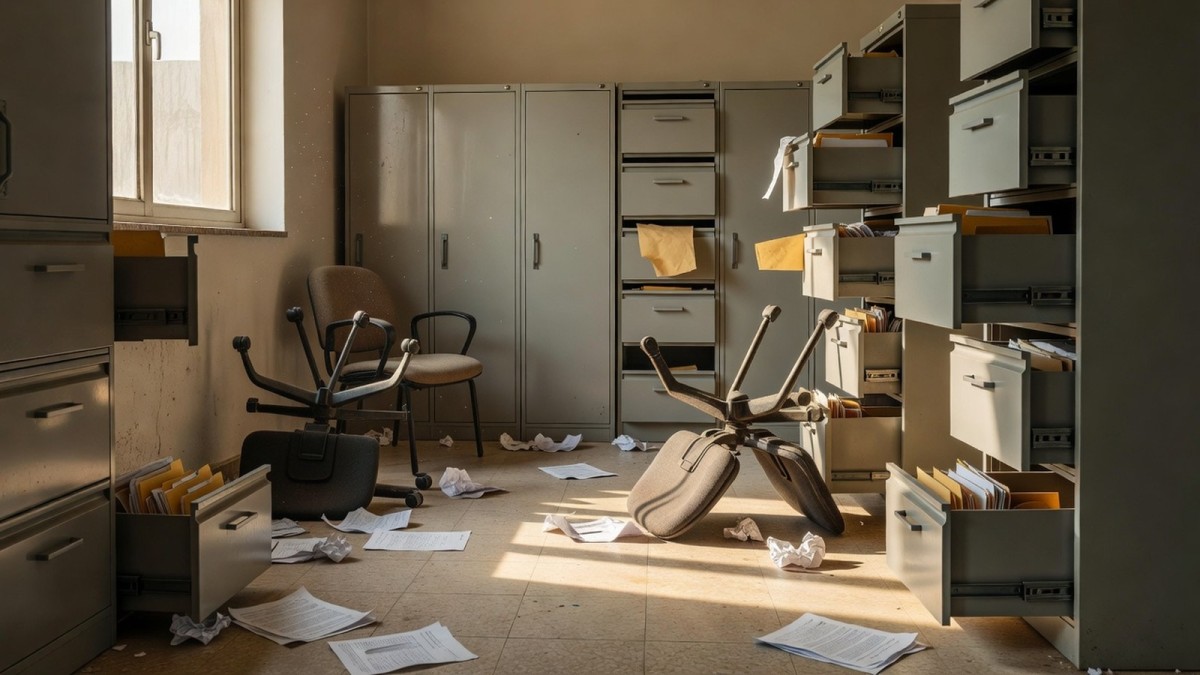
At the Moscow offices of Novaya Gazeta, the corridors are silent; "there is no newspaper anymore," Muratov tells Rosenberg in an exclusive interview published on the BBC News YouTube channel. Muratov co-founded Novaya Gazeta more than 30 years ago; it became the flagship of hard-hitting independent journalism in Russia, exposing human rights abuses and high-level corruption. In 2021 he was joint winner of the Nobel Peace Prize "to safeguard freedom of expression"; the Nobel Committee noted six of the paper's journalists had been killed, including Anna Politkovskaya, whose investigative work on Chechnya and the Kremlin's inner circle made her a target until her assassination in 2006.
But the recognition did not protect the paper. After the February 2022 full-scale invasion of Ukraine, Novaya Gazeta halted operations under pressure; Muratov explains that Putin issued a decree and the printing presses were nationalised, the registration revoked. The website is blocked inside Russia, accessible only from abroad or through VPNs. In April 2022 Muratov himself was attacked on a train from Moscow to Samara, doused with red paint laced with acetone that caused chemical burns to his eyes. The attack, which authorities never fully investigated, sent a clear signal to any journalist contemplating dissent: even a Nobel laureate was not untouchable.
'There Will Never Be Victory'
What the Kremlin assumed in 2022 would be a short, successful "military operation" has become the bloodiest conflict in Europe since the Second World War, now in its fifth year. A confident President Putin continues to predict victory for Russia. Muratov counters: "There will never be 'victory', because what has been going on for nearly five years - no matter how it ends - can no longer be considered a victory. It cannot be a victory when two Slavic nations have ripped a million people to shreds. Or more than a million." The figure, impossible to independently verify, underscores the catastrophic scale of the bloodshed.
He frames the situation starkly: Ukraine can be destroyed but not conquered, with "destroy" meaning continued escalation all the way to the use of a nuclear weapon. Asked whether he really believes the Kremlin leader would use nuclear weapons, Muratov dismisses experts who claim to read Putin's mind as "charlatans" - "in the same league as astrology." Nobody knows what is going on in Vladimir Putin's head, he insists, and anyone who claims otherwise is engaging in speculation dressed up as expertise.
He points to the data: since the beginning of the year, the need to use nuclear weapons has been mentioned more than 500 times, including on state television and at the St Petersburg International Economic Forum, where a speaker talked up nuclear use as something favourable. The rhetoric, Muratov suggests, is not merely propaganda but a reflection of a regime that has painted itself into a corner and sees no way out that does not involve escalation.
1,500 Political Prisoners and the Return of Soviet Fear
Muratov says most independent opinion leaders have been declared "foreign agents", "extremists" or "terrorists" - several hundred in total. At a conservative estimate, at least 1,500 people are now in prison for speaking out against state policy since the start of the "special military operation" - three times more than during the "savage days" of the KGB in the USSR, he says. In his 1975 Nobel lecture, dissident Andrei Sakharov listed more than 120 political prisoners; a decade later Amnesty International estimated more than 600 prisoners of conscience. The comparison is chilling: the current crackdown has outpaced even the darkest periods of Soviet repression, and it shows no signs of abating.
Muratov himself has been designated a "foreign agent", a label used to punish Kremlin critics: they are banned from teaching and from taking part in elections, and face asset restrictions. The label is designed to stigmatise and create the sense of an enemy within. Yet Muratov appears reluctant to dwell on his own pressures, preferring to highlight compatriots in prison. He speaks of them with a mixture of pride and anguish, describing their courage in terms that suggest he sees them as the true heroes of this period - not the generals or politicians who have presided over a war of attrition.
The Faces in the Folder
During the interview, Muratov opens a folder of photographs of political prisoners. One shows four journalists - Antonina Favorskaya, Konstantin Gabov, Sergey Karelin and Artyom Kriger - jailed for five and a half years on extremism charges over alleged links to Alexei Navalny's anti-corruption organisation. Another shows Alexei Gorinov, a city councillor jailed for "knowingly spreading false information" about the Russian military after speaking against the war. Gorinov's case became a symbol of the crackdown on local officials who dared to voice opposition, and his imprisonment sent a warning to thousands of others who might have considered following his example.
He holds up a photograph of Pavel Kushnir, a pianist praised for his performances of Rachmaninoff and Schubert, arrested after posting anti-war videos; Muratov shows a second image - Kushnir in his coffin, dead at 39 in a pre-trial detention centre during a hunger strike. The juxtaposition of the two photographs - the living artist and the dead body - is devastating. He also highlights Nadezhda Buyanova, a 68-year-old Ukrainian-born paediatrician sentenced to five and a half years in a penal colony for allegedly criticising the war at work, and Novaya Gazeta managing editor Oleg Roldugin, now under house arrest. Each face in the folder represents a life interrupted, a family shattered, and a warning to anyone who might consider following their path.
Has Security Increased?
When he launched the mass invasion in February 2022, Putin spoke of "ensuring the security of Russia." Muratov asks pointedly whether security has increased: with Ukrainian drones attacking warehouses of Russia's largest online retailer Wildberries, the petrol crisis, disruption to mobile internet, and political prisoners filling jails. Despite opinion polls registering a fall in Putin's domestic approval ratings, Muratov believes the president retains a tight grip on power. The polls suggest a population that has grown weary of the war but remains too frightened to translate that weariness into action, analysts note.
He dismisses talk of splits among the elite or secret conspiracies: "The country is run by Vladimir Putin. They're frightened of him." That fear, he says, is reinforced by Putin's main support base, the Federal Security Service (FSB). The security services, analysts note, have been among the principal beneficiaries of the war, expanding their power and influence while the rest of Russian society bears the costs. Any suggestion that the elite might turn on Putin is wishful thinking, he insists; the system has been built precisely to prevent that outcome.
Putin's Laughter and the West's Double Standards
As critical as he is of his own government, Muratov has few illusions about the West. Putin "knows very well the true value of European leaders", he says: on one hand they talk to him about human rights, while with the other they sign agreements with Russia on oil, gas and diamonds. "When they talk to Putin about European values, he truly laughs out loud. He knows the true value of people who preached to him those values." The observation is not merely rhetorical; it reflects a pattern of Western engagement that has continued even as the war has dragged on, with European companies maintaining commercial ties and governments quietly continuing to purchase Russian energy resources.
The observation cuts both ways: Western governments have continued commercial relationships with Moscow even while condemning the war, and Muratov's point is that this contradiction has handed the Kremlin a propaganda gift and undermined the moral authority of European criticism. When European leaders lecture Putin on human rights, he can point to their own willingness to do business with his regime. The double standard, Muratov suggests, has made it easier for the Kremlin to dismiss Western condemnation as hypocrisy and to rally domestic support around the narrative of a besieged Russia.
Analysis - A Voice From Inside the Silence
The interview is a rare thing: an open, critical voice recorded inside Russia itself. Muratov's most urgent complaint is that the world has lost interest in the political prisoners who were the first to speak out against the invasion. "No one in the world is interested," he says. Analysts suggest this indifference is itself a strategic problem for Ukraine's backers, who must balance military support against the fate of Russians jailed for opposing the war. The prisoners, many of them journalists, activists, and ordinary citizens who spoke out at great personal risk, have become an afterthought in a conflict that has consumed global attention for nearly five years.
Yet there are moments of hope. Muratov describes how, on the streets of Moscow, colleagues hear only words of gratitude, "spoken in a whisper." What people think is very important, he insists. For the Kremlin, the fifth year of war brings grinding territorial gains in the east alongside mounting domestic strain; for the opposition, survival itself has become a form of resistance. The whispers may be the seeds of something that could eventually grow into a more substantial challenge to the regime - though Muratov is careful not to predict when or how that might happen.
The interview ends with Muratov's refusal to ask whether the Nobel Prize protects him, telling Rosenberg: "This is not a question for me. Whenever you have the opportunity, ask the authorities that." It is a characteristically defiant response from a man who has spent his career holding power to account, and who continues to do so even as the room for independent voices in Russia shrinks to almost nothing. His words, recorded in a silent newsroom that once hummed with the activity of dozens of journalists, stand as a testament to the power of speaking truth in the face of overwhelming pressure.
By Irina Volkov, Staff Writer
This article was produced with AI-assisted research and editorial support. Reporting is based on sources cited in the article.
What's Your Reaction?
 Like
0
Like
0
 Dislike
0
Dislike
0
 Love
0
Love
0
 Funny
0
Funny
0
 Wow
0
Wow
0
 Sad
0
Sad
0
 Angry
0
Angry
0

Russia/Eastern Europe Correspondent at Global1.News. Covering Russian politics, energy, security, and the shifting dynamics of the post-Soviet space. Provides clear-eyed analysis on one of the world's most opaque regions.









Comments (0)