
Lebanon Slams Israel for 'Systematic' Destruction in South as Fragile Truce Hangs in Balance
Lebanese PM Nawaf Salam accuses Israel of systematic destruction in southern Lebanon amid a fragile US-mediated truce, as Defense Minister Israel Katz vows to keep troops in a security zone. Analysis of Hezbollah disarmament, the June framework, and regional stakes.
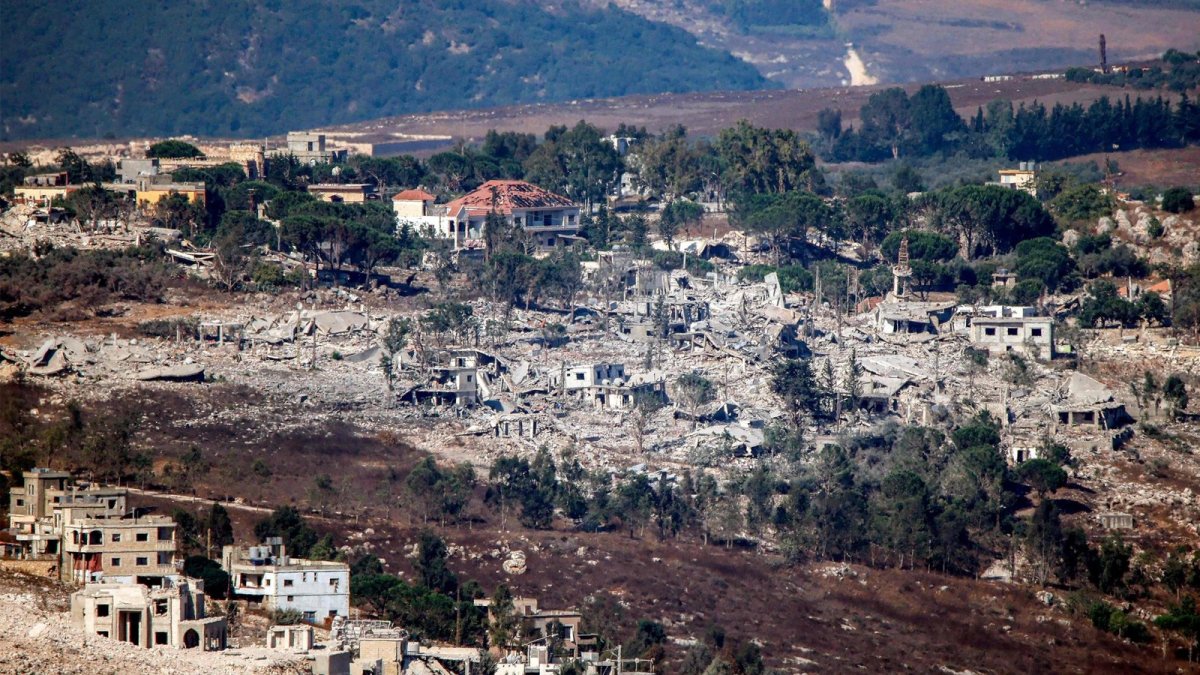
The smoldering ruins of southern Lebanon have become the latest battlefield in a war of words that threatens to unravel a fragile truce. Lebanese Prime Minister Nawaf Salam on Wednesday delivered a blistering rebuke to Israel, accusing it of the "systematic destruction" of homes, infrastructure, and places of worship in the country's south—a charge that cuts to the heart of a deeply contested post-war order. The accusation, leveled as Israeli Defense Minister Israel Katz boasted of "destroying all the houses" in occupied territory, underscores the profound fragility of a US-mediated framework agreement that was supposed to end the confrontation between Israel and the Iran-backed Hezbollah.
The dispute is not merely a diplomatic spat. It represents a fundamental clash over the meaning of the June framework deal, the future of Lebanon's sovereignty, and the strategic calculus of a region still reeling from the broader Israel-Iran war that erupted in March 2026. With an eighth round of negotiations scheduled for next month in Rome, the question is no longer simply whether the ceasefire will hold, but whether the political architecture being built atop the ruins can survive the weight of mutual distrust and competing security doctrines.
The March War and the Collapse of a Precarious Balance
To understand the current crisis, one must revisit the chain of events that plunged Lebanon into war. According to the source material, Hezbollah drew Lebanon into the Middle East war in March 2026 by attacking Israel, which responded with heavy airstrikes and a ground invasion. Lebanese authorities say these operations have killed more than 4,300 people and displaced more than a million—roughly a fifth of the country's population. The figures, which have continued climbing through the summer even after a ceasefire nominally took effect, paint a picture of a nation subjected to devastating collective punishment.
The conflict did not emerge from a vacuum. It is the latest chapter in a long and bitter history that includes the 2006 war, the unresolved legacy of UN Resolution 1701—which called for the disarmament of militias and the withdrawal of Israeli forces—and the decades-old occupation of the Shebaa Farms. The March war, however, was different in scale and scope. It was explicitly framed by the sources as part of the US and Israel's broader war on Iran, with Hezbollah acting as Tehran's most capable proxy. The ground invasion and subsequent occupation of dozens of villages across southern Lebanon represent the deepest Israeli incursion since 2006, and the establishment of a so-called "security zone" evokes painful memories of Israel's 18-year occupation of the same territory that ended in 2000.
The April 17, 2026 ceasefire, brokered by the United States, was meant to halt the fighting. It did not. Israeli forces have continued their attacks and occupy dozens of villages, with no timeline set for a full withdrawal. The subsequent June framework agreement, reached in Washington, was designed to address this impasse through a phased approach: the disarmament of Hezbollah, a gradual Israeli withdrawal, and the deployment of the Lebanese army to the region, starting in limited "pilot zones."
Israel's Security Zone Doctrine: A Policy of Controlled Destruction
Israeli Defense Minister Israel Katz's recent visit to occupied southern Lebanon laid bare the strategic thinking behind the ongoing demolitions. His statements—that the military was "destroying the underground infrastructure" and "destroying all the houses"—were not off-the-cuff remarks but a clear articulation of a security doctrine. Israel appears to be pursuing a policy of creating a depopulated buffer zone, stripping the area of any infrastructure that could be used by Hezbollah in a future conflict, and making it physically uninhabitable to prevent the return of the local population.
This approach is a double-edged sword. On one hand, it provides Israel with a tactical advantage, denying Hezbollah cover and operational depth. On the other, it is a profound violation of international law, as Prime Minister Salam was quick to point out. His statement that Israeli "attacks, incursions, demolitions and the systematic destruction of homes" represent "a serious violation of the principles and rules of international law and international humanitarian law" is a legally sound assessment. The claim that villages and towns "are entirely 'military facilities'" was dismissed by Salam as defying "any logic."
The strategic calculus for Israel is clear: maintain a security buffer at any cost, even if it means rendering the land uninhabitable. Katz's vow to keep troops in the "security zone" and his separate statement that Israeli troops would not withdraw from occupied zones in Lebanon, Syria, or Gaza signal a broader regional posture of indefinite military presence. This is a direct challenge to the framework agreement, which the United States itself has acknowledged does not permit a permanent military presence. A US State Department official stated that "a permanent military presence in South Lebanon is not consistent with the commitments made in the Framework, or the long-term peace and security of both states."
Hezbollah's Disarmament Dilemma: Between Resistance and Statehood
At the heart of the framework agreement lies the most intractable issue: the disarmament of Hezbollah. The Iran-backed group, which is not a party to the talks, has said it will pull back from south of the Litani River but has refused to disarm to the north. This position reflects a fundamental dilemma. For Hezbollah, its arsenal is not merely a military asset but the very foundation of its political power and its raison d'être as a "resistance" movement against Israel. Disarmament would effectively neuter the group, transforming it from a powerful state-within-a-state into a conventional political party subject to the authority of the Lebanese state.
For the Lebanese government, the disarmament question is equally fraught. The state's monopoly on weapons is a cornerstone of sovereignty, yet the Lebanese army is demonstrably weaker than Hezbollah and faces immense political pressure not to confront the group directly. The framework agreement's approach—deploying the Lebanese army to the south as Israeli forces withdraw—is an attempt to square this circle. But as the recent demolitions show, the Lebanese army is being asked to secure territory that Israel is actively destroying. Army chief Rodolphe Haykal, in a meeting with US Gen. Joseph Clearfield, discussed "the difficulties the army faces in carrying out its missions, primarily due to the continuing attacks, bulldozing and destruction by the Israeli occupation."
The situation places the Lebanese state in an impossible position. It is being asked to guarantee security in a region it does not fully control, against an adversary that is actively undermining its efforts, while simultaneously managing a domestic political landscape where Hezbollah retains significant popular support, particularly in the Shia community that has borne the brunt of the destruction. President Joseph Aoun's meeting with Clearfield, focused on the implementation of the framework deal, underscores the high-stakes diplomatic tightrope walk Beirut is engaged in.
The US Mediation Stakes: Credibility on the Line
The United States finds itself in a delicate position. As the primary mediator and guarantor of the June framework, Washington's credibility is directly tied to the agreement's success. The State Department's carefully worded statement—expecting "all parties to act in a manner consistent with the Framework they agreed to"—reflects an attempt to pressure Israel without publicly breaking with its closest regional ally. The acknowledgment that Israel "has clearly stated that it has no territorial ambitions in Lebanon" is a diplomatic fig leaf, given that Katz's actions and statements suggest otherwise.
The US is also navigating a broader regional landscape. The June framework was signed against the backdrop of a US-Iran memorandum of understanding, which has significantly decreased violence. This suggests a grand bargain in which Washington sought to de-escalate the Israel-Iran confrontation by pressuring Hezbollah to stand down while offering Tehran a measure of diplomatic engagement. The current crisis threatens to unravel this delicate architecture. If Israel is seen as violating the framework with impunity, it undermines the entire premise of US-mediated diplomacy, not just in Lebanon but across the region.
The proposed $1.2 billion security assistance package for Lebanon over five years, put forward by two US senators, is a clear signal of Washington's long-term commitment to strengthening the Lebanese state. However, the tying of part of the funding to progress on the state's monopoly over weapons and Hezbollah's disarmament creates a potential Catch-22. The Lebanese army cannot effectively assert its authority in the south while Israel is actively destroying the very infrastructure it is meant to protect. The funding, while welcome, may be contingent on conditions that are currently impossible to meet.
Regional Implications: Iran's Proxy Network and Gulf Reactions
The crisis in southern Lebanon has profound implications for the wider Middle East. For Iran, Hezbollah is the crown jewel of its proxy network, a strategic deterrent on Israel's northern border. The group's disarmament would be a catastrophic strategic loss for Tehran, signaling that its "forward defense" doctrine is vulnerable. The US-Iran memorandum of understanding suggests Tehran may have accepted a temporary tactical retreat, but the ongoing Israeli demolitions could harden Iranian resolve and complicate any broader rapprochement.
For the Gulf states, particularly Saudi Arabia and the UAE, the situation is a double-edged sword. They have long viewed Hezbollah as a destabilizing force and a tool of Iranian expansionism. A weakened Hezbollah, stripped of its military capabilities, would be a strategic victory for Riyadh and Abu Dhabi. However, the spectacle of Israel systematically destroying Lebanese villages and displacing its population is deeply unpopular across the Arab world and could fuel anti-normalization sentiment. The Abraham Accords, which normalized relations between Israel and several Gulf states, are predicated on the idea that Israel can be a force for regional stability. The images emerging from southern Lebanon undermine that narrative.
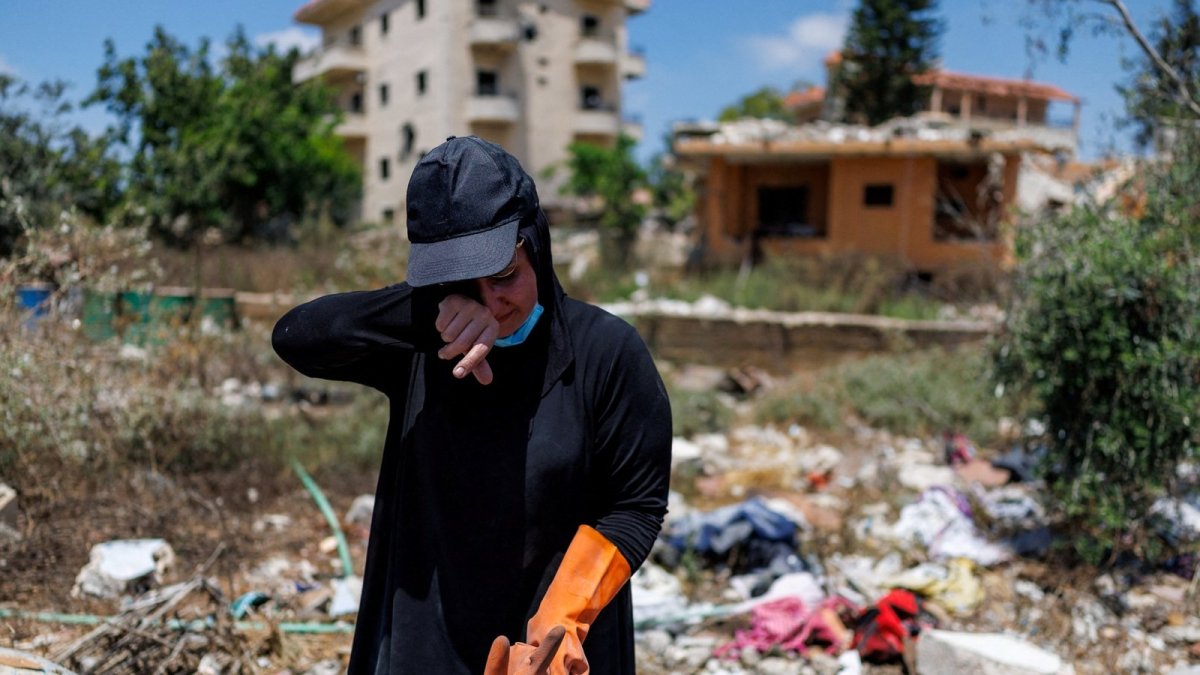
The reconstruction challenge is another critical dimension. Lebanon, already grappling with a catastrophic economic collapse, now faces the task of rebuilding entire villages. The destruction of municipal buildings, schools, health clinics, and nurseries—as reported by Lebanon's army in Zawtar al-Shariqya—is not just a humanitarian tragedy but a deliberate act of erasure. It will take years and billions of dollars to rebuild, and the international community's willingness to fund reconstruction will be directly tied to the political trajectory of the framework agreement. If Israel continues its demolitions, donor fatigue will set in, and Lebanon's post-war recovery will be stillborn.
A Fragile Path Forward
The eighth round of US-sponsored negotiations in Rome next month represents a critical juncture. The talks will need to address the fundamental disconnect between Israel's security zone doctrine and the framework's commitment to Lebanese sovereignty. The United States, as mediator, will have to decide whether to enforce its own agreement or continue to give Israel latitude. The Lebanese government, for its part, must find a way to assert its authority without triggering a domestic political crisis or a resumption of full-scale war.
The path forward is narrow and fraught with peril. The framework agreement, for all its flaws, remains the only viable diplomatic vehicle for ending the conflict. But it cannot succeed if one party is actively undermining its core principles. The systematic destruction of southern Lebanon is not a security measure; it is a policy of collective punishment that will poison the well for generations. As the smoke rises from the ruins of Zawtar al-Shariqya and other villages, the international community faces a stark choice: uphold the framework and hold all parties accountable, or watch the fragile peace collapse into a new cycle of violence that will engulf the entire region.
By Malik Hassan, Staff Writer
This article was produced with AI-assisted research and editorial support. Sources: Daily Sabah, Agence France-Presse (AFP), Al Jazeera.
What's Your Reaction?
 Like
0
Like
0
 Dislike
0
Dislike
0
 Love
0
Love
0
 Funny
0
Funny
0
 Wow
0
Wow
0
 Sad
0
Sad
0
 Angry
0
Angry
0

Middle East Correspondent at Global1.News. Based in Beirut, covering politics, conflict, energy, and society across the Middle East. Brings context and depth to a region often reduced to headlines.












Comments (0)