
Mongolia Signs Fuel Deal With South Korea: Energy Diversification Amid Regional Pressures
The July 2026 Agreement and Its Immediate Terms The agreement signed on July 30, 2026, between Mongolian Minister of Industry and Mineral Resources Damdinnyam Gongor and officials from South Korea's Ministry of Trade, Industry, and Energy establishes a monthly supply of 50,000 tons of refined petroleum products. This includes 10,000 tons of jet fuel, 20,000 tons of AI-92 gasoline, and 20,000 tons of diesel fuel. The volumes represent over 33 percent of Mongolia's monthly gasoline demand and appr
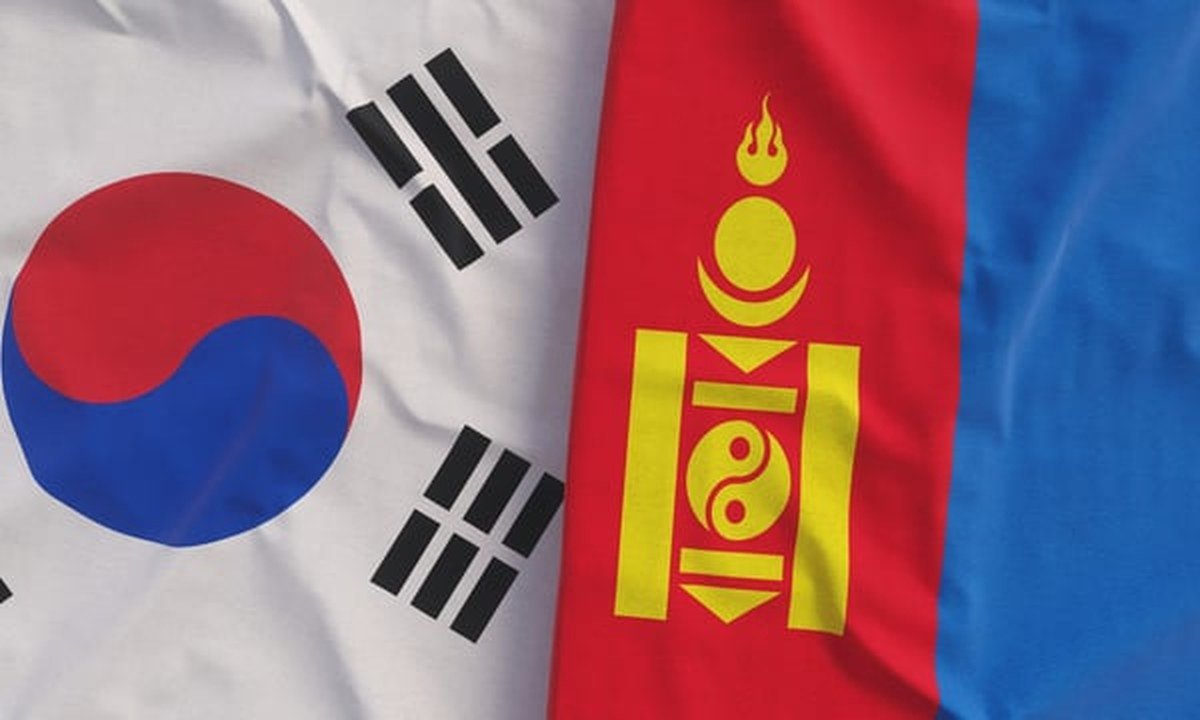
The July 2026 Agreement and Its Immediate Terms
The agreement signed on July 30, 2026, between Mongolian Minister of Industry and Mineral Resources Damdinnyam Gongor and officials from South Korea's Ministry of Trade, Industry, and Energy establishes a monthly supply of 50,000 tons of refined petroleum products. This includes 10,000 tons of jet fuel, 20,000 tons of AI-92 gasoline, and 20,000 tons of diesel fuel. The volumes represent over 33 percent of Mongolia's monthly gasoline demand and approximately 20 percent of its diesel requirements for logistics and agriculture.
Negotiations followed directly from South Korean President Lee Jae-myung's state visit to Mongolia between July 9 and 11, 2026. During that visit, both governments declared a "New Golden Era" of bilateral relations and advanced work on a Comprehensive Economic Partnership Agreement aimed at tariff reductions across multiple sectors.
Mongolia's Historical Dependence on Russian and Chinese Supplies
Mongolia's reliance on Russian refined petroleum products, which has exceeded 90 percent of its total supply with the remainder drawn from China, stems from its landlocked position and the legacy of integrated Soviet-era supply networks. This structural dependence has exposed Ulaanbaatar to repeated shocks whenever Russian refining capacity faces constraints or when maritime routes such as the Strait of Hormuz experience disruption. Summer demand surges driven by tourism and agricultural activity have compounded these pressures, prompting parallel emergency purchases from China even as longer-term alternatives are pursued.
The July 2026 agreement with South Korea therefore represents a calculated step toward partial diversification. By securing monthly volumes that cover more than one-third of gasoline needs and one-fifth of diesel requirements, Mongolia gains breathing room while negotiations on the Comprehensive Economic Partnership Agreement continue. This move aligns with broader efforts to reduce vulnerability without severing established commercial ties to its immediate neighbors.
Russia subsequently requested emergency fuel from Kazakhstan and imposed a ban on diesel exports, measures that affected other Central Asian importers including Kyrgyzstan and Tajikistan. Summer demand spikes from tourism and agricultural activity further strained Mongolia's position, prompting Ulaanbaatar to seek parallel emergency supplies of 6,000 tons of gasoline from China while finalizing the larger Korean contract.
South Korea's Strategic Positioning in Northeast Asian Energy Flows
For South Korean refiners the arrangement opens a new, stable export channel at a time when domestic capacity remains robust. Companies such as SK Energy, GS Caltex, and Hyundai Oilbank stand to benefit from consistent demand for jet fuel, gasoline, and diesel without requiring allocation of specific volumes under the government-to-government framework. The deal thereby supports Korea's refined-product export sector while advancing energy-security objectives that extend beyond the peninsula.
Seoul's role as a reliable supplier also carries diplomatic weight. By positioning itself as a guarantor of fuel stability for a neighboring state, South Korea strengthens its leverage in Northeast Asian energy flows and reinforces the "New Golden Era" framework established during President Lee Jae-myung's July visit. This practical cooperation complements the twenty-one agreements reached at that time and lends substance to tariff-liberalization talks under the Comprehensive Economic Partnership Agreement.
The fuel agreement positions South Korea as a reliable alternative supplier at a moment when traditional Russian deliveries face constraints. Seoul's Ministry of Trade, Industry, and Energy has framed the arrangement as part of a broader effort to expand economic partnerships beyond the Korean peninsula. The deal complements the 21 cooperation agreements reached during President Lee's July visit and aligns with Mongolia's stated goal of reducing over-reliance on its two immediate neighbors.
From Seoul's perspective, the arrangement supports energy security objectives by creating new export channels for refined products while strengthening diplomatic leverage in a region where China and Russia maintain dominant influence over landlocked neighbors.
Geopolitical Context: Ukraine War Effects and Great-Power Competition
Russia's fuel-supply constraints, arising from wartime damage to refining infrastructure and subsequent export restrictions, have produced ripple effects across Central and East Asia. Kyrgyzstan and Tajikistan have already adopted emergency measures, illustrating how wartime pressures on Russian capacity transmit quickly to dependent economies. Mongolia's parallel sourcing from South Korea and limited emergency volumes from China reflects a similar hedging strategy amid these regional strains.
China's supplementary shipments of six thousand tons of gasoline remain modest in scale and duration. This posture signals Beijing's preference for maintaining influence through existing channels rather than competing directly with the larger Korean contract. The resulting pattern underscores Mongolia's continued navigation between great-power suppliers while seeking more diversified options.
Russia's tightening fuel supply stems directly from wartime damage to its refining infrastructure. This development has accelerated diversification efforts not only in Mongolia but across Central Asia. Mongolia's decision to secure Korean volumes therefore reflects a calculated response to both immediate shortages and longer-term strategic hedging against over-dependence on Moscow and Beijing.
China's role remains supplementary in the current arrangement, limited to the smaller emergency shipment. The Korean contract, by contrast, offers higher volumes and a commitment to consistent monthly deliveries, including specialized jet fuel critical for Mongolian aviation.
Policy Implications for Korean Foreign Policy and Regional Stability
The fuel agreement advances South Korea's New Northern Policy by extending concrete economic engagement into Mongolia, a democracy situated between Russia and China. Under President Lee Jae-myung, Seoul has pursued broader outreach that includes Global South partnerships; the Mongolian deal demonstrates that such diplomacy can deliver tangible energy resources rather than solely financial or technical assistance. This approach enhances Korea's image as a dependable actor in a region where traditional suppliers face wartime limitations.
Timing with ongoing Comprehensive Economic Partnership Agreement negotiations suggests energy cooperation may serve as a foundation for wider tariff reductions. Mongolia's strategic geography makes successful diversification particularly salient for Korean foreign policy, offering a model for stable engagement that avoids direct confrontation with Moscow or Beijing while reinforcing bilateral resilience. The fuel deal advances South Korea's "New Northern Policy" objectives by extending economic engagement into Mongolia, a country historically oriented toward Russia and China.
It also reinforces Seoul's image as a stable partner capable of delivering concrete energy resources rather than only financial or technical assistance. For Mongolia, the arrangement provides a safety net that protects domestic gas stations and aviation operations from potential shortfalls. Scholars will note that the timing coincides with ongoing CEPA negotiations, suggesting that energy cooperation may serve as a practical foundation for deeper tariff liberalization in the coming years.
Forward-Looking Assessment of Bilateral Energy Ties
Should deliveries continue as scheduled, South Korea could become a structural element in Mongolian fuel security. Success will hinge on sustained refining capacity in Korea, reliable maritime logistics, and Mongolia's capacity to integrate new volumes into domestic distribution without creating bottlenecks. These factors will determine whether the arrangement evolves into longer-term infrastructure cooperation or remains a monthly supply mechanism.
Risks include potential Russian price competition once its refining sector stabilizes and limits imposed by existing storage and transport networks. For other Russian-dependent economies facing comparable constraints, the Mongolian precedent offers an analytical reference point: diversification is feasible when alternative suppliers possess both capacity and diplomatic willingness to engage. The July 2026 deal thus initiates a more multipolar energy relationship whose durability will be tested over the medium term.
Should monthly deliveries proceed as scheduled, South Korea is positioned to become a structural guarantor of Mongolian fuel stability. Future expansions could include refined product storage facilities or joint ventures in downstream infrastructure. The agreement also opens analytical questions about whether similar supply arrangements might emerge with other Russian-dependent economies facing comparable wartime constraints.
Over the medium term, the success of this diversification will depend on sustained Korean refining capacity, stable maritime logistics, and Mongolia's ability to integrate new suppliers into its domestic distribution network without creating fresh bottlenecks. The July 2026 deal therefore marks not an endpoint but the beginning of a more multipolar energy relationship in Northeast Asia.
By Prof. David Park, Staff WriterThis article was produced with AI-assisted research and editorial support. Reporting is based on sources cited in the article.
What's Your Reaction?
 Like
0
Like
0
 Dislike
0
Dislike
0
 Love
0
Love
0
 Funny
0
Funny
0
 Wow
0
Wow
0
 Sad
0
Sad
0
 Angry
0
Angry
0
East Asia/Technology Correspondent at Global1.News. Seoul-based voice covering Korean politics, technology, business, and culture. Analyzes how technology and geopolitics intersect across East Asia.










Comments (0)