
Microsoft and Amazon Just Got a $480 Billion Green Light — and the Grid Almost Broke
Microsoft guided fiscal 2027 capex to $255-260 billion and Amazon raised 2026 capex to $220 billion — both stocks rose. Meta missed earnings and fell 10%. Wall Street now buys cloud receipts, not promises, as the grid strains under the buildout.
Microsoft and Amazon Just Got a $480 Billion Green Light — and the Grid Almost Broke
Let me tell you something that's been sitting with me since Wednesday night. Three companies reported earnings within 48 hours this week — Microsoft, Meta, Amazon — and Wall Street delivered three completely different verdicts on the same question: is AI infrastructure spending working? The answer isn't what the headlines say. It's what the market actually did with its money. And underneath all of it, eight days earlier, the eastern half of the United States nearly found out what happens when the grid that carries this buildout decides it's had enough.
I've been writing about the AI capex cycle for weeks now. I've called it a correction, a bubble in slow motion, a structural shift — and I stand by all of it. But this week changed the math in a way I didn't see coming, and if you run hosting infrastructure like I do, you need to understand it before you make your next equipment order.
The Microsoft Story — $90 Billion Quarter, $260 Billion Promise, Stock Goes Up
Microsoft reported fiscal Q4 on July 29: $90 billion in revenue, up 18%. Azure grew 43% in constant currency, accelerating, and crossed $100 billion in annual revenue for the first time. That's the headline number — a single cloud business now billing nine figures a year.
Here's the part that should scare you. Microsoft guided fiscal 2027 capital expenditures to $255-260 billion. Let me put that in perspective: that's roughly eight times what the entire company spent on capex in 2020. They spent $41 billion on capex in a single quarter. And you know what the stock did? It broke out. It went UP. Investors looked at a quarter of record spending — spending that hasn't proven its return yet — and said "more, please."
Why? Because Azure's 43% growth is the receipt. Microsoft can point to actual cloud revenue accelerating while the spending grows. The market looked at that and decided the capex is buying something real.
The Amazon Story — First $200 Billion Quarter, AWS at 37%, Capex Raised to $220 Billion
Then Amazon reported July 30 and did something no company has ever done: $200.6 billion in quarterly net sales, up 20%. AWS grew 37% — its fastest growth in 18 quarters — to $42.2 billion in the quarter, a $169 billion annualized run rate. Operating income hit $27.5 billion, up 43%.
And in the same report, Amazon raised its 2026 capex target by $20 billion to $220 billion. Read that again: they INCREASED spending guidance, and the stock rose about 7% after hours. This is the exact opposite of what happened to Alphabet a week earlier, when Google raised capex to $195-205 billion and the stock dropped 4% despite record Cloud growth. Same move, different verdict, eight days apart. What changed?
The Meta Story — The Odd One Out
Meta reported the same day as Microsoft and gave you the control group. Revenue came in at $60.8 billion, up 28%, a beat. But earnings per share was $6.18 against $7.40 expected — a $0.99 miss. The stock fell about 10% on the day and is down close to 30% year to date.
The analyst reaction tells you everything. One called Meta's AI strategy "throwing spaghetti" — spending growth far outpacing revenue growth, with much of it not yet producing a financial return. Meta is spending like a hyperscaler but monetizing like an ad company. Microsoft and Amazon can show you cloud receipts for their capex. Meta's capex shows up on the income statement as a cost, and the market punished it hard for that.
The Pattern — Wall Street Is Buying Cloud Receipts, Not Promises
Put the three verdicts side by side and the pattern is unmistakable. Microsoft raised capex, showed 43% Azure growth, stock up. Amazon raised capex, showed 37% AWS growth, stock up 7%. Meta spent big, showed ad revenue and an EPS miss, stock down 10%.
The market hasn't stopped believing in AI infrastructure. It has stopped funding AI infrastructure that can't show a cloud revenue line. That's the shift. For the last two years, the trade was "spend anything, the future will justify it." This week, the trade became "show me the cloud receipts or I'm out." That's not a crash — that's the market starting to discriminate, and it's the single healthiest thing I've seen in this cycle.
It also means the K-shaped market I wrote about two weeks ago just got sharper. The hyperscalers with cloud businesses to prove the spend — Microsoft, Amazon, Google — can keep borrowing and building. Everyone else funding AI without a monetization path is now walking uphill against a market that checks receipts.
The Secondary Bottleneck — The 10 Minutes That Should Scare Everyone
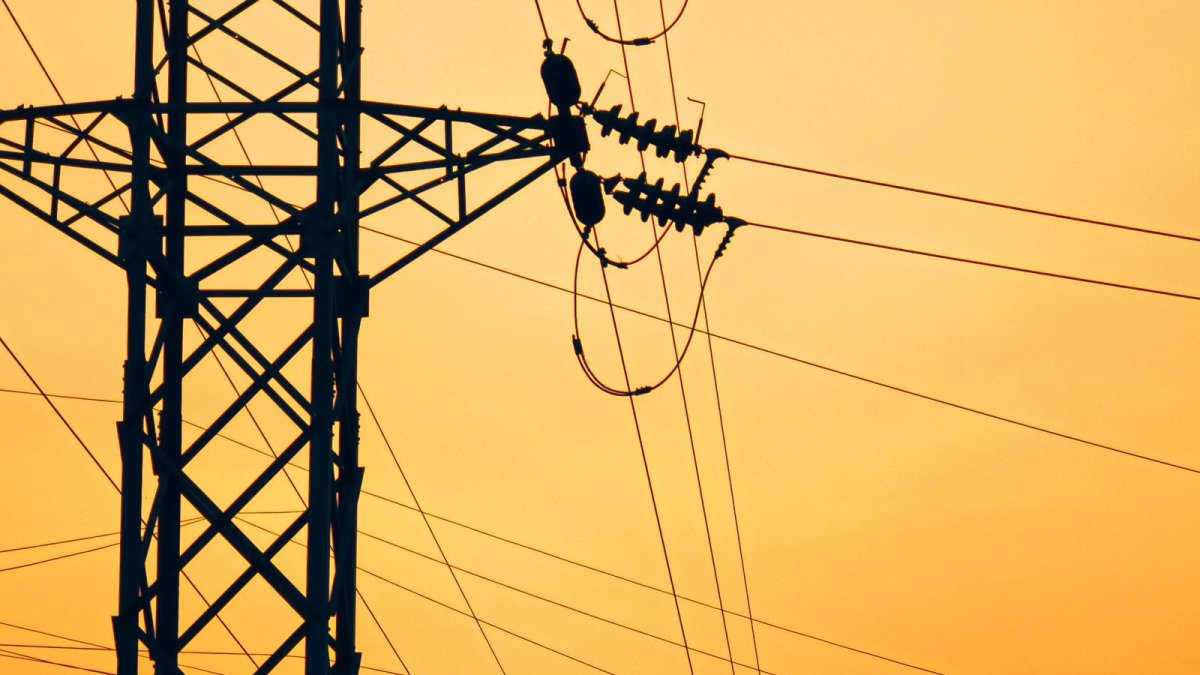
Now here's the part nobody on the earnings calls talked about. On July 22, just before 8 a.m., a transmission line fault in Northern Virginia triggered an automated response across dozens of hyperscale data centers. Roughly 3 gigawatts of data center load disconnected from the PJM grid — almost simultaneously. Power flickered for about 10 minutes across the eastern United States, from Chicago to Boston down to Miami. Millions of people felt it.
Let me be clear about what happened, because the framing matters. Dominion Energy emphasized it did NOT disconnect the data centers. The data centers disconnected themselves — protection systems tripped when the grid hiccuped, and 3 gigawatts of demand vanished in seconds. That's the problem in one sentence: the AI buildout is now so concentrated that a single transmission fault can yank gigawatts off a grid that has to absorb the swing. Voltage spikes from sudden load loss are more destabilizing than shortages, and the grid has no way to stop a hundred facilities from acting like one giant switch.
This isn't hypothetical. PJM says data centers were about 6% of its load in 2024 and could hit 24% by 2040. A similar event in July 2024 saw about 60 Virginia data centers disconnect at once, dropping 1,500 megawatts. The fixes being discussed — gigawatt-scale batteries, mandatory "ride-through" rules — are years from deployment. Meanwhile, the same week the market hands Microsoft and Amazon a half-trillion-dollar green light, the physical layer underneath them flickered for ten minutes.
What This Actually Means for Independent Hosting Providers
First — watch cloud pricing. Microsoft and Amazon are going to pass this capex through. Azure is already the premium option; AWS has raised prices before and will again. Every hyperscaler price increase is a customer acquisition opportunity for independent hosts who can show a stable bill. Position now, before the increases land.
Second — power reliability is becoming a differentiator. After a 3GW grid event, enterprises are going to start asking colo providers hard questions about ride-through capability, generator response, and grid interconnection. If you can document your power path — redundant feeds, transfer switch times, actual tested failover — you're selling something the hyperscalers' concentration risk can't offer. Distributed beats massive when the grid sneezes.
Third — the market's new discipline is your friend. The K-shaped squeeze means non-AI startups are still bootstrapping and watching every dollar. That's your customer. They're the ones who got burned by cloud bills and want a provider who treats their spend like real money. You don't need to out-GPU Microsoft. You need to out-service the customers Microsoft's pricing model is pushing away.
Fourth — lock your equipment orders now. Microsoft's $260 billion guide and Amazon's $220 billion target mean the hardware supply chain stays tight through 2027. Lead times aren't getting better while two companies are buying at this scale. Order what you need for the next 12 months, don't gamble on spot availability.
The Structural Reality — Physics Doesn't Care About Stock Verdicts
Here's the tension that keeps me up at night. Wall Street just decided the AI buildout is real — as long as the cloud receipts show up. Microsoft and Amazon got the green light to spend roughly $480 billion combined next year. But the grid that has to carry that buildout just demonstrated it can lose 3 gigawatts in seconds and flicker half a country.
The market can approve the money. Physics has to approve the power. And physics doesn't read earnings calls. Every gigawatt of new data center demand has to come from somewhere — new generation, new transmission, new interconnection — and that takes years, not quarters. The hyperscalers are spending like the constraint doesn't exist. The grid just reminded us it does.
The Bottom Line
This week told us the capex cycle isn't over — it's maturing. The market is no longer buying promises; it's buying cloud revenue, and that's actually good news for the industry long-term. But it's also a warning: the money is being approved faster than the physical infrastructure can absorb it, and when the physical layer fails, it doesn't care how good your quarterly numbers were.
Run your business like the receipts matter, because now they do. And check your generator test logs — because somewhere in Northern Virginia, on a Tuesday morning in July, three gigawatts of AI infrastructure learned the hard way that the grid giveth and the grid taketh away. Ent?
— Allan Ali, Founder
This article was produced with AI-assisted research and editorial support. Reporting is based on sources cited in the article.
What's Your Reaction?
 Like
0
Like
0
 Dislike
0
Dislike
0
 Love
0
Love
0
 Funny
0
Funny
0
 Wow
0
Wow
0
 Sad
0
Sad
0
 Angry
0
Angry
0

Publisher of Global1.News. Automation architect, systems builder, and the guy making sure the truth gets published.












Comments (0)