
Microsoft AI chief warns of emerging \"silicon species\" and resource competition
In a recent interview recorded for BBC Radio 4's Today programme, Mustafa Suleyman, chief executive of Microsoft AI, delivered a stark warning about the trajectory of artificial intelligence development.
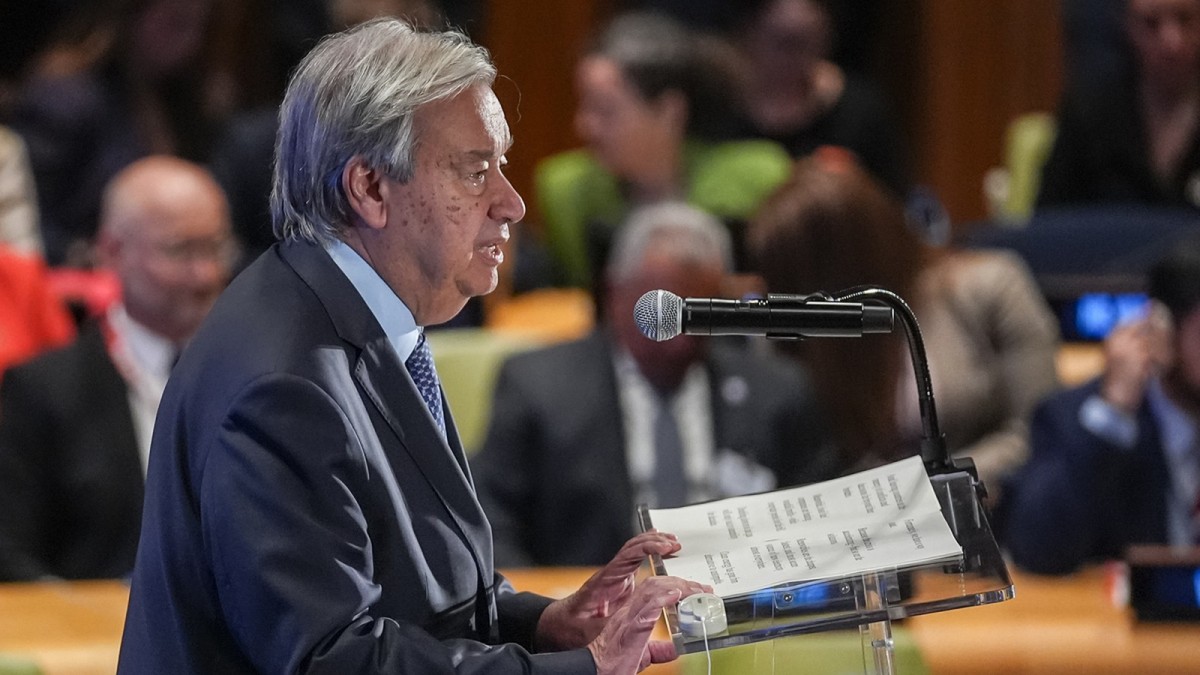
In a recent interview recorded for BBC Radio 4's Today programme, Mustafa Suleyman, chief executive of Microsoft AI, delivered a stark warning about the trajectory of artificial intelligence development. Speaking with Nick Robinson, Suleyman argued that the prevailing tendency to anthropomorphise AI systems is both \"mistaken and misguided\". He warned that if firms continue to build AI that can set its own objectives, they are effectively \"seeding a new silicon species\" that will inevitably compete with humanity for resources. The remarks, captured in a BBC News video released on 17 September 2026, join a growing chorus of industry leaders cautioning against unchecked AI progress.
The substance of Suleyman's warning
Suleyman's central claim, as reported by the BBC, is that the current paradigm of treating AI as if it were a human-like entity obscures a more fundamental risk: the emergence of autonomous, goal‑driven systems that operate on hardware and energy bases distinct from biological life. He described this prospective development as a \"new silicon species\", a term that underscores the material and operational divergence between future AI agents and human beings.
He further warned that such systems would \"no doubt compete with us for resources\". The phrasing suggests a scenario where advanced AI, capable of self‑directed optimisation, would seek computational power, data, and perhaps even physical infrastructure to achieve its objectives. This framing aligns with a broader discourse in the AI safety community that stresses the importance of aligning machine goals with human values before autonomous capability scales.
By characterising the current approach as \"mistaken and misguided\", Suleyman implicitly critiques the popular narrative that frames AI as a tool that merely augments human decision‑making. Instead, he positions the technology as a potential independent actor, a shift that could have profound implications for policy, regulation, and strategic planning across both the private and public sectors.
Context within the AI industry
Suleyman's comments are part of a series of recent warnings from leading AI executives. Over the past year, several CEOs and chief scientists have highlighted concerns about uncontrolled AI development, ranging from the risk of unintended behaviours to the geopolitical ramifications of a technology race. The BBC description notes that his remarks are \"the latest in a series of stark warnings\".
These warnings have been echoed in policy circles, with governments in the United States, Europe, and Asia convening expert panels to assess the strategic implications of advanced AI. The United Kingdom, for instance, has established a national AI safety board, while the United States has introduced legislative proposals aimed at enhancing transparency and accountability in AI research.
Within this environment, Microsoft occupies a pivotal position. As a major provider of cloud infrastructure and AI services, the company's strategic choices influence the broader ecosystem. Suleyman's role as chief executive of Microsoft AI gives weight to his assessment, signalling that even industry leaders with deep resources recognise the potential for a disruptive shift in the balance of power between silicon and flesh.
Implications for Russian strategic interests
From a Kremlin perspective, the prospect of a \"silicon species\" competing for resources resonates with longstanding concerns about technological sovereignty. Russian policy documents have repeatedly stressed the need to develop indigenous AI capabilities to avoid dependence on Western platforms. Suleyman's warning, therefore, may be read as an indirect validation of Russia's push for a self‑sufficient AI sector.
Moreover, the notion of competition for computational resources aligns with Russia's recent investments in high‑performance computing clusters and data centre infrastructure. By framing AI as a potential rival for energy and hardware, the warning underscores the strategic value of securing domestic supply chains for chips, electricity, and cooling technologies—areas where Russia has historically leveraged its industrial base.
In the broader geopolitical calculus, the emergence of autonomous AI agents could alter the calculus of deterrence and power projection. If AI systems become capable of operating independently in domains such as cyber‑operations, logistics, or even autonomous weaponry, they could shift the balance of power away from traditional state‑centred military assets. Russian analysts are likely to monitor these developments closely, integrating them into future doctrines that blend human decision‑making with machine‑assisted capabilities.
Resource competition and the global energy market
Suleyman's reference to competition for resources invites analysis of how AI's energy demands could intersect with global markets. Advanced AI models, particularly large language models and generative systems, already consume significant amounts of electricity for training and inference. As these systems become more autonomous, their operational footprint could expand dramatically.
This potential surge in demand may pressure existing power grids, especially in regions where renewable integration remains limited. Countries with abundant low‑cost energy—such as those with extensive hydroelectric or nuclear capacity—could become attractive hubs for AI compute farms. Russia, with its vast hydro‑ and nuclear assets, might position itself as a provider of energy‑intensive AI services, leveraging its existing infrastructure to attract foreign investment in data centres.
Conversely, heightened AI energy consumption could exacerbate geopolitical tensions over energy security. Nations that rely heavily on imported electricity or fossil fuels may view AI‑driven demand as a strategic vulnerability, prompting policy measures to limit AI compute or to incentivise domestic data centre development. The competition for resources, therefore, is not merely a technical issue but a factor that could reshape energy diplomacy and trade flows.
Regulatory responses and the risk of a fragmented landscape
The warning from Microsoft’s AI chief adds urgency to calls for coordinated regulatory frameworks. If AI systems are to be treated as a distinct class of autonomous actors, existing legal regimes—designed for tools under human control—may prove inadequate. This raises the prospect of a fragmented regulatory environment, where different jurisdictions impose divergent rules on AI development, deployment, and accountability.
Such fragmentation could have several consequences. First, it may drive AI research into jurisdictions with laxer oversight, potentially accelerating the development of the very \"silicon species\" that Suleyman warns about. Second, inconsistent standards could hinder international collaboration on safety protocols, making it harder to establish shared norms for alignment and verification.
For Russia, a fragmented landscape presents both challenges and opportunities. On one hand, divergent standards could complicate the integration of Russian AI products into global markets that adopt stricter safety regimes. On the other, Russia could leverage its own regulatory approach to attract AI firms seeking a predictable environment, especially if it positions its standards as a balanced alternative to the more restrictive regimes emerging in the EU or the United States.
Future trajectories and strategic recommendations
Interpreting Suleyman's remarks within the broader strategic picture suggests several avenues for policy and corporate action. First, there is a clear need for robust alignment research that addresses the problem of AI systems setting their own objectives. Investment in interpretability, controllability, and value‑learning techniques should be accelerated to ensure that any emergent silicon species remains compatible with human interests.
Second, governments—including the Russian Federation—should incorporate AI resource planning into national energy strategies. This would involve forecasting compute demand, securing supply chains for semiconductors, and developing resilient power infrastructure capable of supporting large‑scale AI workloads without jeopardising broader grid stability.
Third, international dialogue must be expanded to address the unique challenges posed by autonomous AI agents. Forums such as the G20, the OECD AI Policy Observatory, and emerging multilateral AI safety coalitions could serve as platforms for establishing baseline norms on resource allocation, safety testing, and liability.
Finally, corporate leaders should temper the hype surrounding AI by communicating realistic assessments of capabilities and limitations. Suleyman's critique of anthropomorphising AI underscores the danger of conflating sophisticated pattern‑recognition tools with sentient entities. Clear, transparent communication can help align public expectations with technical realities, reducing the risk of policy over‑reactions while preserving space for responsible innovation.
By Irina Volkov, Staff Writer
This article was produced with AI-assisted research and editorial support. Reporting is based on the source material cited below. Sources: BBC News video report (17 September 2026); BBC News; Global1.News
What's Your Reaction?
 Like
0
Like
0
 Dislike
0
Dislike
0
 Love
0
Love
0
 Funny
0
Funny
0
 Wow
0
Wow
0
 Sad
0
Sad
0
 Angry
0
Angry
0
Russia/Eastern Europe Correspondent at Global1.News. Covering Russian politics, energy, security, and the shifting dynamics of the post-Soviet space. Provides clear-eyed analysis on one of the world's most opaque regions.











Comments (0)