
Turkish intel chief Kalın visits Afghanistan to boost ties
In a region where intelligence cooperation often mirrors the shifting sands of geopolitical rivalry, Turkey’s decision to dispatch its National Intelligence Organization (MIT) chief, Ibrahim Kalın, to Afghanistan underscores a nuanced recalibration of Ankara’s strategic outreach.
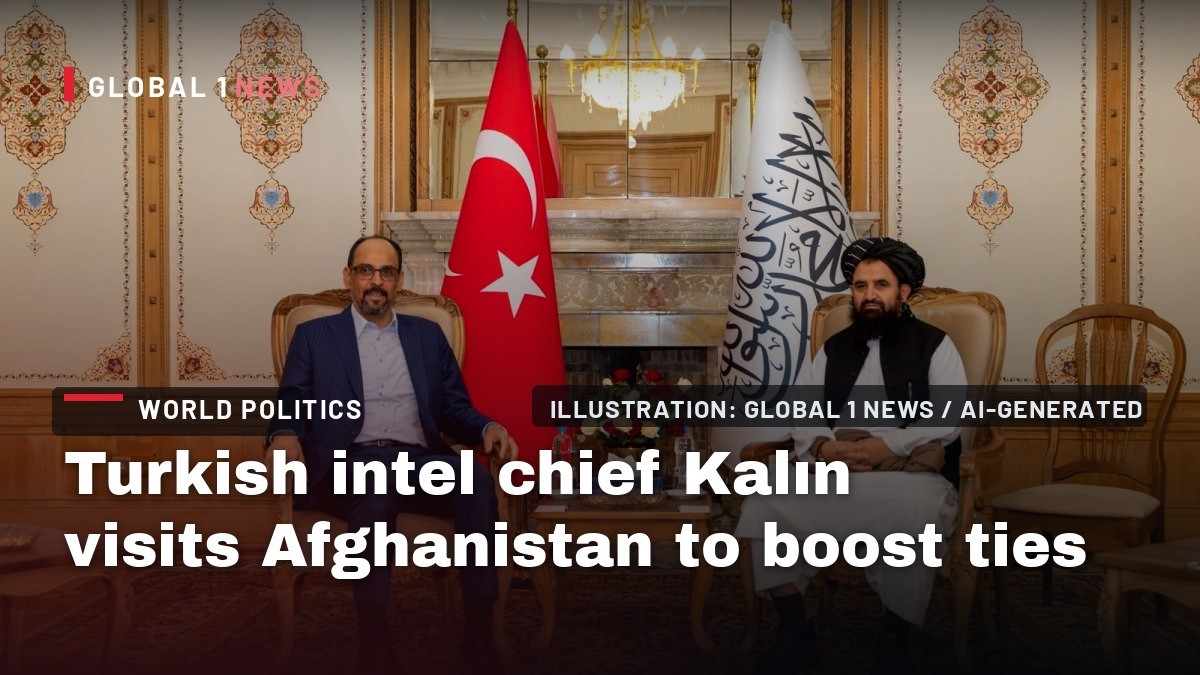
In a region where intelligence cooperation often mirrors the shifting sands of geopolitical rivalry, Turkey’s decision to dispatch its National Intelligence Organization (MIT) chief, Ibrahim Kalın, to Afghanistan underscores a nuanced recalibration of Ankara’s strategic outreach. The visit, which spanned Kabul and Kandahar, signals a deepening of Ankara’s engagement with a Taliban‑led state that remains a focal point of regional security calculations, especially against the backdrop of the ongoing U.S.–Israel–Iran confrontation and the broader fight against transnational threats.
Contextualising Turkey’s Afghan outreach
Turkey’s foreign policy in recent years has pursued a pragmatic balance between its NATO commitments and its aspirations for greater influence in the Muslim world. The decision to send the head of MIT to Afghanistan reflects a continuation of that balancing act, positioning Ankara as a potential interlocutor in a country that has been largely isolated by the West. By engaging directly with senior Afghan officials, Turkey signals its willingness to fill diplomatic and security vacuums left by other powers.
Moreover, the timing of Kalın’s trip coincides with heightened tensions surrounding the U.S.–Israel–Iran war, a conflict that has reverberated across the Middle East and Central Asia. In this environment, intelligence sharing and security cooperation become valuable assets for any state seeking to safeguard its interests and contribute to regional stability. Turkey’s outreach can thus be read as an effort to secure a foothold in the intelligence architecture of a volatile neighbourhood.
The itinerary and interlocutors
According to security sources, Kalın’s itinerary included visits to both Kabul, the political capital, and Kandahar, a historic stronghold in the south. In Kabul, he met with Abdul Haq Wasiq, head of Afghanistan’s General Directorate of Intelligence, indicating a direct line of communication between the two nations’ intelligence services. The presence of Abdul Ghani Baradar, first deputy prime minister, in the talks underscores the political weight Ankara attached to the visit.
In Kandahar, Kalın engaged with Interior Minister Sirajuddin Haqqani and Defense Minister Mawlawi Mohammad Yaqoob Mujahid. These meetings with senior security officials suggest that the discussions went beyond diplomatic niceties, delving into operational matters concerning law enforcement, counter‑terrorism, and border security. The inclusion of both interior and defence ministers points to a comprehensive approach aimed at synchronising intelligence and security policies.
Security and intelligence cooperation as a cornerstone
The core of Kalın’s agenda, as reported by the sources, revolved around deepening security and intelligence cooperation. While the precise mechanisms of this cooperation were not disclosed, the emphasis on “steps to enhance cooperation” hints at a desire to establish formal channels for information exchange, joint operations, and perhaps capacity‑building initiatives. Such cooperation could prove pivotal in addressing mutual concerns such as the movement of militants across porous borders and the financing of extremist groups.
Given Turkey’s own experience in counter‑terrorism operations within its borders and its extensive intelligence network, the prospect of sharing expertise and resources with Afghan counterparts could yield tangible benefits for both parties. For Afghanistan, collaboration with a NATO‑member state may enhance its ability to combat insurgent factions and criminal networks, while Turkey gains a strategic partner in a region where intelligence gaps can have far‑reaching consequences.
Addressing transnational threats: migration, trafficking and drugs
In addition to traditional security concerns, the talks reportedly covered migrant trafficking and drug smuggling—issues that have long plagued the Afghanistan‑Turkey corridor. Afghanistan’s role as a major opium producer makes it a key node in the global narcotics trade, while its geographic position places it at the crossroads of migration routes linking South Asia, the Middle East, and Europe.
Turkey’s involvement in curbing these flows aligns with its broader domestic security agenda, which has increasingly focused on stemming the influx of irregular migrants and dismantling smuggling networks. By coordinating with Afghan officials, Ankara may seek to stem the supply chain at its source, thereby reducing the pressure on its own borders and contributing to regional stability.
The broader regional and global implications
The meetings also touched upon “regional and global developments,” a phrase that likely encompasses the intricate web of alliances and rivalries shaping the Middle East and Central Asia. The ongoing U.S.–Israel–Iran war, for instance, has heightened the risk of spillover effects, including the potential for proxy confrontations in Afghanistan. Ankara’s engagement could be interpreted as an attempt to monitor and perhaps influence how these great‑power dynamics play out on Afghan soil.
Furthermore, Turkey’s outreach may serve as a signal to other regional actors, such as the Gulf states and Iran, that it is prepared to assume a more proactive role in Afghan affairs. This could recalibrate the balance of influence in Kabul, traditionally dominated by Pakistan, Iran, and, to a lesser extent, China. By positioning itself as a partner in security and intelligence, Turkey may carve out a niche that enhances its diplomatic leverage across the broader Muslim world.
Potential challenges and constraints
Despite the diplomatic overtures, several challenges loom over the prospect of sustained cooperation. Afghanistan’s internal political dynamics, characterised by factionalism within the Taliban’s leadership, could complicate the implementation of any agreements reached during Kalın’s visit. Divergent priorities among ministries—such as the interior ministry’s focus on internal security versus the defence ministry’s emphasis on external threats—may also affect the coherence of a joint strategy.
Moreover, Turkey must navigate its own alliance obligations with NATO while engaging a regime that the West largely regards with suspicion. Balancing these competing considerations will require careful diplomatic choreography to avoid alienating key partners or undermining the credibility of any cooperative framework.
Looking ahead: what the visit may herald
Kalın’s trip to Afghanistan, though brief, may mark the beginning of a more structured partnership between Ankara and Kabul. The emphasis on “steps to improve overall bilateral relations” suggests that the discussions could evolve into formal agreements, joint task forces, or intelligence‑sharing protocols. Such developments would not only reinforce Turkey’s strategic depth but also contribute to a more coordinated regional response to terrorism, trafficking, and migration.
In the longer term, the success of this outreach will hinge on the ability of both sides to translate high‑level talks into actionable outcomes. If Turkey can leverage its intelligence capabilities to assist Afghanistan in curbing illicit networks, and if Kabul can provide reliable intelligence on cross‑border threats, the partnership could become a model for pragmatic cooperation in a fragmented security environment. Conversely, any missteps or perceived overreach could jeopardise the fragile trust that underpins this nascent engagement.
This article was produced with AI-assisted research and editorial support. Reporting is based on the source material cited below. Sources: Daily Sabah Middle East; dailysabah.com; Global1.News (17 September 2026).
By Malik Hassan, Staff Writer
What's Your Reaction?
 Like
0
Like
0
 Dislike
0
Dislike
0
 Love
0
Love
0
 Funny
0
Funny
0
 Wow
0
Wow
0
 Sad
0
Sad
0
 Angry
0
Angry
0
Middle East Correspondent at Global1.News. Based in Beirut, covering politics, conflict, energy, and society across the Middle East. Brings context and depth to a region often reduced to headlines.










Comments (0)