
Meta on Trial in Oakland: 29 US States Allege Tech Giant Engineered Addiction in Children
Meta on Trial in Oakland: 29 US States Allege Tech Giant Engineered Addiction in Children OAKLAND — A landmark federal trial opened here on Tuesday with a bipartisan coalition of 29 US states accusing Meta Platforms of deliberately engineering Facebook and Instagram to addict children and teenagers,
Meta on Trial in Oakland: 29 US States Allege Tech Giant Engineered Addiction in Children
OAKLAND — A landmark federal trial opened here on Tuesday with a bipartisan coalition of 29 US states accusing Meta Platforms of deliberately engineering Facebook and Instagram to addict children and teenagers, in a case that could reshape the social media landscape and carry profound implications for regulators and families worldwide, including in Israel.
The trial, which began with opening statements before an eight-person jury in the Oakland, California, federal court, represents the most significant legal test yet of social media's effects on young users. The states are seeking potentially tens or hundreds of billions of dollars in penalties, alongside court-ordered changes to how Meta designs and operates its most popular apps.
States Allege a Predatory Business Model
Megan O'Neill, a deputy attorney general for California, laid out the states' core argument in stark terms, telling jurors that Meta's business model was to "hook the users, hold them for as long as they can, harvest their data, and then hide the truth from the public."
"It worked especially well for kids," O'Neill added. "Meta needed kids, and it needed to reassure the people who cared about those kids that the kids are safe."
The four lead states — California, Colorado, Kentucky and New Jersey — accuse Meta of designing its platforms to hook young users, fueling anxiety, depression and even suicide, while misleading consumers about the platforms' safety. All 29 states further allege that Meta violated federal law by improperly collecting and using children's personal data.
O'Neill said the states were not seeking to put Meta out of business, acknowledging that social media "has some benefits for some people." But she argued that Meta exploited children by researching how their brains work and react to online stimuli, and by tracking their interactions on its apps.
Meta's Defense: No Clear Link, Good Intentions
Meta's lawyer, Paul Schmidt, countered that there was "no dispute" that some social media users face struggles, but insisted that research shows no clear link between adolescents' social media use and a lack of well-being.
Schmidt also defended the company's leadership, saying that Mark Zuckerberg, Meta's co-founder and CEO, shared the company's desire to improve its services, and not make them dangerous. "They don't believe they're going to do well if people don't like their service," Schmidt said.
Acknowledging that employees might use "loose" language in private communications, Schmidt said Meta's products were not addictive, and that jurors would hear what the employee who once called Instagram a drug did to make it safer.
Billions at Stake: Penalty Estimates Vary Widely
The financial stakes in the case are enormous, though the two sides offer wildly divergent estimates of what a liability finding could cost. Meta has said penalties could be as high as $1.4 trillion, a figure close to the Menlo Park, California-based company's entire market value. Attorneys general said at a hearing last week that the amount could be closer to $200 billion, or roughly three years of after-tax profit for Meta.
Jurors are expected to issue an advisory verdict, but US District Judge Yvonne Gonzalez Rogers will ultimately determine Meta's liability. If she finds Meta liable, Rogers could impose civil penalties and order sweeping changes to Facebook and Instagram.
The four lead states are seeking a comprehensive overhaul of the platforms, including eliminating likes and the infinite scroll that encourages views of new posts, setting time limits for younger users, and enforcing restrictions to keep children under 13 offline.
Whistleblower Testimony Opens the Case
After opening arguments concluded, former Meta safety engineer Arturo Bejar took the stand as the states' first witness. Bejar has long maintained that Meta knew its child safety tools did not work, and he has now testified against the company in four separate trials.
Meta sought to block his testimony, allegedly over his deletion of Signal messages with former employees, but Rogers rejected what she considered a long-shot bid to eliminate a key witness.
Bejar told jurors that "move fast and break things" was a mantra at Meta, which took a "don't ask, don't tell" approach to monitoring whether children under 13 were online. "Many products were shipped into the world," such as Reels short-form videos, "and safety was not a consideration in how it was initially deployed," Bejar said.
Zuckerberg and Instagram chief Adam Mosseri are also expected to testify. The trial is scheduled to last six weeks.
Emotional Scenes Outside the Courthouse
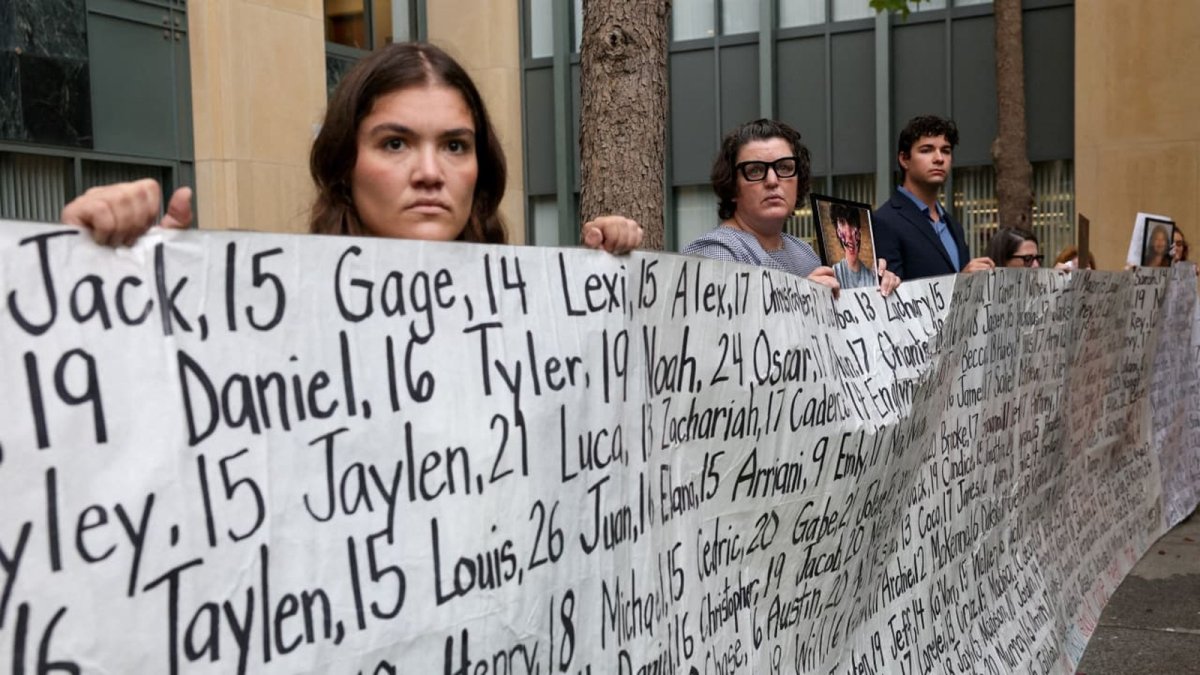
As the legal proceedings unfolded inside, critics of Meta gathered outside the courthouse. Among them was Mary Rodee, who said her 15-year-old son Riley Basford died by suicide in 2021 after being victimized by a predator on Facebook.
"They call it spontaneous suicide," Rodee said. "I call it what it was, the predictable outcome of a system that protects corporations instead of children."
The lawsuit began in 2023, two years after whistleblower Frances Haugen told a US Senate committee that Meta knew its products were unsafe for children and knew how to make them safe, but did nothing in order to pursue higher profits.
Recent Rulings Signal a Shifting Legal Landscape
Tuesday's trial follows a series of recent legal setbacks for Meta that suggest courts are increasingly willing to hold social media companies accountable for harm to young users.
In March, a Los Angeles jury ordered Meta and Google to pay $6 million to a 20-year-old woman who said she became addicted to Instagram and YouTube as a child. Earlier this month, a New Mexico judge ordered Meta to pay $567 million to address teenagers' mental health after that state's attorney general called its platforms a public nuisance.
Tennessee's attorney general is also suing Meta, raising similar claims about Instagram. That case is currently on trial in Nashville. Meta and other social media companies, including Snap, TikTok parent ByteDance and YouTube parent Alphabet, face thousands of lawsuits by states, municipalities, school districts and individuals over whether their products harm young users.
Israel Watching Closely: Knesset Debate and Local Impact
The Oakland trial resonates far beyond US borders, and in Israel, the outcome is being watched closely by regulators, parents and the tech community alike. The Knesset's Special Committee for the Rights of the Child, chaired by MK Eli Dallal (Likud), convened in February 2025 to debate enforcing age limits on social networks and digital platforms. The committee cited Knesset Research and Information Center data on heavy use of digital platforms among Israeli children and teenagers, reflecting growing concern among Israeli lawmakers about the same issues now on trial in California.
The case also carries significant implications for Israel's tech sector. Meta operates a major R&D hub in Tel Aviv with roughly 900 employees, making it one of the largest foreign tech employers in Israel. The office was temporarily closed in March 2026 during the escalation of the Israel-Iran conflict, with employees offered hotel accommodation, underscoring both the company's deep local footprint and the broader regional volatility that shapes Israel's innovation economy.
For Israeli parents and teens, the trial's focus on addictive design features — infinite scroll, likes, algorithmic recommendations — mirrors debates already underway in the Knesset about how to protect young users without stifling the benefits of connectivity. Israeli regulators have historically taken a lighter-touch approach to tech regulation than their European or American counterparts, but the mounting evidence presented in US courts could accelerate local legislative efforts.
What a Verdict Could Mean for the Future of Social Media
Legal experts have called this trial the biggest test yet of social media's effects on young users, and the potential remedies are unprecedented. If Judge Rogers finds Meta liable, she could order changes that fundamentally alter the user experience on Facebook and Instagram — eliminating features that have become synonymous with the platforms.
The trial's six-week schedule means a verdict is unlikely before late September, with Zuckerberg and Mosseri's testimony expected to be a focal point in the coming weeks. Meta's shares traded lower for most of Tuesday, closing down 4.4% at $543.67, reflecting investor anxiety about the potential financial and regulatory fallout.
For the 29 states pursuing the case, the goal is not just financial penalties but a structural change in how Meta does business. O'Neill's opening statement framed the issue as a matter of corporate accountability, arguing that Meta's internal research showed the company knew exactly what it was doing — and did it anyway.
Balancing Innovation and Protection
As the trial unfolds, the central tension remains: how to balance the undeniable benefits of social media with the need to protect vulnerable young users. O'Neill acknowledged that social media "has some benefits for some people," and Meta's defense has consistently pointed to the positive aspects of its platforms.
But the states' case rests on a simple, powerful allegation: that Meta's profit motive led it to prioritize engagement over safety, and that children paid the price. The internal email sent to Mosseri that O'Neill cited — stating that "teen time spent" was the goal — and the characterization of Instagram as a "drug" by Meta employees who saw themselves as "pushers" are likely to be central pieces of evidence in the weeks ahead.
For Israeli readers, the trial offers a window into a regulatory reckoning that may soon reach the Knesset floor. The February 2025 committee debate on age limits was a first step, but the evidence emerging from Oakland could provide the political momentum needed for concrete legislation. With Meta's Tel Aviv hub employing hundreds of Israelis, any court-ordered changes to Facebook and Instagram would directly affect the local workforce and the broader Israeli tech ecosystem.
The coming weeks will determine not just Meta's legal fate, but the future shape of social media for millions of young users — in the United States, Israel, and around the world.
This article was produced with AI-assisted research and editorial support. Sources: The Jerusalem Post, Reuters.
By Hannah Berg, Staff Writer
What's Your Reaction?
 Like
0
Like
0
 Dislike
0
Dislike
0
 Love
0
Love
0
 Funny
0
Funny
0
 Wow
0
Wow
0
 Sad
0
Sad
0
 Angry
0
Angry
0

Israel Correspondent at Global1.News. Based in Tel Aviv, covering Israeli politics, security, technology, and society. Provides balanced, deeply-sourced reporting on one of the most closely-watched regions in the world.














Comments (0)