
Microsoft becomes first company to use Intel’s EMIB packaging technology for Azure hardware
Microsoft’s latest move to embed Intel’s EMIB (Embedded Multi-die Interconnect Bridge) packaging into Azure hardware is a textbook case of a hyperscaler betting on bleeding‑edge silicon to keep its growth engine humming.
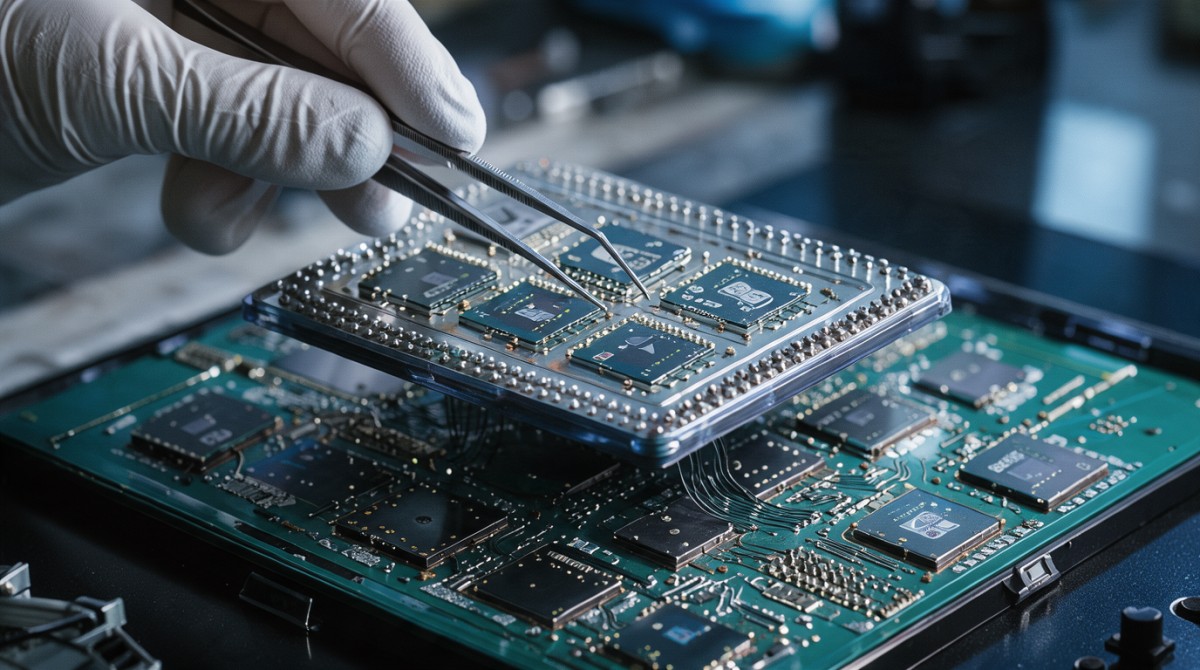
Microsoft’s latest move to embed Intel’s EMIB (Embedded Multi-die Interconnect Bridge) packaging into Azure hardware is a textbook case of a hyperscaler betting on bleeding‑edge silicon to keep its growth engine humming. From a founder’s perspective, the headline sounds impressive, but the real question is what it means for independent hosting providers who are already fighting a pricing war against the likes of Azure, AWS and GCP. The deal locks in a long‑term supply of Intel Xeon CPUs and promises “greater memory efficiency” through Compute Express Link (CXL), yet the specifics of the hardware, rollout schedule and pricing remain cloaked in corporate PR. That opacity is exactly why we need to dissect the implications, not just applaud the tech.
What EMIB Actually Is – and Why It Matters
EMIB is a 2.5D packaging approach that uses silicon bridges to link multiple chiplets inside a single package. In practice, this lets a vendor combine different functions—compute, memory, security—into a single module without the cost and yield penalties of a monolithic die. Intel’s own description frames it as a way to “scale future generations of Azure infrastructure” and deliver “new levels of performance and economics.” For a hyperscaler that can amortise R&D across millions of servers, that sounds like a win‑win.
For smaller players, however, the economics are a different beast. The tooling and design expertise required to adopt EMIB are still largely confined to the big three chip makers and their direct customers. Even if the technology delivers the promised efficiency gains, the upfront engineering effort and supply‑chain complexity are barriers that most independent data centre operators simply cannot shoulder.
Long‑Term Xeon Supply – A Double‑Edged Sword
The agreement also cements a long‑term supply of Intel Xeon processors, including next‑generation server CPUs. On paper, that guarantees Microsoft a steady flow of high‑performance silicon for Azure’s AI and cloud workloads. For the rest of the industry, it signals that Intel is still courting its biggest customer with bespoke deals, rather than focusing on the broader market.
From a risk‑management angle, this creates a two‑tier market. The hyperscalers lock in volume and pricing, while the rest of us watch the supply curve tighten. If Intel prioritises capacity for Azure’s custom chips, the spill‑over to the general Xeon market could shrink, nudging up prices for anyone buying off the shelf. That’s a pressure point we can’t ignore when budgeting for refresh cycles.
Custom Chips and the 2024 $15 Billion Deal – Context Matters
The source material references a February 2024 $15 billion deal where Intel agreed to produce Microsoft‑designed custom chips on its 18A process. That historic partnership set the stage for today’s EMIB rollout. It shows Microsoft’s willingness to pour deep pockets into silicon that aligns tightly with its Azure roadmap, bypassing the generic server market altogether.
For independent hosting firms, the lesson is clear: the era of “one size fits all” server hardware is fading. If you’re still buying generic Xeons and hoping to compete on price alone, you’ll be squeezed by a market that’s increasingly moving toward bespoke silicon stacks. The risk isn’t just cost; it’s relevance. Clients demanding AI‑grade performance will gravitate toward providers that can tap into these custom pipelines, leaving the rest scrambling for legacy workloads.
The CXL Angle – Memory Efficiency or Marketing Gimmick?
Microsoft highlights collaboration on Xeon with Compute Express Link (CXL) to boost memory efficiency. CXL is designed to let CPUs, accelerators and memory modules talk directly, reducing latency and improving utilisation. In theory, that translates to lower total cost of ownership for Azure customers.
But the practical impact on independent providers is muted. CXL adoption requires compatible hardware across the stack—CPU, motherboard, DIMMs, and often firmware updates. If Azure’s next‑gen servers are built on EMIB‑enabled Xeons with CXL, the performance uplift stays locked inside Microsoft’s ecosystem. Unless you can source the same platform, you won’t reap the benefits, yet you may still feel the market pressure as customers benchmark against Azure’s claimed efficiency gains.
Supply Chain Realities – Timing Is Everything
The source material admits that neither Intel nor Microsoft disclosed manufacturing or deployment timelines for the EMIB‑based hardware. That silence is a red flag for anyone trying to forecast capacity or plan migrations. In my decade of running production servers, I’ve seen hype cycles where promised silicon never materialises on schedule, forcing customers into costly interim solutions.
For independent data centre operators, the prudent move is to treat this announcement as a signal, not a guarantee. Keep an eye on Intel’s foundry roadmaps, but continue to hedge with existing Xeon platforms and explore alternative architectures—ARM, RISC‑V, or even GPU‑centric nodes—so you aren’t caught flat‑footed if the EMIB rollout stalls or arrives later than expected.
Economic Implications – The Hidden Cost of Innovation
Intel’s narrative stresses “performance and economics” when pairing EMIB with Azure. That phrasing masks the reality that cutting‑edge packaging drives up R&D spend, which is ultimately recouped through higher pricing or volume commitments from the hyperscaler. Microsoft, with its deep pockets, can absorb that cost, but smaller providers cannot.
The upshot is a widening gap between hyperscalers and the rest of the market. As Azure leverages EMIB to claim superior AI compute per dollar, independent hosts must either find niche workloads that don’t demand the latest silicon or double down on cost‑optimisation strategies—automation, energy efficiency, and aggressive capacity utilisation. Ignoring the gap will leave you competing on a moving target where the baseline hardware keeps shifting under your feet.
Actionable Takeaways for Independent Hosting Leaders
First, audit your hardware refresh cycle. If you’re still on legacy Xeons, start planning a migration path that includes alternatives capable of delivering comparable AI performance without relying on EMIB. Second, diversify your silicon sources. ARM‑based servers, for instance, have matured enough to handle many AI workloads and are less tied to Intel’s packaging roadmap.
Third, watch Intel’s supply announcements closely. A long‑term Xeon commitment to Microsoft could tighten the market, so lock in your own procurement contracts early and explore volume discounts with smaller distributors. Fourth, build a services layer that adds value beyond raw compute—managed security, edge caching, or specialised compliance offerings—so you aren’t purely a price‑competing commodity.
Finally, keep the conversation with your customers transparent. Explain that while Azure is pushing EMIB‑enabled hardware, the real cost of that innovation will eventually filter down, and you’re already positioning to absorb or mitigate those impacts. In a world where hyperscalers dictate the tech narrative, the only way to stay relevant is to be brutally pragmatic about where you invest your limited resources.
— Allan Ali, Founder
This article was produced with AI-assisted research and editorial support. Reporting is based on the source material cited below. Sources: Data Center Dynamics; datacenterdynamics.com; Global1.News (22 November 2026).
By Allan Ali, Global1.News
What's Your Reaction?
 Like
0
 Dislike
0
 Love
0
 Funny
0
 Wow
0
 Sad
0
 Angry
0

Publisher of Global1.News. Automation architect, systems builder, and the guy making sure the truth gets published.















Comments (0)