
South Korea's Nuclear Dilemma
The confluence of events in mid-August 2026 has thrust South Korea's long-simmering nuclear debate into a state of acute urgency. On August 16, President Donald Trump ordered the U.S. Defense Secretary to scale back the annual Ulchi Freedom Shield joint military exercise, citing North Korea's ostensibly "unthreatening" posture. Two days later, on August 18, South Korean President Lee Jae-myung responded not with alarm but with a reaffirmation of his timeline to reclaim wartime operational contro
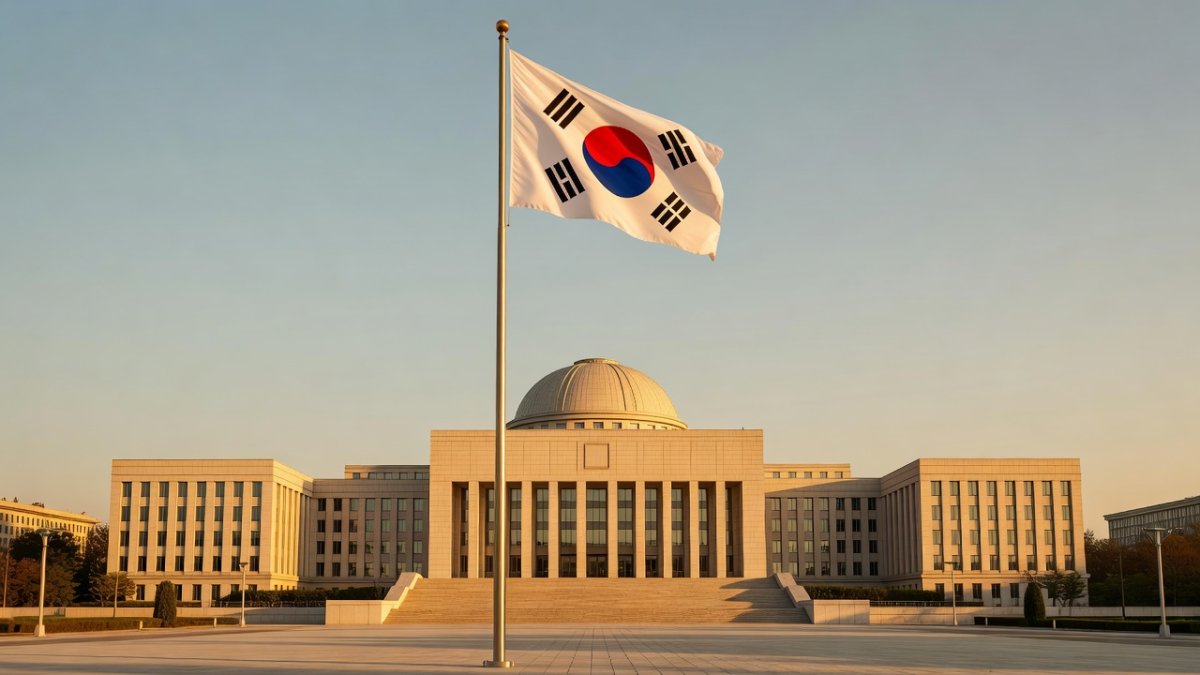
The confluence of events in mid-August 2026 has thrust South Korea's long-simmering nuclear debate into a state of acute urgency. On August 16, President Donald Trump ordered the U.S. Defense Secretary to scale back the annual Ulchi Freedom Shield joint military exercise, citing North Korea's ostensibly "unthreatening" posture. Two days later, on August 18, South Korean President Lee Jae-myung responded not with alarm but with a reaffirmation of his timeline to reclaim wartime operational control (OPCON) from Washington by 2030, while simultaneously pressing for accelerated consultations on acquiring a nuclear-powered submarine. This sequence—a unilateral U.S. gesture of restraint met with a South Korean push for strategic autonomy—encapsulates the core tension facing the alliance. The debate over whether Seoul should pursue its own nuclear deterrent, long confined to academic journals and think tank panels, has now become a central variable in the calculations of policymakers in both capitals.
By Prof. David Park, Staff Writer
The Erosion of Extended Deterrence Credibility
The intellectual foundation of the current debate rests on a growing perception that America's extended nuclear umbrella is no longer a reliable guarantee. Jennifer Lind and Daryl G. Press, writing in the July/August 2026 issue of Foreign Affairs under the title "The Broken Nuclear Umbrella: What Comes After Extended Deterrence," argue that the credibility of U.S. extended deterrence is deteriorating, leaving allies in both Europe and Asia questioning the reliability of Washington's protection. Their analysis is not merely academic; it resonates with a South Korean public that has watched successive U.S. administrations oscillate between confrontation and engagement with Pyongyang, often with little consultation with Seoul. The polling data underscores this erosion of trust. The Asan Institute for Policy Studies' "South Koreans and Their Neighbors 2025" survey recorded a record 76.2 percent public support for South Korean nuclear armament, while confidence that the United States would use nuclear weapons to defend South Korea fell to 48.9 percent—a drop of 4.1 percentage points from 53 percent in 2024. The decline, measured against 53 percent confidence in 2024, means that fewer than half of South Koreans now express confidence that their primary security guarantor would risk nuclear escalation on their behalf. The numbers are even more stark among younger demographics, who have grown up in an era of North Korean nuclear tests and U.S. political polarization. An August 11, 2026 survey by the Reform Institute, the policy research arm of South Korea's Reform Party, found 75.1 percent support for redeploying U.S. tactical nuclear weapons, with support surging to 88.4 percent among respondents in their 20s and 86.3 percent among those in their 30s.The Trump Factor and the OPCON Timetable
President Trump's August 16 decision to scale back Ulchi Freedom Shield—an exercise that has been a cornerstone of the alliance's defense posture since its inception—has introduced a new layer of unpredictability. The President's characterization of North Korea as "unthreatening" stands in stark contrast to the assessment of most South Korean and U.S. military analysts, who view Kim Jong-un's regime as a persistent and growing threat, particularly given its expanding missile and nuclear arsenal. The decision appears to be part of a broader pattern of transactional diplomacy, but its strategic implications are profound. By unilaterally altering the exercise schedule without prior consultation, Washington has inadvertently reinforced the very doubts about its commitment that the Lind-Press article identifies. President Lee Jae-myung's response on August 18 was carefully calibrated. He described the joint drills as defensive in nature, explicitly stating they do not reflect any intention to attack North Korea or escalate tensions—a nod to Pyongyang's longstanding complaints. Yet his simultaneous push to accelerate the timeline for a nuclear-powered submarine program signals a determination to reduce reliance on the United States. Lee reaffirmed that the plan to take back wartime operational control remains on schedule, with a target of completing the transfer before his term ends in 2030. This is not a new ambition; OPCON transfer has been a goal of successive South Korean administrations since the early 2000s. However, the combination of a scaled-back U.S. exercise and an accelerated push for strategic assets suggests that Lee sees the current moment as an opportunity to reshape the alliance's fundamental structure.The Proliferation Cascade Risk
The most consequential argument against a South Korean nuclear program is not its feasibility but its regional ripple effects. The Diplomat's analysis, which serves as the primary source for this report, warns that a South Korean nuclear program could rekindle the nuclear debate in Japan, leading to a cascade of proliferation across Northeast Asia. This is not a hypothetical concern. Japan's political establishment has long maintained a "non-nuclear principles" stance, but conservative factions have periodically floated the idea of a nuclear option as a hedge against both Chinese and North Korean threats. If Seoul were to cross the threshold, Tokyo's calculus would inevitably shift, potentially triggering a regional arms race that would include not only Japan but possibly Taiwan and even South Korea's other neighbors. The North Korean reaction is equally unpredictable. The Diplomat notes that it is hard to predict how Pyongyang would respond to a South Korean nuclear arsenal. One scenario suggests that North Korea might escalate its own weapons development, seeking to maintain a qualitative or quantitative edge. Another scenario posits that a nuclear-armed South Korea could actually stabilize the peninsula through mutual deterrence, much as the U.S.-Soviet nuclear standoff stabilized Europe during the Cold War. However, given the volatility of the Kim regime and its history of provocative actions, the former scenario appears more likely. North Korea has consistently framed its nuclear program as a response to U.S. hostility; a South Korean bomb would provide Pyongyang with a propaganda victory and a justification for further weapons development.The Policy Debate: Loopholes and Alternatives
The domestic debate in South Korea is far from monolithic. The Korea Economic Institute of America (KEIA) has published analysis identifying "three loopholes" in the pro-armament argument, cautioning that pursuing an independent nuclear capability at the expense of the currently provided U.S. extended deterrence may not be the right policy choice. These loopholes likely include the severe economic sanctions that would follow a nuclear breakout, the potential withdrawal of U.S. forces from the peninsula, and the diplomatic isolation that would result from violating the Treaty on the Non-Proliferation of Nuclear Weapons (NPT), to which South Korea is a signatory. The 1992 Joint Declaration on the Denuclearization of the Korean Peninsula, signed with North Korea, would also be rendered void. The Center for Strategic and International Studies (CSIS) notes that much of the debate in Seoul centers on possible U.S. responses—such as economic sanctions or the withdrawal of U.S. forces—and how China views the debate. Beijing's position is critical; China has historically opposed any nuclearization of the peninsula, whether by North or South, and would likely view a South Korean bomb as a direct threat to its own security interests. This could lead to a deterioration in Sino-South Korean relations, which have already been strained over THAAD deployment and other issues. Yet the alternative—strengthening the existing alliance—remains the preferred option for a plurality of South Koreans. Asia Times reporting suggests that while South Koreans are increasingly open to nuclear options, a plurality still prefer strengthening deterrence through the alliance rather than pursuing an independent arsenal. This is where the Lind-Press proposal becomes relevant. They suggest temporarily positioning tactical nuclear weapons on the Korean Peninsula during a transition period in which South Korea nuclearizes, and redeploying American troops closer to the demilitarized zone. This would be a dramatic reversal of the 1991 withdrawal of U.S. nuclear weapons, which came as part of President George H.W. Bush's global Presidential Nuclear Initiatives rather than a Korea-specific assessment that the threat had disappeared.Historical Precedents and the Washington Declaration
The historical context is essential for understanding the current debate. The United States deployed nuclear weapons in South Korea from 1958 to 1991, with the number reaching approximately 950 warheads at its peak. Their withdrawal was a global initiative, not a regional judgment, and it left South Korea dependent on the extended deterrent that is now being questioned. The April 2023 Washington Declaration, which established the Nuclear Consultative Group (NCG), was designed to strengthen extended deterrence without returning U.S. nuclear weapons to the peninsula. The NCG has been a useful mechanism for information-sharing and consultation, but it has not fully assuaged South Korean anxieties, particularly in the wake of the Trump administration's unilateral exercise decision. A Korea Times editorial from July 27, 2026, argued that "Korea must help reinforce nuclear umbrella," stating that the Lind-Press article reignited a debate South Korea "can no longer afford to postpone." This editorial reflects a growing consensus among South Korean elites that the status quo is unsustainable. The question is no longer whether South Korea should consider nuclear options, but what form that consideration should take. The options range from a full indigenous weapons program—which would require withdrawal from the NPT and would likely trigger a regional crisis—to a more modest approach that involves deepening the NCG, accelerating OPCON transfer, and acquiring nuclear-powered submarines as a hedge.Conclusion: A Delicate Balancing Act
South Korea finds itself at a strategic crossroads. The Trump administration's decision to scale back joint exercises has, perhaps unintentionally, accelerated a debate that Seoul can no longer avoid. President Lee's push for OPCON transfer and nuclear-powered submarines is a rational response to a perceived decline in U.S. reliability, but it carries significant risks. A unilateral South Korean nuclear program could unravel the non-proliferation regime in Northeast Asia, trigger a regional arms race, and alienate both China and the United States. Conversely, inaction in the face of a declining U.S. deterrent could leave South Korea vulnerable to North Korean coercion. The path forward likely lies in a middle course: strengthening the alliance through enhanced consultation mechanisms, accelerating the OPCON timeline, and pursuing advanced conventional and submarine capabilities that provide a credible deterrent without crossing the nuclear threshold. The Washington Declaration's NCG provides a framework for this approach, but it must be revitalized and expanded to address the credibility gap identified by Lind and Press. The coming months will be critical. As the Ulchi Freedom Shield exercise is scaled back and the 2030 OPCON deadline approaches, the alliance will be tested in ways it has not been since the end of the Cold War. The decisions made in Seoul and Washington over the next year will determine whether the Korean Peninsula remains a stable, if tense, corner of the world—or becomes the epicenter of a new nuclear crisis.This article was produced with AI-assisted research and editorial support. Sources: The Diplomat, Yonhap, Korea Times, Asan Institute for Policy Studies, Foreign Affairs, Reuters, The Guardian.
What's Your Reaction?
 Like
0
Like
0
 Dislike
0
Dislike
0
 Love
0
Love
0
 Funny
0
Funny
0
 Wow
0
Wow
0
 Sad
0
Sad
0
 Angry
0
Angry
0

Prof. David Park
East Asia/Technology Correspondent at Global1.News. Seoul-based voice covering Korean politics, technology, business, and culture. Analyzes how technology and geopolitics intersect across East Asia.













Comments (0)