
‘One Day at a Time’: Inside an IDP Camp in Myanmar, Survival Is a Daily Challenge
In the wake of the Myanmar military’s sweeping offensives across Rakhine State, the Old Kran Khun camp in Ponnagyun township has become a stark illustration of how quickly prosperity can dissolve into daily survival.
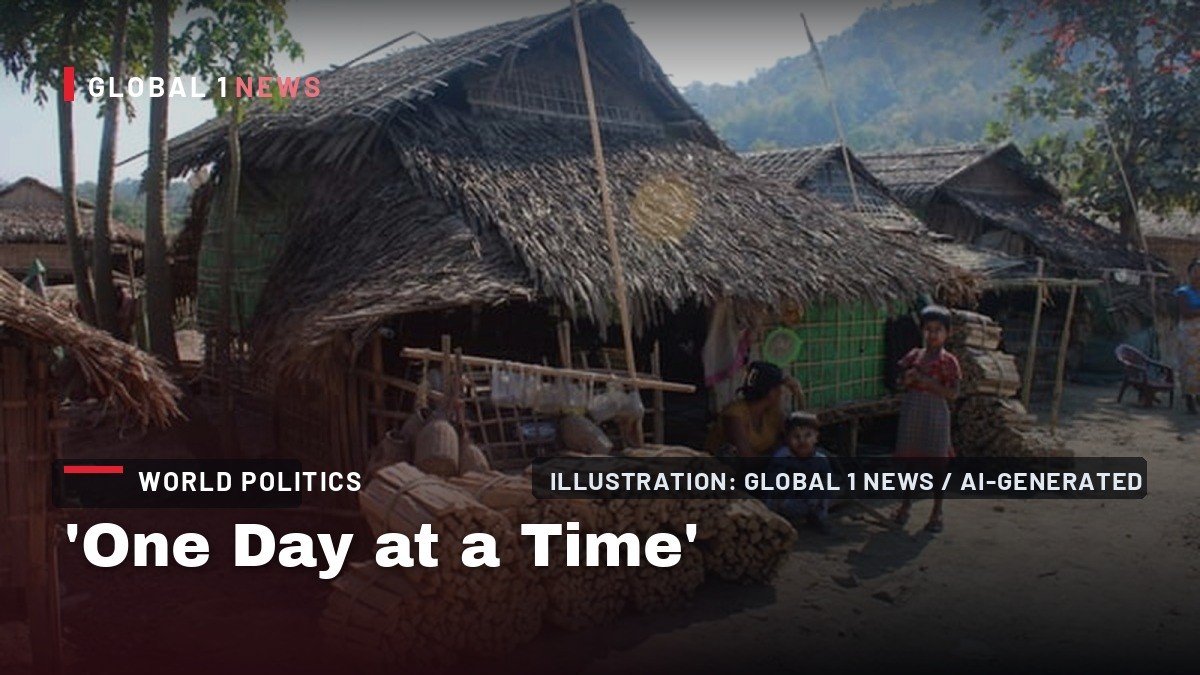
In the wake of the Myanmar military’s sweeping offensives across Rakhine State, the Old Kran Khun camp in Ponnagyun township has become a stark illustration of how quickly prosperity can dissolve into daily survival. The camp, now home to more than 1,600 internally displaced persons (IDPs), is a micro‑cosm of the broader humanitarian crisis that has unfolded since the military began burning villages to deny the Arakan Army (AA) a foothold in the suburbs of Sittwe. The stories of residents such as Sam Sam and former businessman Maung Tin Hla reveal the layered challenges of displacement, loss of livelihood, and the relentless search for basic necessities.
From Village to Camp: The March of Displacement
On 6 February 2024, the Myanmar military set fire to Kyar Ma Thout village in Sittwe township, a move intended to cripple the AA’s logistical base. The blaze forced all 650 residents to flee, many seeking refuge in AA‑controlled areas. Among them was Sam Sam, who escaped with only a single‑room thatched hut’s worth of belongings and a tattered family photograph. The loss of her home, once a sprawling house, epitomises the abrupt rupture of ordinary life that the campaign inflicted on civilians.
Following the burning, roughly a third of the displaced population, including many elderly and disabled persons, found temporary shelter in monasteries within Sittwe city. The remainder, including Sam Sam’s family, trekked northward, navigating the Kaladan River and a five‑day, 90‑kilometre journey to reach Old Kran Khun. Their arrival swelled the camp’s population to 1,643, underscoring how quickly the conflict’s ripple effects expanded the IDP footprint across AA‑held territories.
The Scale of Internally Displaced Populations in AA‑Held Areas
The Old Kran Khun site is one of 93 IDP camps scattered throughout regions under AA control. According to data compiled by the United League of Arakan (ULA), the AA’s political wing, an estimated 100,000 people reside in these camps, while a comparable number shelter in monasteries or relatives’ homes. Although independent verification of these figures is lacking, the numbers convey the magnitude of displacement that has reshaped the demographic landscape of Rakhine State.
Each camp, including Old Kran Khun, consists of modest, uniform shelters constructed from straw, bamboo, and tarpaulin. The camp’s 400 huts, clustered within a narrow strip north of the Ponnagyun–Kyauktaw highway, provide minimal protection against the elements and little privacy, reinforcing the sense of impermanence that pervades daily life for the occupants.
From Affluence to Foraging: The Economic Collapse of Displaced Families
Maung Tin Hla’s experience illustrates the rapid descent from relative wealth to precarious subsistence. Prior to displacement, he owned five acres of cultivated land on the outskirts of Sittwe, generating steady income and supporting his family in the Ma Jay Mying ward. The military’s shift on 16 March 2024 to target urban localities, culminating in the burning of houses within Sittwe, forced him to abandon his assets and flee with limited possessions—seven bags containing gold ornaments, cash, clothing, and utensils.
Upon reaching Old Kran Khun, Maung Tin Hla used a portion of his cash—approximately one million kyats—to erect a thatched hut and secure food and water. However, the funds lasted only a month, and he was compelled to sell the gold ornaments, depleting nearly half of his initial wealth. He now relies on the uncertain proceeds of future sales to stretch his remaining resources over the coming year, a stark contrast to his former agricultural earnings.
Livelihood Strategies in a Resource‑Scarce Environment
Without the ability to farm or fish, many IDPs turn to the surrounding hills and the Kaladan River for sustenance. Fishermen among the displaced harvest river fish for sale, while others scour the hills for firewood, bamboo, and edible vegetables. These gathered items serve dual purposes: they are either consumed directly or sold in the camp’s informal markets and nearby villages.
For families like Maung Tin Hla’s, who lack fishing or climbing skills, the daily hunt for resources is especially arduous. His wife spends long hours on household chores and caring for their seven‑year‑old son, who attends a school two kilometres from the camp. The absence of a reliable income source leaves the family dependent on the diminishing returns of scavenging, a situation echoed across the camp’s population.
Environmental Strain and the Depletion of Natural Resources
The relentless extraction of forest products has begun to erode the hills’ capacity to support the camp’s inhabitants. Maung Aye Tun, who arrived from Mrit Nar village after its burning, notes that the hills are becoming increasingly depleted after three years of unrestrained scavenging. He observes that the effort required to collect sufficient firewood and vegetables has grown substantially, forcing residents to venture deeper into the forest each day.
This environmental pressure not only threatens the immediate food security of IDPs but also raises concerns about the long‑term sustainability of the surrounding ecosystem. As the hills’ resources dwindle, the daily trek—often eight kilometres to the western hills—becomes more taxing, and the uncertainty of each foraging trip intensifies.
Education and the Prospects for Children in Displacement
Despite the hardships, the camp maintains a modest educational provision for its younger residents. Maung Tin Hla’s son, enrolled in Grade 1 at a school located two kilometres from the camp, represents a cohort of children whose schooling continues amidst displacement. However, the quality and continuity of education are constrained by limited resources, the need for children to assist with household chores, and the psychological toll of living in a precarious environment.
These educational challenges are compounded by the broader uncertainty surrounding the children’s futures. With families hoping for a return to their original homes, the disruption to schooling may have lasting implications for the region’s human capital development.
Human Resilience Amid Ongoing Conflict
The daily rhythm at Old Kran Khun is dictated by scarcity and the relentless pursuit of basic needs. Residents rise before sunrise to embark on arduous treks for firewood and vegetables, returning by noon with whatever they can gather. The camp’s atmosphere, described by observers as heavy with sorrow and quiet desperation, is nonetheless punctuated by moments of solidarity and perseverance.
Stories like those of Sam Sam, who clutches a photograph of a home now lost, and Maung Tin Hla, who holds onto the hope of returning to his cultivated land, underscore a profound resilience. While the military’s tactics have stripped many of their livelihoods and forced them into makeshift shelters, the displaced continue to adapt, seeking whatever means—however limited—to sustain themselves and their families.
This article was produced with AI-assisted research and editorial support. Reporting is based on the source material cited below. Sources: The Diplomat; thediplomat.com; Global1.News (17 October 2026).
By Kenji Tanaka, Staff Writer
What's Your Reaction?
 Like
0
Like
0
 Dislike
0
Dislike
0
 Love
0
Love
0
 Funny
0
Funny
0
 Wow
0
Wow
0
 Sad
0
Sad
0
 Angry
0
Angry
0

Japan Correspondent at Global1.News. Tokyo-based voice covering Japanese politics, technology, economy, and culture. Tracks the intersection of tradition and innovation in one of the world's most dynamic societies.












Comments (0)