
Macky Sall Steps Back from UN Secretary‑General Race, Shaping Africa’s Diplomatic Path
In a quiet but consequential announcement on 17 October 2026, Senegal’s former president Macky Sall withdrew his candidacy for the United Nations secretary‑general post.
In a quiet but consequential announcement on 17 October 2026, Senegal’s former president Macky Sall withdrew his candidacy for the United Nations secretary‑general post. The decision, reported by Africanews, came just a day after an informal straw poll among Security Council members revealed that each of the seven hopefuls had faced at least one veto. Sall’s exit reshapes the African diplomatic landscape at a moment when the continent seeks greater representation at the highest echelons of global governance.
Context of the UN Secretary‑General Selection Process
The United Nations has long followed a delicate dance of regional rotation, meritocratic assessment, and geopolitical bargaining when choosing its top diplomat. In recent cycles, the Security Council conducts an informal straw poll to gauge member states’ preferences, a step that often signals which candidates will survive the formal voting rounds.
This year’s poll, conducted among the fifteen permanent and ten rotating members, showed a uniform pattern: every contender, including the Senegalese hopeful, encountered at least one veto. Such a spread of opposition underscores the complex calculus of power politics, where the interests of the United States, China, Russia, the United Kingdom and France intersect with the aspirations of emerging powers and regional blocs.
For Africa, the selection carries symbolic weight. The continent has previously secured the secretary‑general seat with figures like Kofi Annan and Boutros Boutros‑Ghali, but the last appointment in 2021 was a European. African diplomats have therefore been keen to present a candidate who can bridge the continent’s developmental priorities with the UN’s broader agenda.
Macky Sall’s Diplomatic Profile and Appeal
Macky Sall, who served as Senegal’s president from 2012 to 2024, built a reputation as a pragmatic reformer. His tenure was marked by efforts to diversify Senegal’s economy, strengthen democratic institutions, and promote cultural diplomacy through initiatives that highlighted Senegal’s vibrant music scene and film heritage, such as the Dakar Biennale and the annual FESPACO outreach.
Beyond domestic reforms, Sall cultivated a network of relationships across the African Union (AU) and the Economic Community of West African States (ECOWAS). He frequently championed regional integration projects, advocated for youth employment programs, and supported the African Continental Free Trade Area (AfCFTA). These credentials positioned him as a candidate who could articulate Africa’s development agenda within the UN framework.
His candidacy was also bolstered by Senegal’s standing as a stable democracy in West Africa, a country that often hosts cultural festivals and diplomatic gatherings that celebrate pan‑African identity. This background gave Sall a platform to argue for a secretary‑general who could balance the UN’s peace‑keeping responsibilities with the continent’s pressing climate and health challenges.
The Straw Poll Outcome and Its Implications
The informal straw poll referenced in the Africanews report revealed a uniform pattern of at least one veto per candidate. While the exact distribution of votes was not disclosed, the presence of a veto against every hopeful signals a fragmented consensus among the permanent members. This scenario often leads to behind‑the‑scenes negotiations, where candidates may withdraw in exchange for diplomatic concessions or to preserve regional unity.
Sall’s withdrawal, coming just a day after the poll, suggests a strategic calculation. By stepping aside, he may be preserving Senegal’s diplomatic capital and avoiding a protracted contest that could diminish Africa’s collective bargaining power. It also opens space for another African candidate to emerge, potentially one with broader acceptability among the veto‑holding powers.
The move reflects a broader pattern observed in previous UN selections, where candidates sometimes withdraw to allow a “clean” slate for a consensus candidate. In this sense, Sall’s decision aligns with a diplomatic tradition of prioritising the institution’s stability over individual ambition.
Potential Successors and African Unity
With Sall out of the race, the field now includes several other African aspirants. While the Africanews video did not name them, the AU’s recent statements have emphasized the need for a candidate who can secure the confidence of both the Security Council and the broader UN membership. The AU’s diplomatic corps, often convening at the African Union Headquarters in Addis Ababa, has been working to rally support behind a single nominee.
Regional blocs such as ECOWAS and the Southern African Development Community (SADC) have historically coordinated their endorsements to avoid splitting the African vote. The withdrawal of a high‑profile figure like Sall may be a tactical move to facilitate such coordination, allowing a less polarising candidate to gain traction.
Moreover, the African diplomatic community is keen to showcase the continent’s cultural dynamism. References to Senegal’s musical heritage—Mbalax rhythms that echo across West Africa—and its cinematic contributions at festivals like FESPACO can be leveraged to illustrate Africa’s soft power, reinforcing the narrative that an African secretary‑general would bring a fresh, inclusive perspective to the UN.
Reactions Within Senegal and Across the Continent
In Senegal, the announcement was met with a mixture of disappointment and pragmatic acceptance. Citizens who had followed Sall’s political journey noted his willingness to step back for the greater good, echoing the Senegalese value of “jokk,” a term denoting communal responsibility. Local media highlighted his legacy of promoting education and cultural exchange, suggesting that his withdrawal does not diminish his contribution to Senegal’s international standing.
Across the broader African media landscape, commentators have praised the decision as a sign of mature diplomacy. Analysts at the African Development Bank and think‑tanks in Nairobi and Lagos have pointed out that Africa’s influence at the UN often hinges on presenting a united front, and Sall’s move may help avoid a fragmented candidacy that could be exploited by rival powers.
At the same time, civil society groups in Senegal and elsewhere have called for greater transparency in the selection process, urging the AU to ensure that any eventual African nominee reflects not only diplomatic acumen but also a commitment to human rights, gender equality, and climate action—issues that have resonated strongly in recent African Arts Biennials and youth movements.
Looking Ahead: Africa’s Strategic Path at the UN
As the UN Secretariat‑General race progresses, Africa’s strategic objective remains clear: to secure a leader who can amplify the continent’s voice on matters ranging from climate resilience to conflict resolution. The continent’s participation in the UN’s peace‑keeping missions, its leadership in the African Union’s peace and security architecture, and its growing economic clout through initiatives like AfCFTA all reinforce the case for an African at the helm.
The withdrawal of Macky Sall does not signal a retreat but rather a recalibration. By stepping aside, he may be positioning Senegal to support the eventual African candidate more forcefully, leveraging its diplomatic networks and cultural capital. This approach aligns with Senegal’s long‑standing tradition of “Teranga”—hospitality and generosity—extending it into the diplomatic arena.
In the coming weeks, the Security Council will convene formal votes, and the AU will likely announce its endorsed candidate. Observers will watch closely how the balance of vetoes, regional endorsements, and civil society advocacy shapes the final outcome. For African journalists like myself, the story is not just about a single candidacy but about the continent’s ongoing quest to translate its vibrant cultural energy and developmental aspirations into decisive influence within the world’s most powerful intergovernmental organization.
By Amara Diop, Staff Writer
This article was produced with AI-assisted research and editorial support. Reporting is based on the source material cited below. Sources: africanews video report (17 October 2026); africanews; Global1.News
What's Your Reaction?
 Like
0
Like
0
 Dislike
0
Dislike
0
 Love
0
Love
0
 Funny
0
Funny
0
 Wow
0
Wow
0
 Sad
0
Sad
0
 Angry
0
Angry
0
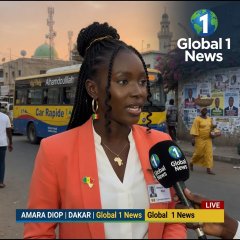
West Africa/Sahel Correspondent at Global1.News. Dakar-based journalist covering politics, security, climate, and development across Francophone and Anglophone West Africa. Tells the stories of a region undergoing profound transformation.









Comments (0)