
MeetInNigeria: Africa's First Improv and Playback Theatre Festival Lights Up Abuja
For one unforgettable week in late June, Nigeria's capital city of Abuja became the beating heart of African storytelling — hosting the continent's first-ever International Improvisation and Playback Theatre Festival, a gathering that proved theatre is far more than entertainment.
For one unforgettable week in late June, Nigeria's capital city of Abuja became the beating heart of African storytelling — hosting the continent's first-ever International Improvisation and Playback Theatre Festival, a gathering that proved theatre is far more than entertainment. Artists, educators, humanitarian workers, and community leaders from across Africa and beyond converged on the Federal Capital Territory to share stories, sharpen their craft, and celebrate a creative form that turns ordinary lives into spontaneous art.
MeetInNigeria: Africa's First Improv and Playback Theatre Festival Lights Up Abuja
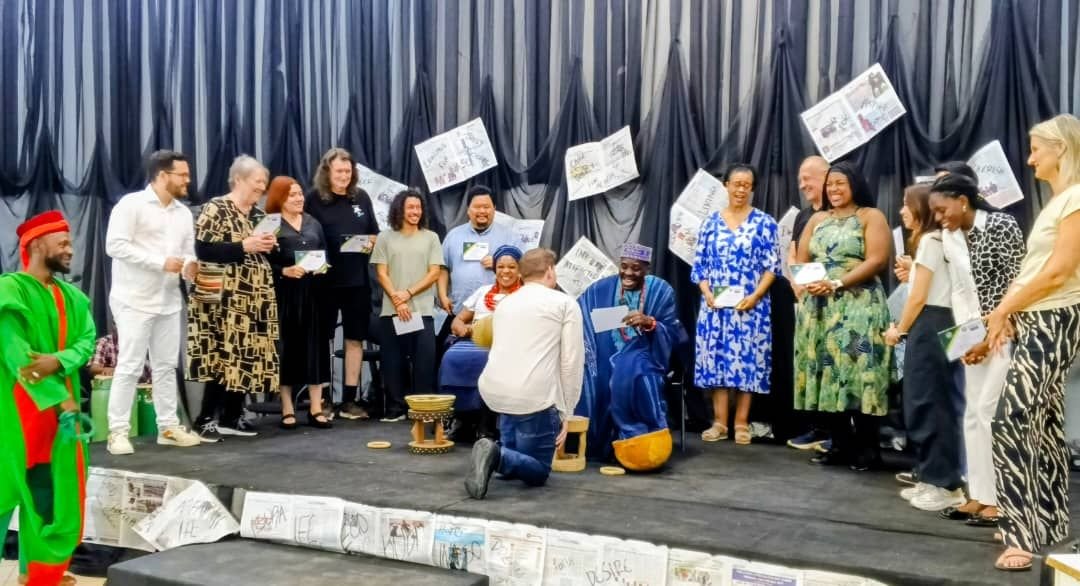
Abuja, Nigeria — The week-long festival, tagged "MeetInNigeria," brought together performers from North America, Europe, Asia, Australia, and across Africa for a historic first: both the global improvisational and playback theatre communities gathering on African soil for a combined celebration of performance, training, cultural exchange, and social impact. On stage, performers transformed ordinary life experiences into spontaneous theatre, drawing smiles, reflection, and sometimes tears from the audience.
A Historic First for the Continent
When the first performers took to the stage at the International Improvisation and Playback Theatre Festival in Abuja, something shifted in the cultural landscape of the continent. This was Africa's first-ever joint gathering of the global improvisational and playback theatre communities, a milestone that placed Nigeria firmly on the world map of unscripted performance art. The festival, held June 21-27, 2026, transformed the Federal Capital Territory into a living laboratory of spontaneous creativity.
Each day unfolded with a rhythm that felt both disciplined and liberating. Morning training workshops and master classes ran from 9am to 5pm daily, offering participants intensive instruction in the craft of improvisation and playback techniques. Then, as the sun began to set over Abuja, the energy shifted to the evening live unscripted performances from 6 to 8pm, where audiences witnessed stories pulled from the very air — tales of love, loss, triumph, and struggle, recreated in real time.
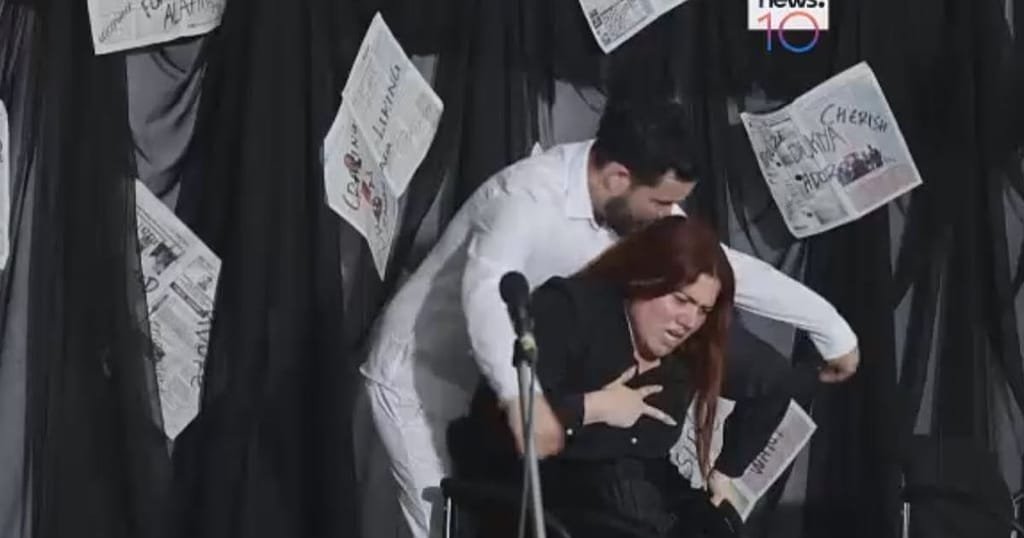
For those unfamiliar with playback theatre, the form is deceptively simple yet profoundly moving. Audience members share personal stories from their lives, and actors immediately recreate those experiences on stage through unscripted performance using dialogue, movement, and music. There is no script, no rehearsal, no safety net — only the raw material of human experience and the skill of performers who have trained their bodies and voices to respond in the moment.
The festival made Abuja a crossroads for artists, educators, humanitarians, business leaders, and community animators from across the globe. In the corridors between sessions, one could hear conversations in Yoruba, Hausa, English, French, and a dozen other languages, all united by a shared commitment to the power of story. The presence of international practitioners alongside Nigerian performers created a dynamic exchange that felt both historic and deeply natural.
'One Story at a Time': Theatre for Social Justice
This year's theme, "One Story at a Time: Improvisation for Social Justice," gave the festival a moral weight that elevated it beyond mere entertainment. Throughout the week, workshops and performances explored social justice, mental health, resilience, conflict resolution, communication, education, and community development — issues that resonate deeply across the African continent, where communities continue to navigate the complex legacies of colonialism, conflict, and rapid social change.
Playback theatre has long been recognized for its role in healthcare settings and among internally displaced communities, where storytelling serves as a vital tool for emotional healing and recovery. In Abuja, practitioners demonstrated how the form can help individuals process trauma, find language for experiences that resist easy articulation, and feel seen by others who witness their stories transformed into art.
The unscripted nature of the performances fosters empathy, reflection, and human connection in ways that scripted theatre rarely achieves. When an audience member shares a story of loss and watches actors embody that experience on stage, something profound occurs — the storyteller feels validated, the audience feels connected, and the shared space becomes a container for collective emotion.
This is the core belief driving the festival: that stories have the power to transform lives. In a world increasingly dominated by screens and mediated communication, the simple act of telling a story to a live audience and watching it come to life through performance is a radical act of presence and connection. The festival's commitment to social justice through storytelling positions theatre not as escapism but as a vital tool for building more just and compassionate communities.
The Organizers Behind the Milestone
Behind this historic gathering stood two pioneering organizations: the Access to Creative Play Foundation and The Ensemble Improv Theatre Company, both of which have been championing improvisational and playback theatre practice in Nigeria for years. The Ensemble, based in Abuja, holds the distinction of being Nigeria's first dedicated improvisational theatre company, a trailblazer in a cultural landscape long dominated by scripted drama and Nollywood productions.
Executive Director Oluwadamilola Abdulai-Apotieri, who also serves as festival director, described the event as a platform for expanding creative opportunities and social transformation through storytelling. Her vision for the festival was not merely to showcase talent but to demonstrate how improvisational theatre can serve as a vehicle for addressing some of the most pressing challenges facing Nigerian and African society.
The Access to Creative Play Foundation brings more than 11 years of experience working with internally displaced persons, using stories as a tool for resilience building and psycho-social support. This deep engagement with vulnerable communities has shaped the foundation's approach to theatre, grounding it in a commitment to social impact that extends far beyond the stage.
The foundation has also championed applied improvisation in a range of professional settings, including medicine — where it enhances communication, patient safety, and bedside manner — as well as corporate team building and even prisons. This expansive vision of improvisation's potential reflects a growing recognition that the skills of listening, collaboration, and spontaneity are essential not just for artists but for professionals in every field.
Voices From the Stage and the Audience
Among the international voices at the festival was Stephanie Ryan, an American theatre actress whose words captured the spirit of the gathering. "Theatre is an incredible source of soft skills for listening, collaboration, and building confidence," she said. "It is a great way of bringing people together; theatre is a universal language that allows people to laugh and build connections that may not exist." Her observation that laughter transcends language resonated deeply in a space where performers and audiences came from vastly different cultural backgrounds.
Nick Bone, a practitioner from Australia, offered a complementary perspective on the power of improvisation. He spoke of how art takes people "a little bit out of your head and more to your heart and body," a description that captures the embodied, visceral nature of playback theatre. Bone also noted how organizations use improvisation training to help companies and countries think through cultural issues, highlighting the practical applications of skills often dismissed as merely artistic.
The festival featured a rich mix of local Nigerian performers and international guests, creating a dynamic exchange that benefited both groups. Nigerian performers brought their own cultural traditions and storytelling techniques to the form, while international practitioners offered new perspectives and methodologies. This cross-pollination was one of the festival's greatest strengths, demonstrating that playback theatre is not a fixed form but a living tradition that evolves with each new cultural context.
Perhaps most importantly, the festival created a safe space to share lived experiences and amplify overlooked voices. In a world where certain stories are privileged and others silenced, playback theatre offers a platform for those who are rarely heard. The festival's commitment to this principle was evident in every performance, as audience members from all walks of life stepped forward to share their stories and see them honored on stage.
Playback Theatre's Journey From 1975 to Abuja
The roots of playback theatre stretch back to 1975, when the form was founded by Jonathan Fox and Jo Salas in the United States. Since then, it has spread to more than 70 countries, evolving and adapting to diverse cultural contexts while maintaining its core commitment to honoring personal stories through spontaneous performance. The journey from those early experiments to the packed venues of Abuja represents a remarkable arc of global cultural exchange.
The form works through a simple yet powerful mechanism: audience members share personal experiences, and actors re-enact them on stage with dialogue, music, and movement. The conductor, or "conductor," guides the process, ensuring that each story is honored and that the performance remains true to the teller's experience. This structure creates a unique intimacy between performers and audience, breaking down the traditional barriers of theatre.
Improvisational theatre's unscripted nature is both its greatest challenge and its greatest gift. Performers must be fully present, deeply attentive, and willing to take risks in service of the story. This demands a level of skill and trust that can only be developed through extensive training and practice — precisely what the festival's morning workshops were designed to provide.
The growing global recognition of playback theatre as a medium for empowerment, inclusion, and social transformation has positioned it as a significant force in contemporary performance. By hosting this festival, Nigeria has positioned itself at the forefront of this movement, demonstrating that African practitioners are not merely recipients of global trends but active contributors to the form's evolution. The connection to African oral traditions and griot storytelling culture is unmistakable — playback theatre, in many ways, is a modern incarnation of the ancient practice of communal storytelling that has sustained African societies for centuries.
What This Means for Africa's Creative Economy
The significance of Africa hosting a first-of-its-kind global theatre gathering extends far beyond the week of performances in Abuja. It signals a shift in the global cultural landscape, where African cities are increasingly recognized as vital nodes in the international creative economy. For Nigerian and African theatre scenes — from Lagos and Abuja to Accra, Nairobi, and Dakar — this festival represents both an achievement and a challenge to build on the momentum.
The potential for future editions and festivals across the continent is immense. The success of MeetInNigeria demonstrates that there is both appetite and capacity for such gatherings, and other African cities may well follow Abuja's lead in hosting similar events. This could create a virtuous cycle, where each festival builds on the previous one's success, attracting more international participants and generating greater economic and cultural benefits.
Theatre and creative arts contribute to community development and the creative economy in ways that are often underestimated. Beyond the direct economic impact of festivals and performances, the arts build social capital, foster creativity and innovation, and provide meaningful employment for young people. In a continent where youth unemployment remains a pressing challenge, the creative economy offers a pathway to sustainable livelihoods that is both culturally resonant and economically viable.
For young African performers, students, and storytellers, the festival offered a glimpse of what is possible. Seeing international practitioners at the top of their craft, and witnessing Nigerian performers hold their own on the same stages, is profoundly inspiring. It demonstrates that African artists can participate in global conversations not as imitators but as innovators, bringing their own perspectives and traditions to bear on forms that are constantly evolving.
Africa's growing role in using the arts to promote dialogue, healing, and stronger communities is one of the most hopeful developments in the continent's cultural landscape. The MeetInNigeria festival, with its commitment to social justice and its celebration of storytelling, embodies this trend. As the final performances drew to a close and participants departed Abuja for their home countries, they carried with them not just new skills and connections but a renewed conviction in the power of stories to transform lives — one story at a time.
By Amara Diop, Staff Writer
This article was produced with AI-assisted research and editorial support. Reporting is based on sources cited in the article.
What's Your Reaction?
 Like
0
Like
0
 Dislike
0
Dislike
0
 Love
0
Love
0
 Funny
0
Funny
0
 Wow
0
Wow
0
 Sad
0
Sad
0
 Angry
0
Angry
0

West Africa/Sahel Correspondent at Global1.News. Dakar-based journalist covering politics, security, climate, and development across Francophone and Anglophone West Africa. Tells the stories of a region undergoing profound transformation.











Comments (0)