
Marcos Orders SSS, PhilHealth, Pag-IBIG Deductions for Contractual Gov't Workers
President Marcos signed AO 43 directing agencies to facilitate voluntary SSS, PhilHealth, and Pag-IBIG deductions for contract of service and job order workers, with consent, to expand social protection coverage for millions of government contractual workers.
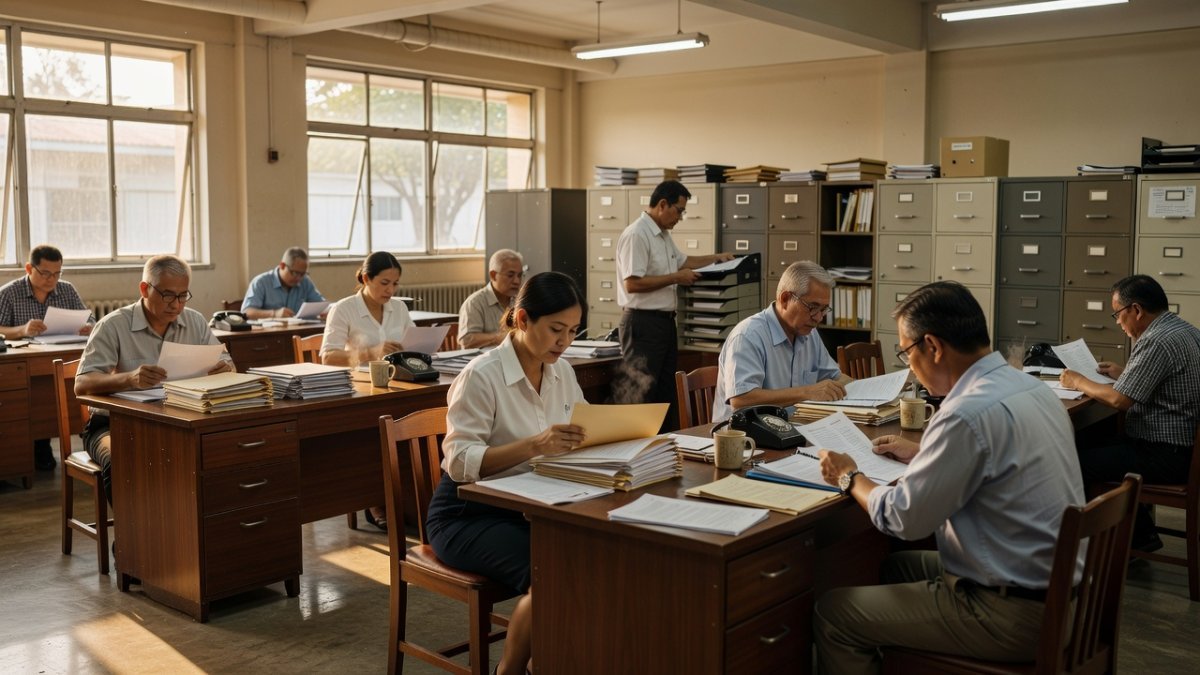
MANILA, Philippines — In a move that promises to bring millions of government contractual workers out of the shadows of social protection, President Ferdinand Marcos Jr. has ordered all state agencies to facilitate the voluntary deduction and remittance of SSS, PhilHealth, and Pag-IBIG Fund contributions for contract of service (COS) and job order (JO) workers.
Administrative Order No. 43, issued last June 3, directs every department, bureau, and government-owned or controlled corporation (GOCC) to put in place mechanisms that allow these often-forgotten workers to finally build their retirement funds, health insurance, and housing savings — but only with the worker’s explicit consent.
For the estimated hundreds of thousands of COS and JO workers across the archipelago — from the utility staff in city halls to the project-based researchers in state universities — this is a significant step toward the security that regular employees have long taken for granted. The order explicitly cites Republic Act Nos. 11199 (SSS Act of 2018), 11223 (Universal Health Care Act), and 9679 (Pag-IBIG Fund Law) as the legal foundations for this policy.
What the Administrative Order Actually Says
The core directive is straightforward: all covered government agencies must facilitate the voluntary deduction of prescribed contributions from the compensation of COS and JO workers, subject to the prior consent of the worker. This is not a mandatory deduction — it is an opt-in system, but one that agencies are now duty-bound to enable and promote.
"All covered government agencies are hereby directed to facilitate the voluntary deduction of prescribed SSS, PhilHealth and Pag-IBIG Fund contributions from the compensation of COS and JO workers, subject to the prior consent of the worker," the order read.
Beyond the mechanics of deduction, the order places a premium on information dissemination. Agencies are required to provide COS and JO workers with the necessary information on available social protection coverage. This is crucial in a landscape where many contractual workers simply do not know their options, or have been told for years that they are not eligible for such benefits.
The order also tasks agencies to remit the deducted contributions directly to the SSS, PhilHealth, and Pag-IBIG Fund, ensure timely remittance, and implement necessary agreements with these institutions. The Department of Budget and Management (DBM), Civil Service Commission (CSC), Commission on Audit (COA), and the three state insurers are jointly tasked to issue the implementing rules, guidelines, and accounting procedures.
Who Is Covered and Who Benefits
The coverage is sweeping. It applies to all departments, agencies, bureaus, offices, and instrumentalities of the national government, including GOCCs and state universities and colleges (SUCs) that engage COS and JO workers. This means the administrative aide at the Department of Agriculture regional office, the encoder at a state college, and the janitorial staff at a government hospital are all potential beneficiaries.
For many of these workers, the reality today is stark. They perform essential functions — manning front desks, maintaining facilities, assisting in field research — yet they receive no retirement benefits, no health insurance from their employer, and no housing loan eligibility. They are often paid on a daily or per-project basis, with no security of tenure and no safety net when illness strikes or when they reach retirement age.
The order explicitly clarifies that this facilitation does not amend the existing contractual relationship between state agencies and their COS and JO workers. In other words, this is not a step toward regularization — but it is a recognition that these workers deserve the same social protection floor as their regular counterparts.
The Financial Mechanics: How Much Will It Cost Workers?
Under Joint Circular No. 1 issued by the CSC, COA, and DBM in 2025, COS and JO workers may be granted a premium — not more than 20 percent of their compensation — to cover voluntary or self-employed contributions to government-mandated social security programs. This is a critical provision because it acknowledges that many contractual workers earn minimum wages and cannot afford the full contribution burden on their own.
For a COS worker earning, say, PHP 15,000 a month, the voluntary SSS contribution for self-employed individuals would be around PHP 1,650 monthly, PhilHealth would be PHP 500, and Pag-IBIG would be PHP 200 — a total of roughly PHP 2,350, or about 15.7 percent of their pay. The 20 percent premium allowance from the agency could cover this entirely, or at least substantially, depending on how each agency implements the policy.
However, the actual implementation will vary. The order gives agencies the discretion to determine how to structure the premium, subject to the joint guidelines from DBM, CSC, and COA. Workers should not automatically assume their agency will shoulder the full cost — they need to ask their human resources offices about the specific arrangements being put in place.
Why This Matters for Filipino Families
This policy touches the very heart of Filipino family life. Consider the sari-sari store owner in Quezon City whose husband works as a job order driver for the local government. For years, their family has had no health insurance beyond the indigent coverage from PhilHealth — and even that is uncertain. With this order, the husband can now have his contributions deducted automatically, ensuring that when the children get sick, the family can go to a hospital without the paralyzing fear of the bill.
Or think of the single mother in Cebu working as a contract of service encoder at a state university. She has been paying her SSS contributions sporadically, whenever she has extra money, which is rarely. With automatic deduction, she can build a consistent record — and eventually qualify for a salary loan to send her daughter to college, or a maternity benefit when she needs it.
The bayanihan spirit has always been about community support, but this policy is about institutional support — ensuring that the government itself practices what it preaches when it comes to social protection. It is a recognition that the people who keep government offices running, who file the documents, who clean the corridors, who drive the service vehicles, are not second-class citizens.
Potential Challenges and What Workers Should Watch Out For
While the policy is welcome, implementation will not be without hurdles. The first challenge is awareness. Many COS and JO workers are not familiar with the voluntary contribution schemes, and agencies may not have the manpower to conduct extensive information campaigns. Workers should proactively ask their supervisors or HR offices about the new policy and how to avail of it.
The second challenge is the premium funding. The 20 percent premium allowance is discretionary — it is not a mandatory benefit. Agencies with tight budgets may choose not to grant it, leaving workers to shoulder the full contribution. Workers should clarify with their agencies whether the premium will be granted, and if so, how much.
The third challenge is the remittance process. The order requires agencies to remit contributions directly to the SSS, PhilHealth, and Pag-IBIG Fund. Historically, there have been cases of agencies collecting deductions but failing to remit them on time, leaving workers with uncredited contributions. The joint circular from DBM, CSC, and COA will need to include strict monitoring and penalty provisions to prevent this.
Finally, there is the question of the self-employed contribution rate. COS and JO workers are not covered by the employer-employee contribution scheme; they are treated as self-employed for SSS purposes. This means they bear the full contribution, unlike regular employees where the employer shares the burden. The 20 percent premium is meant to offset this, but its adequacy will depend on the worker’s compensation level.
What This Means for the Broader Labor Landscape
This order is part of a broader conversation about the treatment of contractual workers in the Philippines. The government has long been criticized for being one of the largest employers of endo (end-of-contract) workers, with COS and JO arrangements used to circumvent regularization. While this order does not address the core issue of job security, it does address the social protection gap — a significant and meaningful improvement.
For the Commission on Elections (COMELEC) and other agencies that hire thousands of JO workers during election periods, this policy could provide a template for ensuring that even temporary workers have access to benefits. For local government units (LGUs) that rely heavily on JO workers for frontline services, this is an opportunity to demonstrate genuine care for their workforce.
The order also aligns with the broader Universal Health Care agenda, which envisions that every Filipino, regardless of employment status, has access to health insurance. By facilitating PhilHealth contributions for COS and JO workers, the government is taking a concrete step toward that vision.
Next Steps and Timeline
The joint circular from DBM, CSC, COA, SSS, PhilHealth, and Pag-IBIG Fund is the critical next step. This circular will define the specific procedures, forms, and accounting entries that agencies must follow. Until that circular is issued, agencies are expected to begin preparing their internal mechanisms — but workers should not expect deductions to start immediately.
Based on the timeline of similar administrative orders, the joint circular could be issued within the next few months, with full implementation phased in across agencies. Workers who wish to avail of the voluntary deduction should start by checking their current contribution status with SSS, PhilHealth, and Pag-IBIG Fund, and by asking their agency’s HR office about the new policy.
For the millions of Filipino families who depend on the income of COS and JO workers, this is a quiet but significant victory. It does not put food on the table today, but it ensures that when the rainy days come — and in the Philippines, they always do — there is a roof overhead, a hospital bed available, and a pension waiting. That is the essence of social protection, and it is finally being extended to those who have been left out for far too long.
This article was produced with AI-assisted research and editorial support. Sources: PhilStar.com, Official Gazette.
By Bella Reyes, Staff Writer
What's Your Reaction?
 Like
0
Like
0
 Dislike
0
Dislike
0
 Love
0
Love
0
 Funny
0
Funny
0
 Wow
0
Wow
0
 Sad
0
Sad
0
 Angry
0
Angry
0

Philippines/Southeast Asia Correspondent at Global1.News. Manila-based journalist covering Philippine politics, environment, maritime security, and social issues. Passionate about marine conservation and the communities protecting the Philippines' natural heritage.














Comments (0)