
Mamata Banerjee, rebel Trinamool faction allotted new party names, symbols by ECI
The Election Commission of India on Friday, 18 September 2026, formally split the two rival factions of the All India Trinamool Congress (AITC) into separate political entities, each with its own name and electoral symbol.
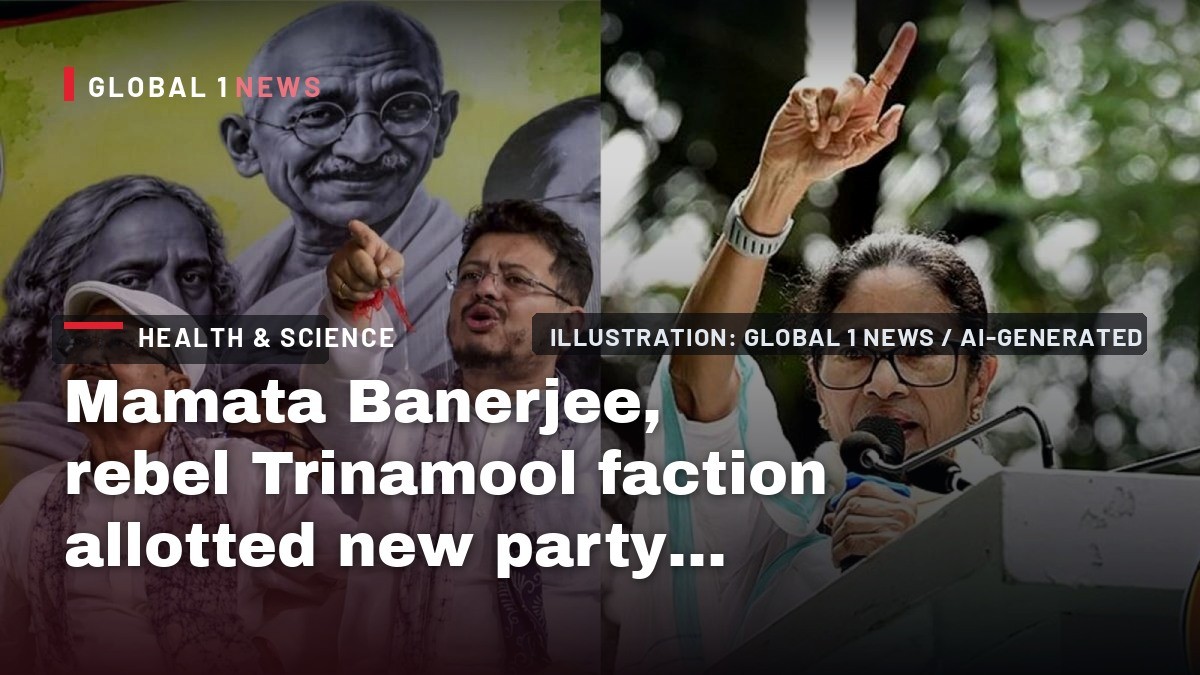
The Election Commission of India on Friday, 18 September 2026, formally split the two rival factions of the All India Trinamool Congress (AITC) into separate political entities, each with its own name and electoral symbol. The faction led by West Bengal chief minister Mamata Banerjee received the designation “Mamata All India Trinamool Congress” and the symbol of a football player, while the splinter group headed by Arup Roy was allotted the title “Democratic Trinamool Congress” together with an envelope as its emblem. This administrative decision follows a directive issued by the commission on 17 September that barred both factions from using the original party name and symbol in the imminent by‑elections for the Nandigram and Rejinagar assembly seats, scheduled for 6 October.
Background to the split and the Election Commission’s intervention
The All India Trinamool Congress, founded by Mamata Banerjee, has been a dominant force in West Bengal politics for more than a decade. Internal dissent intensified earlier this year, culminating in the emergence of a parallel leadership under Arup Roy. The Election Commission, tasked with safeguarding the integrity of the electoral process, stepped in when both groups attempted to contest the upcoming by‑polls under the same party banner and symbol. On 17 September, the commission issued a provisional order preventing either faction from using the historic “Trinamool” name or the party’s iconic flower symbol, thereby averting potential voter confusion.
In response, both camps submitted alternative names and symbols for consideration. The commission’s subsequent allocation on 18 September reflects a calibrated approach: it preserves the right of each faction to contest elections while ensuring that the ballot papers display distinct identifiers. The decision underscores the commission’s role as an arbiter in intra‑party disputes, a function that has grown in prominence as Indian politics witnesses increasing factionalism within major regional parties.
Implications for the upcoming Nandigram and Rejinagar by‑polls
The immediate impact of the symbol allocation will be felt in the two West Bengal constituencies slated for voting on 6 October. Both Nandigram and Rejinagar have been traditional strongholds of the Trinamool brand, and the presence of two similarly named parties could fragment the vote base that historically rallies behind Mamata Banerjee’s leadership. The football‑player symbol assigned to the Mamata‑led faction is likely to resonate with supporters familiar with the party’s grassroots outreach, while the envelope symbol for the Democratic Trinamool Congress may appeal to voters seeking a fresh visual cue.
Political analysts anticipate that the bifurcation could introduce a degree of uncertainty into the electoral calculus for both the ruling state government and opposition parties. The ruling Bharatiya Janata Party (BJP), which has been seeking inroads into West Bengal, may view the split as an opportunity to consolidate anti‑Trinamool votes, especially if the envelope symbol fails to achieve immediate recognition among the electorate. Conversely, the Mamata‑led faction’s retention of a sports‑related icon could reinforce its connection to popular culture and youth engagement, potentially offsetting any dilution of its traditional vote bank.
Legal and procedural dimensions of party symbol allocation
The Election Commission’s authority to assign or deny party symbols stems from the Representation of the People Act and the Election Symbols (Reservation and Allotment) Order, 1968. These statutes empower the commission to intervene when internal disputes threaten the clarity of the electoral process. In this case, the commission’s provisional ban on 17 September was a precautionary measure, allowing both factions to present alternative identifiers before a final determination.
By issuing fresh symbols rather than merely suspending the original one, the commission avoided a complete disenfranchisement of the Trinamool electorate. This approach aligns with past precedents where the commission has facilitated the coexistence of splinter groups, provided that each adopts a distinct emblem. The decision also sets a procedural benchmark for future intra‑party conflicts, emphasizing the need for timely communication of alternative names and symbols to the commission to ensure uninterrupted participation in scheduled polls.
Strategic considerations for the Mamata‑led faction
For Mamata Banerjee’s faction, the adoption of the “Mamata All India Trinamool Congress” name reinforces the personal brand that has been central to the party’s narrative since its inception. By embedding her own name within the party title, the faction signals continuity and a claim to the original ideological legacy. The football‑player symbol, while unconventional, taps into the growing popularity of sports as a cultural touchstone in India, potentially broadening the party’s appeal among younger voters who are increasingly engaged with football leagues and grassroots sports initiatives.
Strategically, the faction will need to invest in voter education to associate the new symbol with its established policy platform. This includes deploying visual materials at polling stations, leveraging social media campaigns, and coordinating with local party workers to ensure that the symbol is unmistakably linked to Mamata Banerjee’s leadership. The effectiveness of this outreach will be pivotal in mitigating any confusion arising from the presence of a similarly named rival faction.
Prospects for the Arup Roy‑led Democratic Trinamool Congress
The Democratic Trinamool Congress, under Arup Roy, faces the dual challenge of establishing a distinct identity while competing against the entrenched Mamata brand. The envelope symbol offers a metaphor of communication and transparency, themes that could be woven into the faction’s campaign narrative. However, the symbol lacks the immediate recognizability of the football player, necessitating a concerted effort to embed it in the public consciousness before the October by‑polls.
Arup Roy’s leadership represents a generational shift within the Trinamool movement, and the new party name may attract voters disillusioned with the status quo. To capitalize on this, the faction must articulate clear policy differentiators, particularly in areas where the Mamata‑led faction has faced criticism, such as governance transparency and intra‑party democracy. By positioning the envelope as a symbol of open dialogue, the Democratic Trinamool Congress can craft a narrative that resonates with civil society groups and urban middle‑class voters seeking reform.
Broader impact on West Bengal’s political landscape
The bifurcation of the Trinamool Congress is likely to reverberate beyond the immediate by‑polls, influencing the strategic calculations of all major parties in West Bengal. The state’s political equilibrium, long dominated by Mamata Banerjee’s leadership, may experience a realignment as voter loyalties are tested. If the split leads to a significant division of the Trinamool vote, opposition parties, particularly the BJP and the Left Front, could gain a foothold in constituencies previously considered secure for the ruling party.
Furthermore, the episode highlights the fragility of personality‑driven parties in the Indian federal system. The emergence of a rival faction named after its leader underscores the personalization of political authority within regional parties. This trend may prompt the West Bengal government to revisit internal party governance structures, potentially instituting reforms to mitigate future schisms. Such reforms could include clearer succession protocols, internal dispute resolution mechanisms, and greater transparency in decision‑making bodies.
Implications for national electoral governance and future reforms
At the national level, the Election Commission’s handling of the Trinamool split serves as a case study in managing intra‑party disputes without disrupting the electoral calendar. The commission’s swift issuance of a provisional ban, followed by the allocation of distinct symbols, demonstrates an operational model that balances legal authority with practical considerations for voter clarity. This episode may inform future legislative proposals aimed at strengthening the commission’s capacity to pre‑emptively address similar conflicts.
Policy makers in the Ministry of Law and Justice and the Election Commission itself may consider codifying clearer timelines for symbol allocation in the event of party splits, ensuring that all stakeholders receive adequate notice before elections. Additionally, the experience could stimulate discussions on the need for a more robust party registration framework that mandates internal democratic processes as a condition for continued recognition. Such reforms would aim to reduce the frequency of factional breakaways that jeopardize electoral stability.
This article was produced with AI-assisted research and editorial support. Reporting is based on the source material cited below. Sources: The Hindu; thehindu.com; Global1.News (18 September 2026).
By Dr. Raj Patel, Staff Writer
What's Your Reaction?
 Like
0
Like
0
 Dislike
0
Dislike
0
 Love
0
Love
0
 Funny
0
Funny
0
 Wow
0
Wow
0
 Sad
0
Sad
0
 Angry
0
Angry
0

India/South Asia Correspondent at Global1.News. Analytical voice with a background in science and health journalism. Based in New Delhi, covering Indian politics, education, healthcare, technology, and policy. Breaks down complex data into clear, actionable reporting.















Comments (0)