
El Niño to Add 49 Million to Global Hunger by 2027
The strengthening El Niño event threatens to push an additional 49 million people into acute food insecurity by the end of 2027, according to the latest UN World Food Programme analysis. With an 81 percent chance of a very strong episode peaking between September and December 2026, India's 13 percent cumulative monsoon deficit already signals direct risks to kharif production and the National Food Security Act's distribution network.
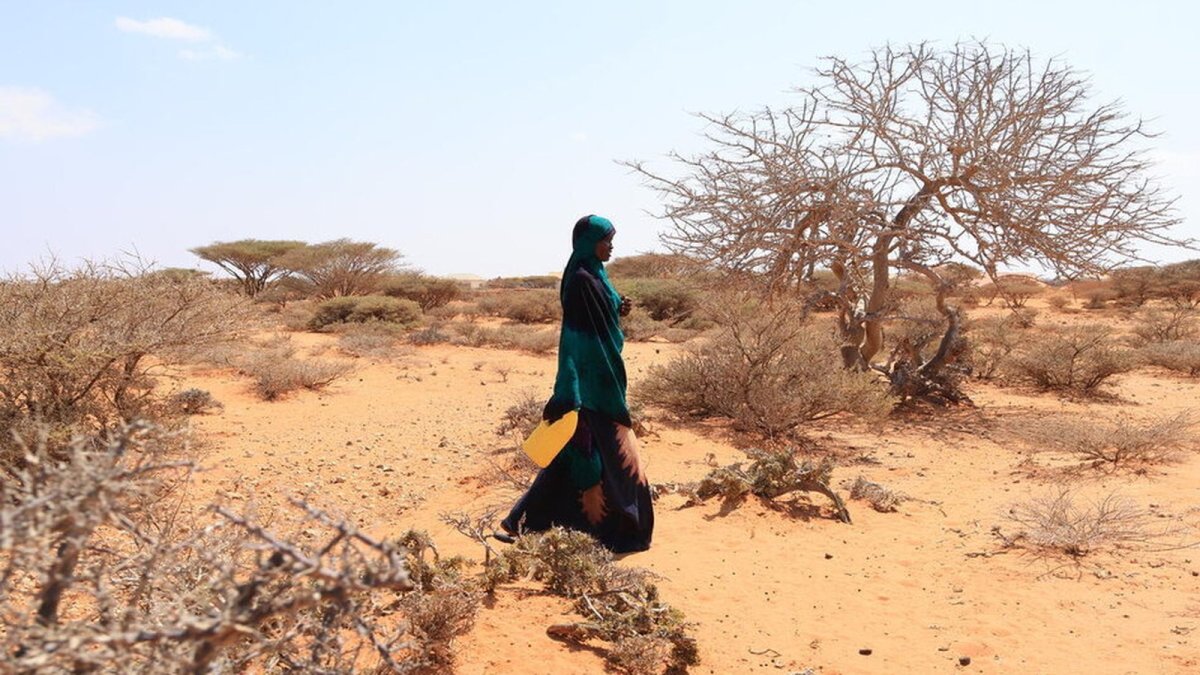
The strengthening El Niño event threatens to push an additional 49 million people into acute food insecurity by the end of 2027, according to the latest UN World Food Programme analysis. With an 81 percent chance of a very strong episode peaking between September and December 2026, India's 13 percent cumulative monsoon deficit already signals direct risks to kharif production and the National Food Security Act's distribution network. These overlapping global and domestic pressures demand urgent attention from policymakers tracking both climate and agricultural data.
El Niño to Add 49 Million to Global Hunger by 2027
New Delhi, India – August 5, 2026 — The World Food Programme's latest analysis shows El Niño could add 49 million people to the ranks of the acutely food insecure by end-2027, with South and Southeast Asia projected to see 8.2 million additional cases amid drought risks and uneven rainfall. India Meteorological Department data already records a 13 percent cumulative rainfall deficit for June-July 2026, leaving nearly 50 percent of districts in deficient or large deficient categories.
Global Scale of the El Niño Threat
WFP analysis covers 45 food-insecure countries where total acute food insecurity could climb from 225 million to 274 million people. The 2015-2016 El Niño previously affected 60-100 million people, and current sea surface temperatures are the warmest since at least 1982. WFP modelling shows an 81 percent chance of a very strong El Niño, potentially the strongest since 1950, with effects extending through 2027 due to harvest cycles across vulnerable regions.
The Guardian has reported that the current El Niño event could be the strongest in at least seventy years, with some observers describing it as a super El Niño, although this term lacks official recognition. Experts have previously indicated that a strong El Niño combined with ongoing global heating might result in the hottest year on record, either in 2026 or more likely in 2027. This assessment underscores the escalating risks posed by climate variability on a global scale.
"El Niño is a massive threat to the food security of millions who are already vulnerable," said Carl Skau, WFP's Acting Executive Director. "The sooner we help families to prepare for these climate shocks, the greater our ability to save lives and protect livelihoods. Severe floods and droughts can quickly push communities from coping to crisis. WFP is already ramping-up early response efforts in eight countries, and we stand ready to do even more."
In India, the Ministry of Agriculture monitors kharif output in states such as Madhya Pradesh and Maharashtra, where rain-fed paddy, pulses, and oilseeds face direct risks from these weather patterns. This tracking is essential for anticipating impacts on agricultural production and ensuring timely interventions in vulnerable regions.
Regional Breakdown and Asia-Pacific Exposure
East and Southern Africa face more than 18 million additional people at risk, a 26 percent increase, while Southern Africa could see a nearly 75 percent rise. Latin America and the Caribbean may experience over 16 million affected, with Central America facing an 83.1 percent proportional increase. Asia and the Pacific are projected to add 8.2 million people, directly relevant to India's monsoon-dependent agriculture and the 2026-27 kharif harvest of paddy, pulses, and oilseeds. Southern Africa, South America and the Caribbean could each see more than 12 million additional people pushed into acute food insecurity, while West and Central Africa face a 12 percent projected increase affecting nearly 6 million additional people.
India's Monsoon Deficits and IMD Data
IMD reports all-India rainfall for July 2026 at 1 percent above normal, yet cumulative June-July figures stand 13 percent below normal following one of the driest Junes on record. Almost 50 percent of districts remain in deficient or large deficient categories. IMD Director General Mrutyunjay Mohapatra noted 269 extreme heavy rainfall events and 918 very heavy events in July, with August rainfall forecast below 94 percent of the long period average of 254.9 mm. July 2026's partial recovery was driven by low pressure areas and depressions, mainly over central India, which swung from a 50 percent deficit in June to a 33 percent excess in July.
Kharif Crop and Reservoir Implications
Central India is the only homogeneous region with seasonal excess rainfall of 4 percent. However, below-normal rainfall forecasts for August and September threaten rain-fed subsistence farming and reservoir storage critical for irrigation. These patterns align with WFP warnings of drought risks, uneven monsoons, and localized flooding that could disrupt production across South and Southeast Asia. Northwest India improved from a 32 percent deficit in June to a 4 percent deficit in July, while east and northeast India and the southern peninsula saw little change.
Food Inflation and RBI Policy Considerations
WFP Director Jean-Martin Bauer noted that global food markets entered this El Niño period after good 2025 harvests, yet conflict and weather-related crop losses could exert upward pressure on prices. For India, any shortfall in kharif output would feed directly into food inflation metrics monitored by the Reserve Bank of India. The National Food Security Act's procurement and distribution targets could face strain if production dips, affecting both consumers and the fiscal burden on taxpayers. India's buffer stocks under the Food Corporation of India and MSP procurement are the classic shock absorbers.
Jean-Martin Bauer has framed the threat plainly by stating that these are events that in the past have triggered large-scale hunger. At the end of 2025, food prices were in favourable ranges, although there has been upward pressure from the war in the Middle East. Bauer also warned that it is very important to avoid a situation where large countries stop food exports, as this could exacerbate global vulnerabilities.
While past El Niño events have not typically triggered major global food price spikes, regional shortages and higher prices could worsen food access for vulnerable households. This situation demands careful attention to prevent localized crises from escalating into broader humanitarian challenges.
For India, kharif output shortfalls historically feed into cereal, pulse, and vegetable inflation, and the RBI's inflation targeting framework makes monsoon performance a key input to monetary policy decisions. Such connections illustrate how international climate phenomena directly influence domestic economic strategies.
Anticipatory Action and Funding Gaps
WFP has scaled anticipatory action programmes across 18 countries, reaching over 1.3 million people in 2026 with cash and assistance. Since May, plans triggered in South Sudan, Chad, Mauritania, Uganda, Guatemala, and El Salvador delivered over USD 14 million supporting half a million people. Every USD 1 invested in such programmes saves USD 3 to USD 7 in avoided losses. WFP and FAO have appealed for increased support.
At least $80 million is budgeted for early warning systems and anticipatory relief. Richard Choularton, director of WFP's Climate and Resilience Service, cautioned that in southern Africa, the biggest food security impact will come during the 2027-2028 lean season, after farmers have exhausted their reserves. These efforts aim to mitigate the effects of impending climate events through proactive support rather than post-disaster response.
Bauer warned that funding cuts from U.S. and European donors in 2025 were hampering monitoring activities. The WFP conducted about 1.1 million household surveys in 2024 compared to about 800,000 in 2025, with data collection falling further in 2026. He stressed that at a time when there is a risk like an El Niño, it is important to have high-frequency data collection to inform responses effectively.
India's IMD has expanded its rain-gauge network as an example of monitoring investment, yet global data gaps continue to weaken early warning capabilities for everyone involved in climate preparedness. This highlights the need for sustained international cooperation in data gathering and analysis.
The Bottom Line
India's existing systems under the National Food Security Act and coordination with ICAR and the Ministry of Agriculture provide buffers, yet the WFP warning underscores the need for enhanced early warning integration with IMD forecasts. Strengthening anticipatory measures for the 2027-28 lean season equivalent in India could protect both farmers and the public distribution network from price spikes and supply disruptions. The 13 percent monsoon deficit, 50 percent of districts in deficit categories, and 8.2 million additional Asia-Pacific cases together highlight how El Niño directly intersects with RBI inflation targets and Food Corporation of India stock management.
— By Dr. Raj Patel, Staff Writer
This article was produced with AI-assisted research and editorial support. Reporting is based on sources cited in the article.
What's Your Reaction?
 Like
0
Like
0
 Dislike
0
Dislike
0
 Love
0
Love
0
 Funny
0
Funny
0
 Wow
0
Wow
0
 Sad
0
Sad
0
 Angry
0
Angry
0

India/South Asia Correspondent at Global1.News. Analytical voice with a background in science and health journalism. Based in New Delhi, covering Indian politics, education, healthcare, technology, and policy. Breaks down complex data into clear, actionable reporting.














Comments (0)